Julie Walters

Looking For Me Friend: The Music of Victoria Wood

23/04/25

Traverse Theatre, Edinburgh

Victoria Wood was on my radar early on. Like many others, I first became aware of her when she appeared on (and won) TV talent show New Faces in 1974. Over the years, I regularly tuned in to her latest TV iteration, witnessing her various working partnerships with the likes of Julie Walters, Celia Imrie and Maxine Peake – and was dismayed to hear of her death from oesophageal cancer in 2015 at the age of just 62.

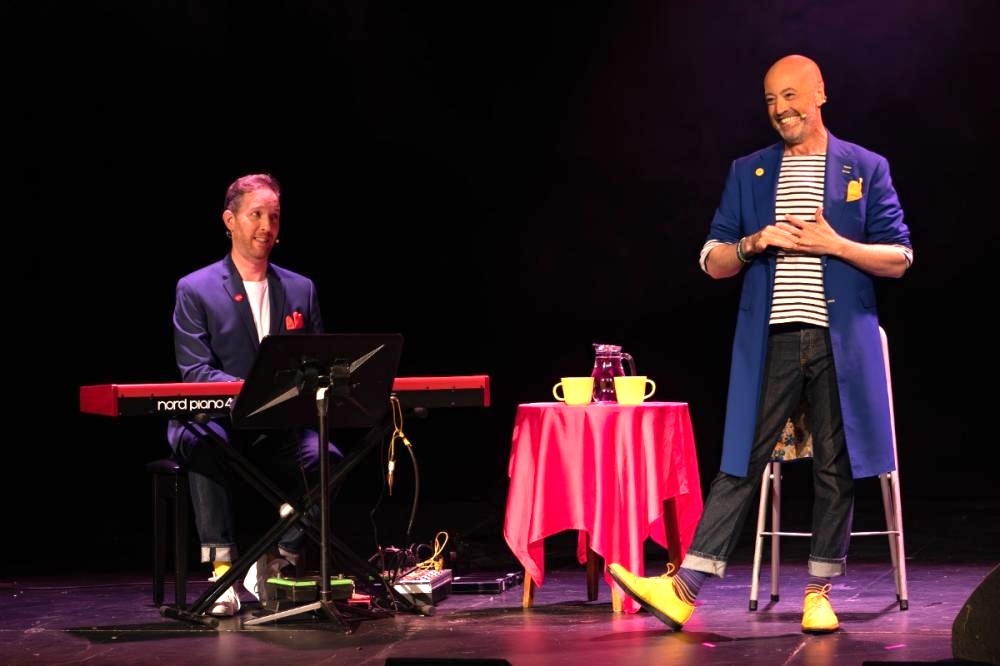
Paulus grew up through the strictures of the 1970s and 80s and, as a gay man, he found Wood an inspiration, enjoying in particular her songs and the playful way she used lyrics to create and define characters. When he met kindred spirit, Michael Roulston, it was perhaps inevitable that the two of them would eventually collaborate on a show, which they brought to the Edinburgh Fringe in 2022.

Looking For Me Friend is essentially a love letter to Victoria Wood, a celebration of the woman who would never use the word ‘biscuit’ when she could say ‘Garibaldi,’ who helped launch the careers of so many other performers, who always came across as somebody you’d love to have a long chat with over a cup of coffee. (I’m fascinated when Paulus tells us that, early in his career, he sent begging letters to scores of entertainers asking for their financial help and the only one who actually came back with a cheque – for £50- was Victoria Wood.) Sadly, he never met her in person.

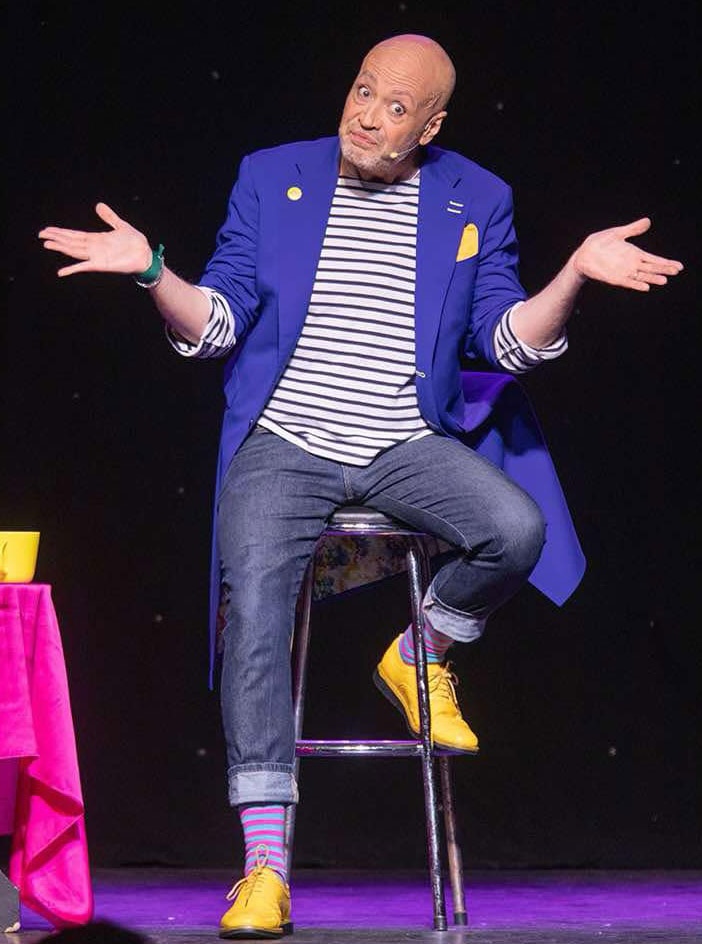
This is a warm hug of a show, and Paulus is a confident and charming performer, nailing each song with aplomb and chatting with the audience in between. This isn’t an impersonation so much an interpretation of Wood’s best musical pieces, which vary in tone from laugh-out-loud funny to downright heartbreaking. Roulston provides sensitive musical accompaniment and occasionally weighs in with some pithy one-liners from Wood’s back catalogue. The two men work together with absolute ease.

It’s clear that there are some people in tonight’s audience who harbour the same devotion to the woman that inspired Paulus, some of them able to shout out even Wood’s most obscure catch-phrases on cue. I’m not that much of an expert myself but listening to the surprising range of material in tonight’s performance does make me appreciate that I’ve missed out on much of the late comedian’s finest compositions. Of course, you don’t have to be a Victoria Wood fan to enjoy this show: even in the unlikely event that you’ve never heard of her, you’ll feel that this is an hour and a half in which you’ve been thoroughly entertained.

Looking For Me Friend has just one more show in Edinburgh before it moves on to pastures new, so grab some tickets. Do it! Do it toniiiiiiiight!

4 stars

Philip Caveney

Paddington in Peru

11/11/24

Cineworld, Edinburgh

After the success of Paddingtons 1 and 2, it was perhaps inevitable that a third instalment would eventually amble into view. But previous director Paul King did set a high bar. His films were perfect family-friendly adventures that kept both children and adults thoroughly entertained. King has now transferred his talents to the somewhat under-appreciated Wonka franchise, so this time out, directorial duties fall to Dougal Wilson, while the screenplay is the work of four writers, one of whom is original scribe Simon Farnaby.

As the title suggests, the third film sees Paddington and his adoptive family, the Browns, leaving their London home in search of Paddington’s beloved Aunt Lucy (voiced by Imelda Staunton), who has gone missing from her nun-run retirement village, deep in the jungles of Peru. The alarm has been raised by the Reverend Mother (Olivia Colman, in yet another scene-stealing role). It’s apparent pretty much from the outset that there’s something a bit dodgy about her – though she’s still unmistakably, adorably, Olivia Colman, singing and dancing her socks off. Once in Peru, the Browns – Hugh Bonneville, Emily Mortimer (replacing Sally Hawkins), Madeleine Harris and Samuel Joslin, accompanied as before by Mrs Bird (Julie Walters) – fall in with mysterious riverboat captain, Hunter Cabot (Antonio Banderas) and his daughter, Gina (Carla Tous). Cabot is introduced via an obscure film reference (Werner Herzog’s 1982 jungle odyssey, Fitzcarraldo), that only a few movie buffs are likely to spot.

A convoluted South American adventure dutifully ensues with occasional nods to Indiana Jones and the like, but it must be said that this isn’t quite as sure-footed as the previous offerings. Paddington (Ben Whishaw) is still utterly delightful and just as prone to pratfalls, but the slapstick isn’t as assured and the ‘fish-out-of -water’ premise of the first film doesn’t really work so well in a jungle. Furthermore, with just about every actor that has appeared in the series popping up for an obligatory cameo, plus scenes where Cabot is haunted by no fewer than five of his gold-obsessed ancestors, the film feels too busy and over-stuffed for its own good. There’s also a tendency for the film’s messages to be pounded home with a huge mallet rather than trusting younger audiences to take them on board.

Don’t get me wrong, Paddington in Peru has enough endearing moments to make it worth the watch and I’m sure youngsters will still be suitably entertained by the little bear’s antics but, all things considered, this offering comes in a good distance behind its predecessors.

Make sure you stay in your seats through the lengthy credits for a welcome call-back to (yet another) character from one of the earlier movies. Sadly, although I’m happy to see him, this only serves to emphasise that the latest adventure doesn’t offer anyone else quite as memorable.

3.8 stars

Philip Caveney

The Secret Garden

28/02/21

Amazon Prime Video

It’s a hundred and ten years since Frances Hodgson Burnett’s The Secret Garden was first published, but its appeal remains undiminished. I remember fondly the copy I had, part of a collection called ‘Children’s Classics for Girls’ (my brother had ‘Children’s Classics for Boys,’ but we both read all of them, of course, because gender boundaries are stupid, and no one knows that better than kids). I remember my grandad (who worked for MGM) enthusing about the 1949 film version too, because it was mostly shot in black and white, but changed to glorious technicolour in the titular garden. I didn’t actually see it until I was grown up, but I carried that image in my head for years.

Mary Lennox (Dixie Egerickx) is ten years old, and living in India. Her family is rich and British, but their enormous wealth and privilege can’t save them. This latest movie adaptation changes the context, so that it’s 1947, and we see the turmoil outside the Lennox mansion, caused by Partition. In the novel, Mary’s parents die of cholera. Here, it seems, they are victims of understandably violent protest. One by one, the servants leave, and Mary is left alone: orphaned, adrift.

In the novel, Mary is spoiled: a demanding, contrary madam, who needs to be brought down a peg or two. Here, director Marc Munden offers us a more sympathetic perspective: how can a child be held accountable for her bad manners? She has been parented in a distant, remote way; raised to expect others to obey her commands. What this Mary needs is love and attention – but that’s in short supply. Found, eventually, by British soldiers, Mary is shipped off to a cold, grey England she has never seen, to live with an uncle she doesn’t know. And she never gets to know him, really, because Archibald Craven (Colin Firth) is every bit as unreachable as her own parents were, willing to do his duty and provide for his niece, but completely uninterested in actually seeing her. The ancestral home, Misselthwaite Manor, is enormous, so it’s easy for them to live separate lives.

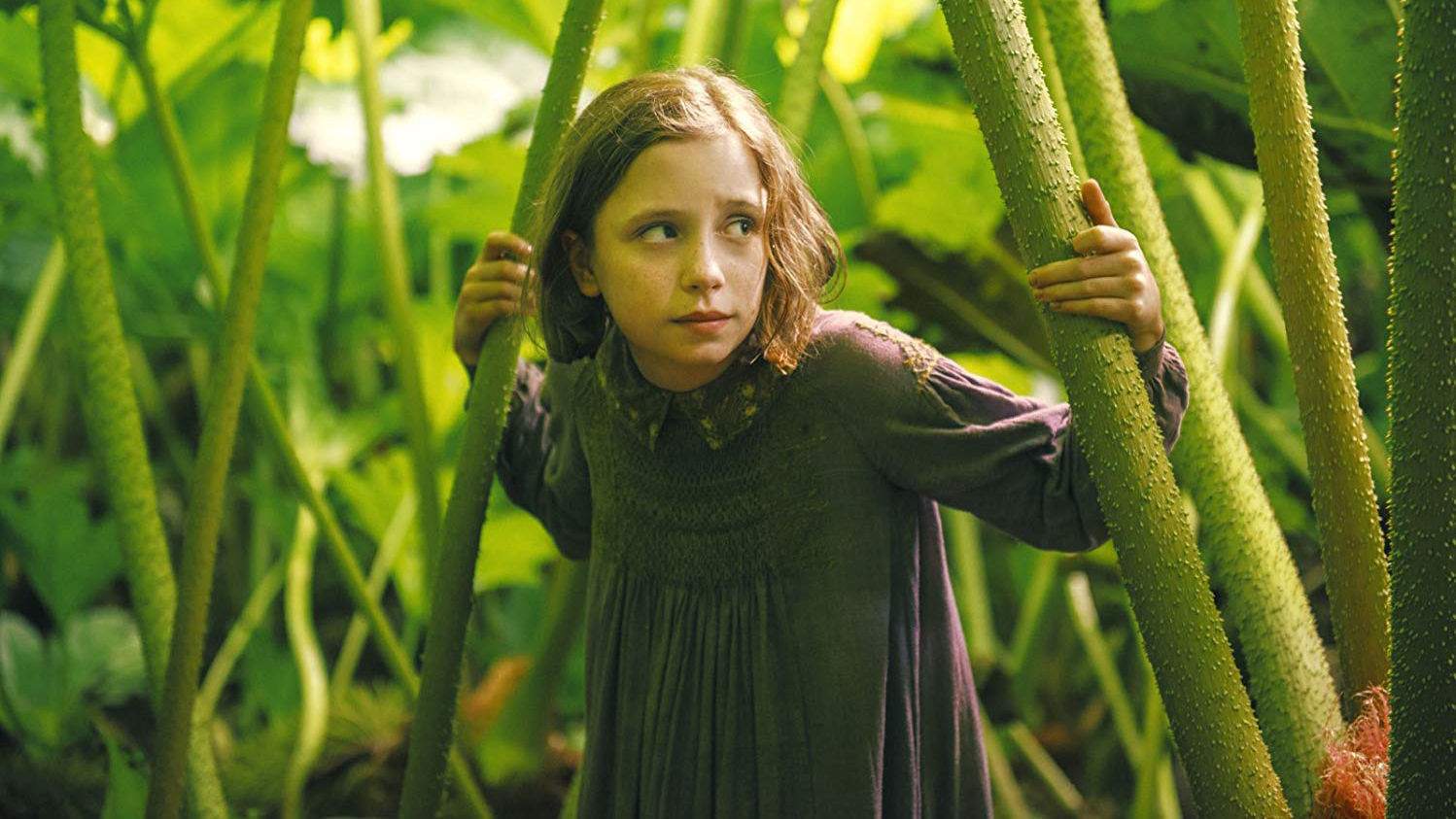
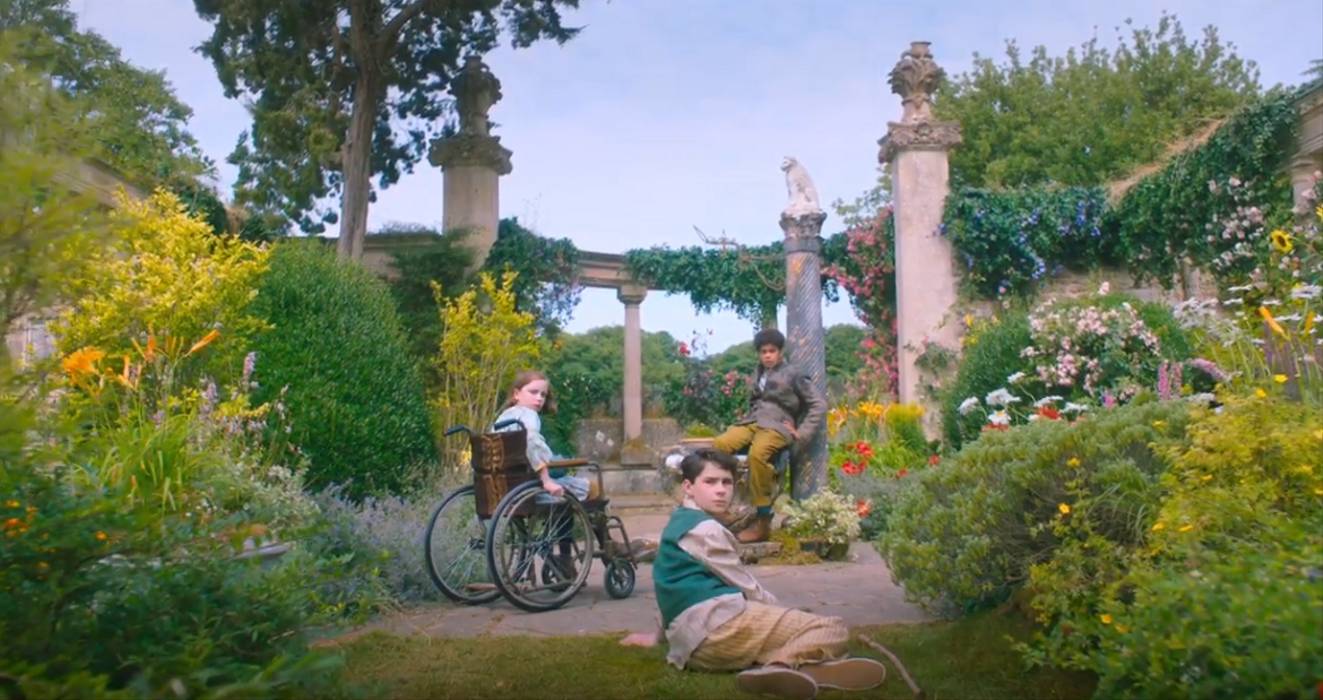
As in India, Mary spends most of her time in the company of servants. Here in Yorkshire, this means the formidable Mrs Medlock (Julie Walters) and the down-to-earth Martha (Isis Davis). While befriending Mrs Medlock is out of the question, Martha proves more amiable, and her brother Dickon (Amir Wilson), whom Mary meets while exploring the estate, soon becomes Mary’s playmate. Together, they roam the vast grounds, take care of a lame dog and, one day, discover a way into a walled garden, which has been locked ever since Archibald’s wife – Mary’s aunt – died, many years ago. This secret, magical place becomes their sanctuary. The idea of transformation is integral to the book, so it’s a little odd that Jack Thorne’s script seems almost to toss this idea aside. Whereas Hodgson Burnett has the children working hard every day to restore the garden to its former glory, here they just play in it. This undermines the central tenet of the story: that gardens (and children) need tending if they’re to grow well.

Take cousin Colin (Edan Hayhurst), who is bedridden, and supposedly out of bounds. He’s another neglected child, trapped by his father’s fears. Archibald thinks Colin has inherited his hunch back, and keeps his son ‘safe’ by cutting him off from the world. Mary hears him crying in the night and decides that what he really needs is to play outside. Like Clara in Johanna Spyri’s Heidi, it turns out that his disability can be ‘cured’ by a bit of fresh air and a positive attitude. (I don’t know if this is as deeply offensive as it seems on the face of things or if it’s a true reflection of poor medical practice at the turn of the last century. Even if the latter is true, does this still apply in 1947?) Still, it’s a transformative move: like the garden, both Colin and Mary become stronger, happier people once they’re shown a bit of love.

This is a good-looking film, and the children all perform well. I like the fact that Mary’s story is contextualised, both by the opening scenes in India and by the old equipment lying around the Manor, a reminder of its recently being requisitioned as a war hospital. But both Walters and Firth are criminally under-used (why cast such great actors if you’re not going to give them anything to do?) and it’s a shame that the garden itself never seems magical; in fact, it’s almost indistinguishable from the rest of the estate, and it’s not clear why this place in particular matters so much to the children. From black and white to technicolour might seem hack nowadays, but I think this movie needs an equivalent trick.

3.6 stars

Susan Singfield

Wild Rose

19/03/19

After her confident showing in Beast, it only seemed a matter of time before we saw Jessie Buckley in a star-making role – and Wild Rose might just be the film to do it for her. As Glaswegian wannabe country star, Rose-Lynn Harlen, she positively owns the screen, even when starring opposite professional scene-stealer, Julie Walters.

Rose-Lynn has long held an ambition: to go to Nashville and become a star of country music (not country and western, mind; that’s a whole different kettle of corn!). But when we first meet her, she’s in the process of being released from a year’s spell in prison, where she’s been sent for throwing a bag of heroin over the wall to one of the inmates. Issued with an ankle tag, which means she has to be home by seven o’clock every evening, she heads off to her mother, Marion (Walters), who has been looking after Rose-Lynn’s two young children in her absence. The children barely know Rose and it’s clear she needs to spend time learning to be their mother again – but those long-held ambitions don’t leave much room for anything so mundane as parenthood.

Rose-Lynn soon discovers that while she’s been away, her regular gig at a Glasgow country music venue has been taken over by someone far less talented than her, and she can’t perform in the evenings anyway. So, at Marion’s urging, she takes a day-job as a cleaner for the wealthy and influential Susannah (Sophie Okonedo), who, once appraised of Rose’s singing skills, decides to use her considerable clout to give her cleaner’s stalled career a boost – but it eventually becomes apparent that the only person who can really help Rose-Lynn achieve her ambitions is… Rose-Lynn herself.

The film is directed by Tom Harper and cannily scripted by Nicole Taylor, and is astonishingly sure-footed throughout. Every time the story threatens to edge too close to cliché, Taylor cannily subverts it and steers things in a much more interesting direction. Here are well-drawn working-class characters, who are never allowed to be the butt of cheap jokes, but emerge as fully drawn, sympathetic people with real lives to live. Okenedo’s character is also a delight, someone who’s prepared to give everything she’s got to help someone better their situation.

Of course, the icing on the cake is that Buckley has an absolutely amazing voice, delivering every song with real passion and vigour, whether she’s standing mournfully on the stage of the Grand Ole’ Opry or belting out a humdinger in a hometown nightclub.  Oh, and look out for a cameo from ‘Whispering’ Bob Harris, playing himself with absolute conviction.

Wild Rose is a genuine treat, a country music spectacular that never slows down long enough to drag its cowgirl heels. Miss this one and weep!

4.7 stars

Philip Caveney

Film Stars Don’t Die in Liverpool

17/11/17

Film Stars Don’t Die in Liverpool is Peter Turner’s story. Based on his memoir of the same name, the film, scripted by Matt Greenhalgh, tells of Turner’s affair with fading film star, Gloria Grahame, and the extraordinary tale of how she came to live out her last days with his mum and dad in 1980s Liverpool.

The performances here are exemplary: both Jamie Bell (as Peter) and Annette Bening (as Gloria) are on top form, and their relationship is affectingly conveyed. Bening convinces absolutely as the ex-Hollywood sexpot, holding her head up high and forging a career in British theatre: proud but vulnerable; confident but insecure. Bell is also utterly credible as the young Turner, flattered by the attentions of someone so famous, falling hopelessly in love. And it’s a touching story: rejected by the film industry, out of touch with her family and dying of cancer, Gloria turns to her ex-lover for the warmth she knows his ‘ordinary’ family can offer, and his parents (Julie Walters and Kenneth Cranham) are more than happy to oblige.

A shame, then, that there isn’t more on offer here. There’s a stellar cast without much to do: Vanessa Redgrave, as Gaynor’s mother, says almost nothing of note; Frances Barber, as her sister, does what she can with a couple of bitchy lines. Walters stands out, as she always does, but is criminally under-used, never called upon to offer anything more than ‘kindly mum.’ The marvellous Stephen Graham plays Peter’s brother, but his talent is wasted: he just sits at the kitchen table wearing one of Harry Enfield’s Scouser wigs, whinging occasionally and looking meaningfully at his strangely silent wife (Leanne Best).

I think the problem is that it’s all very rose-tinted, too closely based, perhaps, on Turner’s memoir, without enough space for the spiky complexity of human reality. It’s superficial and chocolate-boxy: a special memory preserved as in a photo-book, rather than an engaging film that allows its characters to show their flaws. And the story arc lacks drama too, never really building, never really drawing us in. This is a film that relies entirely on its central performances; the casting director (Debbie McWilliams) has done a sterling job; thanks to her, it’s not an entirely missed opportunity.

3.6 stars

Susan Singfield

Brooklyn

MV5BMzE4MDk5NzEyOV5BMl5BanBnXkFtZTgwNDM4NDA3NjE@._V1_UX182_CR0,0,182,268_AL_

17/02/15

‘Missed this film at the multiplex but caught it at an Indie.’ This is something I seem to be saying with increasing regularity, these days. Take Brooklyn, for instance, critically acclaimed and Oscar-nominated, yet it just about managed to scrape a week at Cineworld, to be replaced no doubt, by Dirty Grandpa or something equally vacuous. We caught it at the Heaton Moor Savoy – and while I’m on the subject, how gratifying it was to see this recently refurbished cinema completely sold out at 3.30 pm on a wet Wednesday afternoon, proving that there certainly is a big audience for this film, provided it’s advertised correctly.

Brooklyn is an unashamedly old-fashioned movie, based on the book by Colm Toibin and adapted for the screen by Nick Hornby. In 1950s Wexford, Eilis (Saoirse Ronan) is failing to flourish. She has no job and (even more shameful in that era) no prospect of marriage, so when New York-based Father Flood (Jim Broadbent) arranges for her to emigrate to New York, she jumps at the chance, leaving her older sister, Rose to look after their widowed mother. Once in Brooklyn, Eilis finds a job in a swish department store and a home in a boarding house on Clinton Street run by Mrs Keogh (a delightful cameo by Julie Walters). But it isn’t long before romance arrives in the shape of Italian-American, Tony (Emory Cohen). As is usual in such stories, the path of true love seldom runs smooth and when Rose dies suddenly, Eilis has to head home for the funeral – and once back in her mother’s vicelike grip, life becomes increasingly complicated…

This is a pleasurable, warm bath of a film – there are no great surprises here, but the 50s setting is beautifully evoked, the performances are uniformly good (particularly from Ronan, who fully deserves her Oscar nod) and the story is strong enough to hook you to the end. There’s enough resonance in what happens here to strike chords with most older viewers and in the end, this is perhaps the film’s greatest strength – an everyday tale of an everyday Irish girl cast adrift in an unfamiliar location.

Charming.

4.2 stars

Philip Caveney