Jon M Chu

Wicked: For Good

06/12/25

Cineworld, Edinburgh

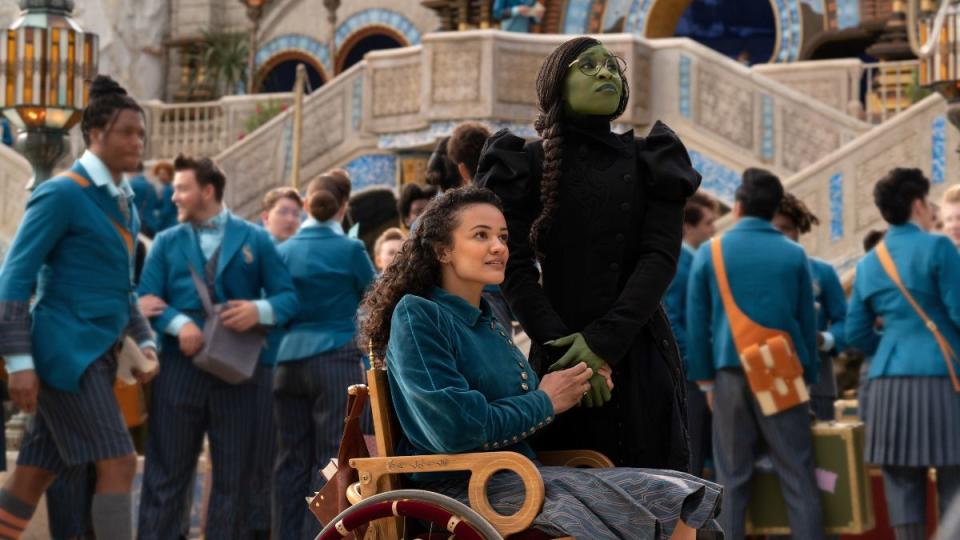
Despite being dazzling, bold and unashamedly in-your-face, Wicked: For Good somehow manages to fall flat. Perhaps the problem lies in the year-long gap between the two parts of this story; it’s like a glass of champagne that’s been left out too long and lost its fizz.

That said, in many ways I prefer this second act (which I’m refusing to call a sequel, because it isn’t: the story arc spans both films, and neither stands alone). At least there’s a resolution here, and I enjoy the creative ways the storyline feeds into The Wizard of Oz. Narratively, For Good – directed by Jon M Chu – is stronger than Wicked, but as a musical? I’m no aficionado, but even I can tell there’s only one real banger in this show (Defying Gravity), and it isn’t reprised here. As a result, the big song and dance numbers, even with Christopher Scott’s sumptuous choreography and the cast’s impressive vocals, just aren’t very memorable.

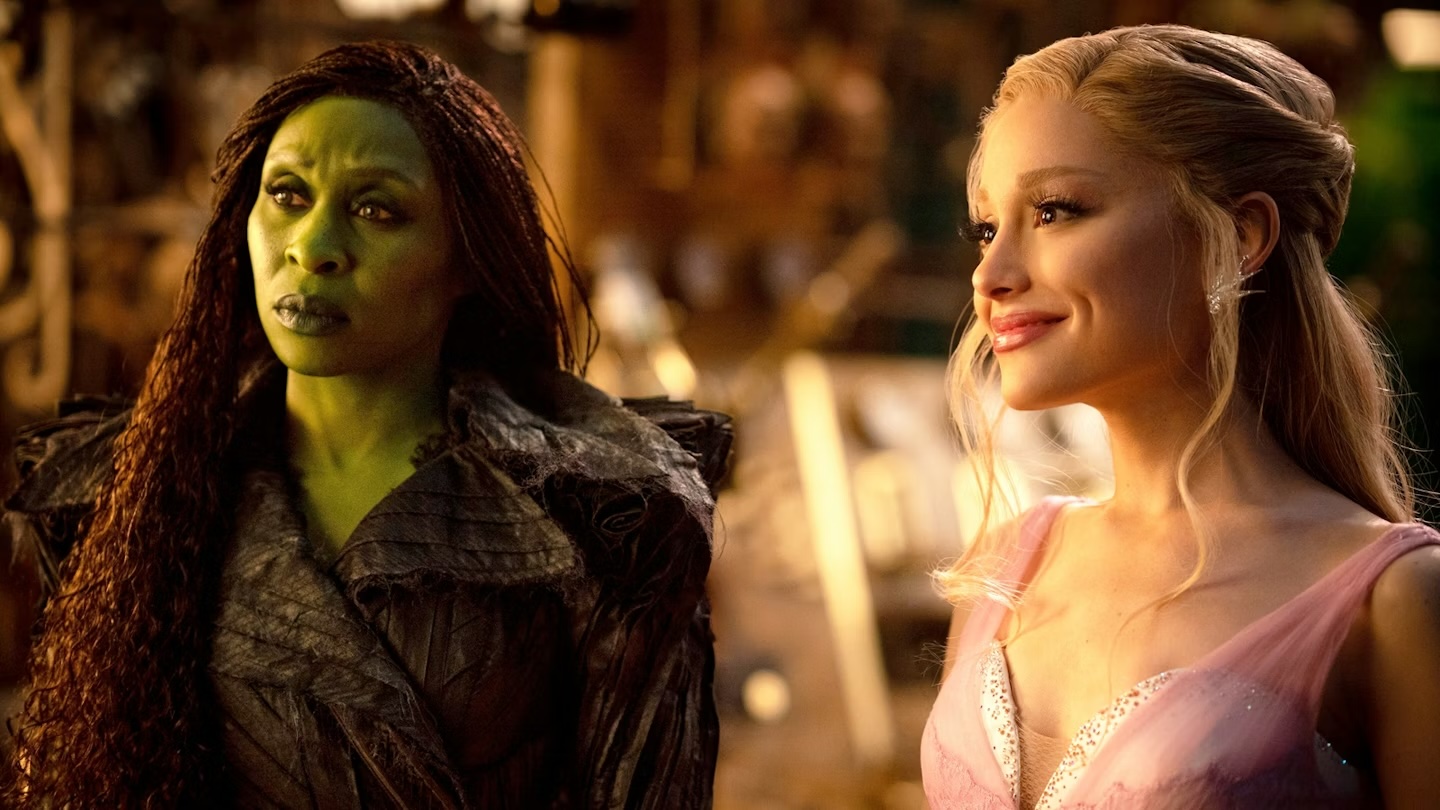
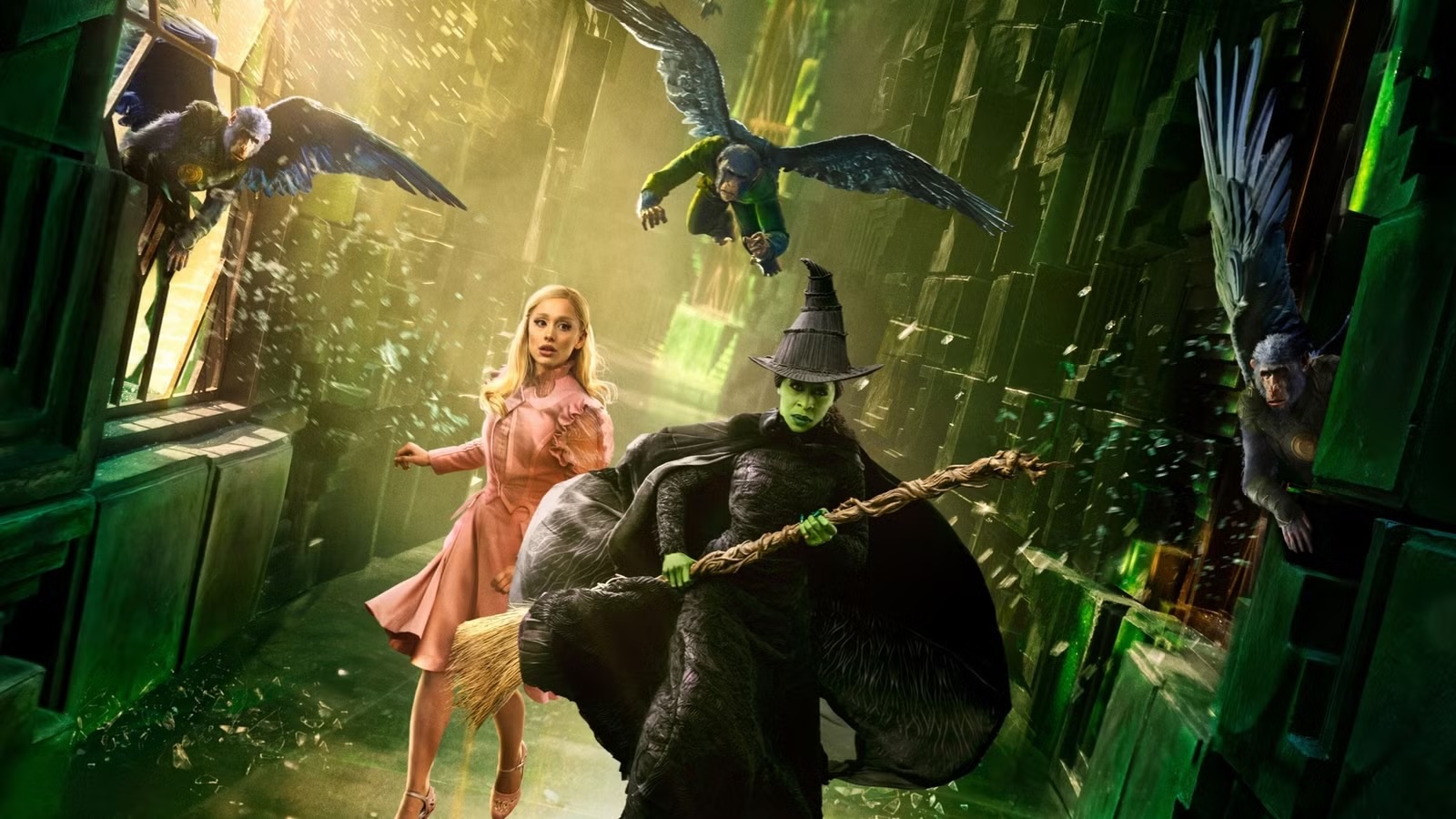
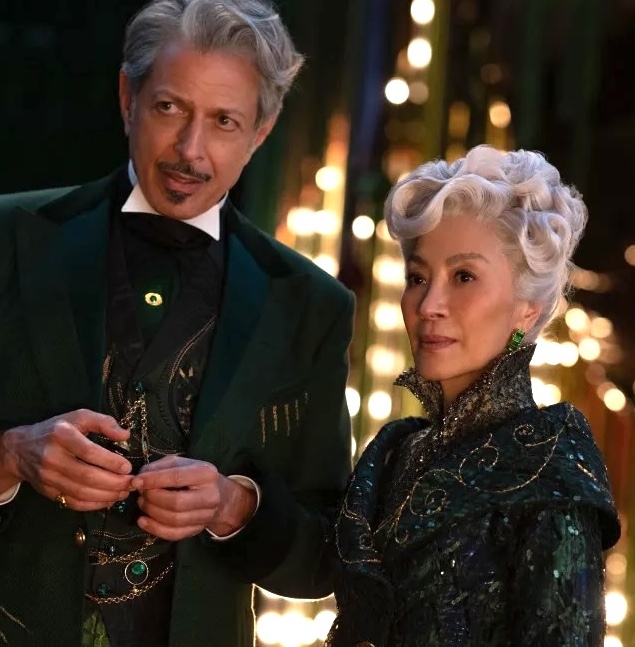
We catch up with Elphaba (Cynthia Erivo) and Glinda (Ariana Grande-Butera) after their erstwhile friendship has been well and truly shattered by the Wizard (Jeff Goldblum) and Madame Morrible (Michelle Yeoh). Neither young woman is exactly happy about the way the duo uses propaganda and misinformation to control the citizens of Oz but, while Glinda opts for a pragmatic, ‘if-you-can’t-beat-’em-join-’em’ approach, Elphaba favours revolution, exposing the truth at any cost. Each feels betrayed by the other…

The two leads are magnificent: perfectly cast and with crackling on-screen chemistry. Their combined talent is beyond formidable, and the strongest scenes are those where they’re together. But they’re let down by a histrionic script (by Winnie Holzman, Dana Fox and Gregory Maguire), where emotions are always dialled up to eleven, and unrequited love is enough of an excuse to destroy a realm. It’s all very teenage – and all very one-note. Nessa (Marissa Bode) fares especially badly, her death-by-Kansas-farmhouse so fudged that you wouldn’t know what had happened if you weren’t familiar with the tale.

There’s plenty to admire here: the production values are second-to-none, and the world-building is exquisite. I just think that it would have been better to make one excellent three-hour film rather than two quite good ones, whose combined five hours add up to less than the sum of their parts.

If you’ve already seen Wicked, then you’ll need to watch For Good to see how it all turns out. It’s not dreadful (there are certainly worse ways to spend a winter afternoon). But is it worth all the money and the hype? You’ll have to decide for yourself if you want to follow the yellow brick road back to Oz.

3.5 stars

Susan Singfield
Wicked: Part One

22/11/24

Cineworld, Edinburgh

It’s gratifying to see the cinema so busy on this icy cold November evening. There’s been a lot of speculation recently about movie-goers being averse to musicals – indeed, there was a notable absence of songs in the trailer for this very film. But, if tonight’s showing is anything to go by, there’s plenty of life in the genre yet. Just not, perhaps, when it strays into the DC universe (Joker: Folie a Deux, I’m looking at you).

Oddly, considering how often I’m at the theatre, I’ve never actually seen Wicked on stage, so the movie is my introduction to the tale. This is clearly not the case for most of the audience: there’s an abundance of green clothing and nail varnish, a lot of excited pre-film chatter and groups of women in the loos afterwards discussing where the film diverges from the show they know and love. Thankfully for the industry, the reactions I overhear are universally positive.

For me, there are a couple of negatives. First, I’m not super-happy about the fact that this is just ‘Part One’. I always feel cheated by movies that only tell me half a story and, although the central relationship between Elphaba and Galinda has a satisfying arc, the dark hinterland – the genocidal capture and destruction of speaking animals – is barely developed at all. Second, with the exception of Defying Gravity, none of the songs seems particularly memorable.

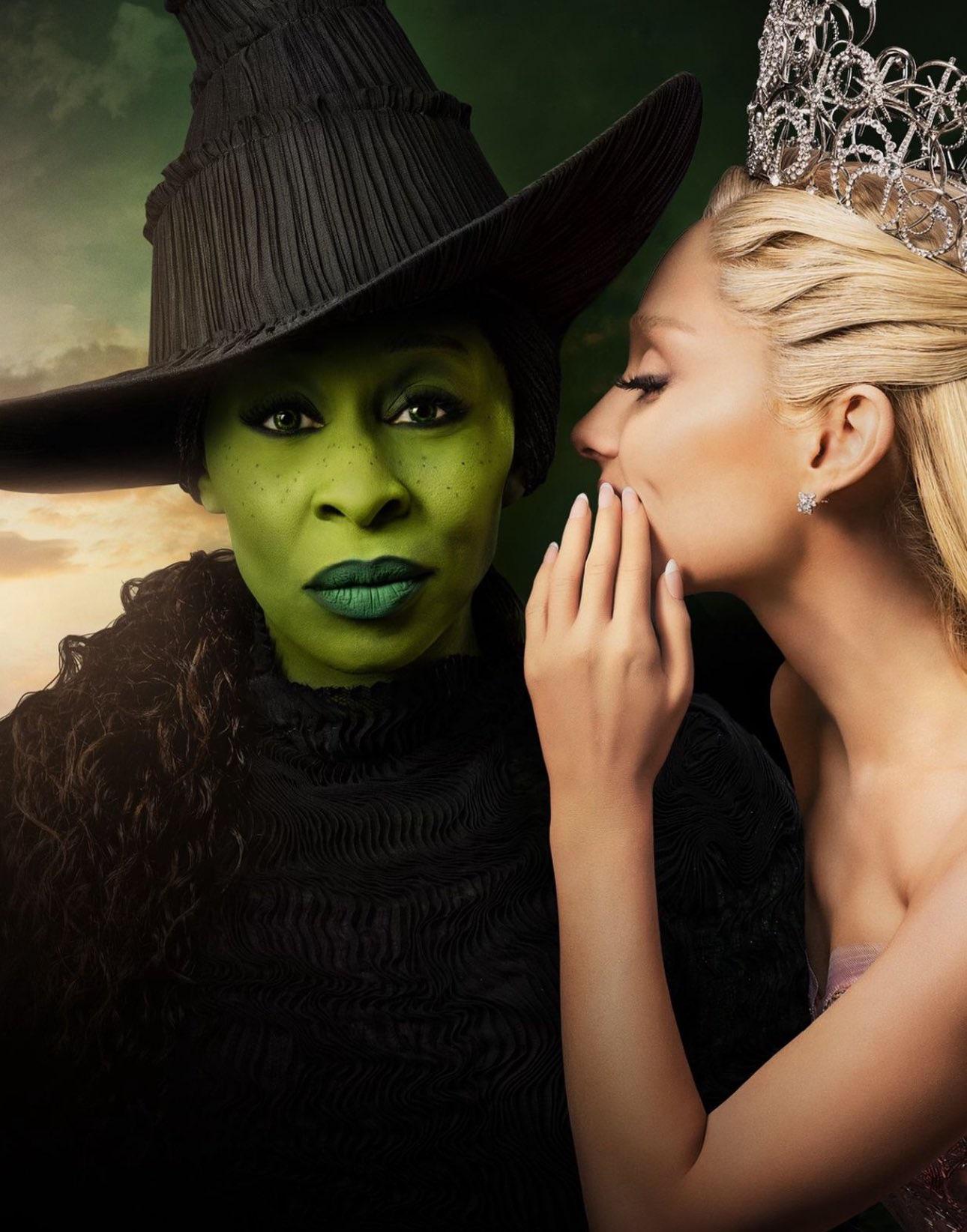
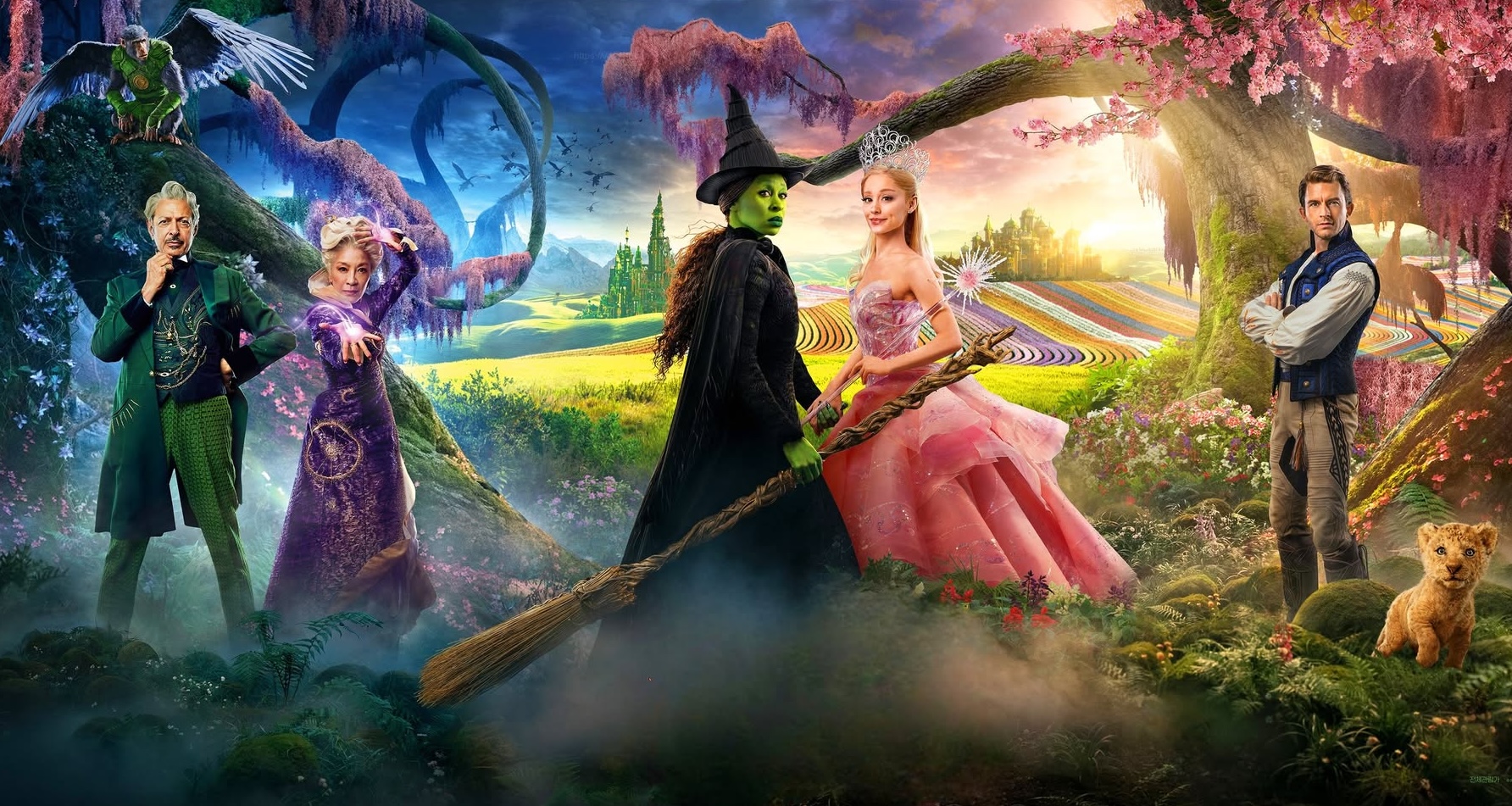
For the most part, though, Wicked is great. For those not in the know, it’s the origins story of the opposing magical forces of good and evil from The Wonderful Wizard of Oz, i.e. The Wicked Witch of the West and Glinda, the Good Witch of the North. In this prequel to L Frank Baum’s novel, Elphaba (Cynthia Erivo) and Galinda (Ariana Grande) meet at boarding school, where they are forced to share a room. Initially, they despise one another: Elphaba is powerful, studious and green, while Galinda is rich, popular and, well… blonde. But opposites attract, and over time they learn to see the good in one another, forging a strong friendship – which even survives the strain of their attraction to the same guy, Fiyero (Jonathan Bailey). When their history professor, a goat called Dr Dillamond (Peter Dinklage), is arrested and forcibly removed from their classroom amid nefarious plans to cage all speaking animals, Elphaba’s sorcery teacher, Madame Morrible (Sandra Yeoh), encourages her to go to the Emerald City, to plead with the Wonderful Wizard (Jeff Goldblum). But all is not as it seems…

Erivo and Grande are perfectly cast as the mis-matched pair, both utterly captivating in their roles. While Erivo provides the emotional depth – Elphaba is a study in suppressed yearning – Grande is the comic relief, all fluffy self-absorption and steely sweetness. It’s a delightful pairing.

Thanks to Alice Brooks’ cinematography, the film looks sumptuous. Oz has been gloriously rendered by designer Nathan Crowley: it’s a little bit steam-punk, a little bit Middle Earth, a truly fantastical land. I love the repeated cog motif, in Shiz academy’s library, on the Oz train and – naturally – in the Emerald City’s Royal Palace. Director Jon M Chu has created a superb stage-screen hybrid, combining established musical theatre-style choreography with a very modern filmic sensibility. LGBTQ+ themes are brought to the fore, with many explicitly queer-coded characters, and lots of deliberate ambiguity, so that we – along with the Ozians involved – are made to ponder where the line is drawn between platonic and sexual attraction, between friendship and love. It works well, emphasising the teenage protagonists’ heightened emotions. No wonder young adults love this story so much.

Judging by tonight’s screening, Wicked: Part One looks certain to be a box office success. I just wish I didn’t have to wait a year for Part Two.

4.1 stars

Susan Singfield

,

In the Heights

18/06/21

Cineworld, Edinburgh

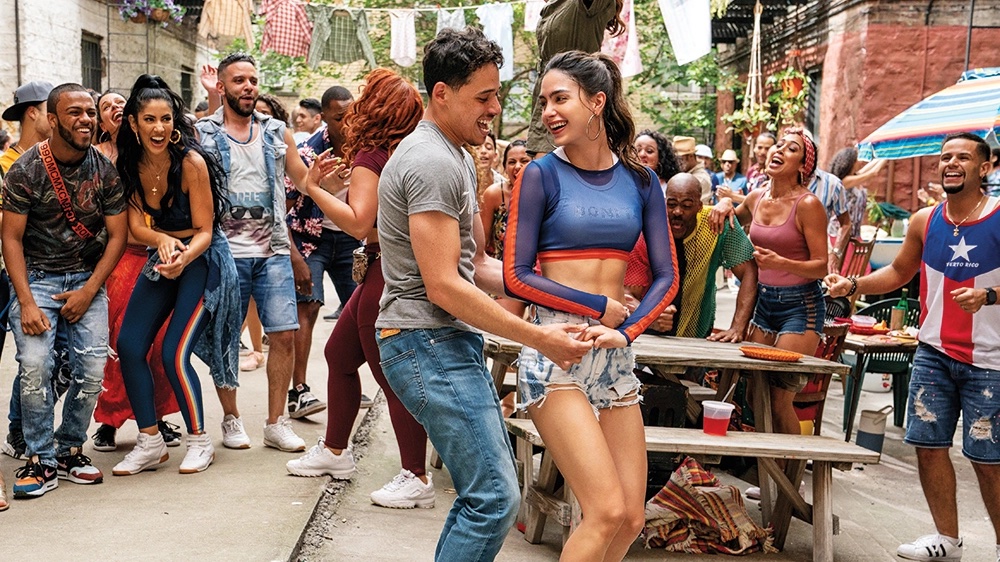
Lin-Manuel Miranda’s award-winning stage musical makes a successful transition to the big screen, with Jon M Chu’s direction really capturing the community spirit at the heart of the piece. Washington Heights is a Manhattan suburb, home to a diverse range of Latin-American people. The film is a raucous celebration of Latinx culture, and – although it touches briefly on issues of poverty, racism and immigration – it’s essentially joyful: a sweet love story; “there’s no place like home.”

Anthony Ramos plays Usnavi, owner of a corner store/bodega, who dreams of returning to his native Dominican Republic to re-open his late father’s beach bar. He’s got a bit of a thing for Vanessa (Melissa Barrera), who works in a nail salon, although she really wants to be a fashion designer. Meanwhile, Nina Rosario (Leslie Grace) has come back home from Stanford University for the summer, and – though the whole-neighbourhood’s in awe of her achievements – she’s decided not to return. The grass isn’t always greener, and she misses belonging. At Stanford, she will always be an outsider.

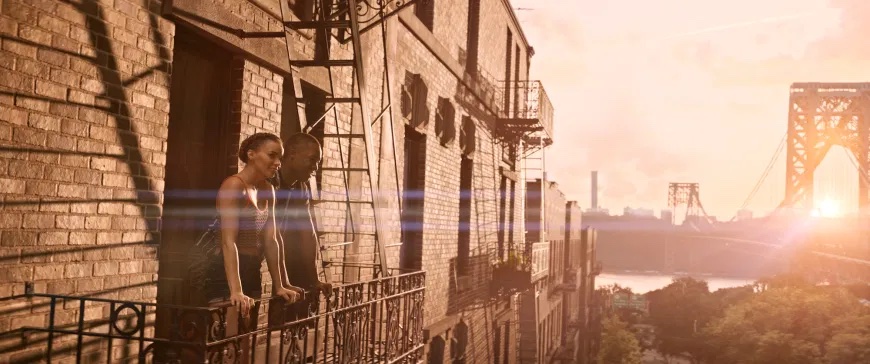
Christopher Scott’s choreography is sublime: it’s vibrant and sexy and sometimes dizzyingly gorgeous. The huge ensemble cast are expertly utilised. There’s a scene on the fire escape that almost literally takes my breath away, and the Busby Berkeley-esque synchronised swimming provides another unexpected delight. The cinematography (by Chu and Alice Brooks) is also spectacular: you can feel the heat rising from every shot, shimmering and crackling, and – during the blackout – it’s genuinely oppressive. The neighbourhood is fully realised, and captured with love.

The film is long; some might say too long. Even though it’s bursting with energy and sparky, likeable characters, it does start to flag at around the eighty-minute mark, and there’s still more than an hour to go. A little tightening wouldn’t go amiss, but – in spite of this – watching In the Heights is, on the whole, a fun way to spend an afternoon.

Although I’m captivated, I sadly find myself at odds with the film’s underlying message, which seems to be an exhortation to appreciate what you have and stay put. I love the community pride that is feted so exuberantly here, but I’m also perturbed by the ‘don’t try anything new’ connotation, which literally nobody gets to challenge. It feels right for Usnavi to realise that home is where the heart is, that he already has exactly what he needs, but the same doesn’t ring true for Vanessa – or Nina. I wish there was more nuance here.

I’d probably like a bit more grit too, if I’m honest. The racism Nina encounters at Stanford is delivered almost as an aside; the plight of DREAMers only briefly touched upon. These are urgent, interesting topics, and there’s space here, I think, for a little more depth, more heft. As it is, In the Heights is lovely, but ephemeral. I can’t see it lingering in my mind, or having a lasting impact.

Still, if what you’re seeking is escapism, this movie more than ticks the box.

3.9 stars

Susan Singfield

Crazy Rich Asians

19/09/18

I’m conflicted about this movie before I even enter the cinema.

On the one hand, I’ve been reading a lot about representation, and how stupidly rare it is for mainstream American movies to feature Asian characters in lead roles, despite Asian-Americans making up a sizeable minority (5.6%) of the population there. So Crazy Rich Asians, with its Asian cast, writer and director, is a welcome reminder that the US is a diverse place, and that there are different cultural perspectives from those we’re offered time and time again.

On the other hand, the trailer has alarmed me. It seems to be wealth porn, revelling in images of lavish houses and designer clothes, first class this and diamond that – not so much aspirational as simple showing off. I’m alarmed rather than impressed by the excesses showcased here.

True, the film makes some attempt to comment on the over-abundance of everything, to dismiss as shallow the trappings of the 1%. But it’s never very convincing in its condemnation, luxuriating as it does in expensive frippery.

Based on Kevin Kwam’s novel of the same name and directed by Jon M Chu, Crazy Rich Asians is a romantic comedy. Rachel Chu (Constance Wu) is an economics professor at NYU. When her boyfriend, Nick (Henry Golding), invites her to Singapore – to attend his best friend’s wedding and meet his family – she’s excited: she’s never travelled before, and she’s keen to see the world beyond America. What she hasn’t realised, however, is that Nick is super-rich: his family are property magnates, the wealthiest in Singapore. And they have very definite ideas about the kind of girl that Nick should marry: American is bad enough, but working-class and fatherless? That’s too far beyond the pale.

Characterisation is this movie’s major strength: the actors are all accomplished and the roles are distinct and largely believable. Wu and Golding make an appealing central pair, and there are some delightful supporting characters, notably Rachel’s college friend, Peik Lin Got (played with relish by the charismatic Awkwafina), and Nick’s fashion-forward cousin, Oliver T’sien (Nico Santos).

But the storyline is clichéd and – dare I say it? – dull. It’s also very American-centric, despite its Asian credentials. The underlying message seems to be that the American way  (the pursuit of individual happiness, following individual passions) is right, and that the Singaporean ideal (at least as espoused in this movie) – of destiny, of family ties and responsibility – is wrong. Rachel has nothing to learn from the people of Singapore, but they have much to learn from her. And this makes me quite uncomfortable.

I’m also bored by all the depictions of excess wealth, and irritated that this movie tries to have its cake and eat it, mocking the vulgarity of Charlie (Harry Shum Jr)’s stag do, whilst revelling in his ludicrously OTT wedding. I’m not sure what I’m supposed to make of Nick’s cousin, Astrid (Gemma Chan), whose defining moment seems to be the ’empowering’ realisation that she doesn’t have to hide her million dollar earrings from her husband, nor of the final, celebratory party – complete with rooftop synchronised swimmers, because what’s a party without them? – which seems to contradict entirely the sentiments preceding it.

All in all, I’m frustrated by Crazy Rich Asians. I don’t know how it can appeal to anyone who’s even slightly socialist. In its favour, it has showcased a plethora of Asian actors, and I hope that we’ll see them again – in better films than this.

2.7 stars

Susan Singfield