
06/02/22
Netflix
History has not been kind to Neville Chamberlain. He’s generally depicted as the naïve fool who, despite good intentions, utterly failed to put the stops on Adolf Hitler. It’s interesting to note that this Netflix film, based on a novel by Robert Harris, chooses to view his actions in the lead up to World War 2 in a more sympathetic light. Could it be that the man actually knew what he was doing?
This is a handsomely mounted production that struggles to create any real sense of suspense, because… well, unlike say Quentin Tarantino, director Christian Schwochow decides to stick closer to the truth. Plot spoiler: Hitler does not get mown down in a hail of bullets by the film’s heroes a la Inglourious Basterds. Just so you know.
We first meet Hugh Legat (George McKay) and his friend, Paul Von Hartmann (Jannis Niewöhner), in 1932, when they are celebrating their graduation from Oxford, along with Paul’s Jewish girlfriend, Lena (Liv Lisa Fries). Paul is singing the praises of a certain Adolf H, who – he genuinely believes – represents the best future for his homeland. Hugh is understandably horrified. Shortly thereafter, Hugh visits Paul in Munich, where the latter seems even more bullish about his adulation for the Führer – and the two friends fall out with each other.
The action moves on six years, and Paul’s views have changed for the better. He’s realised that his earlier beliefs were short-sighted to say the very least and is now involved in a clandestine plot to bring Hitler down before he can do any more damage. When he discovers that his old pal, Hugh, has become private secretary to Neville Chamberlain (Jeremy Irons), Paul spots an opportunity to get to the British PM, in order to urge him not to sign the upcoming Munich agreement.
Hugh, somewhat reluctantly, finds himself once again on his way to Germany.
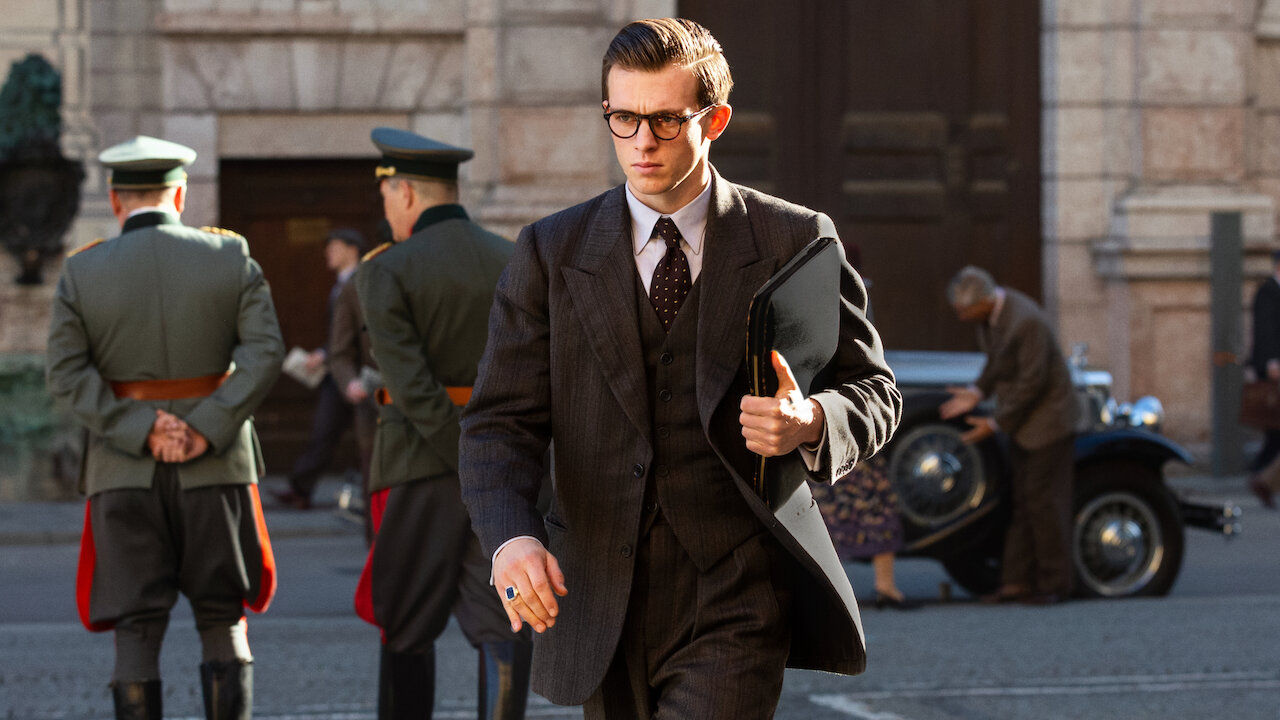
McKay, having spent a lot of time running like the clappers to avoid impending carnage in 1917, finds himself doing something similar here, only this time, he’s attempting to head off an entire World War. (So no pressure there.) He’s very engaging as a young man trying to do his level best, whilst struggling with tantrums from his wife, Pamela (Jessica Brown Findlay), who seems to take it personally that her husband thinks preventing a World War is more important than ensuring he’s home for dinner every evening.
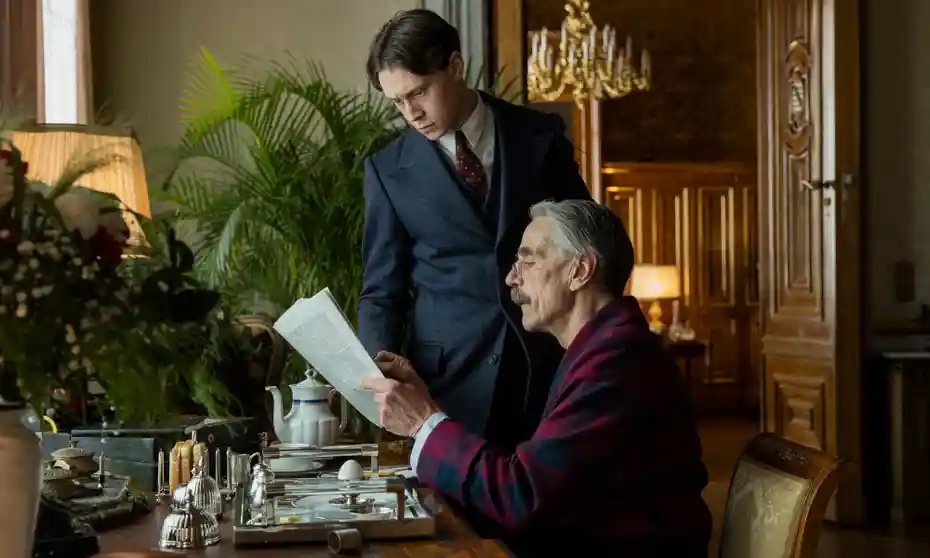
Niewöhner has a smouldering James Dean-ish quality that augers well for his future, while Irons is typically assured in his depiction of Chamberlain, giving us a bumbling, frightfully British sort of chap, who is obsessed with making recordings for the good old BBC and won’t tolerate anybody speaking out of turn. Ulrich Matthes, meanwhile, gives us one of the most terrifying screen Hitlers I can remember.
Matters become more complicated when Paul discovers that a childhood acquaintance, Franz Sauer (August Diehl), is now a leading officer in the SS and that the two of them are going to be spending a lot of time together. What’s more, Sauer is also clearly suspicious about his former schoolfriend’s intentions and has an unfortunate habit of turning up in all the wrong places.
Munich: the Edge of War offers an entertaining couple of hours, but the protagonists never seem to be really imperilled. While this may work in the source novel, it prevents the film from ever going into the kind of overdrive its final stretches require.
3.6 stars
Philip Caveney


 Bouquets & Brickbats