Jesse Plemons

Bugonia

02/11/25

Cineworld, Edinburgh

Yorgos Lanthimos must qualify as one of the hardest-working directors in the business – and one of the most consistently brilliant. Since his breakout with The Lobster in 2015, he’s unleashed a whole string of knockout films and, as I’ve observed elsewhere, he has the gift of turning the wildest, most experimental ideas into palpable hits at the box office. If, in its opening scenes, Bugonia seems like his most straightforward story yet, don’t be fooled. Eyebrow-raising revelations are waiting an hour or so further down the line.

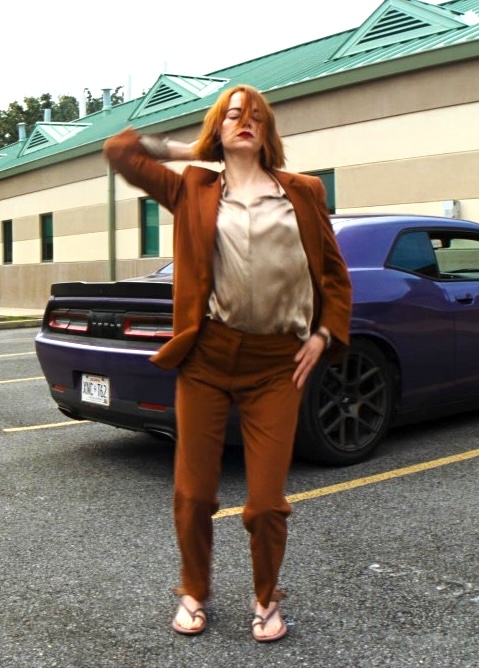
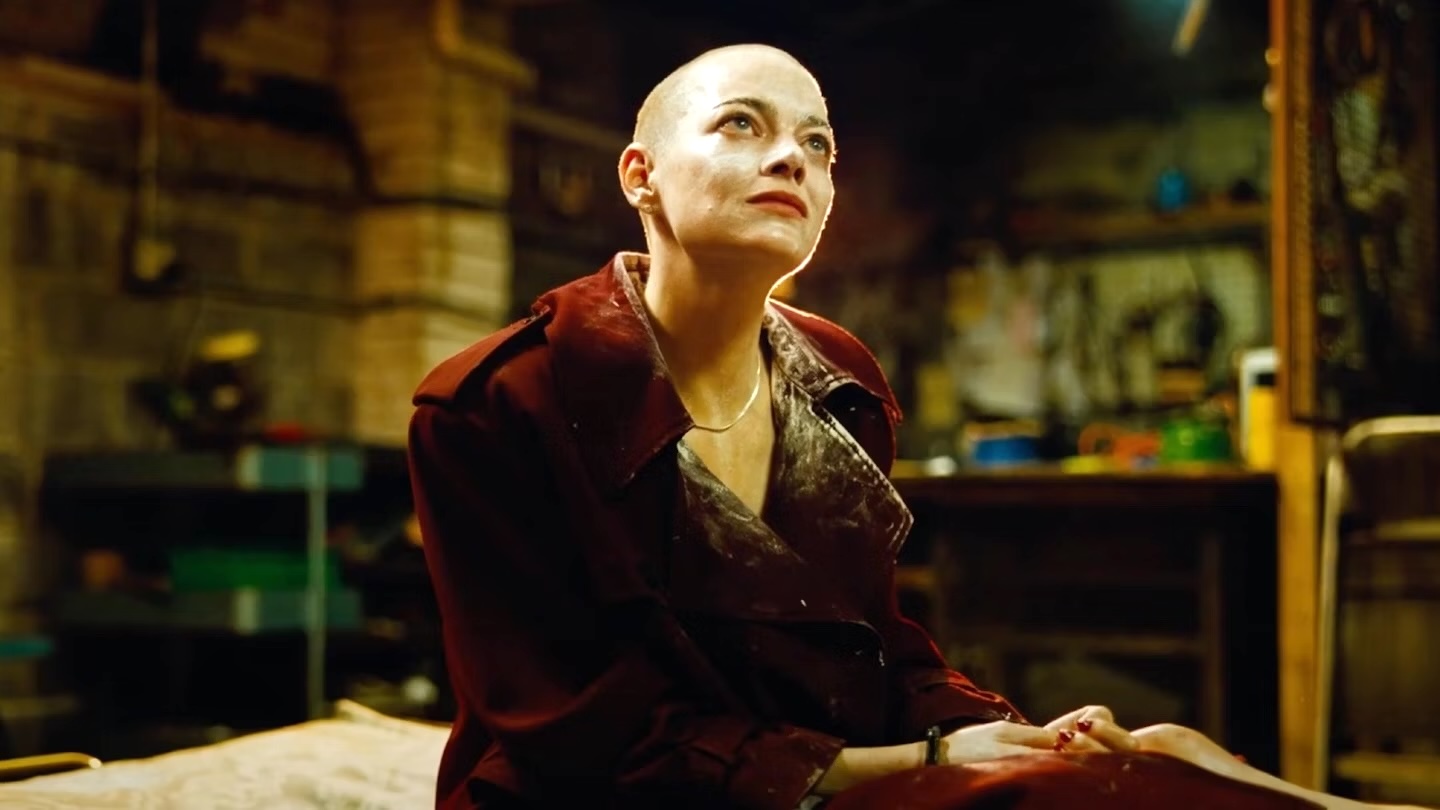
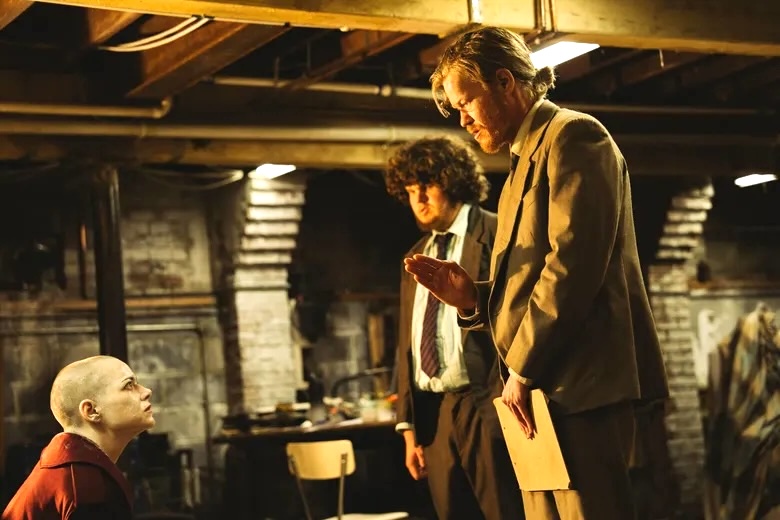
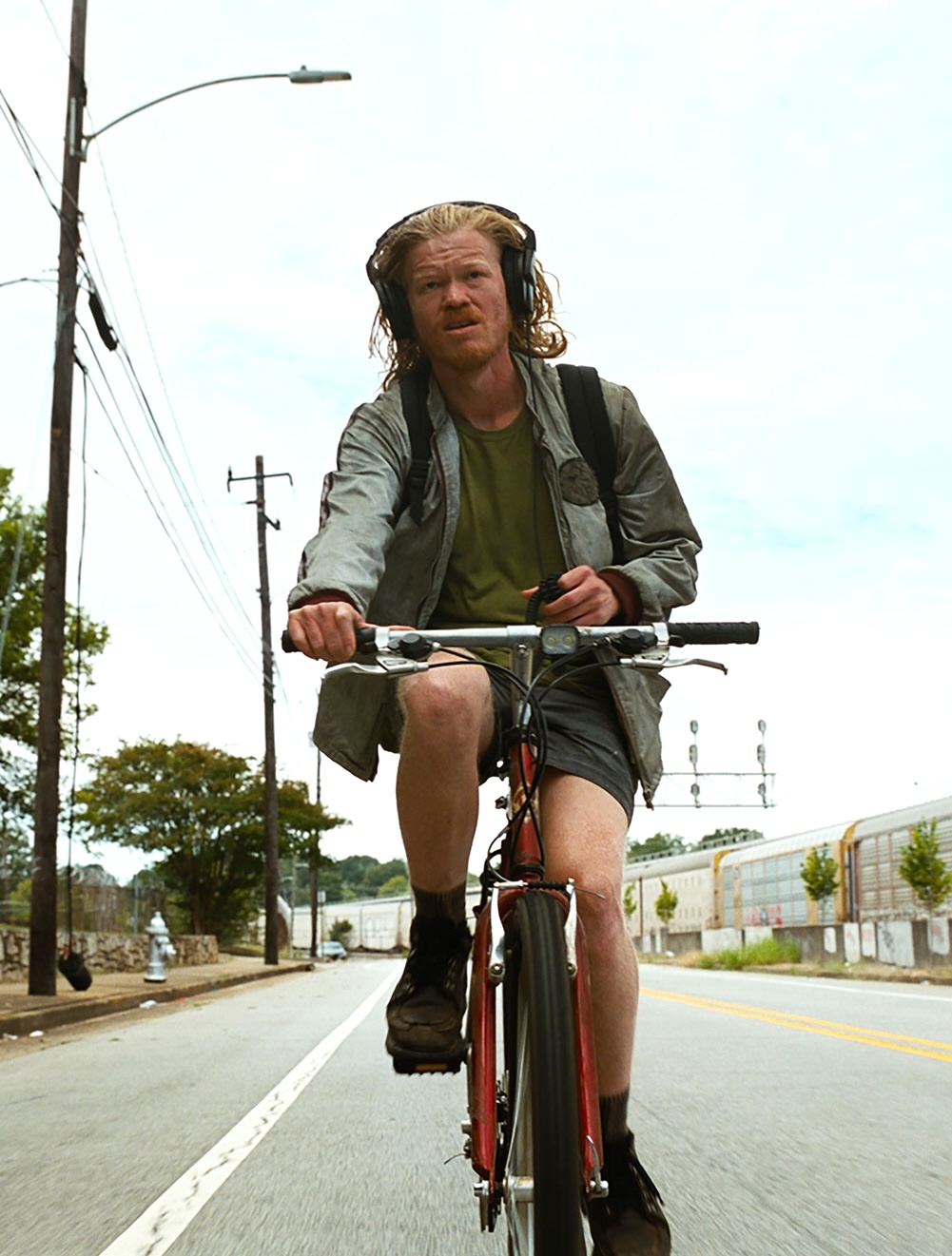
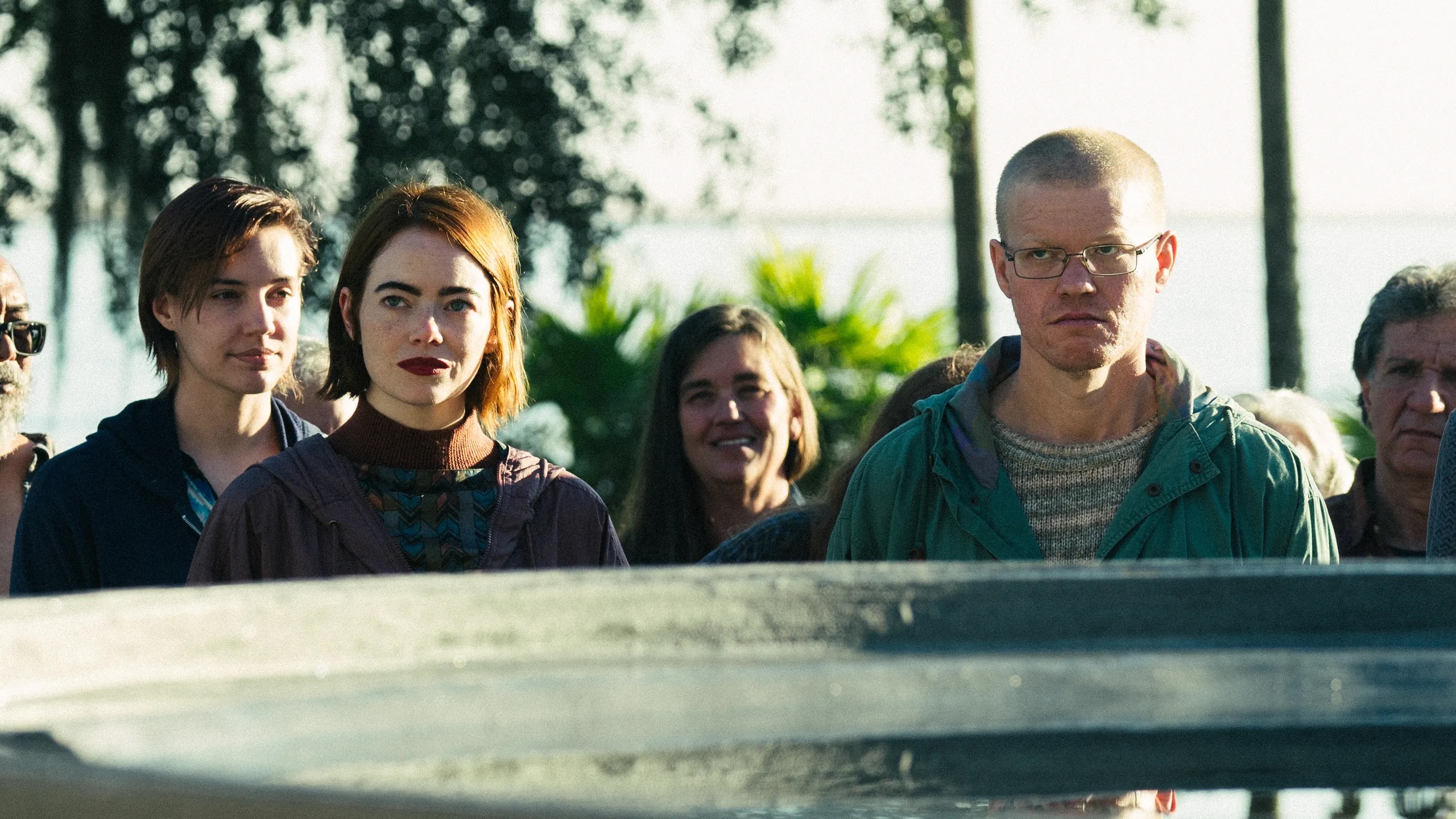
Michelle Fuller (Emma Stone) is the CEO of pharmaceutical megacorporation, Auxolith, located in an unspecified area of the USA – though surprisingly, much of the film was actually shot in and around High Wycombe. As she goes about her business, she’s blissfully unaware that her movements are being studied by Teddy Gantz (Jesse Plemons), a lowly worker at her company’s packaging warehouse.

In his spare time, Teddy studies internet conspiracies and has come to the conclusion that Michelle is actually an ‘Andromedan’ – an alien creature responsible for many of the problems currently facing humanity. She’s also indirectly responsible for the plight of his mother, Sandy (Alicia Silverstone), who is on life support after being used as a test case for one of Auxolith’s experimental drug projects. Worst of all, in Teddy’s mind, is the fact that Michelle is also directly responsible for the decline of the honeybee, which is key to the world’s survival.

Assisted by his vulnerable cousin, Don (Aiden Delbis), Teddy kidnaps Michelle and the two men take her to their ramshackle home in the middle of nowhere. They take the precaution of shaving her head and covering her with antihistamine cream – to prevent her from contacting her ‘mothership’. Teddy wants to use Michelle as a bargaining tool with the Andromedan Emperor, so he can negotiate freedom for the human race. But first, Michelle must be interrogated…

It would be a crime to reveal any more about the plot but, once again, I find myself marvelling at Lanthimos’s ability to manipulate me as a viewer, leading me first in one direction, then in an entirely different one before dashing all my assumptions. There are moments here where I have to restrain myself from gasping out loud. Inspired by Save the Green Planet by South Korean filmmaker, Jang Joon-hwan (which I haven’t seen), Bugonia has been adapted by Will Tracey and, in its latter sections, incorporates elements of a high-stakes thriller as Michelle is obliged to use all her considerable skills to stay alive.

Both Stone and Plemons are utterly captivating in the central roles and it’s easy to see why they’ve become members of Lanthimos’s repertory theatre – while there’s something utterly adorable about Delbis as the hapless Don, unable to challenge the commands given to him by Teddy, even when it’s evident that they disgust and confuse him.

But the film’s true triumph is only revealed in a final extended sequence, where Lanthimos brings all the different strands of the story together to create a shattering, thought-provoking conclusion. The director has announced that he’s ‘taking a rest’ after this and, following a run that includes The Favourite, The Killing of a Sacred Deer, Poor Things and Kinds of Kindness, I’d say he’s definitely earned one.

5 stars

Philip Caveney
Kinds of Kindness

28/06/24

Cineworld, Edinburgh

You have to hand it to Greek director Yorgos Lanthimos – he doesn’t let the grass grow. His sublime adaptation of Poor Things only aired in January, bringing with it a well-deserved Oscar for Emma Stone – and already, here’s his next creation, a more stripped-back, contemporary tale: a kind of portmanteau featuring three different stories with the same actors playing different roles.

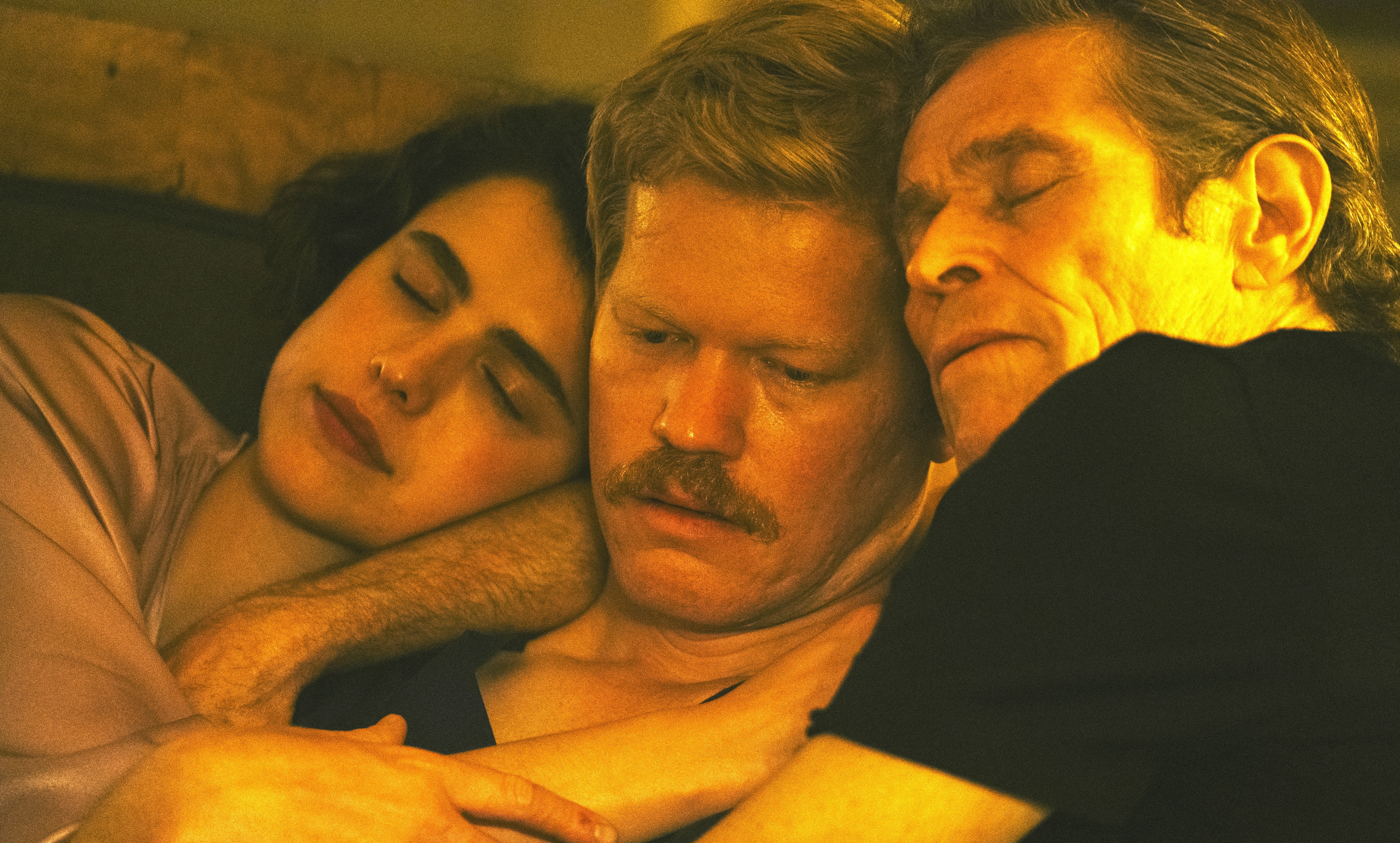
Kinds of Kindness, co-written by Lanthimos with long-time collaborator Efthiminus Filippou, begins with The Death of RMF. This is the story of Robert (Jesse Plemons), a submissive office worker who is compelled by his ruthless boss, Raymond (Willem Dafoe), to carry out a series of humiliating duties. He finally baulks at committing an extraordinary act of violence and is consequently cast out of Raymond’s orbit. Seeking solace, he attempts to forge a relationship with chance encounter, Rita (Emma Stone), but soon makes an unsettling discovery…

In the second tale, RMF is Flying, Plemons plays cop Daniel, whose wife, Liz (Stone), is missing, shipwrecked on a desert island. When she finally returns, Daniel starts to notice changes in her character and, in order to test her, he asks her to to prove her love for him.

In the concluding story RMF Eats a Sandwich, Plemons and Stone play Emily and Andrew, disciples in a weird cult run by Omi (Dafoe again). The two of them have been assigned a difficult task – to locate a mysterious woman who has the power to re-animate the now dead RMF (Yorgos Stefanakos). Could veterinarian Ruth (Margaret Qualley) be the woman to accomplish the impossible?

If this all sounds incomprehensible on paper, fear not, because Lanthimos takes enough time to delineate every character arc with such skill that there is never any confusion about what’s happening onscreen, even when it’s totally mind boggling. These stories are allegories focusing on three of life’s greatest preoccupations: work, marriage and religion – and, as the bizarre events unfold, audiences are led fearlessly through a series of interactions that alternate between harsh reality and haunting dreamscapes.

If I claimed I understood everything that happens here I’d be lying. I only know that this is exciting, unpredictable filmmaking, and – as I was with Poor Things – I’m fascinated to see large numbers of people turning out to see what Lanthimos has come up with. I can think of few other directors who have this ability to push boundaries and simultaneously satisfy the box office. I’m already excited to see what he will come up with next.

While this may not be the exquisite slice of cinematic perfection that was its predecessor, it’s nonetheless the work of a gifted director at the top of his game. Don’t miss it.

4.6 stars

Philip Caveney

Civil War

14/04/24

Cineworld, Edinburgh

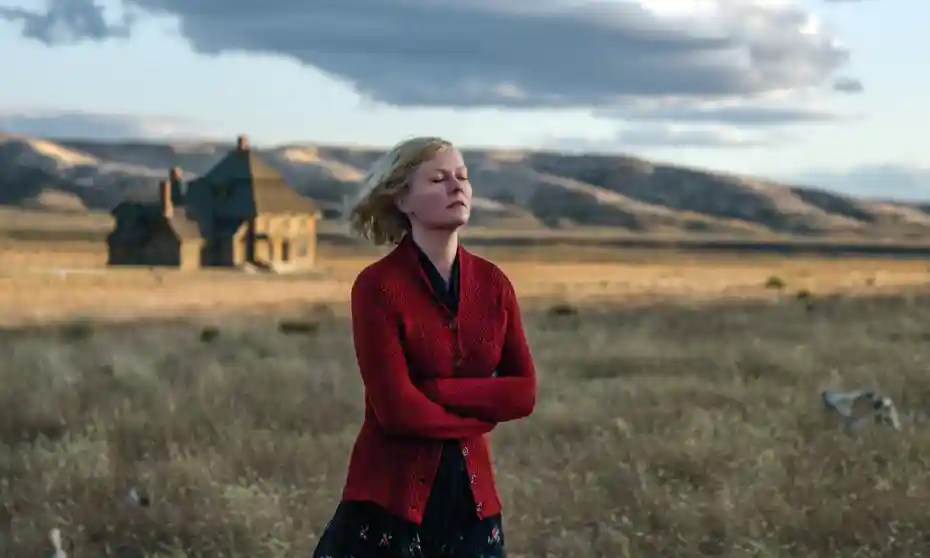
With the situation in the Middle East rapidly approaching flashpoint, it seems a particularly propitious time for Alex Garland’s Civil War to open at UK cinemas. If it was devised as a kind of warning for the near future, then it now seems doubly unnerving. Set in an unspecified year, the film opens with the president of the United States (a suitably Trumpian Nick Offerman) rehearsing a speech telling his followers that all is well and that the seditionary forces opposing him will soon be vanquished. But in reality, the civil war which that has been raging for some time is now approaching its inevitable conclusion as the aforementioned insurrectionists converge on Washington DC. And they haven’t come to shake the president’s hand.

Renowned photojournalist Lee Smith (Kirsten Dunst) and her colleague Joel (Wagner Moura) are both determined to be at the capital in time to witness what happens, and – more importantly – to capture it on film. But getting there will involve a long and hazardous trip across the war-torn country. The night before they leave they pick up a couple of fellow travellers: veteran newshound Sammy (Stephen McKinley Henderson), more cautious than the other two, but still determined to be in at the kill – and young novice Jessie (Cailee Spaeny), who actually idolises Lee and wants to – quite literally – follow in her footsteps…

Civil War has been criticised by some for failing to pin down exactly who is attacking whom in the various conflicts the foursome encounter – but I think that’s entirely the point. Garland (who also wrote the screenplay) wants to show the confusion of warfare, the fact that all kinds of people are pitching into this carnage with manifestos of their own. Against this chaotic background, Garland is much more interested in the photojournalists themselves, the callousness they must possess in order to observe atrocities without ever pitching in to help, the utter determination that propels them to risk their own lives in order to get that one all-important image and document history as it unfolds.

The background in which these scenarios play out is convincingly portrayed. This is production company A24’s most expensive project yet and it shows, the final conflict in the capital rendered with absolute veracity. There’s a powerful sense of unease that builds steadily throughout the film and I’ve rarely seen urban warfare depicted with such unflinching realism and attention to detail. Watch out for a powerful cameo from Jesse Plemons as a merciless soldier in a particularly dread-charged sequence and marvel too at the clever device that repeatedly halts cinematographer Rob Hardy’s adrenaline-charged action sequences to pick out one black and white image.

I’ve occasionally had issues with some of Garland’s endings (Men in particular, where he seemed to be pounding home his final message with a sledgehammer) but this keeps me gripped right to the final frame. Civil War’s conclusion may be too cynical for some, but I feel it’s absolutely spot on. Furthermore, I’d go so far as to suggest that this might be Alex Garland’s most fully-realised film so far.

But be warned. You’ll most likely leave the cinema feeling pretty grim about the future.

4.6 stars

Philip Caveney

Killers of the Flower Moon

22/10/23

Cineworld, Edinburgh

A quick glance at IMDB informs me that I first watched a Martin Scorcese movie way back in 1976 – Taxi Driver – and that I have seen pretty much every film he’s directed since. So naturally I am eager to see Killers of the Flower Moon, though somewhat apprehensive at its prodigious running time of three hours and twenty-six minutes. 

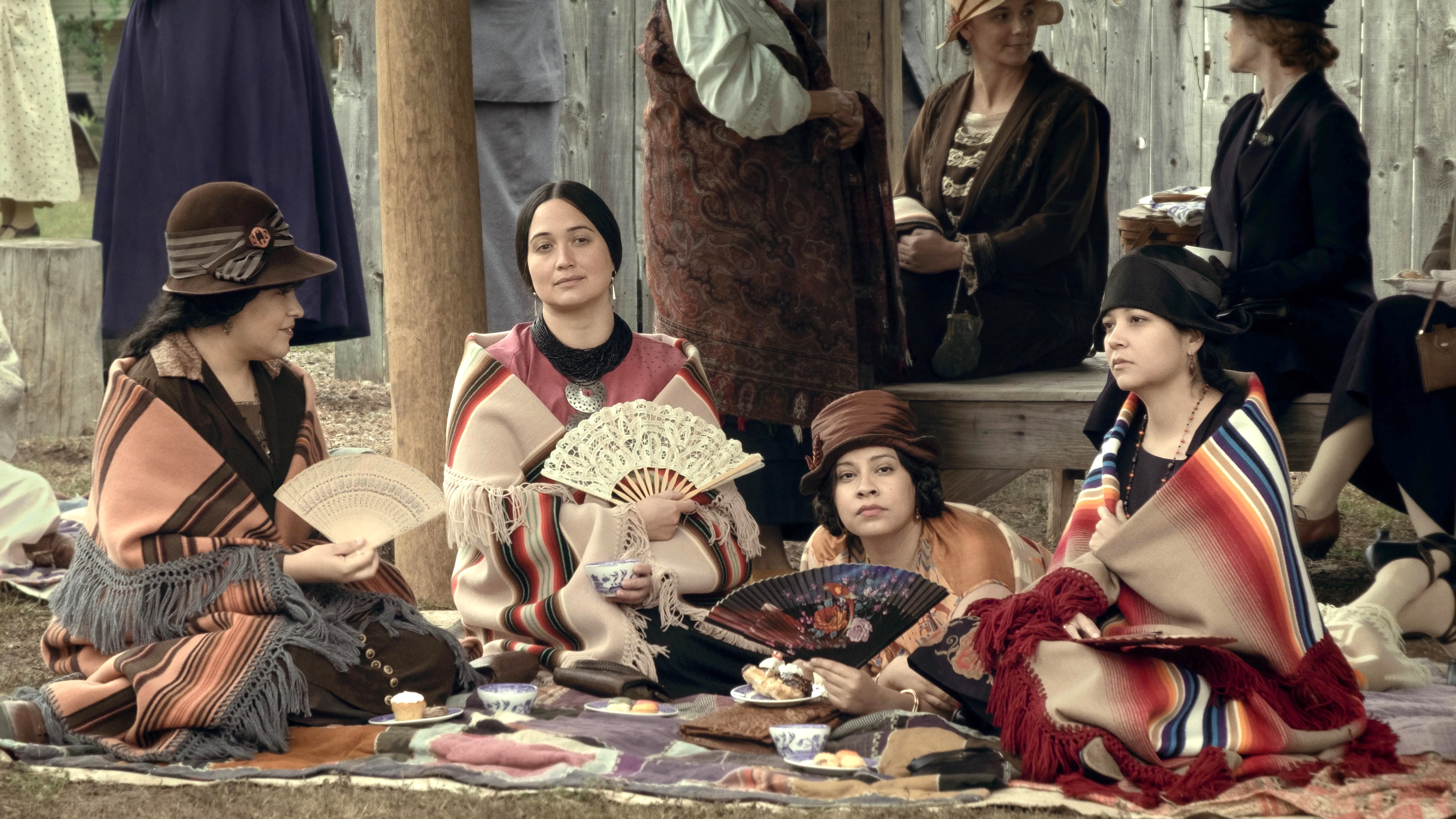
Set in the early 1920s, it tells the story of the Osage tribe, native Americans who, after being shunted unceremoniously from their Kansas homeland to a reservation in the wilds of Oklahoma, subsequently discover that the land they have been allocated contains vast quantities of crude oil – and that they are now the richest people per capita in the USA.

Of course, this being America, it’s complicated. For one thing, the Osage can’t just be allowed to own their own money. The very idea! In most cases, they must have a white guarantor to enable them to have access to it. And naturally, there are plenty of unscrupulous people in the vicinity, who are eager to put their hands on that wealth – even if it means arranging for the regular liquidation of certain members of the tribe. Suspicious deaths among the Osage are all too common, and such crimes are rarely even investigated.

Chief among the white opportunists is rancher ‘King’ William Hale (Robert De Niro), who purports to be the tribe’s greatest friend and has even learned to speak their language, but who secretly wheels and deals to ensure that large amounts of Osage money keeps flowing in his general direction. When his nephew, First World War veteran Ernest (Leonardo DiCaprio), arrives looking to make a new start, Hale ensures that he crosses the path of Osage woman, Mollie (Lily Gladstone), telling Ernest that this will be an opportunity for both of them to make a killing…

There’s no doubt that this true story, based on the book by David Gran, makes for compelling viewing – and the film’s two-hundred-million dollar budget ensures that Scorcese’s evocation of the era is beautifully realised. Many of the great director’s touches are in evidence here: the matter-of-fact quality of the murders; the chilling depictions of everyday cruelty and avarice; and, as ever, there’s Scorcese’s uncanny ability to choose the perfect music to accompany any given scene.

There are also three extraordinary performances to savour. Di Caprio as the sullen, selfish and frankly not-very-bright Ernest may be a career-best display of acting. He plays the role as a kind of arrested adolescent with a constantly glum expression, as though he’s being admonished for something he’s done (or maybe hasn’t done). Old hand De Niro is horribly oleaginous as Hale, a man so utterly devious, it’s a wonder he can manage to walk in a straight line. And Gladstone is terrific as Mollie, managing to convey so much with a withering look, a shrug, a silence. Her calm presence is somehow this turbulent story’s anchor.

The film’s first and concluding thirds, the set-up and pay-off – when FBI man Tom White (Jesse Plemons) arrives to initiate a long-awaited investigation –  easily hold my attention, but that middle section feels decidedly baggy and and the constant stream of viewers nipping out for a judicious toilet break is really distracting. It prompts the inevitable question: does the film need to be so long? In my opinion, no. Trimmed back by an hour, this could have been even more satisfying. I can’t help but think wistfully back to the likes of Lawrence of Arabia and Doctor Zhivago, epic films that always included an intermission around the halfway mark for this very reason.

That said, I love Killer’s ironic coda, which presents an account of what we have just seen as a soapy ‘true crime’ vintage radio recording, and which also features a cameo from Mr Scorcese himself. But the film fails to mention the fact (which I read about elsewhere) that the heinous conditions that the Osage tribe suffers in this film persist to this day. They are still being stiffed by the oil companies, who have brazenly commandeered the ‘black gold’ that continues to bubble up from beneath their reservation. And their demands for justice remain unheard.

Land of the free? Don’t make me laugh.

4.2 stars

Philip Caveney

The Power of the Dog

04/11/21

Netflix

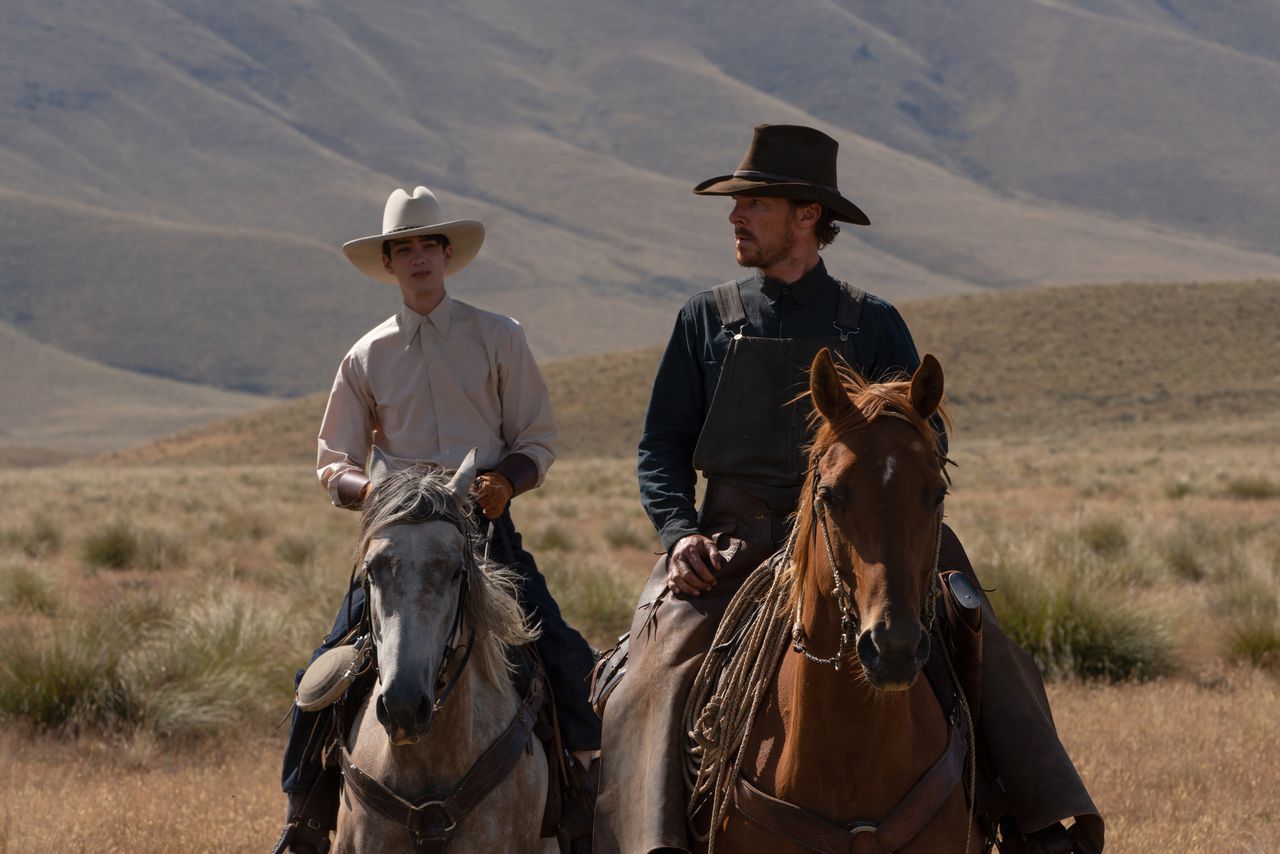
It’s been twelve years since Jane Campion directed a movie and now here’s The Power of the Dog, a ‘western,’ filmed in her native New Zealand, masquerading as Montana in 1925. It’s an interesting period in which to set a story. On the one hand we have cattle drives, carrying on pretty much as they have since the mid 1800s and, on the other, the streets are full of Ford automobiles, the new era clashing headlong with the old. Ari Wegner’s majestic cinematography recalls the best of John Ford, the machinations of mankind constantly in battle with the awesome wonders of the landscape.

It’s in this world that Phil Burbank (Benedict Cumberbatch) and his brother, George (Jesse Plemons), struggle to perpetuate the traditions of their family business, but they are dinosaurs, doomed to yield to the changing times. This is the first film in which writer/director Campion has chosen to feature a male lead and Phil is, perhaps inevitably, the consummate toxic male: cantankerous, vindictive and quick to demolish anybody who offers an alternative to his established way of life. Phil refers to his brother as ‘Fatso’ – to his face – and is not slow to heap disdain on anyone who stands in his path.

When George unexpectedly marries widow Rose Gordon (Kirsten Dunst), Phil is brutally critical of her, particularly when George encourages her to play the piano, something that she protests she’s actually not very good at. (She’s right, she’s not.) To rub salt into the wounds, Phil is an accomplished banjo player.

Rose has a son, Peter (Kodi Smit-McPhee), who has a predilection for making paper flowers and who is quietly studying to be a surgeon. Phil initially takes every opportunity to belittle him, encouraging the other ranch hands to mock him, because of his supposedly effeminate mannerisms.

But Phil has a secret. He is openly in thrall to the late cowboy Bronco Henry, the man who taught him to ride a horse, a man who he still keeps a shrine to in the stables. But as the story progresses, it’s clear that there was something more between the two of them, something that Phil hides from the eyes of the world. When Phil appears to soften and takes Peter under his wing, the scene is set for a psychological drama with a conclusion that you probably won’t see coming. I certainly don’t. It’s only after the credits have rolled that I’m able to piece the clues together.

Cumberbatch went ‘method’ for this and he inhabits the sweary, sweaty, alpha-male world of Phil Burbank with absolute authority. You’ll almost certainly despise him, which is, I think, Campion’s aim. Smitt-McPhee creates an enigmatic persona as Peter, a boy who keeps his cards close to his chest.

It’s perhaps unfortunate that Dunst’s character feels somewhat overshadowed in this male-dominated world, a woman who will allow herself to be driven to alcoholism rather than stand up for herself. What’s more, Thomasin McKenzie, a rising star after Last Night in Soho, has a thankless role as a housemaid with hardly a line of dialogue. I guess that’s simply a reflection of the era.

Plemons, as the monosyllabic George, is nicely drawn, though he’s mostly absent from the film’s second half and I miss the silent confrontation between the two brothers, where I think the story’s true power lies. Jonny Greenwood – who seems to be popping up all over the place at the moment – submits one of his quirky soundtracks.

Once again, Netflix has backed a winner. The Power of the Dog is a handsome film, expertly created and a genuine pleasure to watch. Cumberbatch has been hotly tipped for an Oscar and it won’t be a huge surprise if it comes to fruition.

4.2 stars

Philip Caveney

Antlers

01/11/21

Cineworld, Edinburgh

To describe Antlers as ‘dark’ would be something of an understatement.

The tone of this powerful little eco-horror is jet black with a side order of obsidian. Directed by Scott Cooper and co-produced by Guillermo del Toro, it’s a bleak tale, an allegory that carries its twin themes – the desecration of nature and the destructive power of poverty – in plain view. The story is by no means subtle and it doesn’t make for comfortable viewing – but to be fair, that’s the last thing it’s trying to be.

In an abandoned coal mine, somewhere in the wilds of Oregon, Frank Weaver (Scott Haze) is running a covert meth operation. His home town is broken beyond repair, the nearby mountains plundered of their ‘black gold,’ and now he’s getting by the only way he knows how. But his youngest son, Aiden (Sawyer Jones), has an unfortunate habit of sticking his nose into things – and, when Frank and an employee encounter something supernatural down in the darkness, Aiden inevitably goes to investigate.

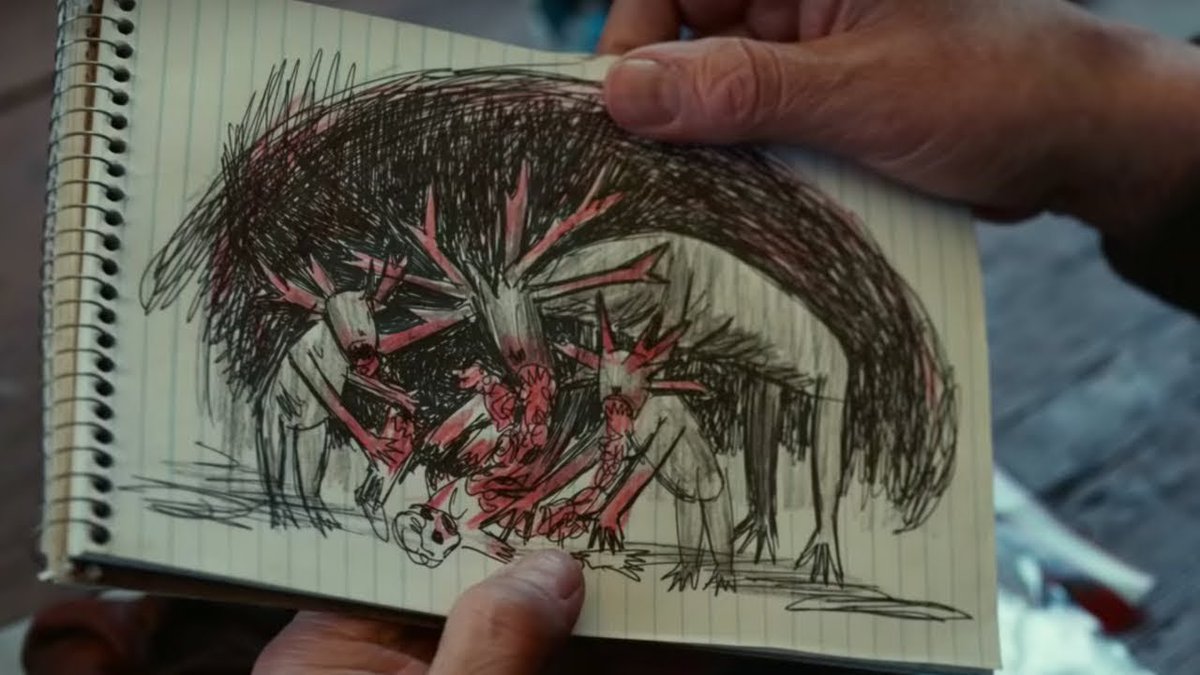
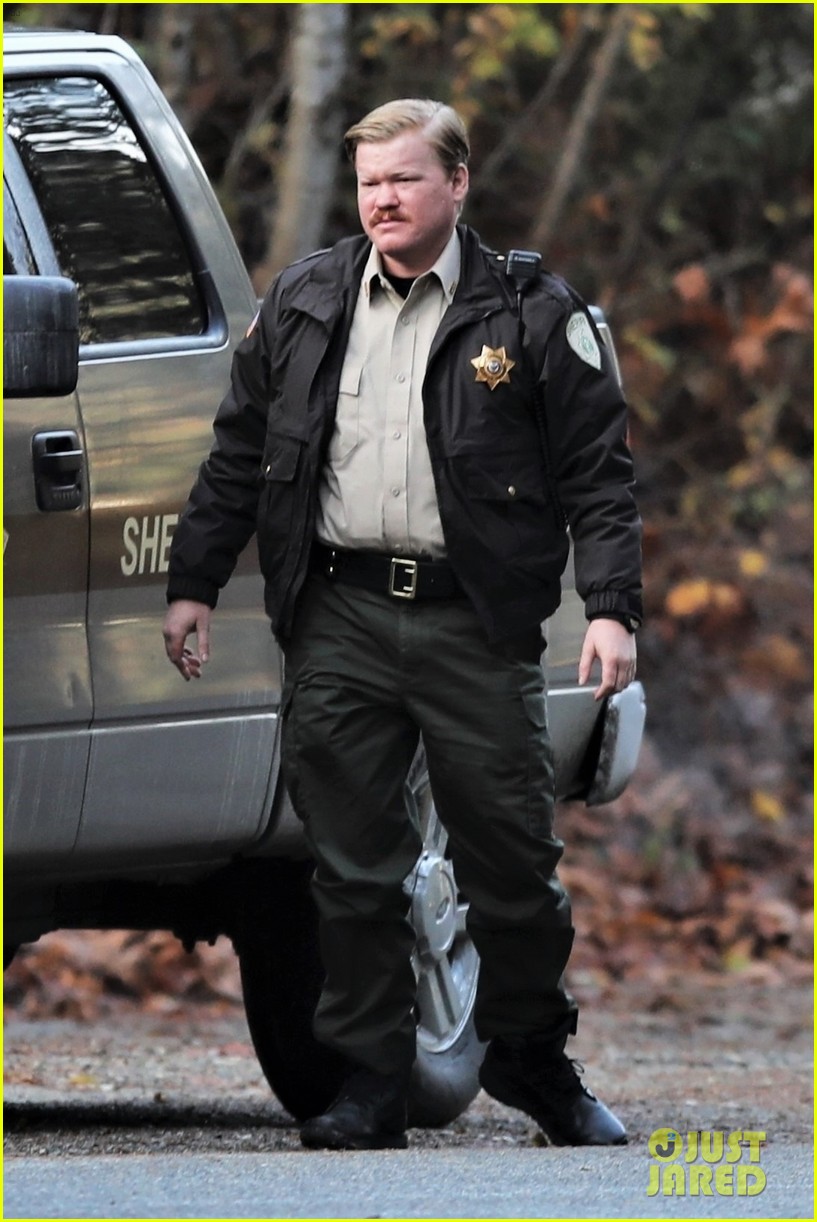
Some time later, high school teacher Julia Meadows (Keri Russell) is struggling to keep her life together. She’s failing to bond with the kids in her classes, she can’t seem to visit the local liquor store without casting yearning glances at the bottles of spirits – and she’s troubled by horrors from her childhood. She is currently living with her brother, the town sheriff, Paul (Jesse Plemons), and they share a past that they’d clearly rather forget. Perhaps that’s why Julia is so drawn to the plight of Lucas Weaver (Jeremy T. Thomas), who sits silently at his school desk, drawing a series of very disturbing pictures. But what has happened to his father and his younger brother? And what exactly is he keeping locked up in the attic of the family home?

It would be too much of a spoiler to tell you more about the story. Suffice to say that the creature that the Weavers have unwittingly unleashed is parasitic in nature and has a habit of vacating its hosts in a very messy manner. But while the story goes to some fantastic places, the grubby reality of the setting keeps everything anchored. The squalid, dying town is a realistic place and its inhabitants are believable enough to encourage us to follow them deep into the realms of the unreal.

Those who flinch from body horror should be warned there are visceral scenes here. We all know that teachers have a tough time, but the events endured by school principal, Miss Booth (Amy Madigan), must qualify as an all time low. Cooper keeps offering tantalising glimpses of something unspeakable lurking in the shadows and his ‘less-is-more’ approach consequently ramps up the fear factor. It’s only towards the end of the film, when we finally see the creature in more detail, that the tension dissipates somewhat… but by then, the director’s work is done and we’ve well and truly been put through the mill.

Antlers is a an accomplished creature feature, that generates an atmosphere of mounting dread for most of its duration. Grim and immersive, it’s eminently suitable for spooky autumn viewing, but we warned, the central premise is not for the faint-hearted.

4.2 stars

Philip Caveney

Judas and the Black Messiah

25/03/21

Apple TV

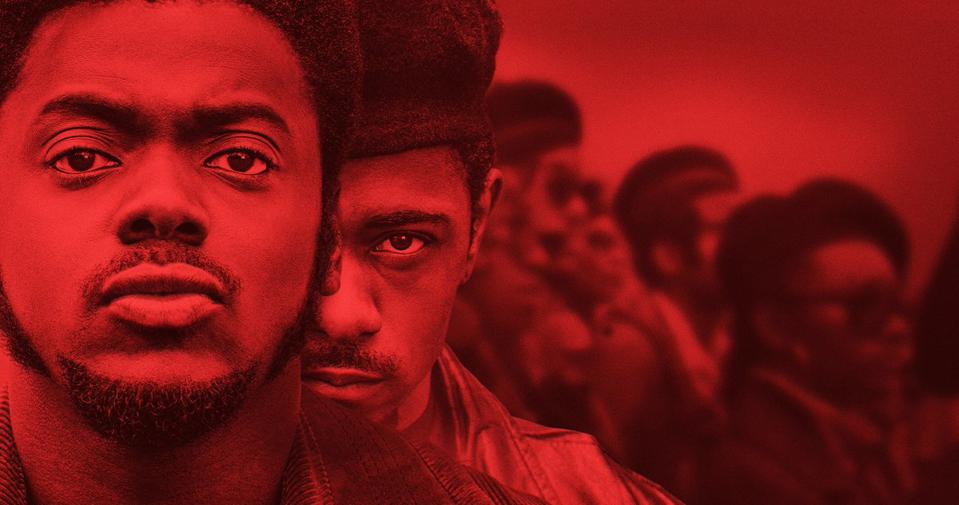
The ‘Judas’ in this story is Bill O’Neil (LaKeith Stanfield), a petty car thief who habitually pretends to be an FBI officer in order to ply his trade. Arrested by the police, he’s approached by genuine FBI Agent, Roy Mitchell (Jesse Plemons), who points out that O’Neil is now facing a lengthy stretch in prison – six months for stealing a car and five to six years for impersonating an officer.

Or, he might prefer to do the Feds a favour and become their snitch, posing as a member of the burgeoning Black Panther movement. Agree to that and he can walk free.

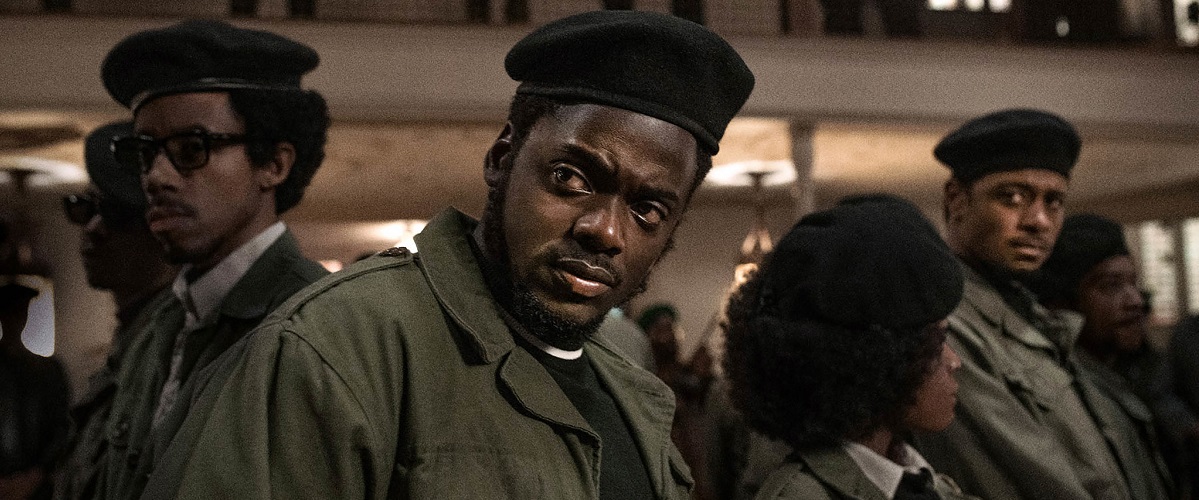
Perhaps not surprisingly, Bill chooses the latter option and, provided with a decent automobile by his new chums, he’s soon acting as driver to the ‘Messiah’ of the story – Black Panther Chairman, Fred Hampton (Daniel Kaluuya). Hampton is a charismatic and influential mouthpiece, who has his eyes resolutely fixed on the emancipation of Black America. With this in mind, he sets about uniting the various gangs of the city into something he calls The Rainbow Coalition. The white powers-that-be are getting decidedly nervous as the Panthers’ power steadily grows and, of course, there will be consequences…

Shaka King’s slickly directed film is set in a grimy, neon-lit vision of Chicago in the 1960s, an urban powder keg perpetually battered by rain; the city almost becomes another character in the narrative. Perhaps it’s a coincidence that Plemons’ smug and smirking Roy Mitchell looks uncannily like Donald Trump and that Martin Sheen’s oily turn as J. Edgar Hoover eerily evokes the oleaginous style of Rudy Giuliani – but I’m inclined to think otherwise. At any rate, the screenplay makes no bones about it. These are power-mad Machiavellian types, who will stop at nothing to assert their absolute authority.

Daniel Kaluuya’s career has soared meteorically since starring in Get Out and he certainly makes the most of his role here. Hamptons incendiary sermons make it easy to understand why he holds so much sway over his disciples – and why the white rulers of America are terrified of his influence. Little wonder the performance has generated substantial Oscar buzz. Stanfield too is excellent in what is arguably the more difficult role, clearly showing in every frame how conflicted his character is, how degraded by participation in Mitchell’s schemes. As well as providing a thrilling narrative, Judas and the Black Messiah is also extremely informative, filling in many of the gaps in my knowledge of the Black Panther movement. When I was a youngster, its members were always painted as evil troublemakers. In retrospect, it’s easy to see that right was on their side.

The list of injustices meted out to Black Panther members is long and shameful – a callous list of beatings, wrongful imprisonments and murders, mostly inflicted on people whose main ambition was to be free. It’s sometimes hard to believe that the incidents portrayed here happened in my own lifetime – and it’s also sobering to reflect that so little has changed since then.

And, lest I try to console myself by saying, ‘well, it was another time,’ the film’s poignant coda reveals exactly what happened to O’Neil, decades after the turbulent events portrayed here.

Shame is clearly something that lasts a lifetime.

4.4 stars

Philip Caveney

El Camino

18/10/19

Billed as ‘a Breaking Bad Movie,’ this Netflix orginal plays more like an extended episode of the much-loved television series, but that’s no bad thing. There are some loose ends that need tying up and writer/director Vince Gilligan gives it his best shot here. The titular vehicle is, of course, the one in which Jesse Pinkman (Aaron Paul) finally makes his escape from the evil Nazi villains who have kept him locked up for so long.

Immediately, there are a few problems. The actors have clearly aged considerably more than the few minutes that are supposed to have elapsed since we last saw the characters. This is particularly evident in the case of Todd (Jesse Plemons), who now has an entirely different physique. However, once this abberation has been taken on board, the film motors along at full throttle, as Jesse sets about trying to engineer his disappearance off the face of the planet.

His first port of call is with old comrades, Badger (Matt Jones) and Skinny Pete (Charles Baker), the latter delivering what is probably the film’s most poignant line. As Jesse struggles to put together enough money to fund his disappearing act, the narrative becomes ever more convoluted, ever more dangerous – and there are regular flashbacks that allow deceased characters to make cameo appearances. Some fare better than others, and its a shame to note that the one we wanted to see more than any other, doesn’t really have an awful lot to add to the story. And fans of Better Call Saul are, I’m afraid, set for disappointment.

Gilligan’s familiar tropes are here: the big skies and sun-blasted landscapes of Alburquerque; the focus on the endearing oddities of the characters; the idiosyncratic dialogue. Despite his changed appearance, it’s Plemons who shines most as the psycopathic Todd, never more interesting than when he’s at the wheel of his car, singing serenely along to a slushy ballad while he transports the body of his latest victim to its last resting place. Sad too, to note the final performance from the recently deceased Robert Forster as the mysterious Ed.

This keeps me engaged right through to its tender and rather touching conclusion but, while it serves as a decent curtain-closer to the series, it doesn’t exactly blow me away. Perhaps too much time has elapsed since I last engaged with Mr Pinkman and co – or maybe those loose ends just don’t offer enough knots to unravel.

3.9 stars

Philip Caveney