Jesse Eisenberg

A Real Pain

12/01/25

Cineworld, Edinburgh

On paper, it sounds like a terrible idea: a comedy about chalk-and-cheese Jewish cousins on a tourist trip to a concentration camp. I’m sorry, what? But Jesse Eisenberg’s script successfully navigates the many potential pitfalls, and A Real Pain emerges as a thoughtful exploration of how we try to make sense of the horrors of recent history, expertly leavened by the mismatched buddy lols.

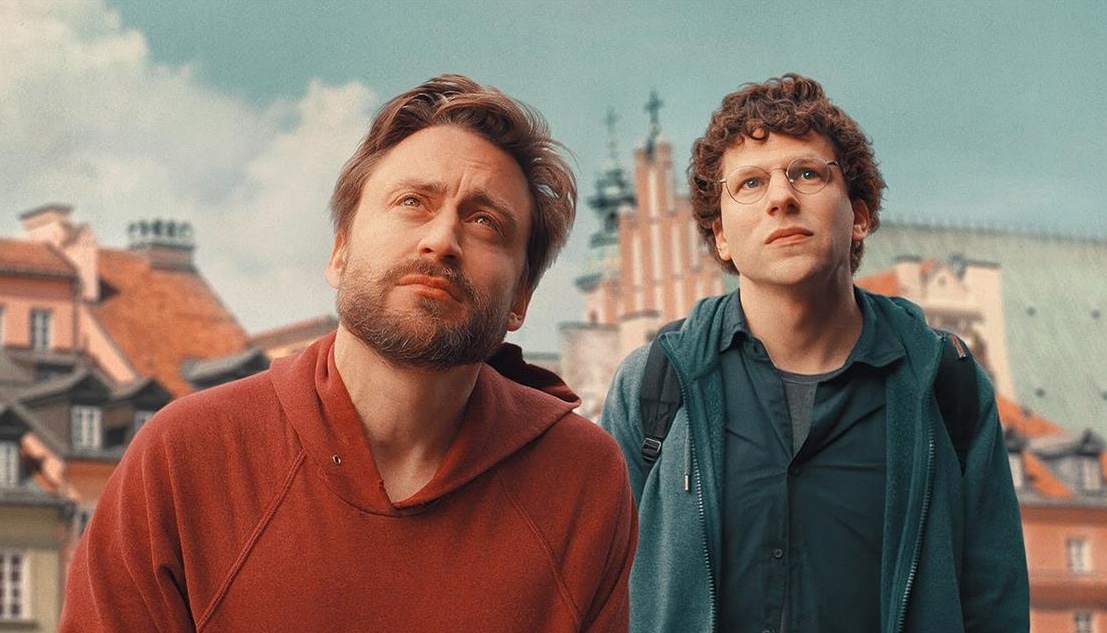
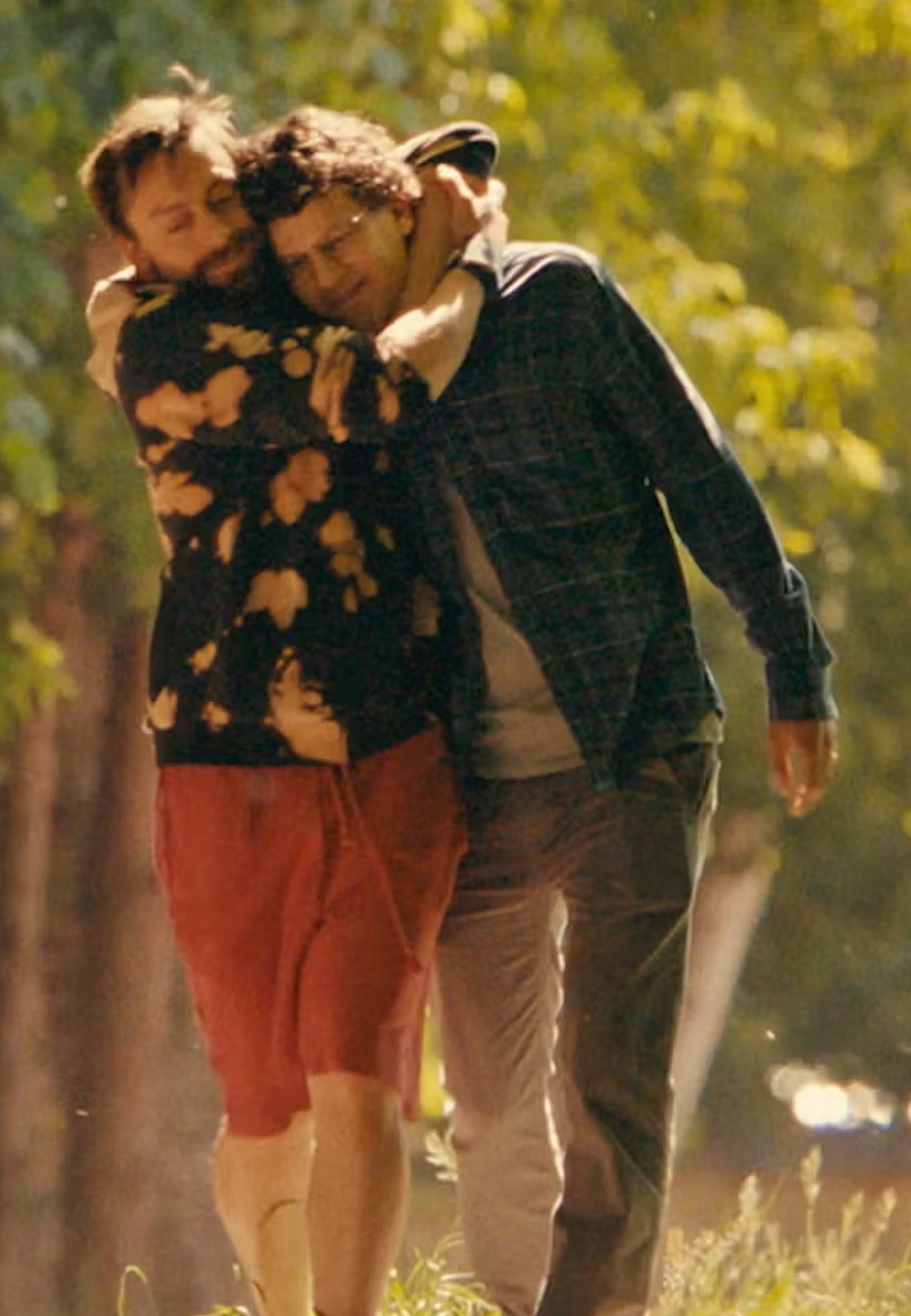
This is very much Eisenberg’s project: he also directs and co-stars as David, the uptight, neurotic half of the central pair. Kieran Culkin is Benji, the cousin he was inseparable from when they were young. Their backstory emerges through the dialogue: as they approach forty, we learn, David doesn’t want to hang out with Benji like he used to. He’s moved to NYC, where he has a wife, a child and a career to focus on. Benji, on the other hand, has yet to find his groove. Sure, he’s funny, charming and very popular, but he’s also living in his parents’ basement, depressed, without a steady job. Their paths rarely cross. But then their beloved Grandmother Dory dies, leaving money in her will for the two of them to travel to Poland, to see the house where she grew up and the camp that she survived. It feels like a canny final plan, to reunite her grandsons while also honouring the past.

It helps, of course, that Eisenberg and Culkin are both such strong actors, easily securing the audience’s sympathy. Culkin in particular shines here in the showier role, Benji’s vulnerability writ large, despite his devil-may-care attitude. Even as he’s selfishly appropriating the window seat – again – or disrupting a whole train carriage with a tantrum, it’s impossible not to feel protective of him, the carapace he’s constructed so obviously fragile. Eisenberg provides the comedic foil; he’s the helpless observer apologising for his cousin’s outbursts, blinking with embarrassment as Benji transgresses social mores.

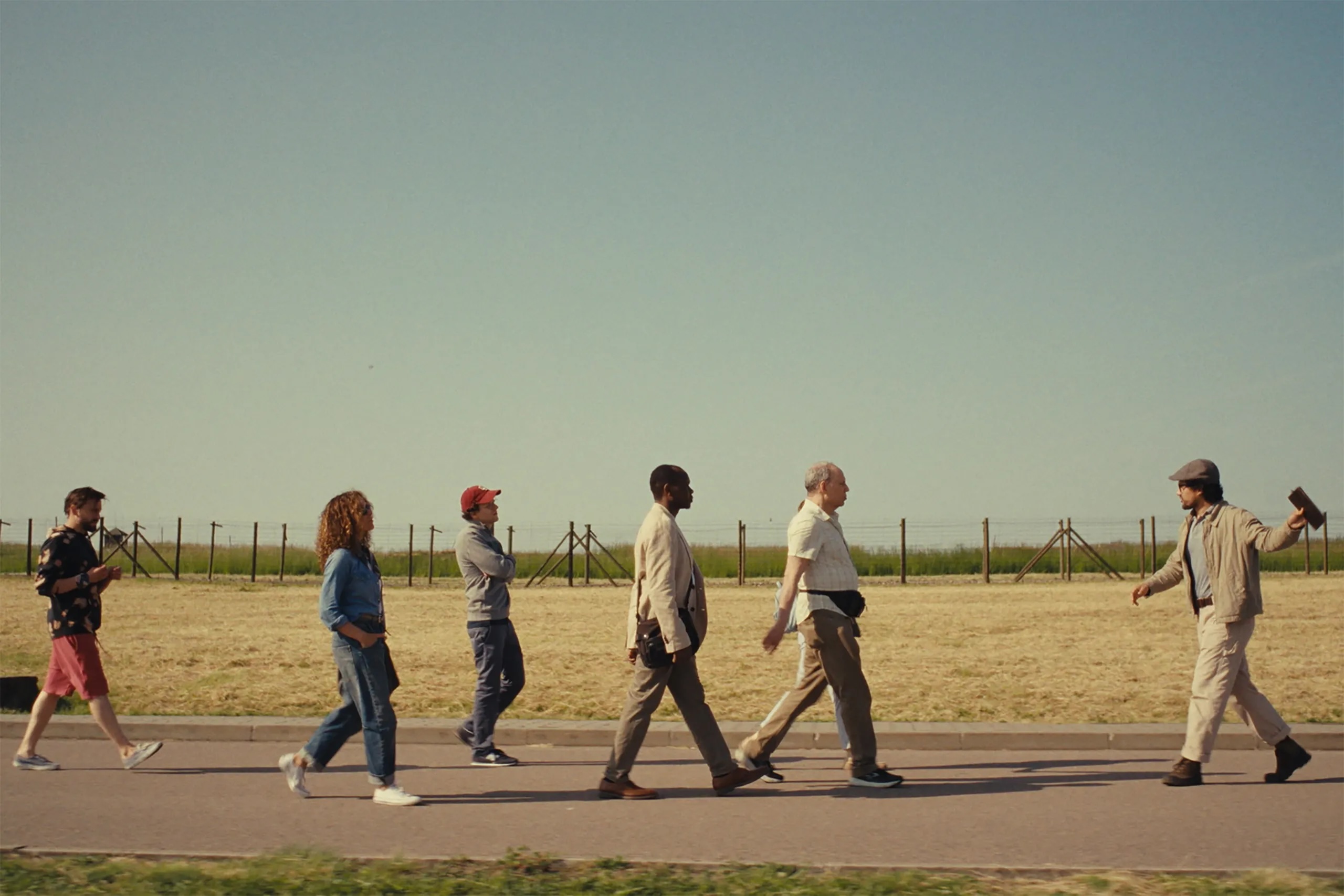
The supporting cast are also well-drawn, a convincing mix of characters, contentedly muddling along. British tour guide James (Will Sharpe) is an affable chap. He’s not Jewish but he is an Oxford graduate with a detailed knowledge of Polish history. The two solo travellers are Marcia (Jennifer Grey), a recently-divorced woman in her early sixties, and Eloge (Kurt Egyiawan), a survivor of the Rwandan genocide who has emigrated to the USA and converted to Judaism. Married couple Mark and Diane (Daniel Oreskes and Liza Sadovy) complete the group; like David and Benji, they’re visiting Lublin because it’s where their family comes from – and where many of them were killed.

The scenes in the Majdanek concentration camp are very moving. Eisenberg sensibly eschews any directorial flourishes here: there’s no music, no flashbacks, no fancy editing tricks. The bare walls speak for themselves, atrocities literally etched onto them in the blue stains left by poison gas. The tour group moves through in silence; their return bus journey passes quietly too, as they reflect on what they’ve seen – and what it means. Later, smoking a joint on the hotel roof, David points out three lights. “That’s the camp,” he says. “It’s so close” – a perfect example of the understated poignancy that makes the movie work so well.

A Real Pain is a clever film, a tight ninety minutes of carefully-structured storytelling, with never a dull moment. Eisenberg straddles the line between respect and irreverence, gently mocking people’s reactions without ever trivialising the Holocaust. It’s no mean feat to create such a heartwarming, thought-provoking tragicomedy.

4.4 stars

Susan Singfield

Sasquatch Sunset

15/06/24

Cameo Cinema, Edinburgh

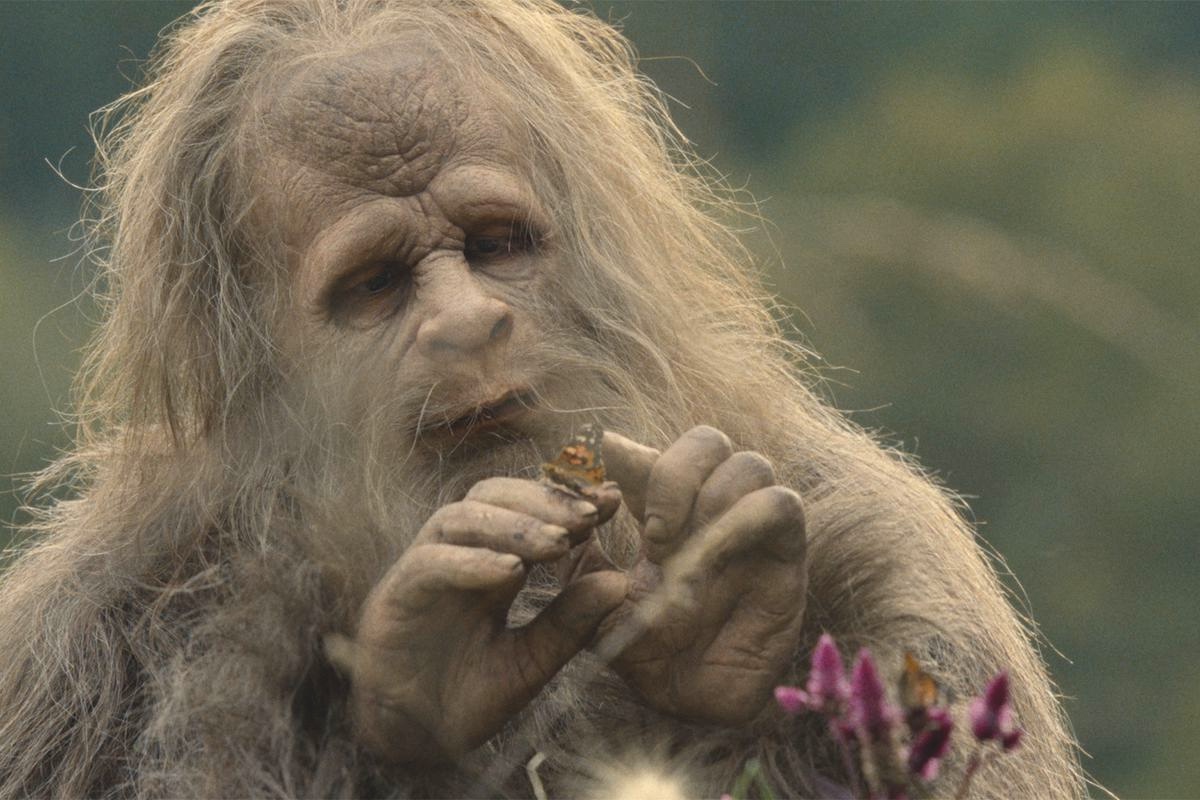
There’s a charming idea at the heart of Sasquatch Sunset, which follows, season by season, a year in the lives of four sasquatches (sasqui?). They live in a remote forest somewhere in North America. There’s an alpha male (Nathan Zellner), a beta male (Jesse Eisenberg), a pregnant female (Riley Keough) and a child (Christophe Zajac-Denek) and the four of them amble around the forest, foraging for food, attempting to procreate and every night constructing a crude shelter in which to sleep. They also spend time thumping tree trunks with branches in an attempt to contact others of their species – with no success.

The conceit of this film, conceived and directed by Nathan and David Zellner, is to treat it with all the seriousness of a nature documentary and, as our four protagonists go about their shuffling business in the tranquility of various woodland settings, there are indeed moments of wry amusement and occasionally some suspense as they stumble into peril.

The creature makeup is pretty convincing – though the film’s budget clearly didn’t extend to making a new-born sasquatch look convincing – and there are surely some cogent observations about the process of survival that can easily be extended to endangered species in the real world. Sasquatch Sunset is, I suppose, an allegory and it doesn’t take a Sherlock Holmes to work out what it’s really about.

But ultimately, there isn’t really enough here to fill the film’s (relatively short) running time and, by the halfway mark, I find myself longing for some more progression. Though the film flirts with the possibility of the creatures encountering humans, this never happens. It would have made an excellent short but, to my mind at least, as a feature-length movie it feels like an interesting failure.

2.8 stars

Philip Caveney

Vivarium

02/04/20

Curzon Home Cinema

Curzon Home Cinema has become our go-to for movies in these stay-at-home times, and Lorcan Finnegan’s waking nightmare, Vivarium, is the latest on their list to catch our eye.

Imogen Poots and Jesse Eisenberg star as Gemma and Tom, a teacher and a tree surgeon. They’re ready, they think, to buy a home together, and visit an estate agent to see what’s available. When creepy Martin (Jonathan Aris) recommends Yonder, a vast suburban estate of identikit new builds, Gemma and Tom are dubious. But Martin is very persuasive, and they agree to go along, just to have a look.

To their horror, they find themselves trapped: it is impossible to escape Yonder’s endless green streets; despite their ever-more frantic efforts, they always end up back at the same house, with food and other staples delivered silently and anonymously, all shrink-wrapped and pre-packaged like the life they’re being forced into. One day, a baby (Côme Thiry) is deposited on their step; within days he has grown into a freaky young boy (Senan Jennings). Tom insists they should refuse to care for the child – it’s not human, he says, and certainly not theirs – but Gemma can’t face leaving the boy to his fate, and does her best to look after him. Tom, meanwhile, is becoming increasingly obsessed with digging a hole in the garden…

The metaphors here are all thinly-veiled. The opening sequence of a cuckoo forcing its way into a nest, brazenly devouring everything it can, is a beautifully brutal portent of what’s to come, but it’s not a subtle allegory. The cartoon-like Yonder, with its perfectly manicured lawns and lifeless, listless architecture, represents the living hell of conformity, the loss of self that many couples feel as they settle down, do what’s expected of them, become subsumed by their children’s needs.

So no, not subtle, but clever nonetheless. The child’s age, for example, is a neat concept: the sight of a six-year-old screaming relentlessly while his ‘parents’ desperately try to placate him with food seems monstrous; the way he copies what they say and parrots it back at them is equally grotesque. But this is just what babies do, amplified here to awful effect.

There is, it must be said, only a single idea here, so it is all bit one-note. Nevertheless, Vivarium is a taut and genuinely frightening film, and its pervasive imagery might well haunt your dreams, especially if you watch it now, while we’re all ensnared in a similar scenario, unable to venture far from home, and barred from participating in the lives we used to lead.

4 stars

Susan Singfield


Zombieland: Double Tap

27/10/19

It’s hard to believe that ten years have passed since the first Zombieland film – and, while the original came as a breath of fresh air amidst the unseemly scramble of leaden undead movies that hit the screens around that time, it’s probably fair to say that there weren’t too many punters desperate to see a sequel. But you have to take your hat off to director Ruben Fleischer, who not only persuaded somebody to finance this, but also got the four lead players to reprise their roles.

A decade has passed for the quartet of survivors too, who – when we first encounter them – are moving into their new headquarters: the White House. Columbus (Jesse Eisenberg) and Witchita (Emma Stone) are now a couple, while Tallahassee (Woody Harrelson) has taken on a fatherly role towards Little Rock (Abgail Breslin). But LR’s at a difficult age, starting to long for a little ‘me time’ and, when Columbus rashly proposes marriage to Wichita, she too feels a little hemmed in. So the two women hit the road, looking for new horizons.

Complications occur when LR encounters a wandering hippie (Avan Joggia) with a guitar and a repetoire of popular rock songs, which he claims to have written. She falls promptly under his spell and runs off with him to a hippie community where weapons are banned, dumping Wichita in the process. Wichita returns to the two men but, in her absence, Columbus has hooked up with Madison (Zoey Deutch), an airheaded valley girl, who has improbably managed to stay alive (and meticulously clean) in the midst of all the carnage. Despite the awkward situation, the four of them head out on LR’s trail.

Double Tap is undoubtedly fun – a silly, good-natured addition to what went before – but, like so many sequels, it struggles to add anything new to the mix. Here, there’s an attempt to suggest that the zombies are evolving from the simple shuffling ‘Homers’ of the original story to ‘T-800s,’ leaner, meaner and harder to kill – and there’s a loosely knit story arc about the importance of family – but, ultimately, that’s not really enough to justify this as a film in its own right. And some of the internal logic of the tale really doesn’t stand up to scrutiny.

The laughs come easily enough and there are sly references to things that occurred in episode one. The cartoon violence is unashamedly visceral (unleash these levels of slaughter at human victims and that 15 rating might need to be raised a notch) and there’s an interesting new character in the shape of Rosario Dawson, as a woman with a major Elvis Presley fixation.

So yes, it’s no hardship to watch – but it isn’t destined to linger very long in the memory.

3.6 stars

Philip Caveney

American Ultra

MV5BMTcwMTM1NDU1Ml5BMl5BanBnXkFtZTgwNDk5MTgzNjE@._V1_SX214_AL_

05/09/15

Mike Howell (Jesse Eisenberg) is a small-town guy, stuck in a dead end job at the local convenience store. He spends his spare time smoking dope and doodling ideas for a comic book featuring a space travelling super monkey called Apollo Ape. Luckily, he’s in a long term relationship with Phoebe (Kristen Stewart), who seems to be his perfect soulmate and who tolerates the fact that Mike has crippling anxiety attacks whenever he tries to travel. Most recently, a long-desired vacation to Hawaii is nixed, when he finds himself running to the john to vomit. As is so often the case in movies like this, all is not what it seems and circumstances conspire to reveal that Mike is in fact, a brainwashed undercover CIA operative, who has been waiting for a certain sequence of words to reactivate him.

Eisenberg is, as ever, a likeable screen presence and Kristen Stewart was always a better actress than the execrable Twilight series allowed her to demonstrate. The first third of this movie is great fun, as Mike realises that he has the potential to be a highly skilled assassin – but once those talents are acquired, the film loses some of its appeal as it becomes a series of ever more complicated Heath Robinsonesque  murders. All manner of gadgets are utilised in Mike’s struggle for survival – mallets, screwdrivers, frying pans and claw hammers – you get the impression that here’s yet another film that must have been sponsored by B & Q. The action is unflinchingly bloody, but shot with enough cartoonish relish to just about excuse its most brutal excesses. Topher Grace and Connie Britton as two warring CIA honchos add depth to Max Landis’s script and there’s an appealing cameo from Bill Pullman as their ruthless boss, but the conviction remains that this could have been better if it had managed to maintain the more appealing elements on show in the first half hour.

American Ultra is eminently watchable, but could easily have been something more than that.

3.8 stars

Philip Caveney