Javier Bardem

F1: The Movie

25/06/25

Cineworld, Edinburgh

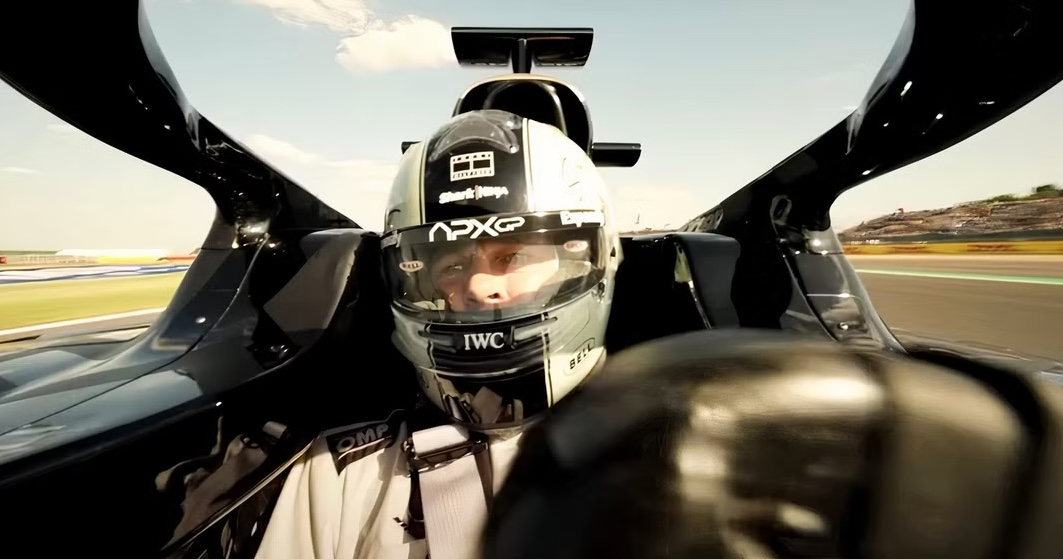
Capturing the appeal of Formula 1 in a feature film has eluded directors since the 1950s. This Apple production, helmed by Joseph Kosinski, has had a fairly troubled journey to its cinematic release and arrives boasting a rumoured production budget in the region of 300 million dollars – which Groucho Marx would doubtless have dubbed ‘one hell of a region.’ As somebody who cares not one jot for Formula 1, I had expected not to like this quite as much as I do. But Kosinski, pretty much as he did in Top Gun: Maverick, straps the viewer into the driving seat and stamps a virtual foot down hard on the accelerator. For the most part, it works.

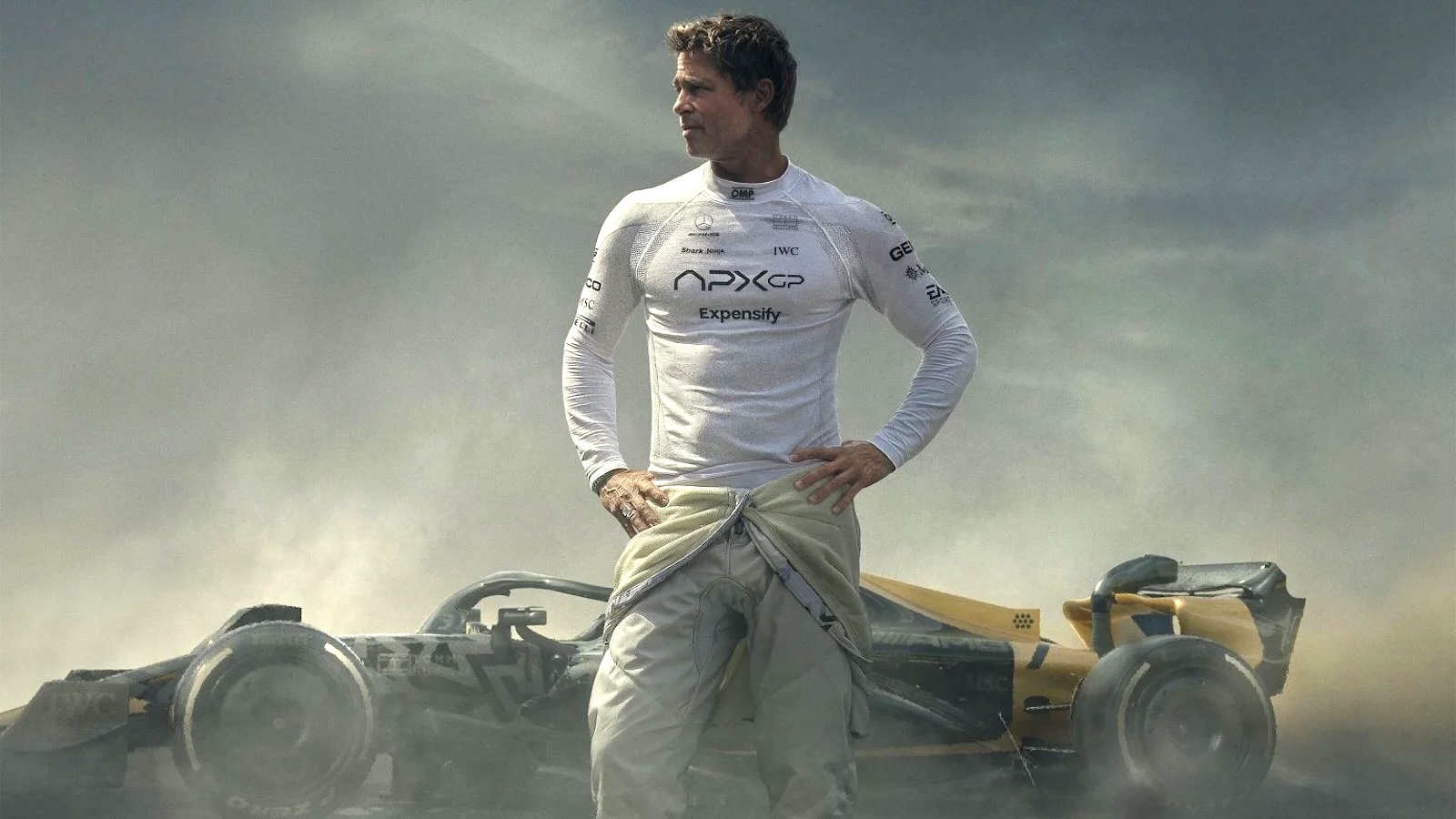
Sonny Hayes (Brad Pitt) is a former F1 driver, who, after a near-fatal crash back in his youth, has lowered his sights somewhat. When we first meet him, he’s gleefully driving a jalopy around a less sophisticated track but he’s clearly learned much over the years and is easily picking up some decent prizes. Out of the blue, he’s approached by his old racing partner, Ruben (Javier Bardem), who offers him second seat on the APXGP Formula 1 team, he now runs, which is currently going through a bad patch. Ruben thinks that Sonny’s vast experience may be just the thing to help his team up the scoreboard.

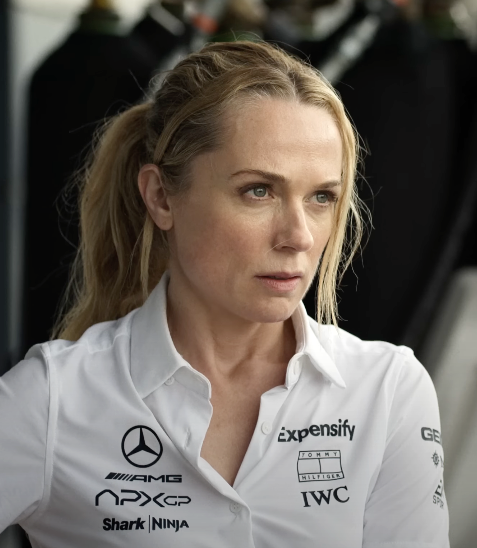
Sonny is initially reluctant to return to the fray, but eventually the offer of a first class plane ticket to London lures him to Silverstone. He’s immediately met with derision by the team’s young lead driver, Joshua (Damson Idris), and with reluctant interest by the team’s resident car designer, Kate (Kerry Condon). But it’s clear that over the ensuing season of high-stakes racing, Sonny’s relaxed and easygoing attitude is eventually going to win over all opposition…

With a running time of more than two and a half hours, F1: the Movie is probably going to find the bulk of its audience on streaming, but there’s no denying how handsome the film looks with cars thundering around the track to the raunchy backing of classic cuts from the likes of Led Zeppelin and Queen. One of the producers is Lewis Hamilton (who even I’ve heard of) and it’s clear that there are cameos scattered throughout proceedings from people I think I’m supposed to recognise. There’s also a little too much here for a rube like me about the various tricks of the trade that Sonny uses to clip seconds off each circuit. Characters debate the advantages of hard tyres versus soft tyres and various additional doo-hingies, leaving me none the wiser, but I’ve no doubt that fans of the sport will be nodding along in approval.

Pitt makes a great job of the lead role, giving us a character who’s driven by his inner demons but nonetheless remains eminently likeable. While his younger teammates are half killing themselves with their exercise regimes, he seems happy to throw a tennis ball around and head out for a leisurely jog. Condon is terrific as the straight-talking Kate, a perfect foil for Hayes’ cynical, hard-bitten one-liners. But I would like to see the excellent Kim Bodnia given more to do as the team’s principal, Kaspar, than just sit around, frowning furiously at a console.

Everything builds to a final showdown at the Yas Marina Circuit in Abu Dhabi, with the very future of the team hanging in the balance. Do they seriously think they’ve a chance of winning?

This makes for decent entertainment; indeed, one sequence, depicting a terrifying crash, actually has me gasping out loud. Aficionados will doubtless have different, more informed criticisms of the film, but for me, this is an enjoyable way to spend a couple of hours. Whether F1 will ever earn back that prodigious production budget remains to be seen.

3.8 stars

Philip Caveney

Dune: Part Two

03/03/24

Cineworld, Edinburgh

It only needs a glance around the IMAX auditorium at Edinburgh’s Cineworld on this Sunday afternoon to confirm that Denis Villeneuve’s big gamble has paid off. There’s barely an empty seat in the building. 

Dune: Part One came along at a propitious time. It was October 2021 and we were barely out of lockdown, sitting uncertainly in our seats, wearing paper masks and slapping gel on our hands at five-minute intervals. What we needed now was something epic to take our minds off the pandemic and we certainly got that – but what we were also handed was an unfinished story and a three-year wait for its conclusion. 

Would it be worth it?

The answer to that is a resounding yes! If the first film occasionally felt a little too languid for comfort, Part Two ramps the action up to eleven, and Villeneuve has the good sense to keep everything rattling along at full speed ahead. The result is a film that, despite  a running time of just under three hours, never feels overlong. 

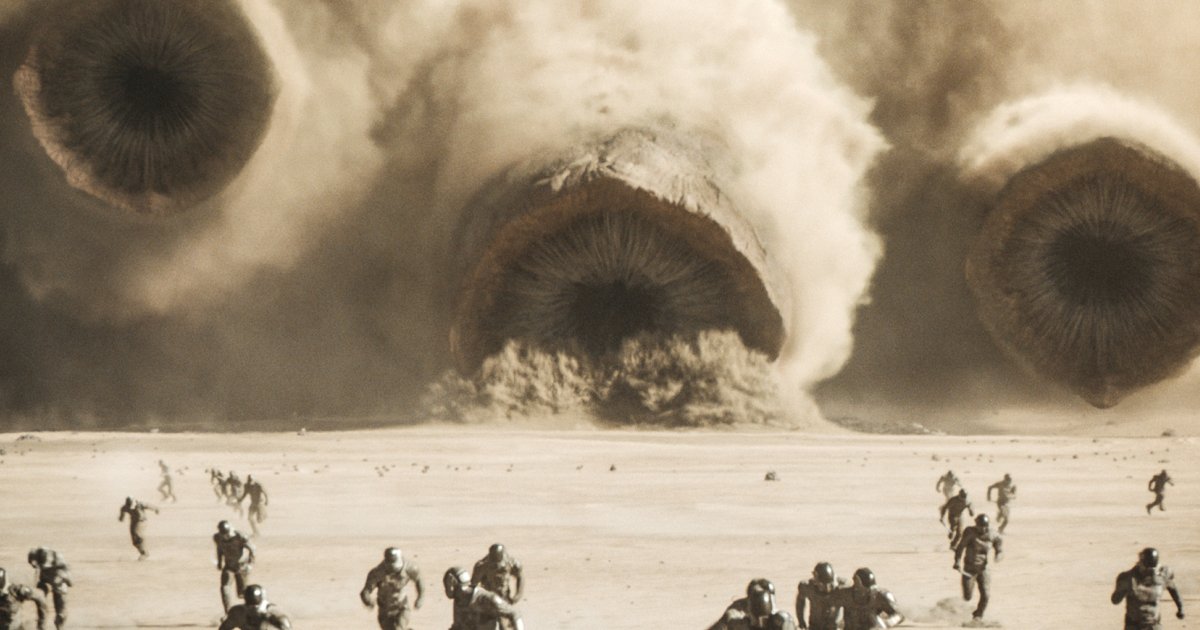
And in this case the word ‘epic’ barely does the material justice: this is an immense, eye-popping spectacle, an insanely inspired slice of cinematic world-building that at times leaves me almost breathless at what I’m witnessing up on the giant screen. This, my friends, is why they invented IMAX. If you haven’t seen Part One since its release (or at all for that matter), I’d advise you to catch up with it via streaming before sitting down to the second installment. I did and it helps no end to reacquaint myself with the characters.

We pick up exactly where we left off. Paul Atreides (Timothée Chalamet) and his mother, Jessica (Rebecca Ferguson), have survived the murder of most of their family and have sought refuge with the Fremen people in the remotest part of the desert planet, Arrakis. Paul has finally met his (quite literal) dream girl, Chani (Zendaya), and, under the protection of Stilgar (Javier Bardem), he’s learning the ways of the Fremen. 

At the same time, he’s all too aware that some of the more devout members of the tribe are giving him meaningful looks and referring back to an ancient prophecy that a messiah will one day arrive and lead the Fremen to triumph over their oppressors.

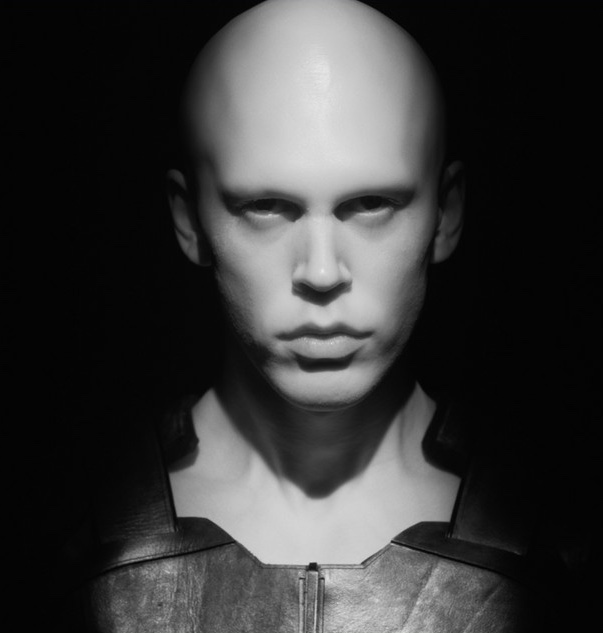
Could this be a potential way for Paul to take revenge for the killing of his father by the evil Baron Harkonen (Stellan Skarsgard), who is still skulking in a bathtub doing unspeakably horrible things to everyone who comes near him? And if you think he’s bad, wait till you meet his nephew, the psychopathic Feyd-Rautha (Austin ‘Elvis’ Butler), who redefines the word ‘villain’ in one of the most remarkable screen transformations ever.

Villeneuve has excelled himself here and Dune: Part Two is an extraordinary achievement, one that cements his reputation as one of the great visionaries of the cinema, up there with the likes of David Lean and Stanley Kubrick. His interpretation of Frank Herbert’s source novel spins allegories about the links between religion and drugs, the evils of colonialism, the ruthlessness of royalty, the inevitability of war between the poor and the privileged. That’s all there lurking behind the dazzling action set pieces and massive explosions.

My only niggle (as with the first film) is that the 12A rating sometimes works against the film, when all that violent mayhem must remain essentially bloodless in order to tick the boxes – but it’s not a big enough quibble to dampen my enthusiasm for this giant-sized helping of space fantasy, that quite frankly makes the Star Wars franchise look positively amateurish by comparison. 

And if the story’s conclusion doesn’t feel quite as er… conclusive as I might have expected, the possibility of Dune Messiah looming on a distant horizon may account for it. A trilogy, perhaps? 

Well, it would be rude not to, right?

5 stars

Philip Caveney

Being the Ricardos

11/01/22

Amazon Prime Video

I am actually old enough to remember watching I Love Lucy as a child – and can recall laughing out loud at the onscreen antics – though a quick glance at Wikipedia tells me that the show only launched in the year of my birth and ended in 1957, so I was probably already viewing re-runs. It was a game changer in many regards, the first scripted TV show to be filmed in front of a live audience using a (then) unique three-camera system. At the peak of its powers, it pulled in sixty million viewers.

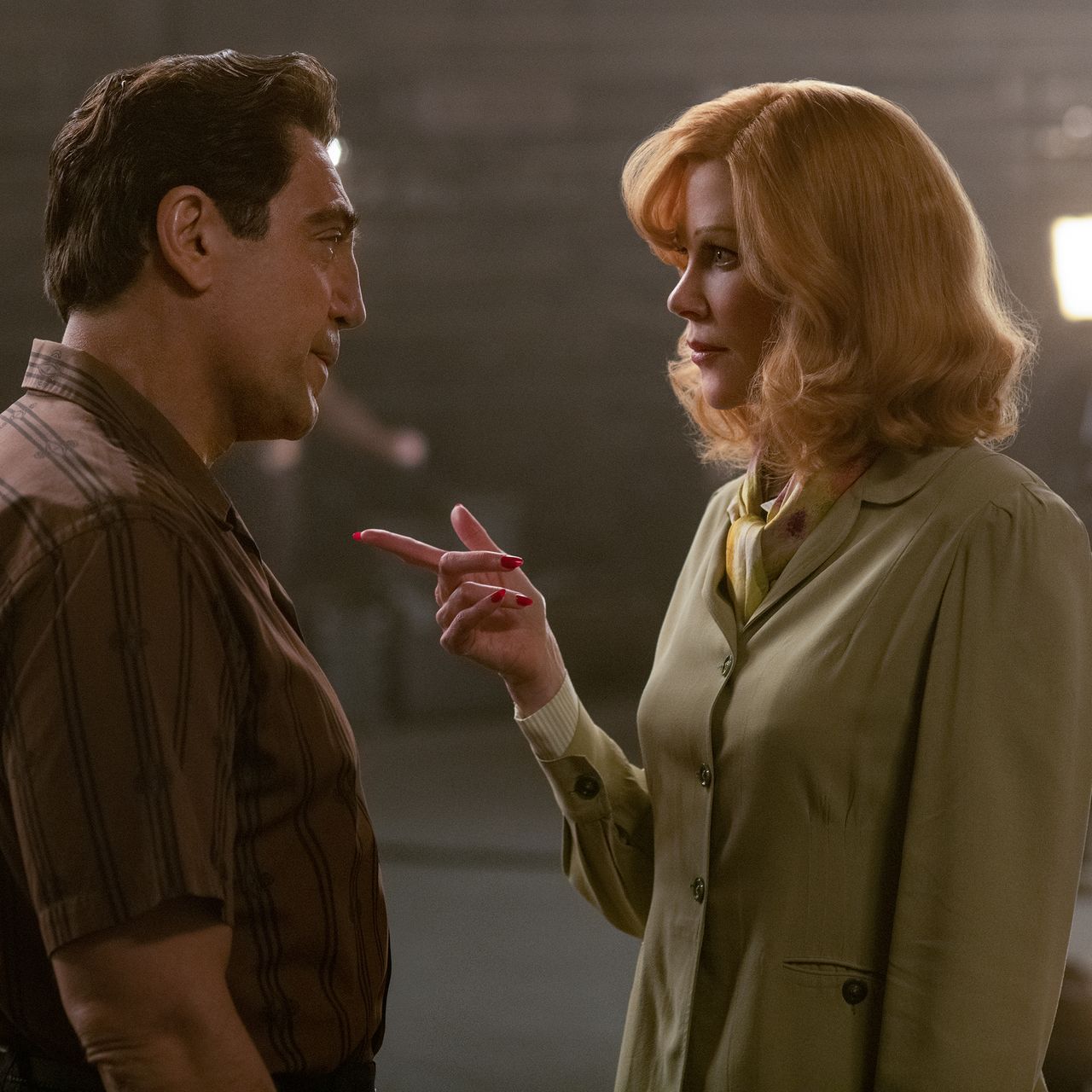
Being the Ricardos is a fascinating look at the husband and wife duo on which the series was loosely based, as they approach a major flashpoint in their joint career. Midway through recording their second series, Lucille Ball (Nicole Kidman) and Desi Arnaz (Javier Bardem) are hit by potential disaster. Ball has been investigated (and cleared) by the House Un-American Activities Committee, but the newspapers are now accusing her of being a communist. Also, she has just discovered she is pregnant with her second child and there’s no way her sponsors are going to allow a visibly pregnant woman onto the television screens, because viewers are going to start thinking about how she got pregnant in the first place and – well, not to put too fine a point upon it, her husband is Cuban…

I know. You could be forgiven for thinking that the series actually originated in the middle ages, but no, in the 1950s, such mundane revelations could stop a series dead in its tracks. So it’s going to take some nifty dance moves to get Lucy and Desi out of this one.

Writer/director Aaron Sorkin adopts a multi-faceted approach to telling his story, introducing it via a series of interviews with the show’s original writers and producer (all played by actors) and then cutting gleefully back and forth between Ball And Arnaz’s first meeting; their early experiences in radio, film and music; the recreation of the recording of a live show and all points in between.

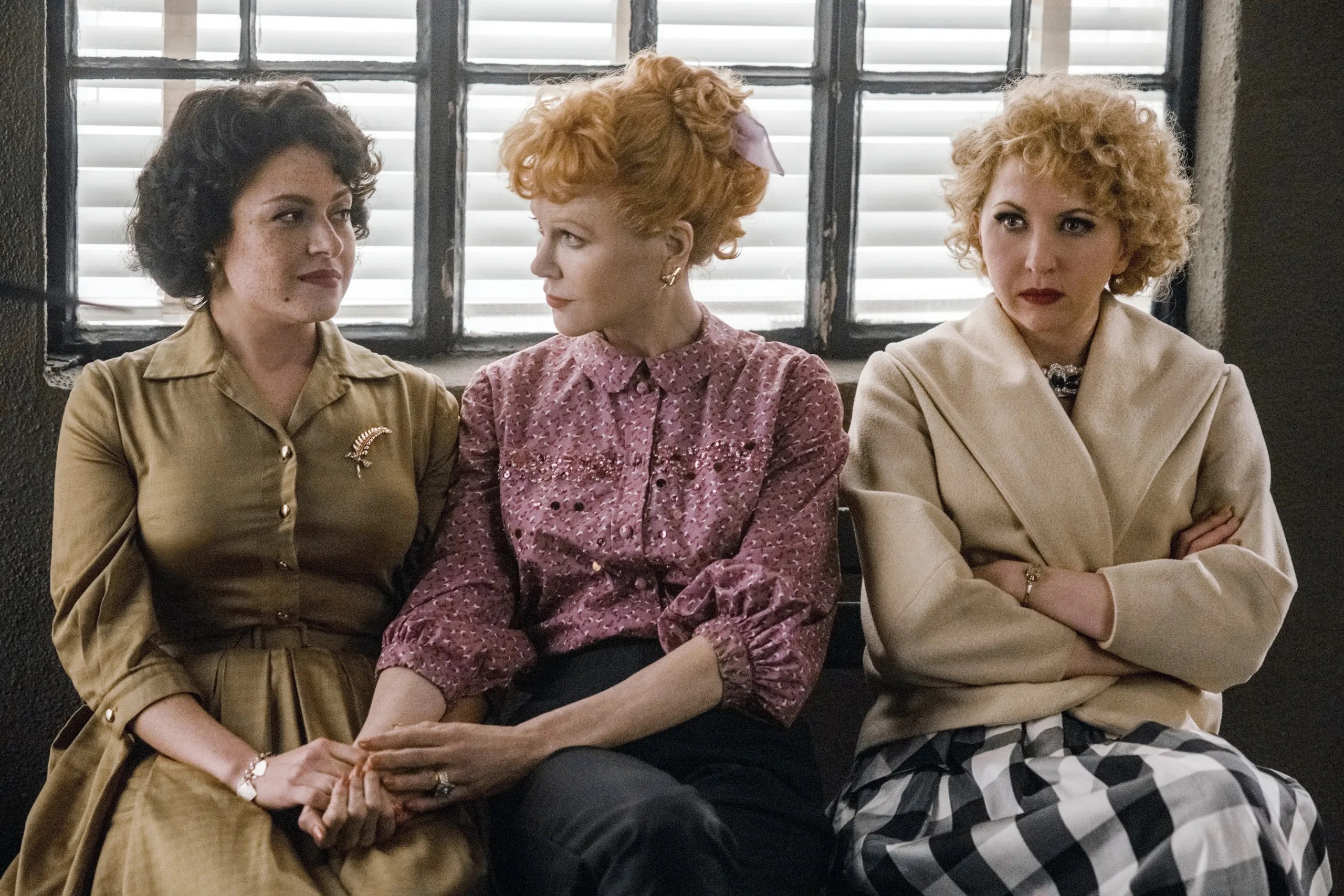
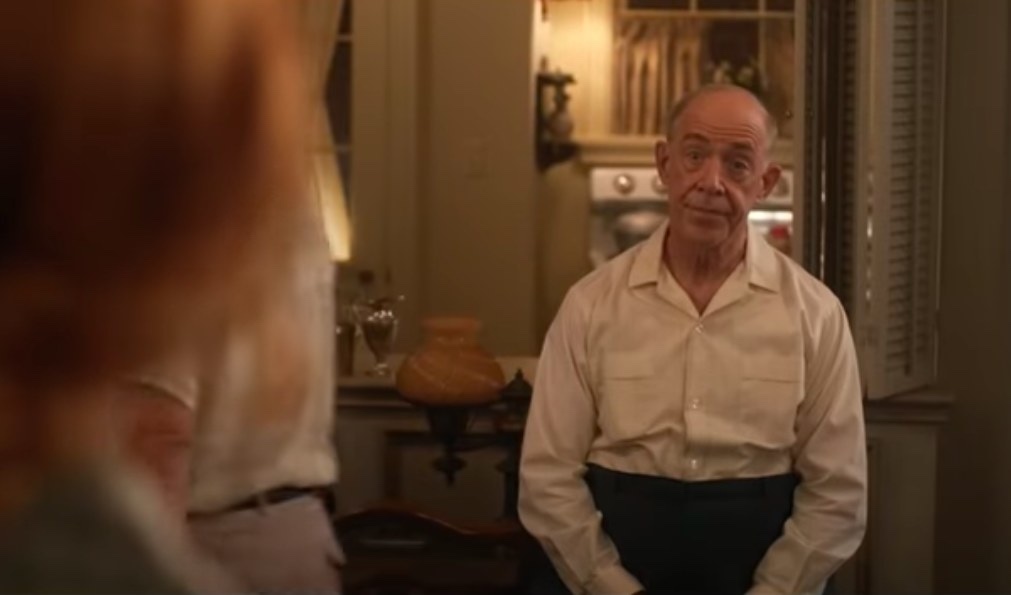
We learn fairly quickly that Ball is an inveterate micro-manager, who trusts nobody’s instincts as much as her own, and that Arnaz is an astute businessman with an eye for self-preservation and a yen for booze, card games and female company. We also meet the duo’s regular co-stars, William Frawley (JK Simmons) and Vivian Vance (Nina Arianda), whose careers are inextricably entwined with those of their employers, and who are not slow to express their dissatisfaction with the way they’re expected to play second fiddle. There’s also an appealing rivalry between the show’s two main writers, Madelyn Pugh (Alia Shawkat) and Bob Carroll (Jake Lacy).

The script positively crackles with witty putdowns and snarky one-liners and Kidman’s performance (which has already been rewarded with a Golden Globe) is extraordinary, nailing Ball’s look, voice and presence in seemingly effortless fashion. Mind you, the cast are uniformly good and the era convincingly evoked. As the story switches expertly back and forth, no scene is allowed to outstay its welcome.

So much more than just another biopic, Being the Ricardos sneaked quietly straight onto Amazon Prime in the UK, but, with a strong Oscar buzz behind it, expect to hear a lot more about it in the days to come.

4.2 stars

Philip Caveney

mother!


17/08/17

Darren Aronofsky is always an interesting filmmaker, but he can be inconsistent. Requiem For a Dream is, in my opinion, a morose and devastating masterpiece, while The Fountain is clumsy and ineffectual. Black Swan definitely goes onto the ‘good Darren’ pile, while Noah is… er… probably best slipped under the carpet. mother! has polarised audiences like no other film in recent history. I find myself fascinated by the plethora of reports on social media from disgruntled punters claiming that it is the worst film they have ever suffered through – people so incensed they seem to be on the verge of stringing up the cinema staff for daring to show such guff.

Mother (Jennifer Lawrence) lives in an octagonal house in the middle of nowhere, with ‘Him’ (Javier Bardem), a celebrated poet, currently suffering from a terrible case of writer’s block. We learn fairly quickly, that the house has, at some unspecified point in time, suffered a devastating fire and Mother is single-handedly attempting to return it to its former glory. While she mucks in with the paintbrushes and wood filler, her poet husband sits around and broods. But then the doorbell rings and we are introduced to ‘Man’ (Ed Harris), a creepy fellow with a consumptive cough, who claims to be a doctor. Mother is instantly suspicious of him, but the poet welcomes him in with open arms and invites him to stay. It isn’t long before Man’s surly wife (Michelle Pheiffer) turns up and starts to treat the house like her personal property, smoking cigarettes indoors and snogging her hubby at every opportunity. But the strange visitations don’t end there. Soon, the house looks like the worst Airbnb invasion in history, with people arriving in droves… and then Mother discovers she is pregnant…

Aronofsky’s camera seems to be caught up in a major infatuation with Lawrence. When it’s not looking her straight in the eye, it’s peering voyeuristically over her shoulder, and following her from room to room, as though it can’t bear to be parted from her. I love the fact that the film takes off at a sprint and barely pauses for breath, as event piles upon event and the whole thing careers headlong into madness.

Look, I appreciate that this won’t be for everyone – but neither do I buy the story that it’s some kind of an insult to the intelligence. In look and tone, the film it most resembles is Roman Polanski’s Rosemary’s Baby – it inhabits a similar world of paranoid speculation, Mother constantly aware of things going on behind her back, against her wishes, but unable to assert her authority. It’s an allegory, for sure, but one that drags in so many potential allusions that you can literally discuss it for hours. There’s the spectre of fame and what that can do to relationships: the way that some men feed off their partners in order to fuel their creativity. There are biblical references, observations about immigration and the way people selfishly protect their own space. And of course, there’s the subject of birth and what that does to a woman, how much it demands of her and what determination it takes to see it through to fruition.

Maybe what ultimately turns so many viewers off is the fact that all these references are there and all of them are relevant. Perhaps most people prefer to have things cut and dried – to identify exactly what the filmmaker is saying in a movie and then walk away feeling pleased with themselves. But there’s a lot to be said for allowing people to arrive at their own interpretation of what the film is actually about. Everybody will have a different view, and it’s no bad thing. In my opinion, when sorting out Aronofsky’s films, I genuinely feel this one belongs on the ‘good Darren’ pile – and that the term ‘Marmite Movie’ was probably never more apt than it is here.

One thing’s for sure. Watching this, there’s one thing you definitely won’t be. Bored.

4.6 stars

Philip Caveney