Jarvis Cocker

Road

27/02/25

Bedlam Theatre, Edinburgh

We enter the auditorium to the strains of Jarvis Cocker warning a rich girl of what it’s really like to be common, to “watch your life slide out of view / and dance and drink and screw / because there’s nothing else to do.” Okay, so tonight’s play – Jim Cartwright’s Road – is set in the mid-80s, a whole decade before Pulp’s song was released, but the lyrics couldn’t be more apt. It’s a fitting anthem to what is essentially a series of bleak vignettes: snapshots of the residents of a Lancashire road as they navigate their way through another grim weekend, trying to find some glimmers of joy in Thatcher’s broken Britain.

This is a sprawling, kaleidoscopic play, but EUTC’s students do an impressive job of wrangling it into shape, creating a vibrant, cohesive show. I especially enjoy their commitment to world-building, with actors in character as the audience files in, as well as throughout the interval, when some chat to people in the toilet queue, while others invite us to join them on stage to dance at Bisto’s Beatoven Disco with DJ Ronan Lenane. (There’s also a pre-show in the bar, but there’s not a lot of room in there, so we don’t get to experience what that’s like.)

I have mixed feelings about Cartwright’s script. Groundbreaking when it premiered in 1986, there’s no denying its continued relevance, as the UK struggles with a cost-of-living crisis and a hollowed-out job market. It’s an elegy for the working-class, and I like its bold spirit and the stylised way the characters voice their despair, saying all the things that usually remain unspoken, masked by politeness and a “chin-up” mentality. However, while the issues sadly haven’t aged, the writing style has: it seems heavy-handed compared to more recent polemics, hitting the audience repeatedly over the head with a message we understand from early on.

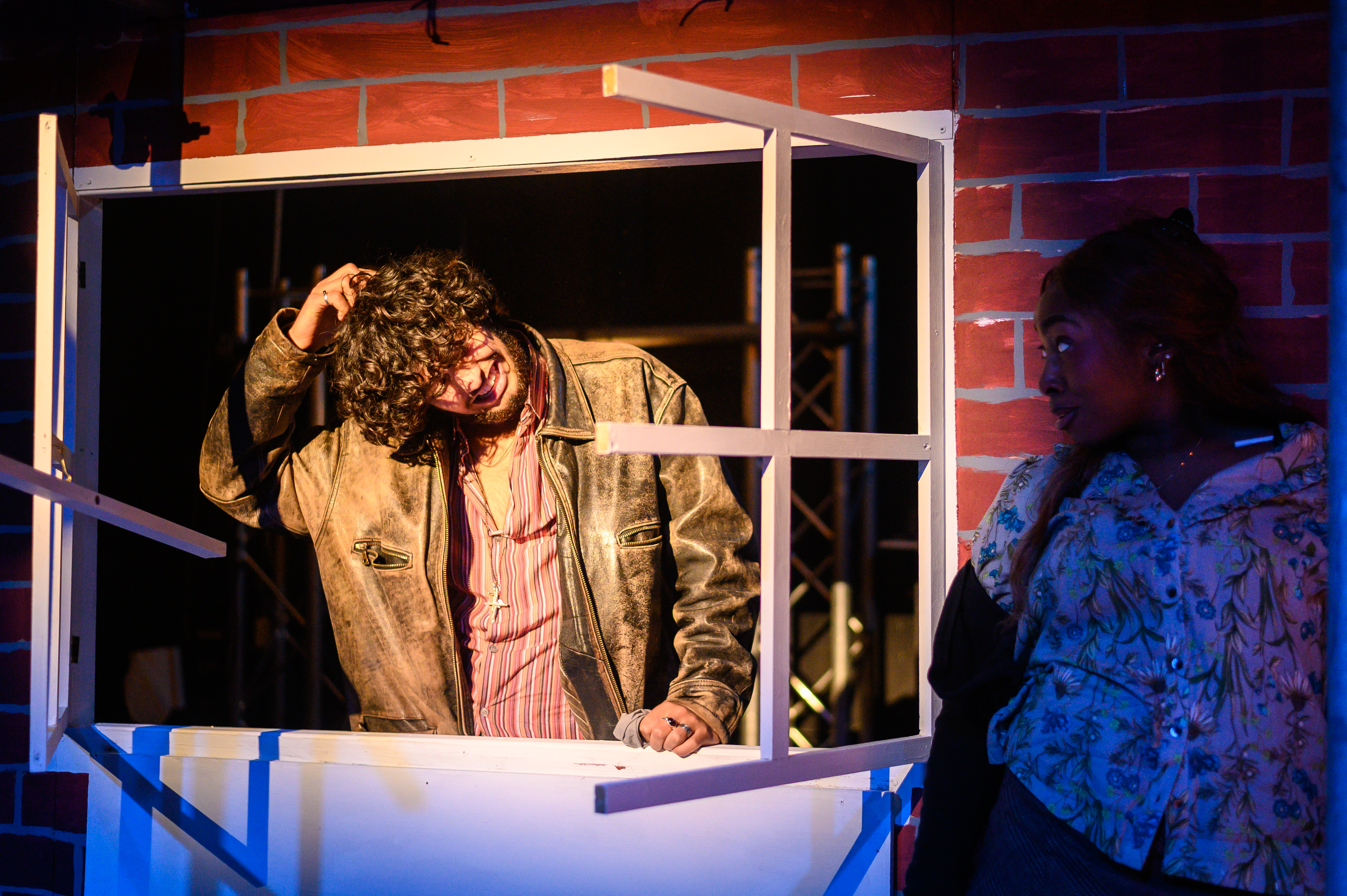
Nonetheless, this is an impressive production, and the array of talent in the room is undeniable. Under Moses Brzeski-Reilly and Dan Bryant’s inventive direction, Bedlam’s performance space is almost unrecognisable. Instead of the usual end-on stage, we have a thrust, the audience positioned around three sides. The fourth side sports a door, a big window and some scaffolding, and the gallery above is also pressed into use. The square performance space is divided into four distinct areas, the road, a ginnel, a living room and a bedroom, the latter pair representing the interiors of several different homes. Miki Ivan’s complex lighting design is crucial in guiding the audience to the various locations.

The sound design – by Millie Franchi – is admirably detailed, the ambience convincing and evocative. However, thanks to a combination of the thrust staging and the venue’s vaulted ceiling, there are moments when I find myself struggling to hear what some of the characters are saying, especially those who are facing away from me on the far side of the room.

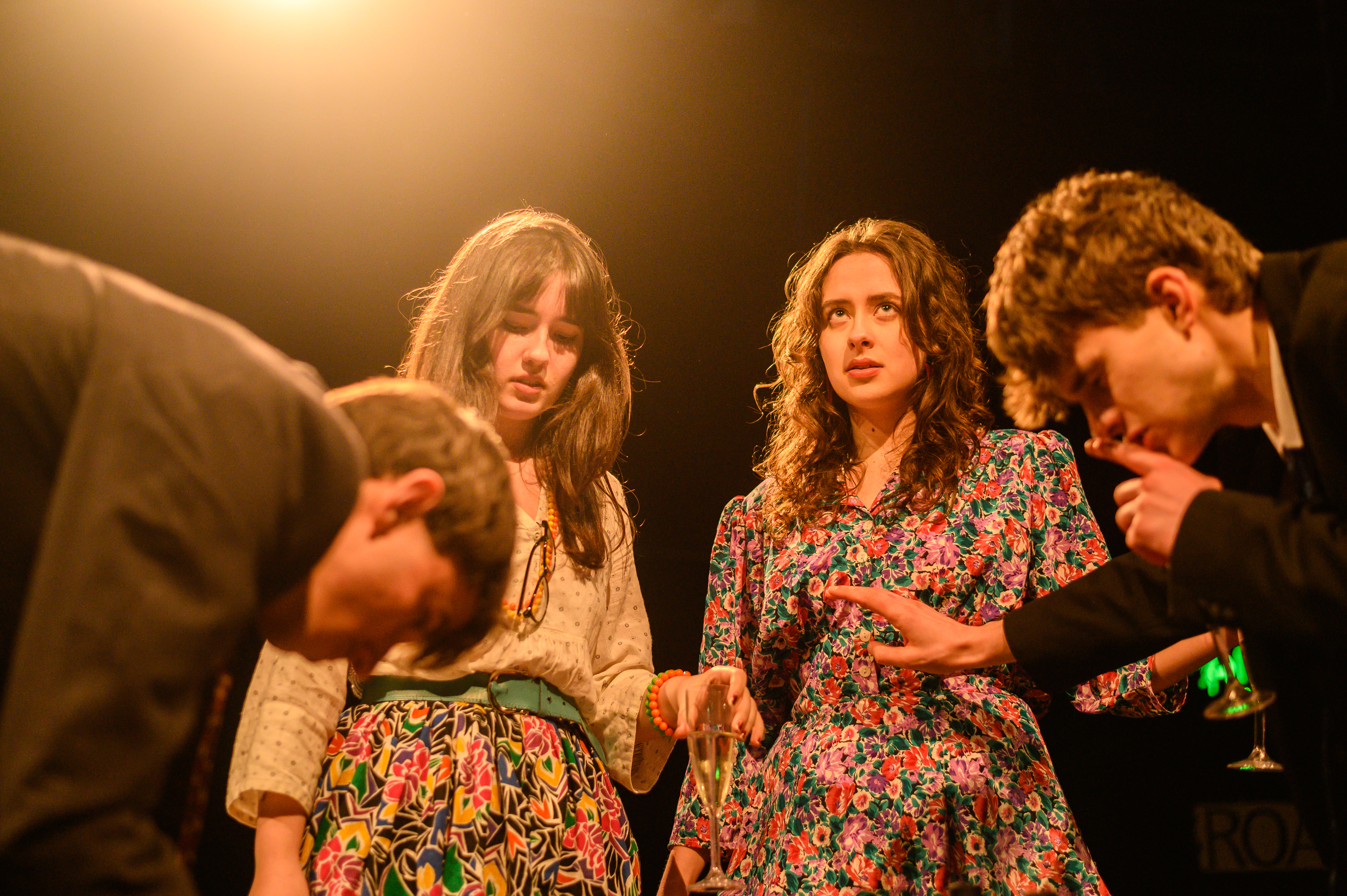
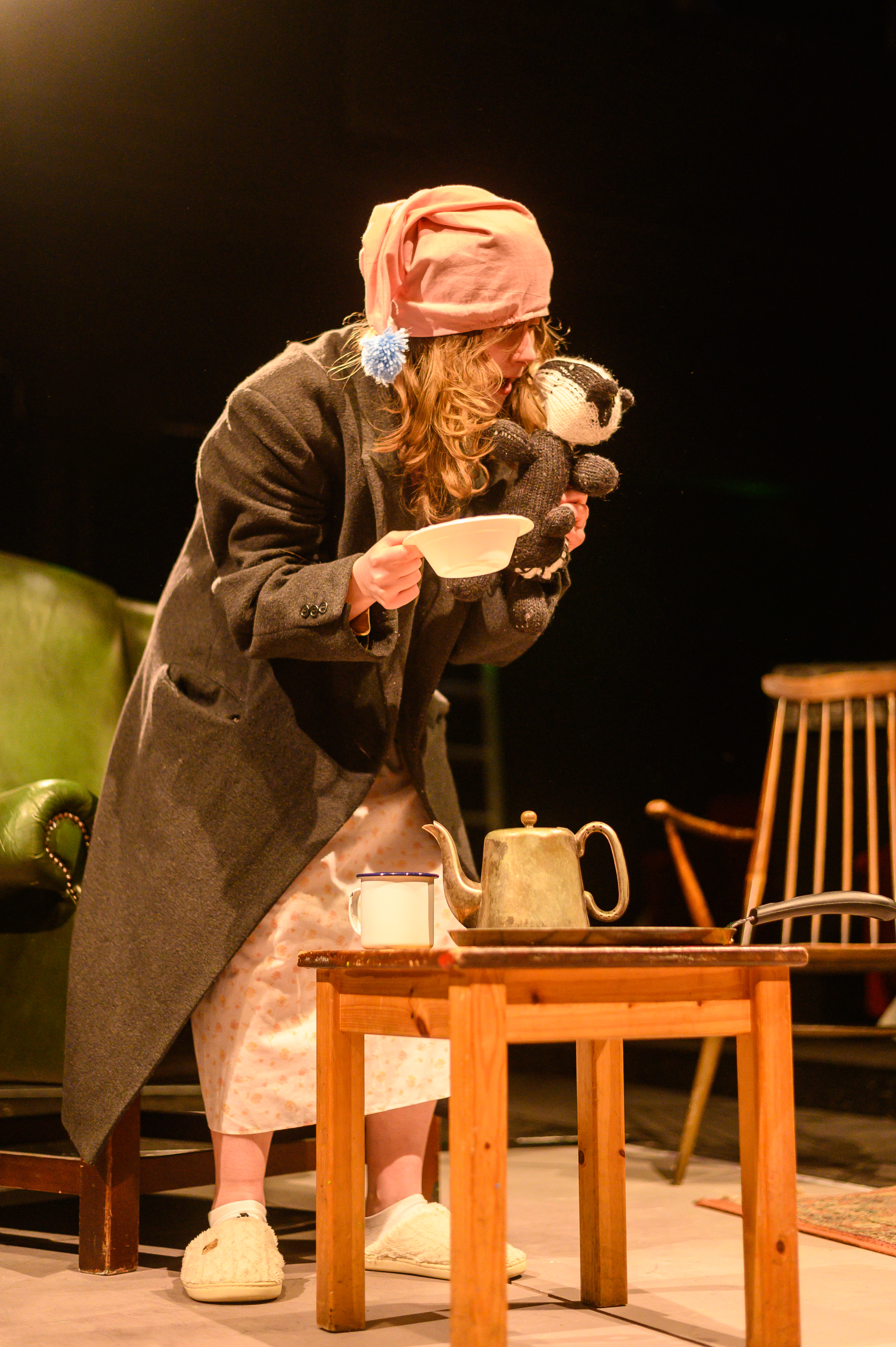
It’s hard to single out individual performers in an ensemble piece like this, but there are a few standouts. Ava Godfrey, Amelia Duda, Will Grice and Sam Gearing absolutely nail the climactic scene where Louise and Carol’s double date with Brink and Eddie transforms from a nihilistic drinking session into an almost spiritual attempt to conjure up some happiness. Ava Vaccari is compelling as Molly, an elderly woman suffering from Alzheimers, while Noah Sarvesvaran provides the centre point as Scullery, the drunken vagrant who guides the audience through proceedings.

Once again, EUTC have succeeded in putting their own inimitable stamp on a classic production. There are just two more chances to see this before it closes, so why not head on down to Bedlam and join in the mayhem.

4 stars

Susan Singfield

The House

06/02/22

Netflix

It’s a cold Sunday afternoon, with the threat of snow hanging over it. We’ve nothing pressing to do, and we’ve already braved the elements for a bracing walk. We don’t want to go out again. It’s warm in our lounge, and there must be something worth watching that we haven’t already seen… But what?

The House pops up as a suggestion, and we’re intrigued.

Originally billed as a miniseries, The House appears on Netflix as a portmanteau, and is – I think – all the better for it. Viewed as one, the themes coalesce, and the strange beauty of this piece is given time to develop.

The house in question is a rather lovely one: three storeys of opulence and grandeur. Enda Walsh’s script shows it to us in three different times: the past, the present and the future.

Chapter One, And Heard Within, a Lie is Spun, is an eerie origins tale, directed by Emma de Swaef and Marc James Roels, and brought to life via some very spooky felt dolls. Mabel (voiced by Mia Goth) is a little girl. It’s some time in the 1800s, and her father’s fecklessness means her family is impoverished. Raymond (Matthew Goode) is a decent man; it’s just that he’s not very good at making money or managing his alcohol intake. One night, he wanders drunkenly into the forest, and meets a mysterious being, who offers him a way out. The enigmatic architect, Mr Van Schoonbeek, will build him a house. It is a gift. The only catch is that they have to live there – and that doesn’t seem like a catch at all. What could go wrong?

A lot, as it happens. Mabel is disconcerted to discover that Mr Van Schoonbeek keeps making changes. Big changes. Such as removing the staircases, so that she and her baby sister, Isobel, are trapped on the upper floor. Her parents seem caught up in the house’s spell, lured by its riches, and all too soon are literally defined by what they own…

Chapter Two, Then Lost is Truth That Can’t Be Won, directed by Niki Lindroth von Bahr, takes us to the present day. The house is now part of a suburban row, and is in the process of being renovated.

By a rat.

Said rat, known only as The Developer and voiced by Jarvis Cocker, is a hard-working soul. He has everything riding on the success of what seems to be a solo project, and – as his constant calls to the bank confirm – is relying on a quick sale. At first, he’s confident. His plans are meticulous. He has dedicated his life to this money-making scheme, sleeping in the basement for months, doing the place up room by room. It’s a wonder of high-spec luxury. But when he spies a fur beetle scurrying along the kitchen floor, he realises he has a problem. He fills in gaps in the skirting boards and throws around a liberal amount of beetle-poison, but all to no avail. He has an open viewing scheduled. What is he to do?

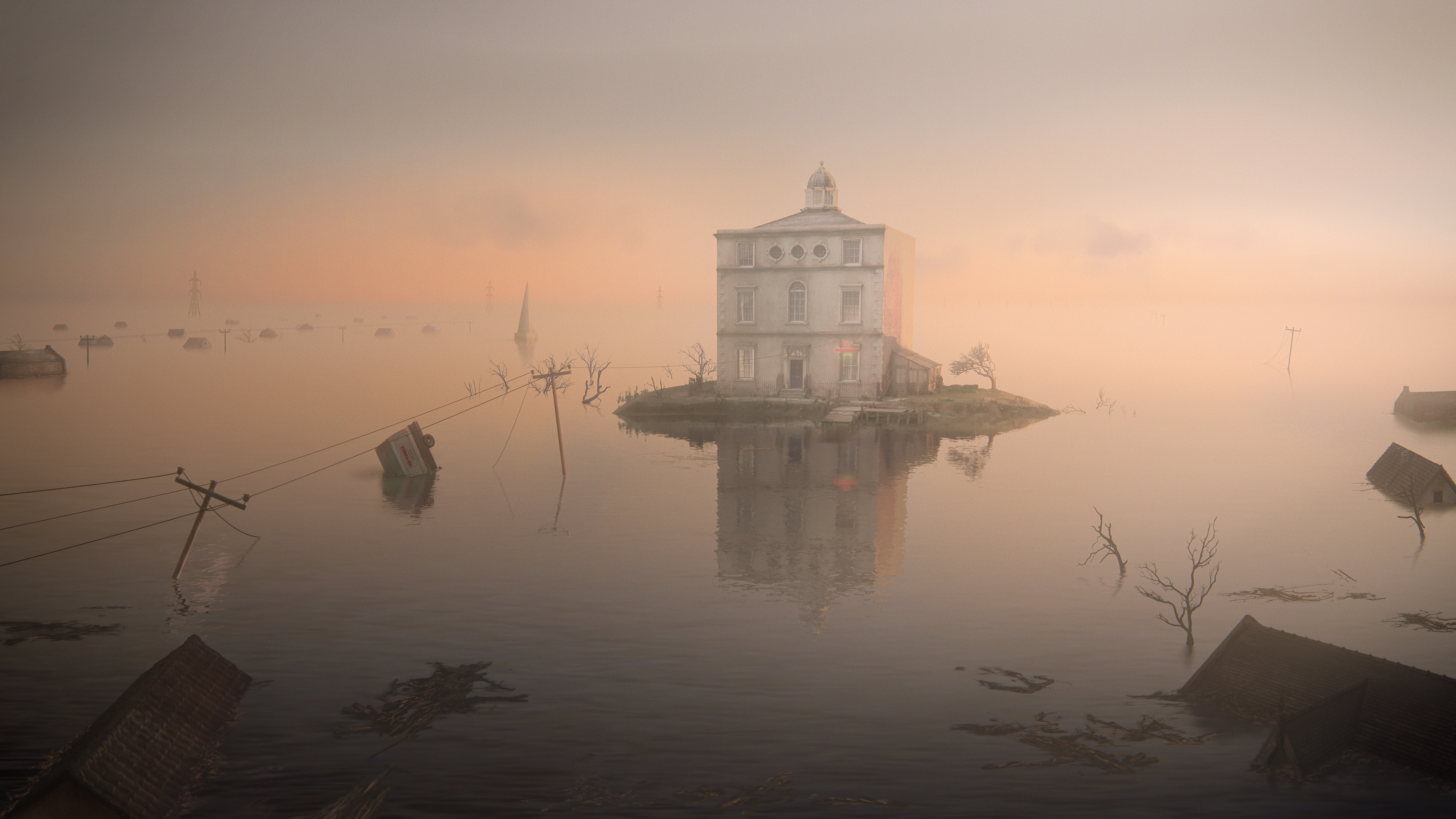
In Chapter Three, Listen Again and Seek the Sun, director Paloma Baeza offers us a washed out dystopia, set in the near future. Floods have risen, and the house looms precariously out of the water, an island in a never-ending sea. It’s all studio apartments now, owned by a cat called Rosa (Susan Wokoma), who dreams of restoring the dilapidated building to its former glory. The Pinterest-style boards attached to her wall show an ambitious vision, but she’s fighting a losing battle. All but two of her tenants have left, and those who remain, Jen (Helena Bonham Carter) and Elias (Will Sharpe), pay their rent, respectively, in crystals and fish. Which is all very well, Rosa tells them crossly, but no plumber will accept them as currency so no, sorry, she can’t do anything about the horrible brown water that’s coming out of the taps.

When Cosmos (Paul Kaye) arrives, the truth becomes clear: Rosa needs to let go of her attachment to the house if she wants to survive.

Taken as a whole, these three stories amount to a gentle polemic, an admonishment to us all to realise what really matters before it’s too late to save the world. It’s beautifully done. The tales are fresh, engaging, and quirkily animated – a lovely way to while away an hour and a half.

4.1 stars

Susan Singfield