James McAvoy

Speak No Evil

12/09/24

Cineworld, Edinburgh

A cut above the usual Blumhouse productions, Speak No Evil is a multi-faceted psychological thriller. Directed by James Watkins, this is an adaptation of a 2022 Danish movie of the same name (which I confess I haven’t seen). It’s also the title of my thriller novel from 1993, but I’m going to be gracious and overlook that fact. Suffice to say that if the aim of the film is to put viewers on the edge of their seats and keep them there for an hour and fifty minutes, then it succeeds in spades.

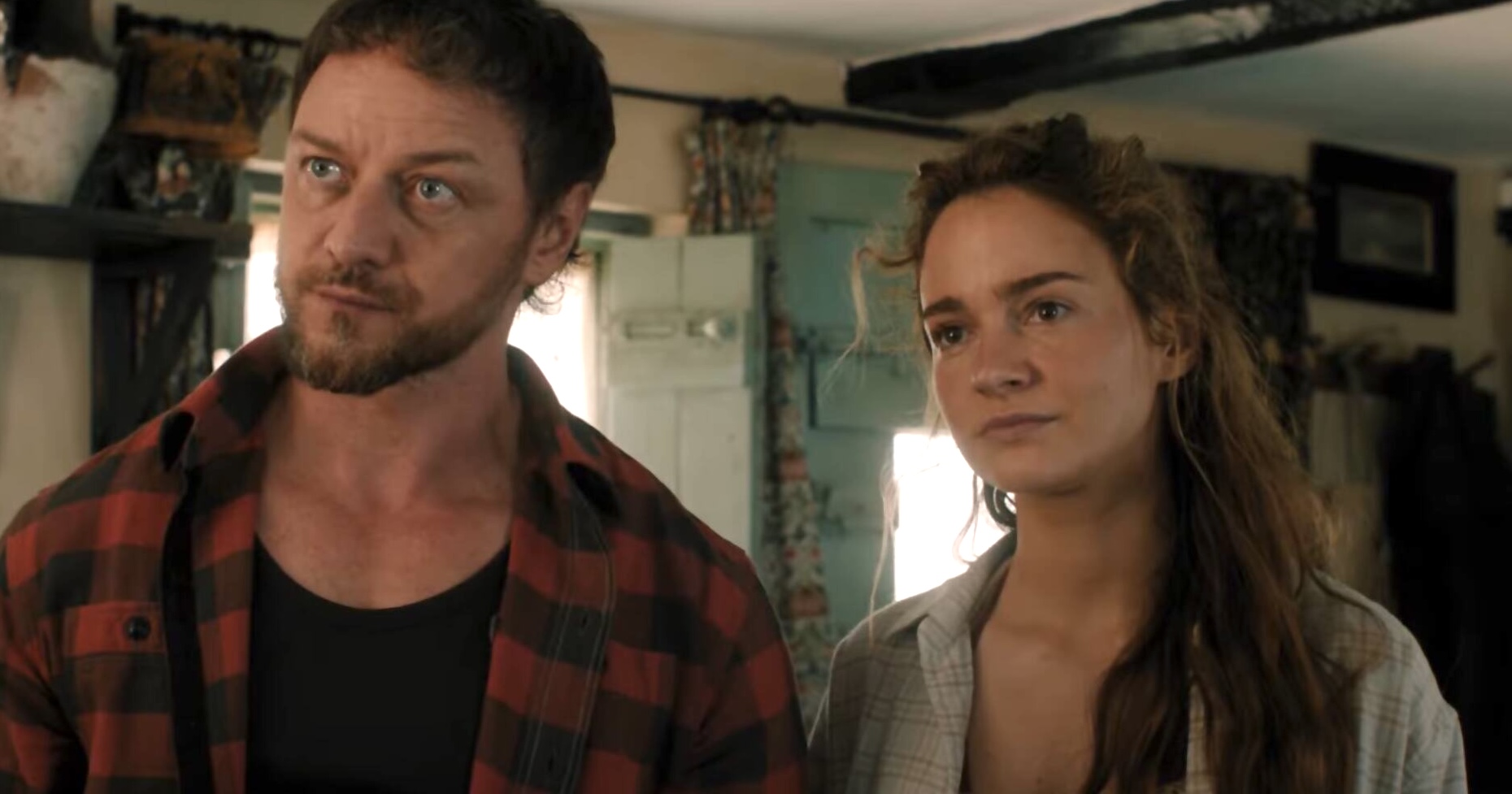
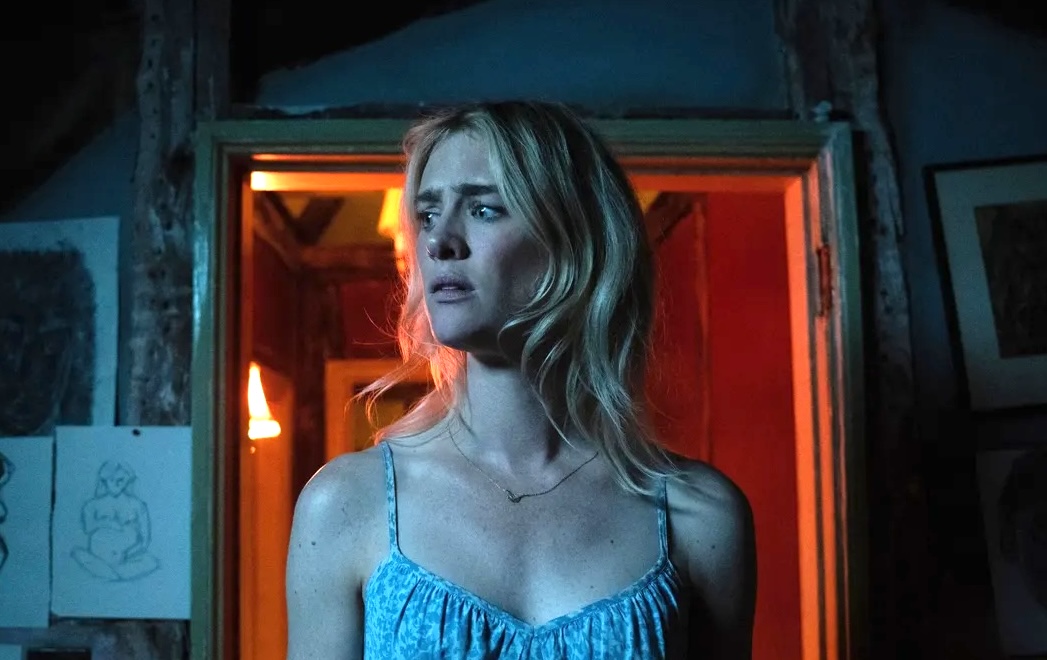
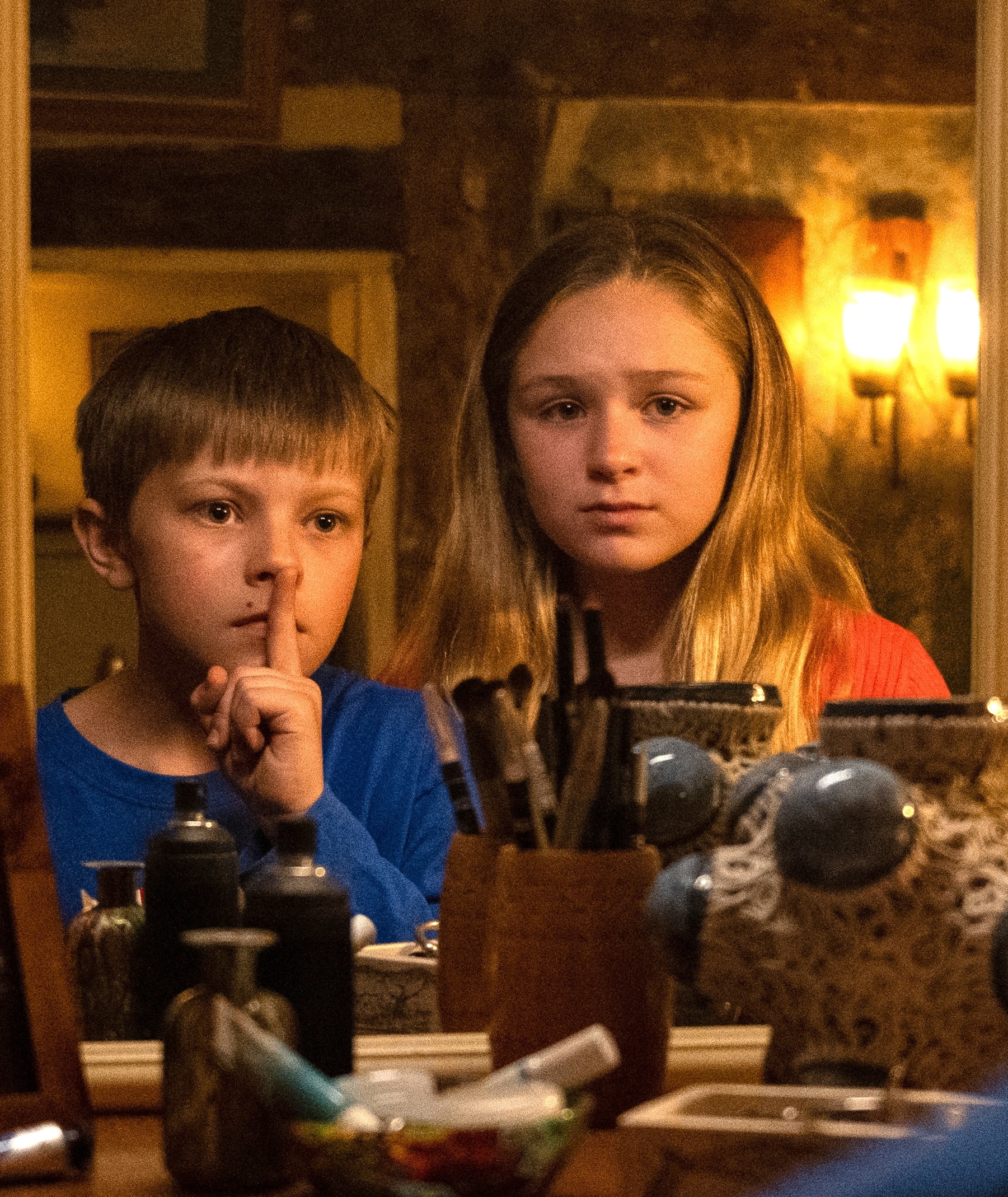
American couple, Ben (Scoot McNairy) and Louise (Mackenzie Davis), take their needy daughter, Agnes (Alix West Lefler), on holiday to Italy. Ben and Louise are currently going through a rough patch in their relationship and are looking to heal some wounds, so when they fall into company with irrepressibly confident British couple, Paddy (James McAvoy) and Ciara (Aisling Franciosi), they find themselves irresistibly pulled into their orbit. Paddy and Ciara also have a child in tow, the sullen and uncommunicative Ant (Dan Hough), who Paddy – a doctor no less – asserts is suffering from a rare condition that makes him virtually unable to speak.

The six holidaymakers get along surprisingly well. In a reversal of the usual national stereotypes, it’s the Americans who are all prim and repressed and the Brits who take delight in being loud, swaggering and generally unfettered. Then Paddy invites his new acquaintances to leave the pressures of their lives in London to enjoy a post-holiday visit to his lovely home in the West Country. Ben and Louise are at first somewhat unsure, but eventually decide to give it a go. After all, what can possibly go wrong?

Um, plenty as it turns out – but the clever thing about the screenplay (co-written by Watkins with Christian and Mads Tafdrup) is that the ensuing shenanigans at Paddy and Ciara’s suspiciously-palatial homestead are always kept just the right side of believability. This script takes its time to fully establish the American characters, so that we really care when things inevitably begin to go haywire for them. There’s a gradual evolution from edgy confrontation into the realms of full-blown horror. At first, it’s just Paddy and Ciara’s lack of propriety that’s the issue – but, as more and more boundaries are crossed, so the suspense rises to almost unbearable levels.

McAvoy’s Paddy is a wonderfully nuanced creation, by turns warm, emotive, sly and ultimately terrifying – but all the characters are nicely played and Davis in particular excels as she is increasingly compelled to compromise her beliefs. If the film’s latter stages are reminiscent of Sam Peckinpah’s Straw Dogs, well that was a very long time ago (1971 to be precise). Suffice to say that, as the narrative approaches its final furlongs, I find myself having to restrain myself from shouting advice at the screen. You know the kind of thing.

‘Don’t go back in there!’ ‘Look behind you!’ And that perennial favourite, ‘Forget about the cuddly toy!’ (You’ll need to see it to fully understand.)

One thing’s for sure. I’m never going to hear The Bangles performing Eternal Flame again without thinking of this nail-biter. Those of a nervous disposition will probably want to give this a miss, but cinematic thrill-seekers like me are going to enjoy it right down to the final frame, when they may – as I did – realise they’ve been holding their breath for a bit too long…

5 stars

Philip Caveney

Atomic Blonde


22/08/17

All those idiots who perpetually bleat that there could never be a female James Bond might care to check this out. If there were any lingering doubts that Charlize Theron can convince as an ass-kicker after Mad Max: Fury Road, then this should dispel those notions completely. Here she plays MI6 agent, Louise Broughton, a kind of Jane Bond figure who apparently subsists on a diet of neat vodka-on-the-rocks and cigarettes, whilst rocking a series of 80s fashions and performing extreme chop socky moves to the strains of classic rock songs. (This is the second film this year to use Flock of Seagulls’ I Ran to excellent effect. Just sayin’).

It’s November 1989 and the Berlin Wall is about to take a permanent dive. Broughton is sent over to Berlin to team up with fellow agent, David Percival (James McAvoy), a man who presents such a dodgy persona, it’s a wonder he can find his own reflection in a mirror. Somebody – Code Name ‘Satchel’ – has procured a list of British agents and their nefarious dealings during the Cold War, a list so incendiary that it mustn’t be allowed to fall into enemy hands. Broughton’s job is to find the list (and hopefully Satchel) and bring them both back to Blighty. But it isn’t an easy task when she can’t trust anybody…

What this basically boils down to is an excuse for a series of bruising action sequences, in which Broughton takes down what seems like a whole army of men, using any weapons at her disposal – a stiletto heel, a frying pan, a bunch of keys – she’s not fussy, she’ll employ anything that comes to hand. The highlight here is a long fight scene on  a staircase. Shot in a continuous take, it sets the bar high for pain and punishment and there’s no doubt that director David Leitch, fresh off John Wick: Chapter Two, knows how to stage a convincing punch-up. I loved the fact that people don’t emerge from one of these skirmishes with a polite spot of blood at the side of their mouth, as we so often witness in this kind of film – no, we regularly see Broughton’s bruised and swollen face and limbs and we quite understand her habit of taking occasional ice baths.

Rather less successful, however, is the plot, which is so labyrinthine as to defy all understanding. Virtually every character we meet is double-crossing somebody else or working for somebody else or pretending to be somebody else. By the conclusion, I thought I had a handle on most of it but I wouldn’t want to testify to it in court – or indeed, in the kind of rigorous debriefing that is used as the framework for Atomic Blonde. There are excellent supporting roles from the likes of Toby Jones, Eddie Marsan and John Goodman, as various men in suits, but this is undeniably a showcase for Theron’s star power and she makes the most of it.

A simpler plot would certainly have made this a better film, overall, but action junkies will love the fights and I’d be lying if I said that I didn’t find them thrilling. If Leitch can marry those superior action chops to a simpler, more convincing storyline, who knows what might be achieved? Here, he manages to win on points rather than achieving a knockout blow. But it’s certainly worth the price of a ringside seat.

3.5 stars

Philip Caveney

Split

21/01/17

It’s time to ask some important questions. Why do film companies keep giving M. Night Shymalan the money to make more films? Why do major actors still think it’s worth taking a punt on appearing in one of them? And perhaps most vexing of all, why do I keep giving the man another chance? To be fair, I’ve managed to resist seeing his last few efforts, alerted by terrible advance reviews, but the word on Split is that it represents a major return to form (something he hasn’t really had, in my opinion, since The Sixth Sense, way back in 1999). So off I dutifully trot to my local multiplex and, perhaps inevitably, I am disappointed once again.

Split is all about Kevin (James McAvoy), a man who suffers from Dissociative Identity Disorder and who, according to his therapist, Doctor Karen Fletcher (Betty Buckley), has twenty-three separate identities. At the film’s opening, he abducts three young women who are leaving a birthday party and imprisons them in his labyrinthine underground lair. One of them, Casey (Anya Taylor-Joy), seems more resourceful than her companions, mostly because of trauma she suffered in her childhood (and to which the film intermittently flashes back). Casey learns very quickly that one of Kevin’s personalities, a nine year old boy called Hedwig, is more approachable than the others and starts to investigate this as a possible way out of her predicament… but all of Kevin’s characters talk about the imminent arrival of a new and very frightening twenty-fourth identity…

It’s an intriguing premise but one which falls short on just about every level. Given that it’s about an abduction, the film fails to generate any real tension or sense of threat. Its risible treatment of a genuine psychological disorder, will, I have no doubt, offend anybody who knows anything about the reality of the situation, as will the actions of Doctor Fletcher, a supposed professional who surely breaks every rule in the book in her approach to her patient(s). McAvoy makes a decent fist of his eight roles (thankfully he isn’t called upon to show us the other fifteen!), which essentially means he changes his voice and expressions, so we’re never in any doubt as to which personality we’re seeing at any given time, but it’s hardly the grandstanding tour de force I’d been led to expect. Perhaps if the script (as ever, also by Shymalan) had been more skilful, I’d have been more convinced by what I was hearing.

All the usual Shymalan tropes are in evidence. Cameo performance by the director? Check. Twist ending that you can see coming a mile off? Check. Weird Twilight Zone-style payoff? Check. And oddly, we’re also offered a coda that absolutely relies on you having a working knowledge of the director’s early output. Inevitably, a lot of people left feeling baffled.

Shymalan has always had a very singular approach to his cinematic ‘vision’ but I’m sorry to say that, try as I might, it’s a vision that I am unable to share. Well, at least it was better than Lady In The Water.

2.2 stars

Philip Caveney