
James Mangold

A Complete Unknown

17/01/25

Cineworld, Edinburgh

Writer/director James Mangold has been down the music biopic route before with 2005’s Walk The Line (featuring Joaquin Phoenix as Johnny Cash), but the news that he was planning a film about Bob Dylan felt like a decidedly tall order. After all, Robert Zimmerman is the proverbial mystery wrapped up in an enigma, a man who has unabashedly invented (and reinvented) the details of his own story from the very start of his career. It’s to Mangold’s credit then, that A Complete Unknown is such a triumph, eschewing the idea of a ‘whole life’ depiction and choosing instead to focus on five turbulent years from the musician’s life.

it’s 1961 and a twenty-year-old Dylan hitchhikes from his home in Duluth, Minnesota to Greystone Park Psychiatric Hospital in New Jersey, where folk legend Woody Guthrie (Scoot McNairie) is slowly succumbing to the ravages of Huntingdon’s Disease. Guthrie is Dylan’s hero and he has come here to sing to him, as song he’s written all about the man. Present at the impromptu performance is Guthrie’s friend and fellow folk stalwart, Pete Seeger (Edward Norton). He’s impressed both by the song and the performer’s confidence, so he takes Dylan under his wing and starts introducing him to the flourishing folk scene in the coffee houses of New York City.

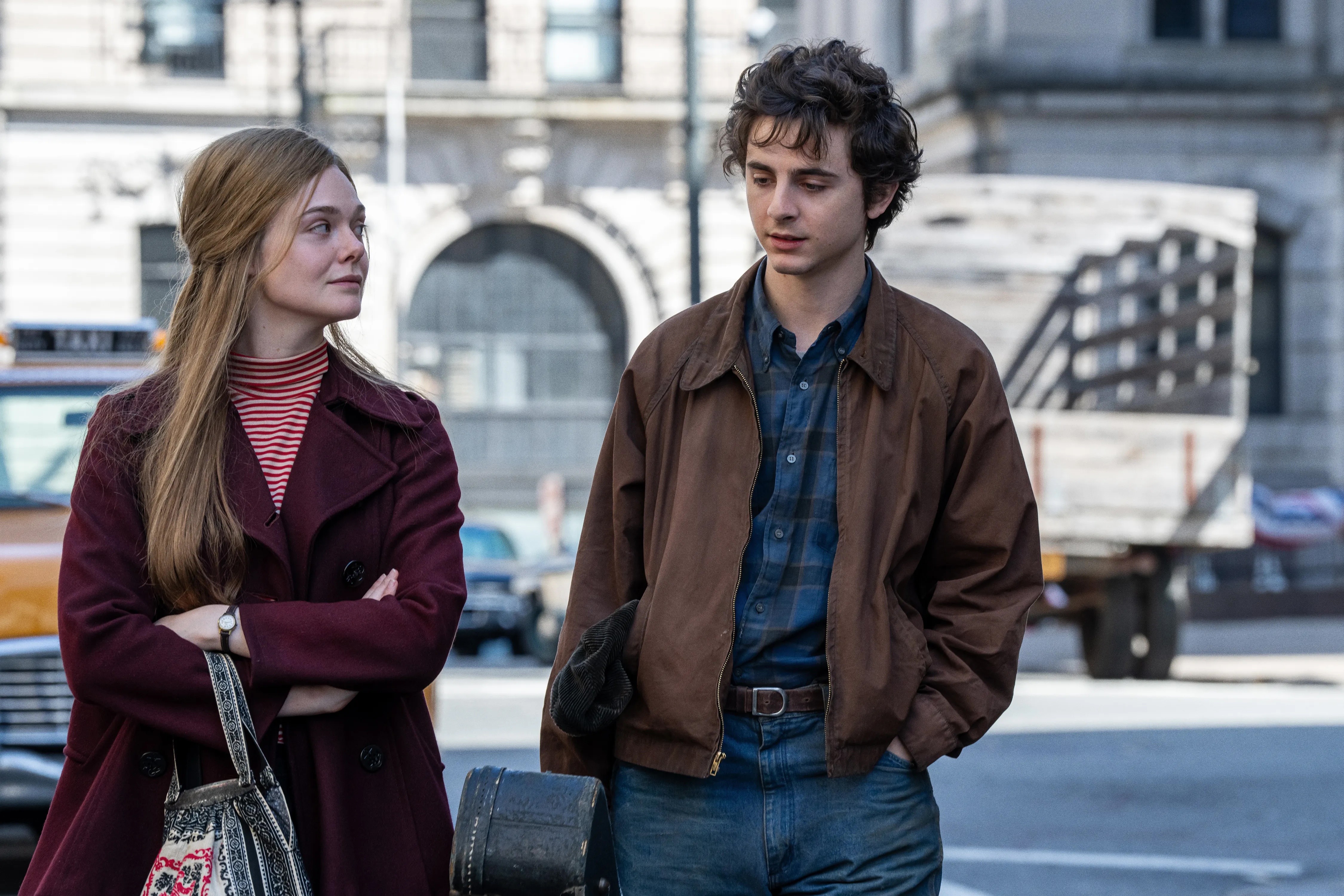
It isn’t long before his regular appearances start to gain him a reputation. At one concert he meets Sylvie Russo (Elle Fanning, a thinly disguised version of Dylan’s real life muse, the late Suze Rotolo), and the two of them become lovers and constant companions. He also meets folk singer Joan Baez (Monica Barbaro), already something of a star on the folk circuit. Baez covers some of Dylan’s songs and helps to bring his work to a wider audience, and inevitably, a romantic entanglement ensues between them.

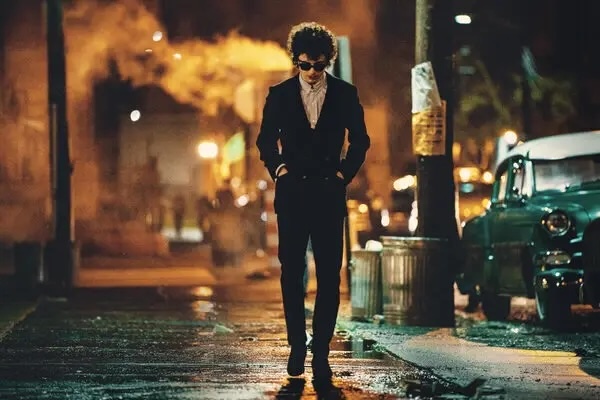
And then, Dylan begins to tire of the strictures of the folk scene and finds himself increasingly drawn to the trappings of rock music – the fashions, the poses, the volume. But he is to discover that folk puritans are opposed to sullying ‘their’ music with electric guitars and keyboards. It becomes clear that the transition won’t be an easy one to make…

These days, I am by no means a Bob Dylan fan, but I did follow him during the mid sixties and have always held a soft spot for Highway 61 Revisited – which, coincidentally, is the album around which this film reaches its climax. In the lead role Timothée Chalamet is quite simply astonishing, offering a performance that goes beyond the realms of mere impersonation. He actually performs all the songs and plays guitar on them. (A post screening Q & A tells me that he didn’t play the instrument before this film, but had the opportunity to work on his character for five years and figured he might as well go all-in). Co-star Barbaro had barely sung a note before she landed the role of Joan Baez, but she somehow nails the woman’s unique vocal style effortlessly.

And then of course, there are the songs, each one indelibly memorable and delivered with enhanced power at this IMAX screening, so that the film’s two hour plus running time seems to positively flash by. Dylan, as portrayed by Chalamet, is a whole contradiction of characters, by turns vulnerable, scheming, hard bitten and amorous, sneering, vindictive, reckless and determined. Of course, Chalamet has been nominated for an Oscar and, should he be successful, then it will be well-earned.

A Complete Unknown is a remarkable achievement, a film that captures the era in which it’s set with absolute veracity and which chooses to focus on one of the most important moments in music history. It’s fascinating to watch it unfold. (Okay, so a few small details have been tweaked – that infamous cry of ‘Judas!’ occurred at the Free Trade Hall, Manchester, not the Newport Folk Festival, but it matters not one jot.) This is a movie to enjoy on the big screen with the best sound system available. After the recent financial failure of the brilliant Better Man, I’m reluctant to speculate on what this film might achieve at the box office, but for my money, it ticks all the boxes.

It’s a musical feast. Dig in.

5 stars

Philip Caveney
Indiana Jones and the Dial of Destiny

28/06/23

Cineworld, Edinburgh

Steven Spielberg’s Raiders of the Lost Ark (1981) was a near-perfect movie, a fast-paced action adventure that harked back to the classic serials of the 1940s. It made a huge profit off a comparatively low budget, so – inevitably – there were going to be sequels. Indiana Jones and the Temple of Doom (1984) and Indiana Jones and the Last Crusade (1989) may not have had the perfection of their whip-tight progenitor, but were decent enough efforts in their own right. And that’s probably where the whole enterprise should have ended. 2008’s The Kingdom of the Crystal Skull was – to put it mildly – a major miscalculation, despite being helmed by the usually dependable Spielberg. For a very long time, there were vague rumours of a fifth outing which remained exactly that. Rumours.

After all, Harrison Ford was getting a bit long in the tooth, so… maybe not?

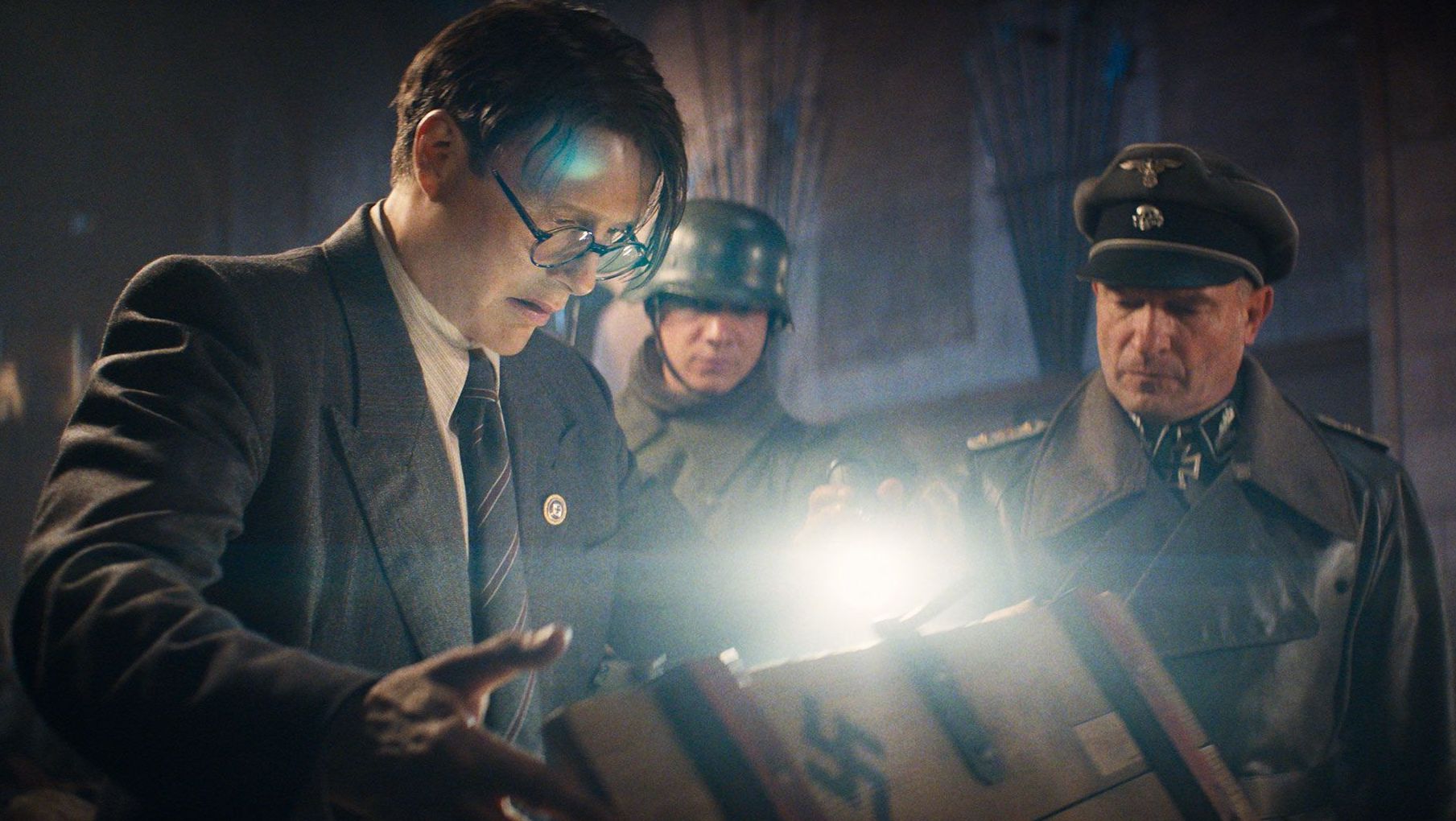
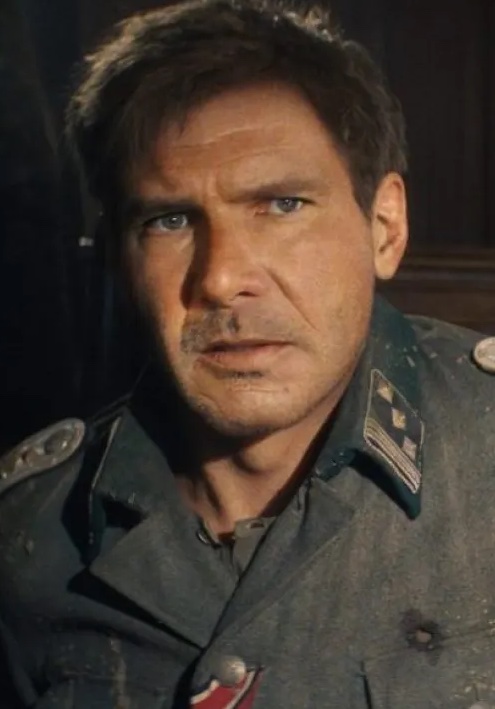
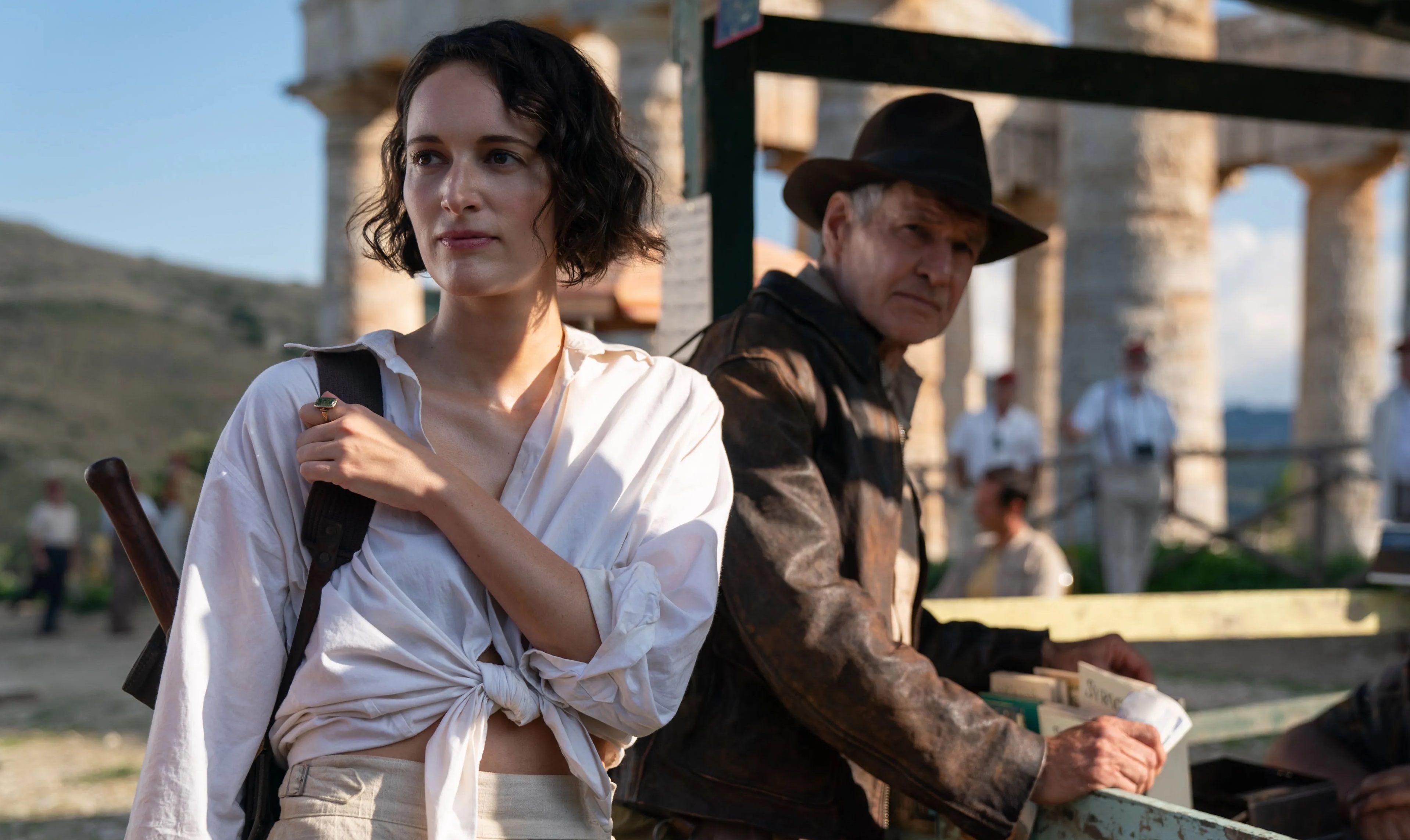
But now, directed by James Mangold, and written (mostly) by Jez Butterworth and his brother John Henry, everyone’s favourite archeologist is back in the game. When we reunite with him it’s via a flashback. It’s 1944, the Germans are rapidly losing the war and, thanks to the wonders of de-aging software, Indy looks like his former self. He’s working alongside his old pal Basil Shaw (Toby Jones) and the two of them are attempting to rescue an ancient antiquity, the Lance of Longinus, from a Nazi train packed with loot. Indy has just been taken prisoner, but needless to say, he’s soon free and wandering the length of the train, looking for the artefact. Also present is Dr Voller (the always excellent Mads Mikkelson), who has already decided the lance is a fake but has discovered instead, on the same train, the titular device (or at least half of it), built by Archimedes and capable of… well, that would be telling. A lengthy action set-piece ensues and it’s pretty good, serving as a promising opener.

But then we move to 1969. Mankind has just landed on the moon and Dr Jones is now earning a crust as a University lecturer, though his students seem much more interested in listening to rock music and smoking dope. Retirement beckons and it’s made very clear that Indy has lost his mojo. Then along comes his Goddaughter, Helena (Phoebe Waller-Bridge), who is also very interested in the Dial of Destiny, but mostly because she plans to sell it to the highest bidder. To give her fair credit, Waller-Bridge gives the franchise a much-needed update, and she’s good on the smart-arse wisecracks, but I’m not sure I quite buy her as an adrenalin-powered action hero. Then again, if I can accept an eighty-year-old male in the role, maybe anything is possible.

The bad guys soon come a-calling and, what do you know, they’re being led by Dr Voller, who has his own unthinkable plans for Archimedes’ invention and won’t hesitate to carry them out. Indy and Helena team up and a game of cat and mouse ensues with some protracted chases. A lengthy sequence featuring Ford on horseback (or at least, his stunt double) is perhaps the film’s standout, but the problem here is that there are just too many of these pursuits. A really complicated one featuring our heroes in a tuk tuk definitely overstays its welcome.

There are frequent nods to those earlier films – some of which work, others which feel meh – and there’s a surprisingly touching scene when Indy tells Helena about what happened to his son and why he and Marion Crane (Karen Allen) are no longer an item. John Rhys-Davies shows up once again as Sallah, but is given very little to do here and, naturally, Helena has a keen young assistant in the shape of Teddy (Ethan Isadore), who seems able to turn his hand to most things, including at one point piloting a plane. As you do.

With a running time over two-and-a-half hours, it’s to Dial of Destiny’s credit that it never really runs out of steam and, if the final conceit is hard to swallow, well, this is a series that’s known for it’s supernatural reveals. (Just don’t overthink the space-time continuum stuff because, on reflection, much of it really doesn’t add up.) I leave feeling that I’ve been suitably entertained but, before I’ve even made the short walk home, I’ve thought of at least half a dozen questions that remain maddeningly unanswered.

So, this is far from the disaster I anticipated but, when held up against that brilliant opening shot of Raiders, it’s frankly not in the same league. I can’t help feeling that, now it’s out in the world, this particular treasure chest should be triple-locked and left in a quiet place to gather dust.

3.8 stars

Philip Caveney

Le Mans ’66

20/11/19

It’s strange the way cinema can reel you in to subjects that would normally leave you as cold as the proverbial stone. To me, the idea of watching a real-life 24-hour sports car endurance race rates only slightly higher than listening to the collected speeches of Nigel Farage. But Le Mans ’66 actually manages to engage me – indeed, in places, it has me perched on the edge of my seat, holding my breath and crossing my fingers.

This based-on-real-events movie, scripted by Jez Butterworth (among others) and directed by James Mangold, focuses on the rivalry between the Ford Motor Company and Ferrari in the mid 1960s. It culminates in the famous racing event of the title. (In America, the film is known as Ford vs Ferrari, which – to my mind – feels much more on the button, but we’ll let that one go.)

Carroll Shelby (Matt Damon) is a former racing driver, reluctantly forced to seek out a  safer occupation (sports car salesman) because of a dangerous heart condition. He is close friends with another driver, Ken Miles (Christian Bale), a cantankerous, tea-swilling Brummie, who – once behind the wheel of a motor car – transforms into an invincible force. Meanwhile, Henry Ford II (Tracy Letts) is fed up with his cars being regarded as dull. He starts to think about taking on Enzo Ferrari (Remo Girone) at the sport the latter dominates, with particular regard to the world’s most gruelling race, Le Mans. Shelby is approached to helm the project, but his choice of Miles as his head driver ruffles a few feathers, not least those belonging to Leo Beebe (Josh Miles), a character so oleaginous, he virtually leaves a trail of slime behind him.

The titular racing event beckons, but there’s a lot of work to be done before Shelby and Miles can even get to the starting line, and most of their problems originate from the interfence of  ‘The Suits’ who run Ford.

There are plenty of things in this film’s favour – not least a dazzling turn from Bale, who offers us one of the few truly sympathetic characters in this story. Damon gets the trickier role as the man who has to bottle up his raging inner demons as he tries to maintain the status quo between Miles and his image-obsessed employers. This is the 1960s and it’s still very much a man’s world, so there’s some major league dick-swinging going on from most of the players. Catriona Balfe is therefore a welcome presence as Miles’ wife, Mollie, and young Noah Jupe offers yet another lovely performance as his hero-worshipping son, Peter. But there are perhaps too many scenes where male characters in business suits stubbornly assert themselves, because… well, because they think they know best.

And… with a running time of two hours and thirty-two minutes, it’s hard to prevent the motor racing sequences from feeling a little bit like an endurance test for the audience. It doesn’t matter how brilliantly they are filmed – and trust me, they are – it’s sobering to emerge from the lengthy onslaught of Daytona ’66 only to realise that the film still hasn’t reached the climactic event after which it’s been named. How much punchier would this be if the running time came in at under two hours?

Still, petrolheads are going to have an absolute field day here – and a quick Google search assures me that the catalogue of awful decisions that are arbitarily thrown at Ken Miles really did happen as depicted here. Little wonder he was so cantankerous!

And, if a committed pedestrian like me can emerge from Le Mans ’66 feeling entertained, I’m pretty sure that plenty of others will too.

3.8 stars

Philip Caveney

Logan

03/03/17

Like many other cinema-goers, I’m getting close to superhero overload. Much as I enjoyed the output of Marvel and DC in my comic-reading childhood, the plethora of recent movie adaptations is starting to feel oppressive. But the trailer for Logan suggests that writer/director James Mangold’s take on the X-Men saga has something fresh to offer, so I resolve to give it a chance. And it’s largely a good call.

Unlike most other superheroes, Logan – or Wolverine to use his stage name – has only ever been portrayed by one actor, Hugh Jackman. Here, the term ‘super’ hardly applies because we see him towards the end of his career, a battle-scarred, embittered survivor, addicted to alcohol and prescription drugs and barely holding down a job as a stretch limo chauffeur. (A scene where he is called upon to drive a rowdy hen party is particularly effective – has it really come to this?)

Oh sure, he can still sprout a set of quality steak knives from his knuckles when circumstances dictate it but even this causes him considerable pain. His old mentor, Professor Charles Xavier (Patrick Stewart) is also in a bad way, semi-senile and afflicted by violent fits that cause all manner of problems (and not just for him). The two former X-Men live in a secret desert hideaway, tended by their albino mutant servant, Caliban (Stephen Merchant making a credible stab at a sort-of straight role). Caliban’s super power is that he has a highly developed sense of smell, which let’s face it, as super powers go is somewhat underwhelming, but he’s also a dab hand with an electric iron, which means that Logan always has a clean, pressed shirt to wear for work.

Things get complicated when Logan is introduced to Laura (Dafne Keen) a child who has been transformed by evil scientist, Dr Rice (Richard E. Grant), using genetic surgery so that she’s now a chip off the old adamantium block, with all the same skills as Wolverine and a tendency to kick off at the least provocation. She is, in the weirdest possible way, Logan’s daughter. It turns out that there’s a whole bunch of genetically modified kids on the run and Dr Rice and an army of gun-wieldng henchmen are determined to recapture them. Bred originally as super-soldiers, they have proved to be failures (too ‘human’) and now need to be eliminated. Logan has little option but to lend them his support.

Much running, leaping and fighting ensues. Logan’s habit of shish-kebabbing the heads of his enemies is particularly grisly and the film occasionally hangs on to its 15 certificate by the skin of its teeth, but the various chases and skirmishes are skilfully devised and genuinely exciting, even if it feels as though the film would benefit from being twenty minutes shorter. Like most movies of the genre, it also features a plot hole the size of Sumatra. If Dr Rice is such a genius, why hasn’t he realised that sending in a hundred men armed with conventional weapons isn’t the best way to go when a single adamantium bullet would stop Logan in his tracks once and for all? But that, I suppose, would be a very short and very unsatisfying story.

As it stands, Logan is an effective metaphor for the process of ageing and, in a strange way, an elegy for the superhero concept itself. Mangold has taken some bravura risks with the X-Men format here and they largely pay off, making this one of the most watchable of Marvel’s recent endeavours. I’ve only one real complaint. The trailer uses Johnny Cash’s fabulous version of Hurt by Nine Inch Nails to great effect. As the credits roll on Logan, we’re fobbed off with a different and far less appropriate Cash song and this feels like a bit of a missed opportunity.

But musical misgivings aside, this is well worth your time and money.

4 stars

Philip Caveney