
22/02/23
Cameo Cinema, Edinburgh
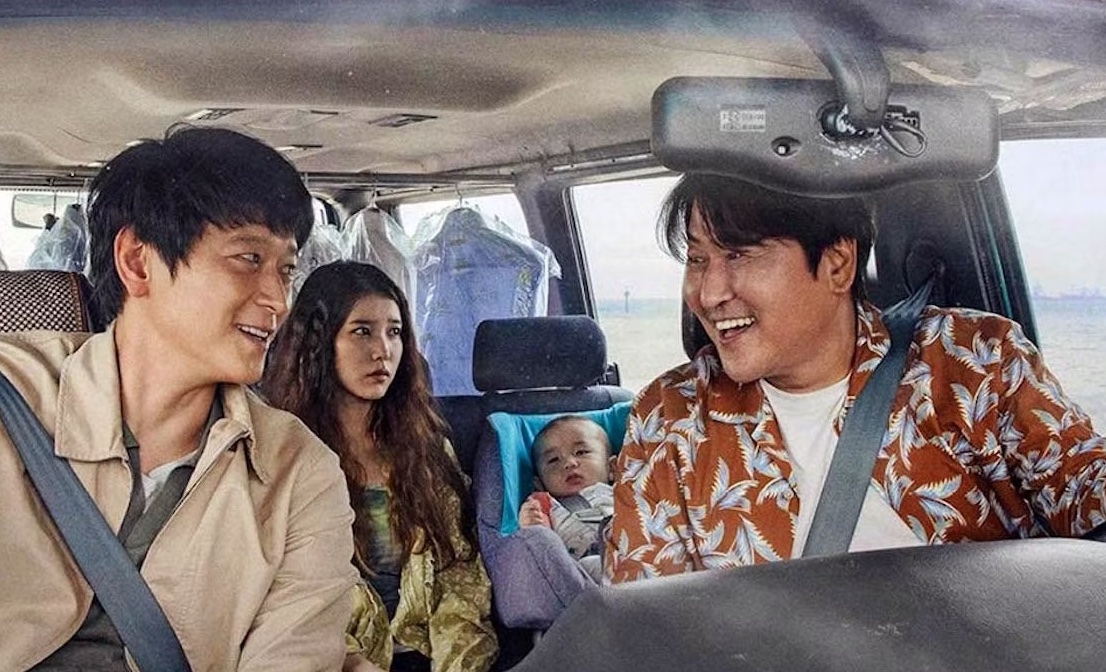
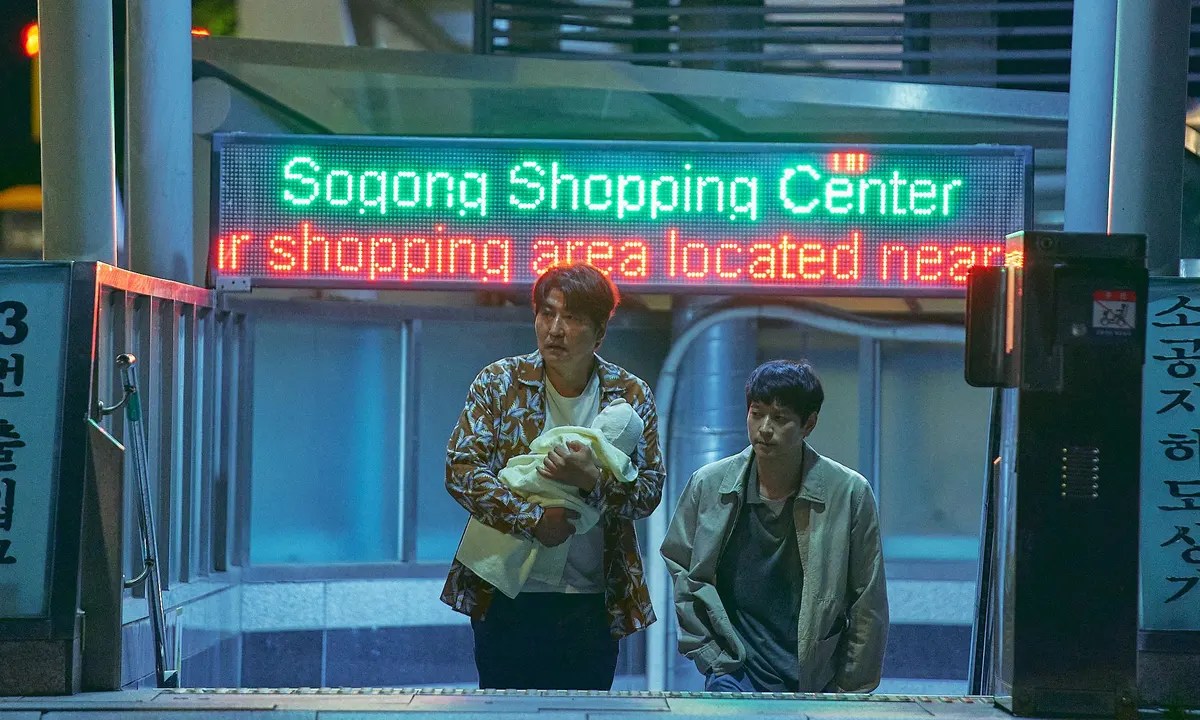
In the rain-lashed city of Busan, prostitute Moon So-young (Ji-eun Lee) takes her recently born boy to a local church’s ‘baby box’ – a safe space where troubled parents can leave their newborns to be collected by orphanages. She’s unaware that a volunteer at the church, Ha Sang-hyun (Song Kang-ho), is running a lucrative sideline, occasionally kidnapping a child and selling it on the open market to young couples who are unable to have children of their own. He’s aided by his friend, Dong Soo (Gang Don-won), an orphan himself, and neither of them seem to have any qualms about what they’re doing. On the contrary, they have convinced themselves that it’s somehow noble.
However, when So-young has a change of heart and returns to the church to look for her child, she’s met by Dong Soo, who explains the situation, and, surprisingly, she decides to go along with their plan, the three of them sharing whatever money they make. They are blissfully unaware that their every move is under surveillance by two detectives, Su-jin (Bae Doona) and Lee (Lee Joo-young), who follow them as the trio set off across the country in a battered van to visit the various prospective buyers.
Japanese director Hirokazu Koreeda, working with cinematographer Hong Kyung-pyo, does a great job of capturing the atmosphere of various locations across Korea, from teeming cities to tranquil landscapes, but there’s a major flaw at the heart of this film, which presents Ha Sang-hu and Dong Soo as a couple of lovable misfits, who seem to see themselves as modern day Robin Hoods (a character in my latest novel Stand and Deliver labours under the same misconception, but this is only his self-assessment and it is shown to be wrong). In Broken, Song Kang-ho in particular – familiar to western audiences from the brilliant and infinitely superior Parasite – is just too downright likeable. Koreeda never seems to acknowledge that the character is doing something heinous and beyond excuse.
Furthermore, a couple of gangsters – who are leaning on Ha Sang-yun for protection money – must be two of the most unthreatening bad guys in movie history. As the story unfolds, it gradually builds to a supposed climax when the two detectives manage to persuade Moon So-young to wear a wire, so they can listen in on proceedings.
And then there’s a sudden conclusion that feels pat and – it must be said – somewhat unbelievable.
Broker has been the recipient of a clutch of incredible advance reviews, but the truth is that this is a muddled and unconvincing story, that seems to believe that contemporary audiences will be willing to ignore the problematic nature of the central characters’ actions. I for one, cannot and that’s an issue that shunts this film into the file labelled ‘D for disappointing’.
3.4 stars
Philip Caveney


 Bouquets & Brickbats