Henrik Ibsen

Ghislaine/Gabler

19/08/22

Greenside at Riddles Court, Edinburgh

Ghislaine Maxwell is largely defined by her relationships with men: she is Robert’s daughter and Jeffrey’s partner. But who is she now, alone in her prison cell, her father long-gone, her ex-lover also dead? She’s a woman of many parts: convicted sex-trafficker, erstwhile socialite, pampered rich-kid, penniless fighter – and the only person serving any time for the rapes that occurred at Epstein’s ‘parties’. The rapists themselves are either dead or free.

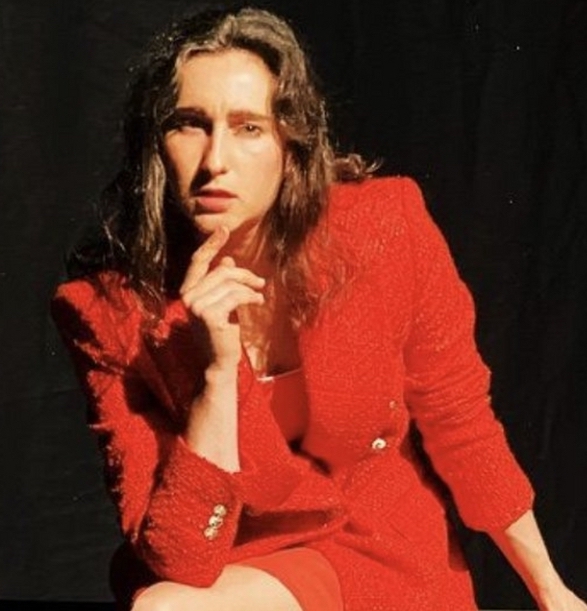
In this challenging piece of theatre, Kristin Winters draws a parallel between the enigmatic Ghislaine and Ibsen’s anti-heroine, Hedda Gabler. The similarities are, in fact, quite astonishing, although I wouldn’t have made the connection by myself. Like Ghislaine, Hedda grows up living in the lap of luxury, and is close to her difficult but rich father – and, like Ghislaine, his death leaves her (relatively) poor. Both women are known by their fathers’ names (Hedda’s married name is Tesman; Ibsen explains the title thus: “My intention in giving it this name was to indicate that Hedda as a personality is to be regarded rather as her father’s daughter than her husband’s wife”). Both women are corrupted by their circumstances, and abuse their power to hurt those weaker than themselves. They each seek to influence other people’s fates; they are hungry and twisted, and it is hard for others to understand what motivates them.

So, yes. The conflation makes perfect sense. And writer/performer Winters’ strange and complex play is as fascinating as the women themselves. It’s an exploration of something unknowable, that raises as many questions as it answers. It’s not an easy watch – and nor should it be. It’s as gnarly and difficult as Maxwell and Gabler, as opaque and unfathomable as their actions. Winters mixes physical and verbatim theatre, lines from Hedda Gabler, imagined internal monologue and dance – and the result is extraordinary. Winters’ intensity is almost unbearably disconcerting.

Perhaps the piece is a little too demanding of its audience: there’s an assumption that we’re au fait with not just the Epstein case (fair enough, that’s common knowledge), but also with Hedda Gabler (I’ve got that one, luckily), and with what happened to Robert Maxwell (in my case, just the ‘media-mogul-financial-misconduct-drowning’ elevator-pitch). I’d like maybe a tad more hand-holding to guide me through some of these details.

This is an intelligent and arresting play and, although I don’t enjoy it exactly, I guess I’m not supposed to. I’m provoked, intrigued, and – in the end – impressed.

4.1 stars

Susan Singfield
The Enemy

20/10/21

King’s Theatre, Edinburgh

Ooh. I’m VERY excited about this one. I’m an avid admirer of Ibsen – what self-respecting theatre-lover isn’t? I’m in awe of the way he combines theatrical innovation and political conviction with accessible story-telling. I’m also a fan of Kieran Hurley’s work (Chalk Farm, Mouthpiece and Beats are all excellent), so I’m fascinated to see what he and director Finn den Hertog do with the Norwegian’s masterpiece, An Enemy of the People.

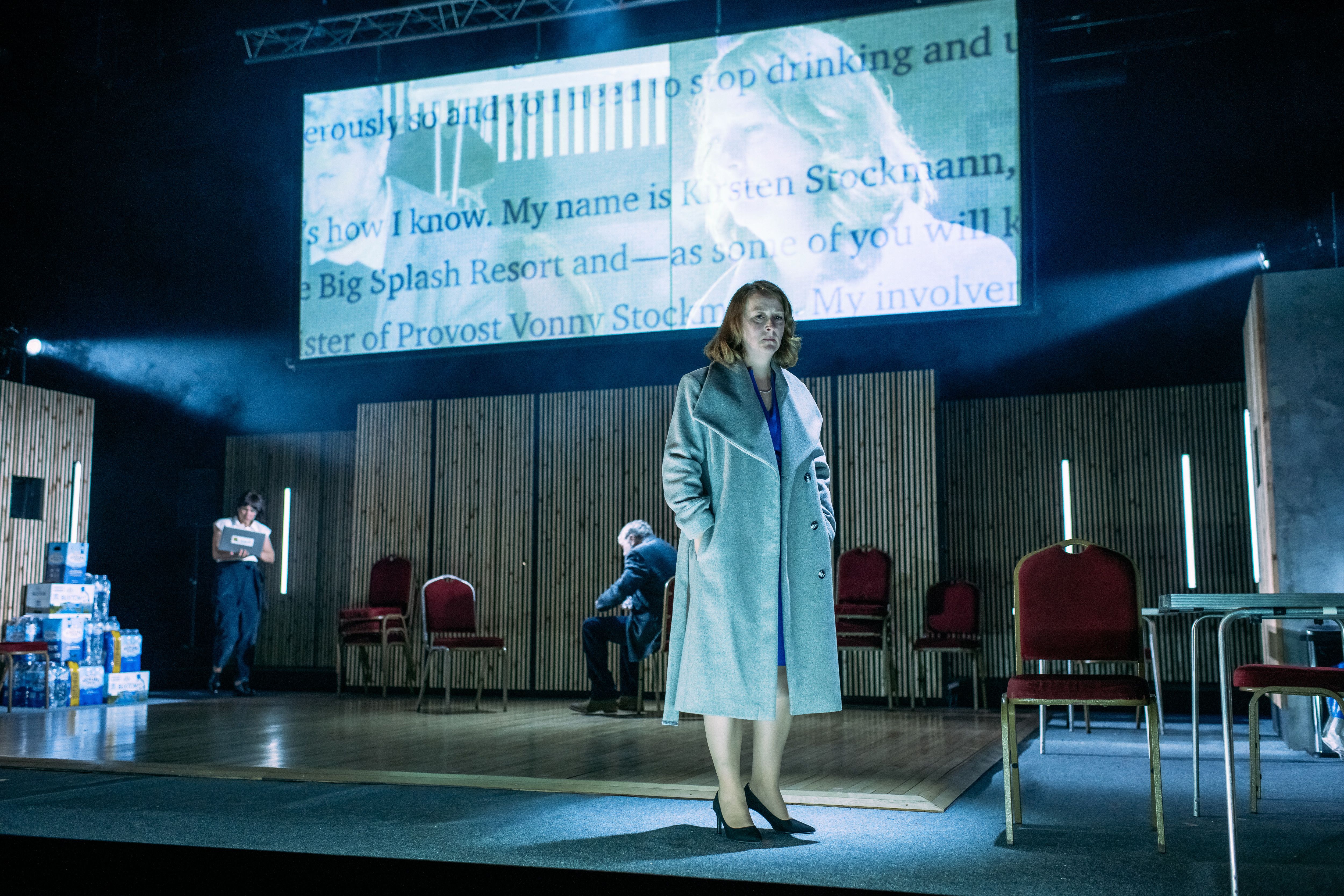
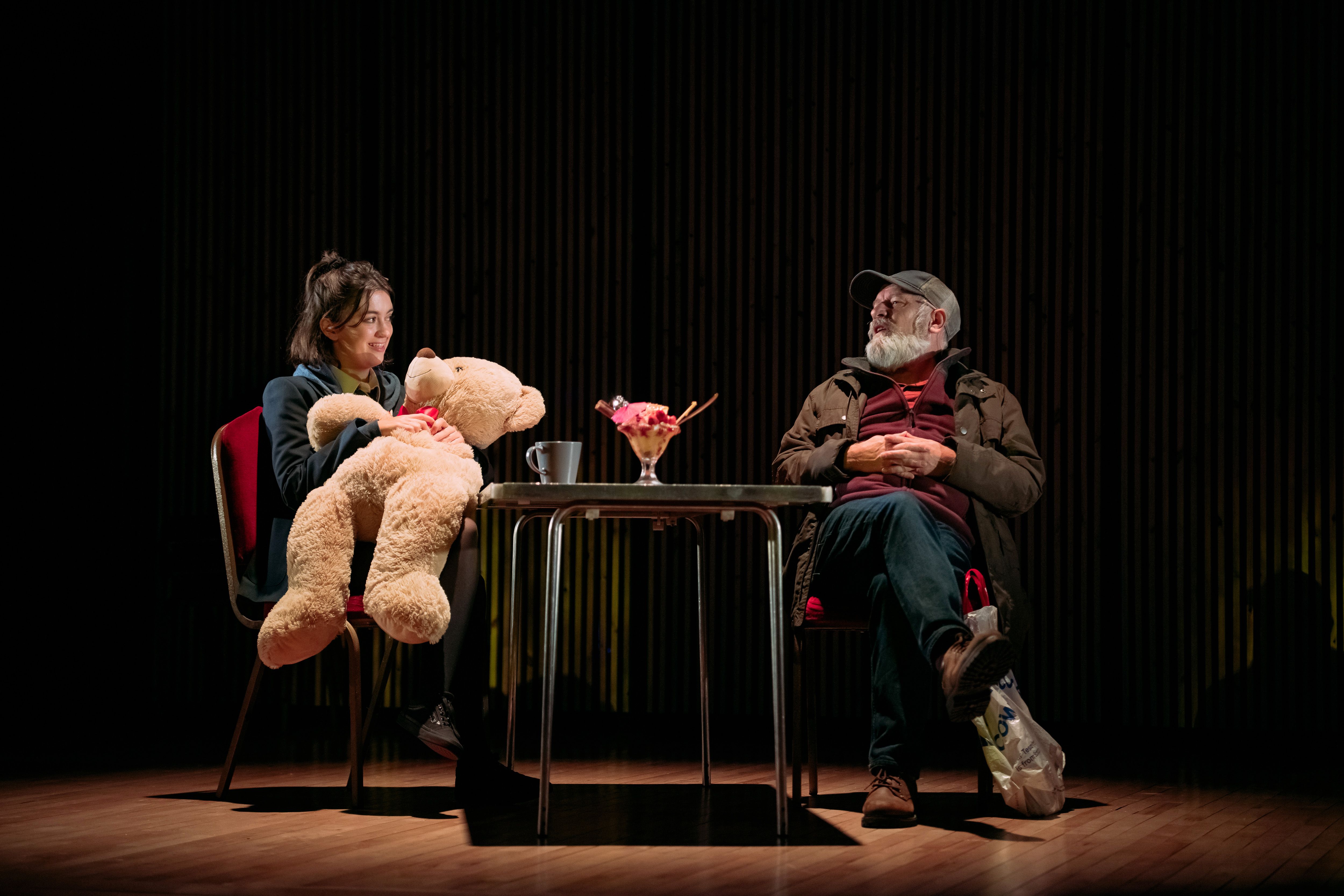
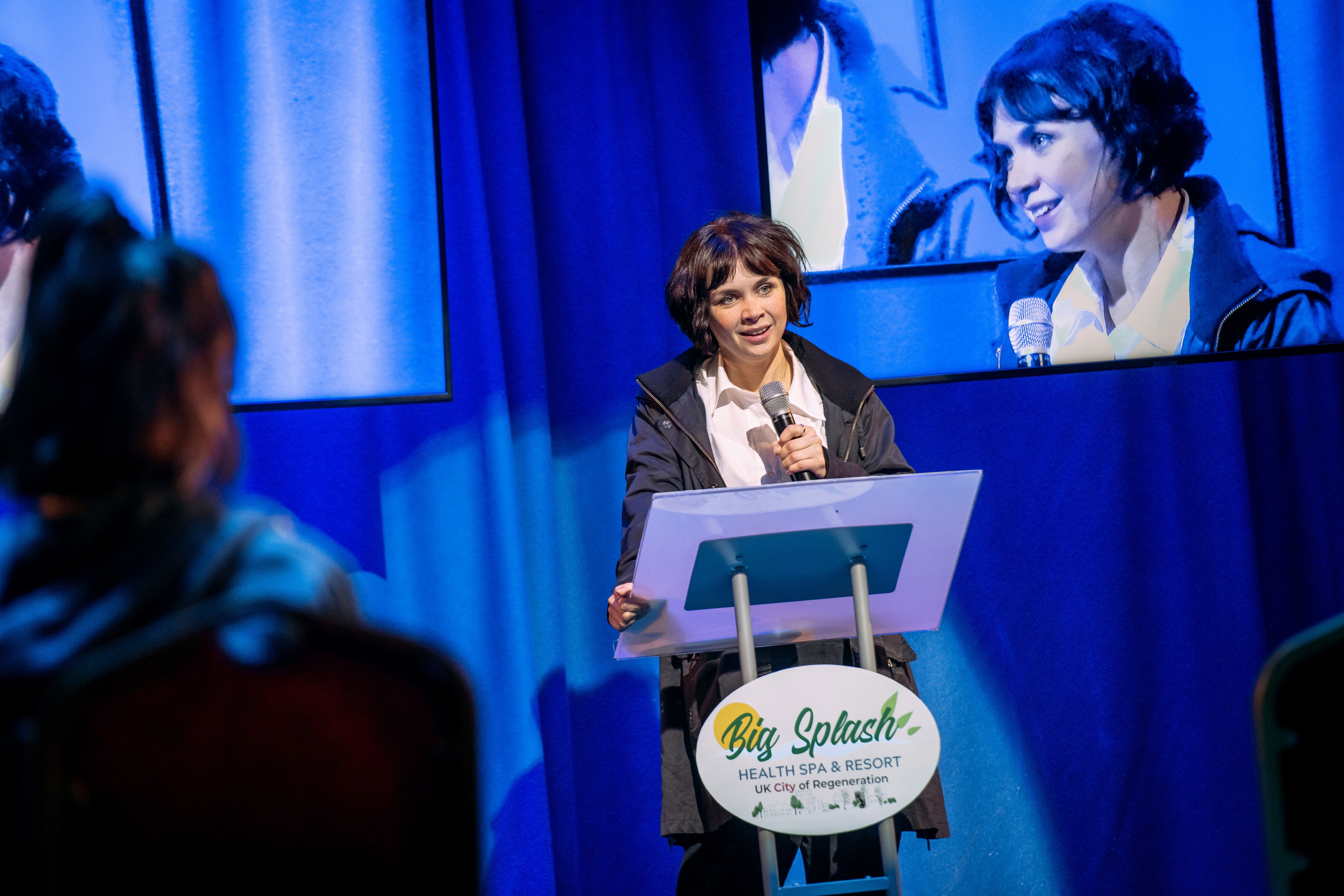
In fact, Hurley doesn’t change much at all, plot-wise. This 140-year-old play is uncannily prescient. The difference is all on the surface: in the modes of communication, and the cadence of the dialogue – and it’s beautifully done. The story shifts easily to a contemporary “once-great Scottish town,” where a new spa resort promises regeneration, and offers hope to the poor and dispossessed who live there. But Dr Kirsten Stockmann (Hannah Donaldson) is concerned: a sickness bug is spreading, and she’s almost certain the town’s water supply has been contaminated. But how? Could blame lie with council-approved shortcuts, aimed at bringing forward the resort’s opening? Maybe. If so, it’s more than a little awkward, because the provost is Kirsten’s sister, Vonny (Gabriel Quigley). Still, surely she will be grateful for the heads up, pleased to be able to avert a public health disaster, no matter what the cost? But no. Vonny has no qualms: without the resort, the people have nothing. They’re not sick because of poison, she tells her sister; they’re sick because they’re poor. She has a point.

Although the story remains unchanged, the staging is bang up-to-date: video designer Lewis den Hertog has created a multi-media piece à la Katie Mitchell, with ‘live cinema’ (where the onstage action is filmed and projected simultaneously onto a large screen) a key feature. There are pre-filmed sequences too, such as a jarringly upbeat advert for the new resort, and a series of enthusiastic vox pops on the local news. And there are text messages, and YouTube videos, and Skype and BTL comments a-plenty. It’s Ibsen with all the socials. It works. There’s a dizzying sense of things spiralling out of control, with Kirsten in the middle, alone, holding on to the damning test result – a dreadful talisman.

But Kirsten isn’t quite alone. She might have broken ties with her sister; her friend, Benny (Neil McKinven), and local celeb, Aly (Taqi Nazeer), might have sidled away – but her teenage daughter, Petra (Eléna Redmond) is firmly on her side. And so, perhaps, is Derek Kilmartin (Billy Mack), who has a proposal for Kirsten to consider…

It’s wonderful to see creative theatre projects taking shape again (I’ve nothing against old favourites, and it’s clear to see why theatres are being cautious post-pandemic, but it’s definitely time for something new). This particular project seems like a canny move, combining Ibsen’s timeless appeal with something bold and fresh. It’s almost guaranteed to get bums on seats, while simultaneously allowing playmakers the chance to experiment. Good call!

For the most part, it pays off. I have a little trouble hearing some of the dialogue, especially in the first act. I’m sitting quite far back in the stalls, which might have something to do with it, but I wonder if it’s more about the actors delivering their lines to cameras rather than to the auditorium. But this is my only gripe. The performances are natural and convincing, the relationships well-defined.

The message is clear: the truth matters, however unpalatable. It’s a timely homily. We need to heed the experts. The only problem is, we all think we’re Kirsten Stockmann.

4.3 stars

Susan Singfield