Hayley Squires

Blitz

09/11/24

Cameo Cinema, Edinburgh

Steve McQueen is always a fascinating filmmaker and I love the fact that I never quite know what to expect from him. Blitz is an Apple Original, destined to start streaming soon, but I would urge anyone interested to seek out an independent cinema where it’s showing, because this is a film that deserves to be seen on the big screen. As the name suggests, it’s set in 1940 as London undergoes the Blitzkreig, bombed on an almost nightly basis by the Luftwaffe.

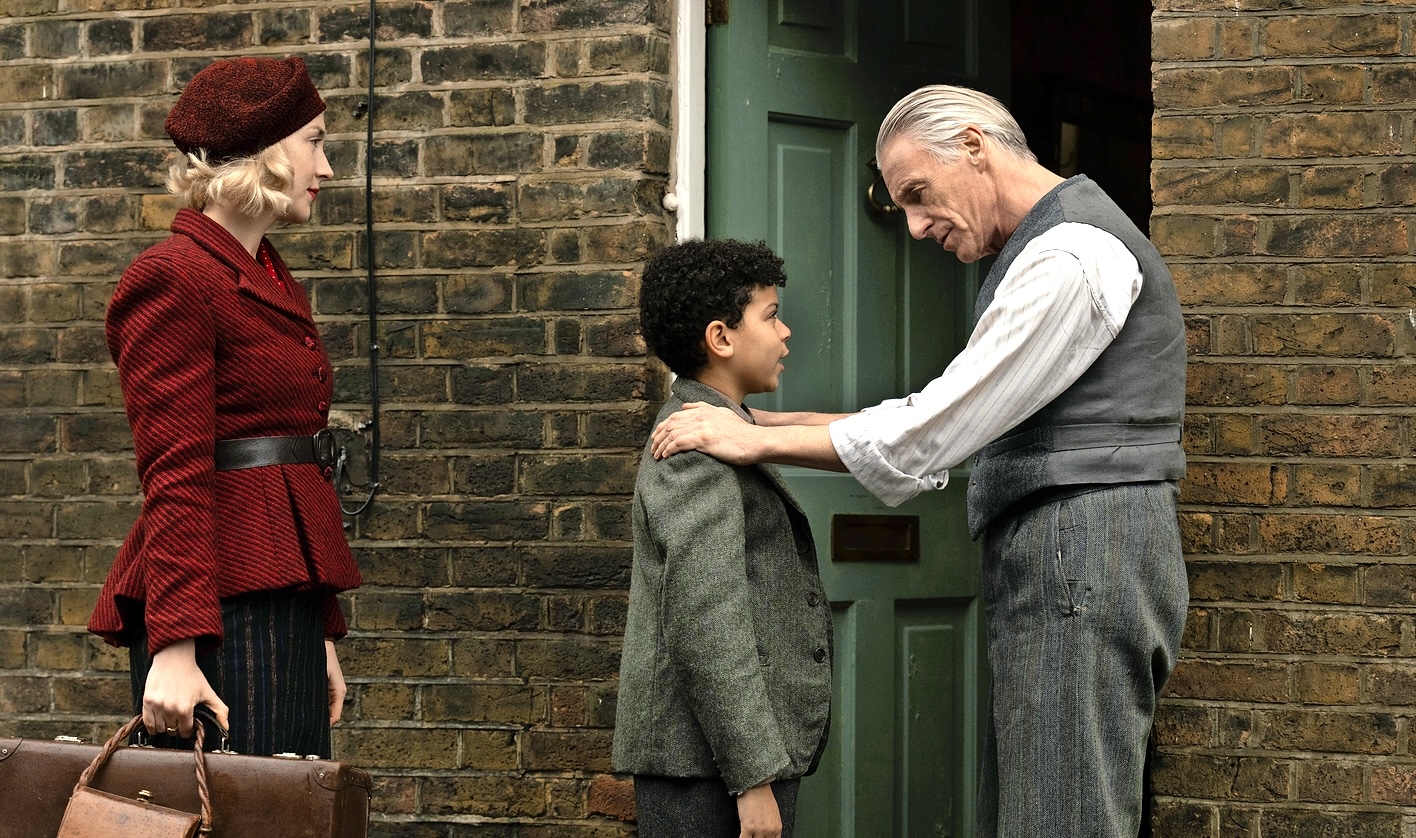
The story is centred around George (Elliott Heffernan), a young mixed-race boy, who lives with his mum, Rita (Saoirse Ronan), and his grandad, Gerald (Paul Weller), in a little terraced house in the city. George has never met his father, who we learn (in flashback) has been deported back to Grenada for entirely nefarious reasons. As the bombing becomes more intense, the government’s plan for the mass evacuation of children from the city is announced. George is reluctant to leave his mum but, together with a bunch of other youngsters, he’s put aboard a train heading for the safety of the countryside.

But George has other plans and, at his first opportunity, he jumps off the train and starts to make his way back along the track in the direction of home…

What ensues repeatedly puts me in mind of a YA adventure as George encounters a whole selection of characters on his way home: kindly Black air-raid warden, Ife (Benjamin Clémentine); callous Fagin-esque thieves, Albert (Stephen Graham) and Beryl (Kathy Burke); and a trio of friendly young boys who keep challenging George to do ever more reckless things. His odyssey is intercut with scenes of what’s happening to Rita: working in a munitions factory; heading out on the town with her friends, Doris (Erin Kellyman) and Tilda (Hayley Squires); even performing a song for the BBC when a live series visits the factory. Episodic it most certainly is but, unlike most of the Sunday evening dramas it might be compared to, the stakes here are perilously high and happy endings are by no means assured. Whenever the story is in any danger of heading towards sentimentality, McQueen (who also wrote the screenplay) finds a way to snatch it back and amp up the jeopardy, never allowing us to forget that these are dangerous, unpredictable times – and not everybody is destined to make it to the end of the line.

The production values are first-class throughout, the depictions of the war-torn city sometimes awe-inspiring, occasionally verging on high art. Blitz also offers a fresh insight into the era, the war seen from the point of view of a boy who suffers from racial slurs on a daily basis. A scene where George wanders through a deserted shopping arcade looking at an exhibition depicting the subjugation of slaves is particularly affecting; so too, an extended sequence at the Café de Paris which depicts a Black orchestra playing for the entertainment of exclusively white, upper-class customers – a frantic, sexually-charged show which is destined to be interrupted in heart-stopping fashion.

Ronan, as ever, portrays her character with absolute assurance and even demonstrates a decent singing voice but it’s Heffernan who is handed the biggest challenge here, carrying this powerful and affecting film with absolute authority. I’ve seen some decidedly lukewarm advance reviews for this, and am at a loss to understand why some critics have failed to appreciate its evident charms. It’s epic filmmaking of the highest order. As I said, it will be on your televisions soon, but it won’t look as awesome as it undoubtedly does on a cinema screen.

4.6 stars

Philip Caveney
Hoard

19/05/24

Cineworld, Edinburgh

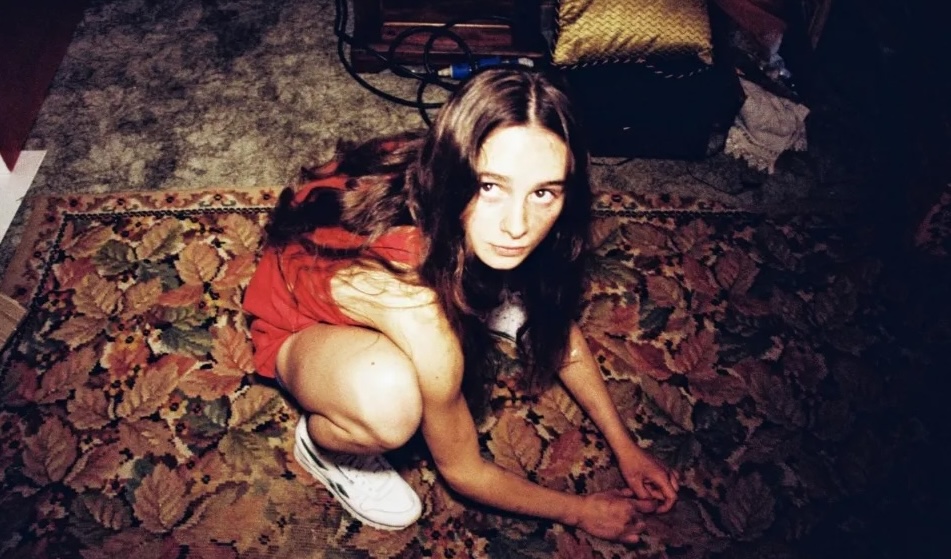
It’s London, some time in the 1980s. Cynthia (Hayley Squires) and her daughter Maria (Lily Beau Leach) are very close, with a whole host of funny rituals and secret games. They watch movies, threading popcorn on string; they dance until they fall over laughing; they go out at night, scavenging from bins.

The house is full to bursting. When she comes home from school, Maria has to climb over the detritus blocking the front door. Her pet ferret, Pearl, goes missing for days. She can’t find her PE kit. In trouble – again – for ‘forgetting’ it, she snaps at her mum. “I hate us. I’ve been to other people’s houses. They’re not like this.”

When the teetering mounds of junk literally crush Cynthia, Maria is taken into care.

Fast forward to 1994. Maria (Saura Lightfoot Leon) is sixteen now. ‘Mum’ is Michelle (Samantha Spiro), who’s been fostering her for years. Despite still being something of an outsider, Maria has been functioning quite well. But there’s a perfect storm brewing: she’s left school but doesn’t have a job; her only friend, Laraib (Deba Hekmat), is moving away; and news comes in of Cynthia’s death. Enter thirty-year-old Michael (Joseph Quinn), an ex-foster kid of Michelle’s who needs a place to stay for a few weeks. He’s a refuse collector, and Maria finds herself drawn to him, his smell kindling childhood memories. And then she begins to emulate her mother’s hoarding ways…

There’s a lot to admire about Hoard. It’s an ambitious piece, and debut writer-director Luna Carmoon depicts Maria’s fracturing mental health with an unflinching eye, managing to convey both her inner turmoil and how she appears to those outside. The thread of images – fireworks, sherbert, tin drums, irons – is boldly interwoven; and the metaphor-made-literal bullfight scene is particularly memorable. Both Leach and Leon evoke empathy for Maria, convincingly portraying her complex character. Squires is wonderful as Cynthia too, her brittle joie de vivre always just about to crack.

The first act is brilliant, but the early stretches of the second are less compelling: I find it hard to believe in Maria’s relationship with Laraib and in her interactions with the people at the pub. I don’t understand why the lovely Michelle would keep inviting her friend, Sam (Cathy Tyson), to bring her daughters over to visit, when she knows that they bully Maria.

Things pick up again as Michael and Maria fuel each other’s neuroses, spinning further and further out of control. It’s a tough watch – even stomach-churning – but that’s okay; it should be. The resolution, when it comes, is perhaps a little pat, but it’s a relief nonetheless. A short coda provides a clue as to where the story comes from, apparently inspired by events from Carmoon’s own life.

If the ambition sometimes exceeds the execution, Hoard is never less than interesting, and Saura Lightfoot Leon is certainly one to watch.

3.2 stars

Susan Singfield

True Things

07/04/22

Cineworld, Edinburgh

Kate (Ruth Wilson) has reached a difficult point on life’s highway. 

She’s somewhere in her thirties and struggling to hold down a thankless job at a benefits office in Ramsgate, where her customers seem to specialise in hurling abuse at her. She has no significant other in her life, no real interests and spends much of her free time gazing wistfully at exotic locations on her computer screen. Her work colleague, Alison (Hayley Squires), is trying to hook her up with one of her male friends, telling her that she needs to start playing the field if she doesn’t want to be a spinster all her life – while Kate’s mum (Elizabeth Rider) criticises her daughter’s ‘difficult nature,’ which – apparently – makes her come across badly to others. Kate’s dad (Frank McCusker) just seems obsessed with giving her home-grown vegetables from his allotment.

It’s clear that Kate is badly in need of new horizons – and things change dramatically when she conducts an interview with ‘Blond’ (Tom Burke), a handsome stranger, who freely admits to having done time in prison and cheekily wants to know if she’s free for lunch later on.

Against all better judgement, Kate accepts the invitation and shortly thereafter finds herself engaged in frantic sex in a high rise car park. To say that she’s smitten by Blond would be something of an understatement. She becomes instantly obsessed with him, unable to function properly when he’s not there, constantly waiting for a call or a text or… something. 

The trouble is, Blond is in complete control of this dangerous liaison and careful to give nothing away about his situation or his intentions. As viewers, we learn as little about him as Kate does. He’s an enigma and a pretty toxic one at that. It’s crystal clear that, if Kate cannot break the powerful hold he has on her, she is destined for heartbreak.

Harry Wootliff’s powerful little film is a veritable powder keg of longing, a symphony of doomed ambition. It’s as much a meditation on the theme of loneliness as it is an examination of the powerful pull of sexuality. Wilson is terrific here, offering yet another of her bruised outsiders struggling to survive the vagaries of life. She takes Kate through a maelstrom of subjugation until she finally seizes agency on a Spanish dance floor, thrashing ecstatically around to the sound of PJ Harvey’s Rid of Me

Burke, meanwhile, makes me understand exactly why Kate is in Blond’s thrall, even when he’s being obnoxiously vague about his intentions or heartlessly exploiting her utter devotion to him. He is powerfully charismatic. The film is essentially a two-hander, with an underused Squires doing the best she can with the thankless role of Alison.

It could be argued that True Things is relentlessly one-note, but if that’s the case, then it’s a note played with utter perfection by skilled artists. The characters here feel absolutely genuine and the slow-burn, languorous atmosphere is further intensified by Ashley Connor’s woozy cinematography, which often depicts events in an out of focus haze. A scene where Kate reels drunkenly around at a house party almost has me reaching for the alka seltzer. Furthermore, there’s a delicious duality to what’s depicted onscreen. I’m not always certain that scenes I’ve just watched have actually happened or are simply imaginings plucked from within Kate’s troubled head-space 

This could easily be annoying but, in the case of True Things, it gives the film added depth.

4 stars

Philip Caveney

The Electrical Life of Louis Wain

12/01/22

Cineworld, Edinburgh

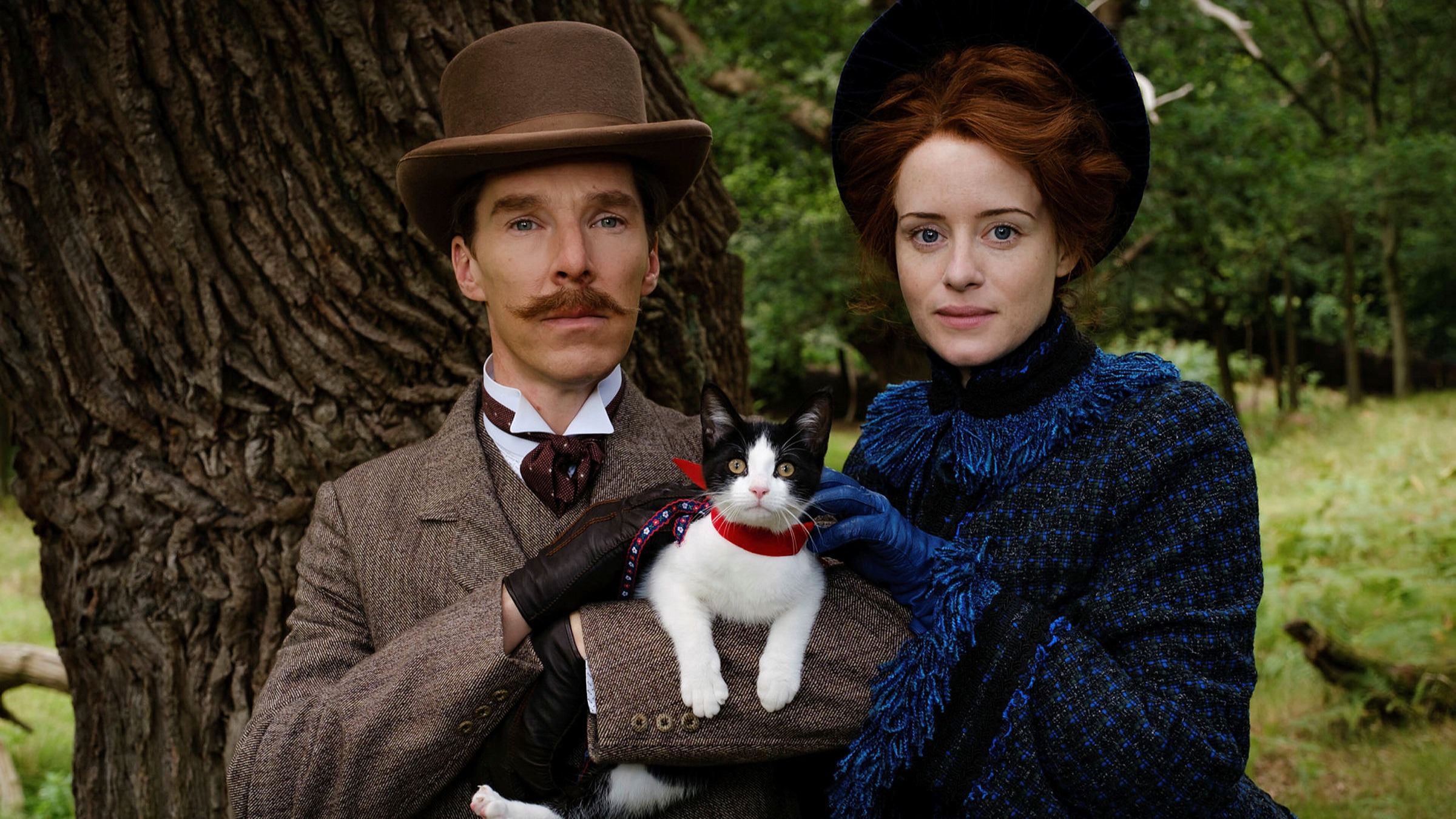
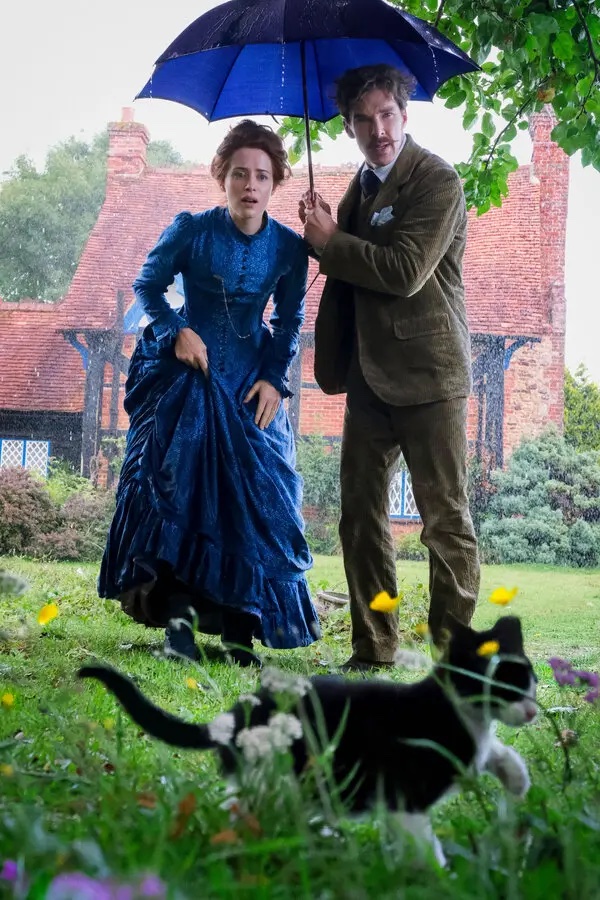
This eccentric biopic of Edwardian illustrator Louis Wain is a curious kettle of cat litter, a story so weird it can only be true. It’s centred around an impressive performance by Benedict Cumberbatch and features such a wealth of talent in the supporting roles that I can’t help feeling that the actor (also executive producer on this) must have called in some favours from his friends.

Cumberbatch portrays Wain at various points in his life, from bumbling, hyperactive youngster to grey and mentally frail in his final years. Cumberbatch manages to convince at just about every point of the journey. When we first meet Wain, he’s a freelance illustrator, who, at the age of twenty, is struggling to provide for the upkeep of his widowed mother (Phoebe Nicholls) and his five sisters, none of whom seem to have any prospect of marriage.

However, the family budget does stretch to paying for a governess to teach the younger girls and she’s Emily Richardson (Claire Foy), who, despite being ten years older than Louis, soon has him hanging on her every word in open-mouthed adoration, much to the disgust of his sour-faced older sister, Caroline (Andrea Riseborough).

It isn’t long before Louis and Emily have married and moved to a picturesque cottage in the countryside. But then Emily receives some devastating news about her health – and moments later, the couple discover an abandoned kitten wandering in their garden, whom they promptly christen Peter. The cat is to have a profound effect on Wain’s career…

The film’s early stretches have a charmingly ramshackle quality, and I’m initially prepared to put aside my reservations about the screenplay by Will Sharpe and Simon Stephenson, which fails to give actors of the quality of Riseborough enough to do. Other luminaries can be missed in the blink of an eye. Hayley Squires, Taika Waititi, Richard Ayoade, Julian Barrett… they flit across the screen like phantoms with barely a line of dialogue between them.

When Wain’s patron, Sir William Ingram (Toby Jones), assigns him a double-page spread in The Illustrated London News to be filled with images of ‘comical cats,’ the artist’s career takes an unexpected leap skywards, but the film fails to soar in the same manner. It becomes bogged down in Wain’s inescapable problems, including his increasingly desperate struggles with schizophrenia and his inability to profit from his own artistic endeavours. (Message to all aspiring illustrators: ensure you copyright your work before you put it in the public domain. You’re welcome.)

From this point, the story fails to maintain a consistent tone and Wain’s bizarre ‘electrical’ theories are never explained clearly enough for us to understand either what they are or why they are considered important enough to include in the title. In its final stretches the film becomes more and more surreal, with landscapes turning into paintings and people turning into cats, while a theremin whines mournfully on the soundtrack. Having Nick Cave appear as the author H.G. Wells seems a step too bizarre and makes me wonder if this is supposed to be one of the hallucinations that Wain suffered towards the end of his life. Whatever it means, it feels like a misstep.

So, all plaudits to Cumberbatch for yet another in his dazzling collection of character studies. It’s quite an about-turn after the toxic masculinity of The Power of the Dog. Perhaps Charms of the Cat would have been a more appropriate title?

And, as for the film that contains said performance, it’s muddled and a bit of a disappointment.

3.4 stars

Philip Caveney

In the Earth

24/06/21

The Cameo Cinema

Ben Wheatley is an enigma. Undeniably prolific, he’s also versatile. Unlike most directors, who find an approach they’re happy with and stick pretty closely to it, Wheatley flits happily from genre to genre with no apparent game plan. Indeed, recent rumours that he’s signed on to helm the sequel to Jason Statham’s big budget creature-feature, The Meg, sound implausible enough to be true. But of all his releases, only a couple of them (Sightseers and High-Rise) stand up as true successes. The rest feel like missed opportunities and his much-lauded shoot-’em-up, Free Fire, is one of the few times I’ve been in a cinema and longed for a fast-forward button.

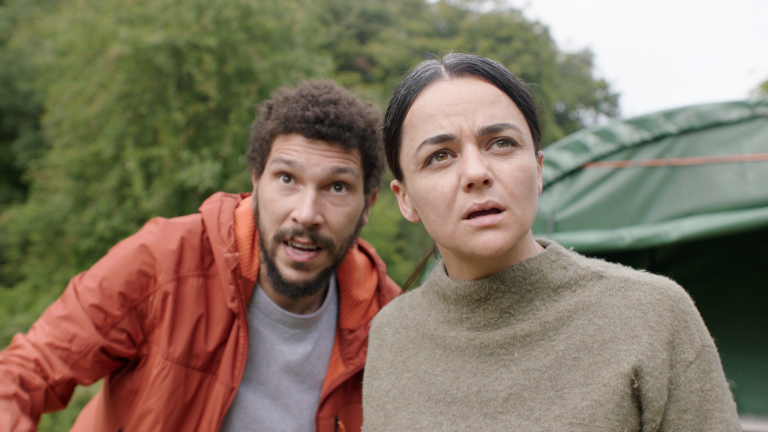
In the Earth sees him returning to the kind of folk-horror elements he mined so effectively in A Field in England, although this time he’s opted for a contemporary setting. The cities of the world are suffering through a crippling pandemic (sound familiar?) and scientist Martin Lowery (Joel Fry) arrives at a remote research facility in a forest on the outskirts of Bristol. He’s looking for his former colleague, Olivia Wendle (Hayley Squires), and is informed that she is conducting some ‘crop research’ in deep forest, several days’ walk from there. He’s assigned forest ranger, Alma (Ellora Torchia), as his guide and the two of them set off into the woods.

But one night, they are attacked by unknown assailants and robbed of their footwear. Shortly thereafter, Martin gashes his foot badly, something we’ve been kind of expecting because of a pointed pre-credits sequence. Then the two of them bump into mysterious loner, Zach (Reece Shearsmith), who takes them to his encampment and performs a bit of impromptu – and extremely grisly – surgery on the damaged foot. Martin is soon to discover that Zach is not the man to entrust his foot – or indeed, any other part of his anatomy – to. Zach is, to put it mildly, bananas, a man who believes that there are ancient spirits in this part of the forest, ones that are taking advantage of the pandemic to exert their power and influence over humanity… and then things start to get really weird.

In the Earth sets out its stall effectively enough and, though it takes a while to build up a head of steam, it boasts performances – especially Shearsmith’s – that are accomplished enough to make me suspend my disbelief over the various loopy shenanigans unfolding under the ancient oaks. Mind you, Martin is so hapless he may as well have the word VICTIM tattooed on his forehead. And why exactly is he there in the first place? A full day after viewing the film, I’m still not sure. And herein lies the main problem with this film. It’s nebulous to the point of being infuriating.

A local legend about a woodland deity called Parnag Fegg is introduced early on, but is never effectively followed up and, instead, we are offered fleeting glimpses of earlier happenings, often flung at us in the midst of psychedelic sequences, when a bunch of fungi start throwing out hallucinatory spores. The first of these passages is impressive, but I could have done without the second one, which just feels like more of the same and, once again, has me thinking wistfully about a fast-forward function. More damningly, for a horror film, apart from a couple of wince-inducing injury details, this doesn’t feel remotely scary.

In the end, I realise that I don’t really care what happens to any of the characters, mostly because I haven’t learned anything about them. File this one under ‘Y’ for ‘Yet another missed opportunity.’

3.2 stars

Philip Caveney

I, Daniel Blake

maxresdefault

21/10/16

If everything had gone to plan, this film wouldn’t have seen the light of day. Ken Loach’s previous movie, Jimmy’s Hall, was intended to be his swan song. And though that was a decent enough film, it was hardly up there with his finest work.But clearly, a look around ‘Benefits Britain’  – as engendered by the Tory party’s heartless policies – has stirred the veteran director out of retirement. I, Daniel Blake is not so much a film as a protracted howl of anger – and it’s one of the finest polemics I’ve seen on the cinema screen.

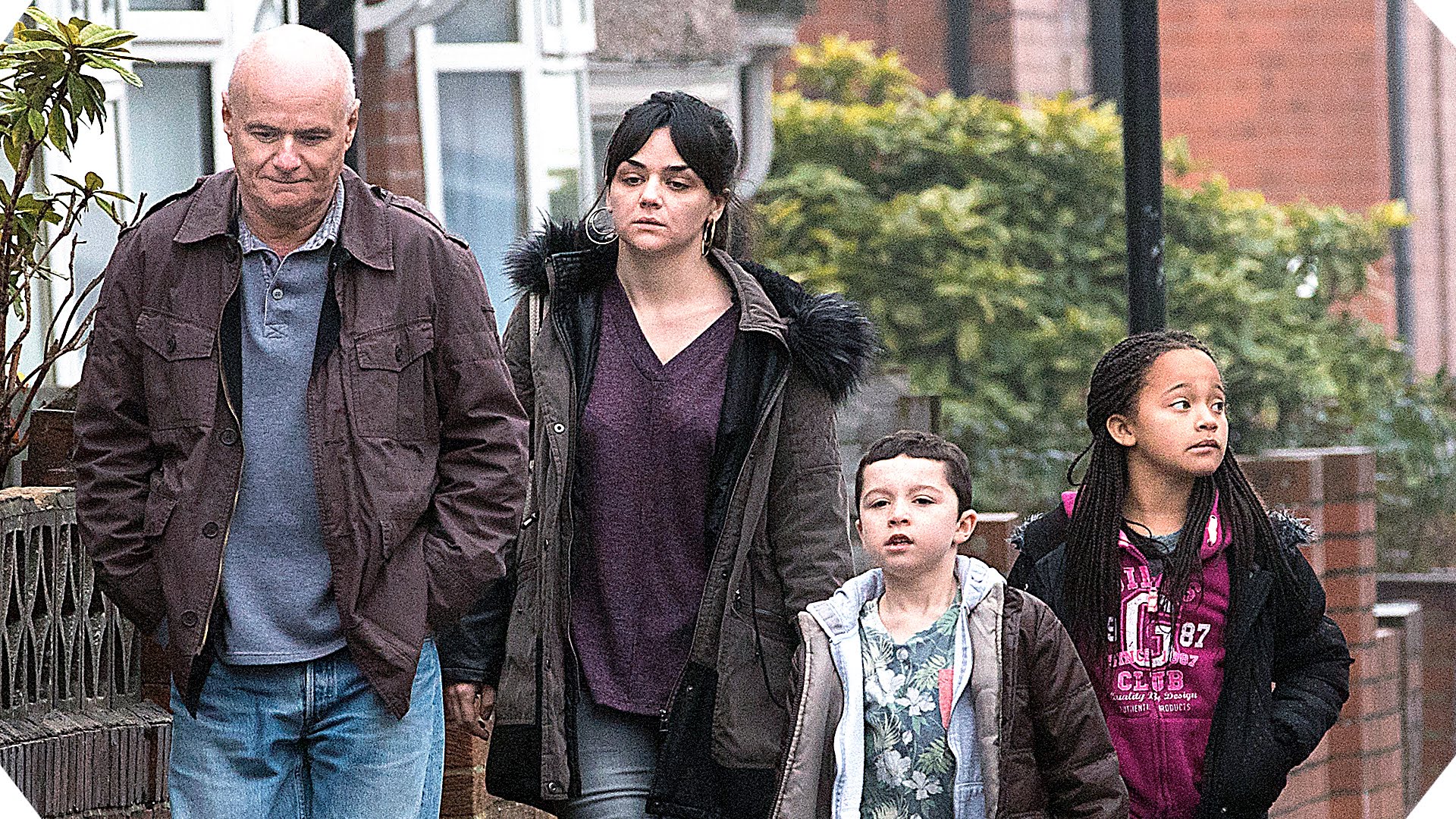
Dan (stand-up comedian, Dave Johns) is a carpenter who has recently suffered a serious heart attack. Told by his doctor that he’s not fit to go back to work, he signs on, but soon discovers that  the ‘decision-maker’ has deemed him ‘fit for work.’ Of course, he has no income, so if he wants money, he’ll have to apply for Jobseeker’s Allowance. This obliges him to trudge around Newcastle looking for jobs that he isn’t fit enough to accept even in the unlikely event that he gets them. During one trip to the Job Centre, he encounters Katie (Hayley Squires) a young single mother with two kids to look after. She’s recently been relocated from London to Newcastle and is desperately trying to find work. Dan befriends her, and becomes a kind of surrogate grandfather to the two children.

All the familiar Loach tropes are here – non actors, giving every scene a shot of verité, semi-improvised dialogue and a story that meanders from incident to incident with little in the way of a traditional story arc. But what there is in abundance is a sense of simmering anger, an incomprehension that life in this green and pleasant land could have come to this sorry state of affairs. There are scenes here that would move the most implacable viewer to tears (a scene set in a food bank is particularly affecting). If this should prove to be Loach’s final film, it’s a hell of a leaving card.

This should be required viewing for every politician in the land.

5 stars

Philip Caveney