Hayao Miyazaki

The Boy and the Heron

20/12/23

Cineworld, Edinburgh

At eighty-two years of age, Hayao Miyazaki, the co-founder of Studio Ghibli, has had more comebacks than Frank Sinatra. He’s been talking about retirement ever since Princess Mononoke way back in 1997, but has managed three major releases since then, not to mention a whole bunch of shorts. And now here he is once again, director and writer of The Boy and the Heron, still reaching for those impossible heights on the big screen – and mostly achieving them.

It’s evident at a glance that Ghibli continues to exert a powerful hold on lovers of quality animation. This advance IMAX screening (the film will officially be released in the UK on Boxing Day) is completely sold out, despite being in Japanese with subtitles. (We don’t mind, we prefer it that way but apparently it puts a lot of viewers off.) We’ve managed to secure a couple of seats in the very front row, the giant screen looming above us, making the whole experience incredibly immersive.

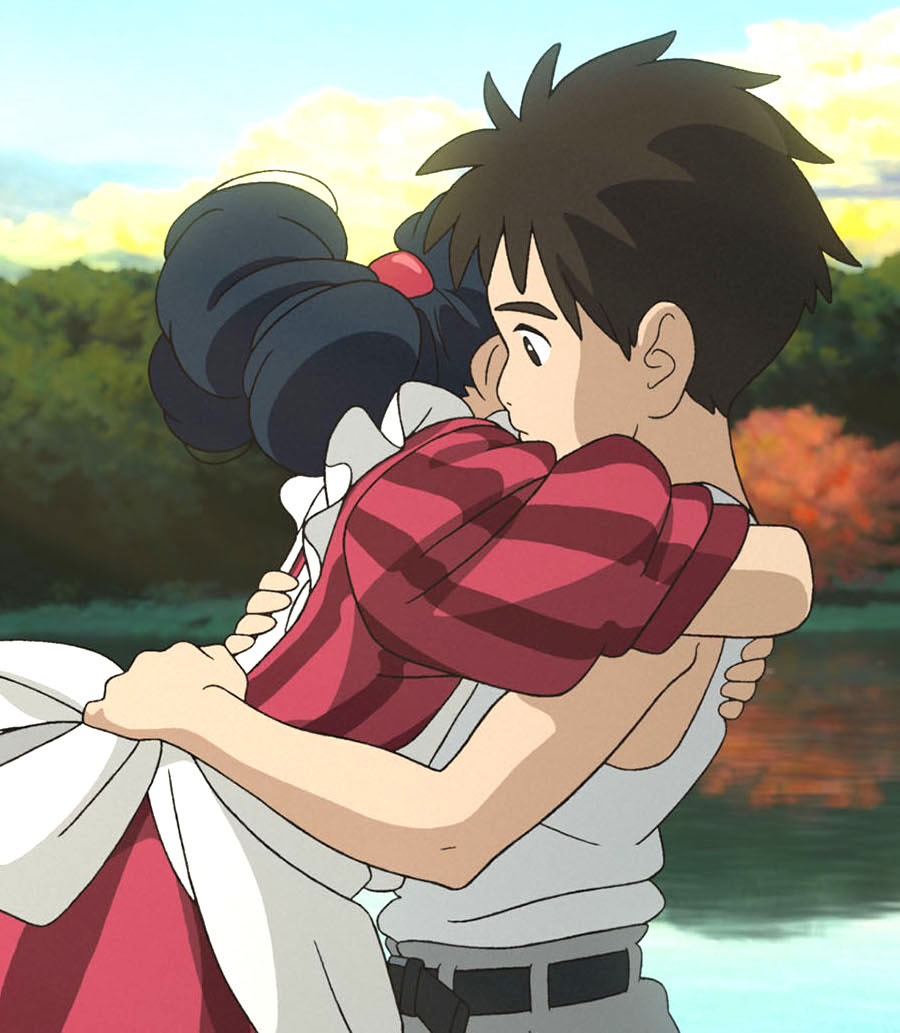
The story is loosely autobiographical, but I can only assume that this applies to the film’s almost hallucinatory opening scenes in World War 2 – otherwise I’m left to conjecture that Mizayaki had a very strange childhood! Tokyo teenager Mahito (Soma Santoni) awakes one night to the sound of an explosion and is told that the local hospital has been firebombed. He’s horrified, because he knows his mother is working there and, in a breathtaking action sequence, he dresses himself and runs frantically through the blazing city, in the desperate hope of rescuing her. But he’s too late.

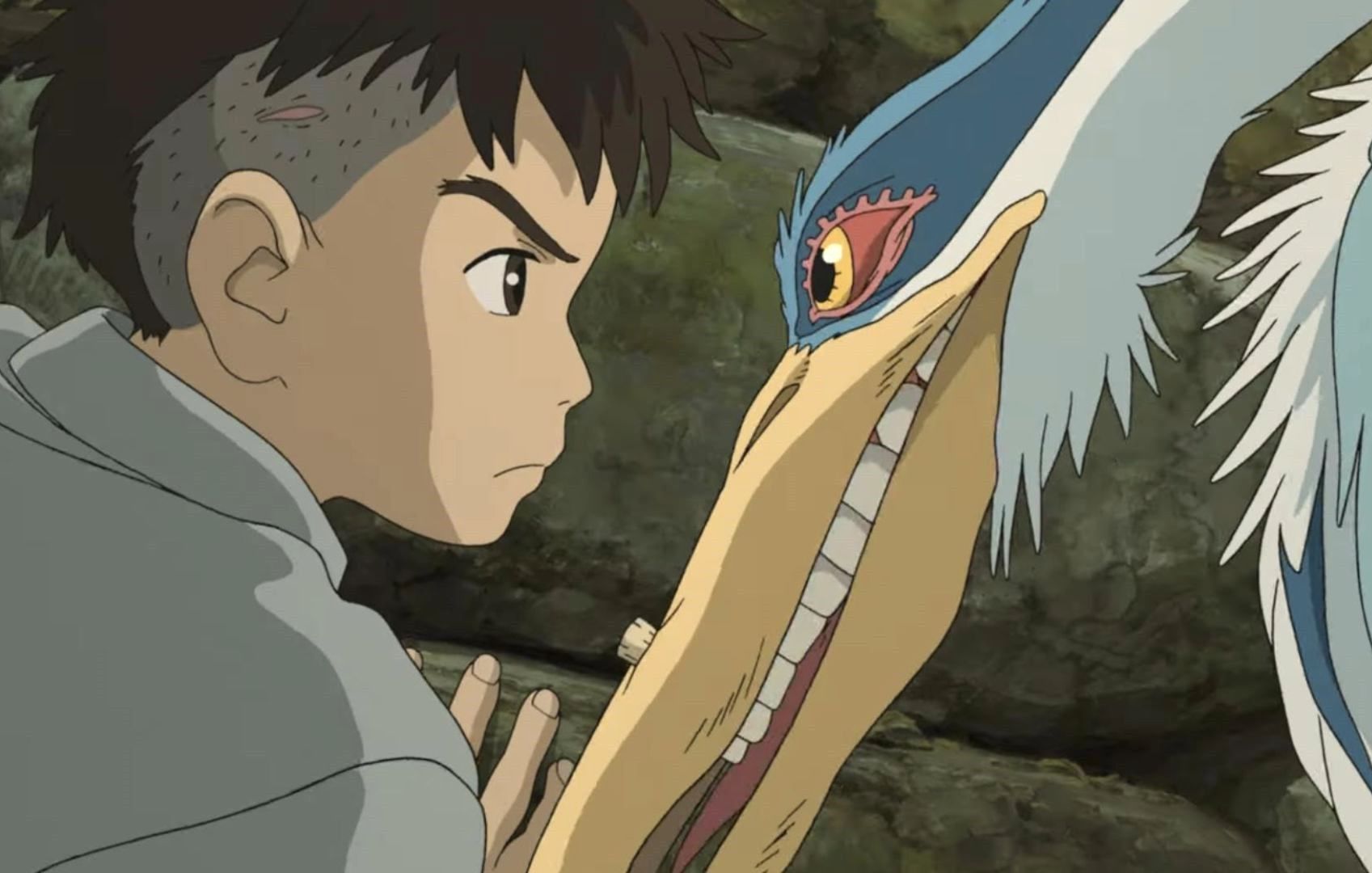
A few years later, Mahito accompanies his father, Shoichi (Takuya Kimura), an aeroplane designer, out to the calm of the countryside. Shoichi is now married to his late wife’s sister, Natsuko (Yoshino Kimura), who is pregnant with what will be Mahito’s little brother or sister. Mahito soon discovers that his stepmother’s country house is a place of mystery and intrigue, serviced by a team of comical-looking… erm… grannies. But things take a darker turn when a sinister grey heron that hangs around the grounds starts talking, telling Mahito that his presence is required elsewhere…

All the hallmarks of Studio Ghibli are present and correct and they’ve arguably never looked more ravishing. There are beautiful shimmering landscapes, ancient mouldering buildings and a succession of weird, dreamlike environments that seem to virtually erupt from the screen. And there’s that brilliant technique they always employ of illustrating food so perfectly, you can actually taste it. (One scene features fish entrails, so this isn’t always a pleasure!)

Aside from the fact that this particular tale focuses on a teenage boy (Ghibli’s lead protagonists are nearly always female), it feels like classic Ghibli dialled up to 11.

If there are some shortcomings, they are in the plot. It’s not that Miyazaki’s screenplay lacks interesting ideas. On the contrary, it’s stuffed with them, so many that they virtually do battle with each other to establish authority. While it’s perfectly fine for a storyline to be complex, it shouldn’t feel over-complicated and, since some of the fantastical goings-on are opaque to say the least, I too often find myself bewildered by what Miyazaki is trying to say. The inevitable questions that arise are left unanswered and, eventually, I decide that this is deliberate.

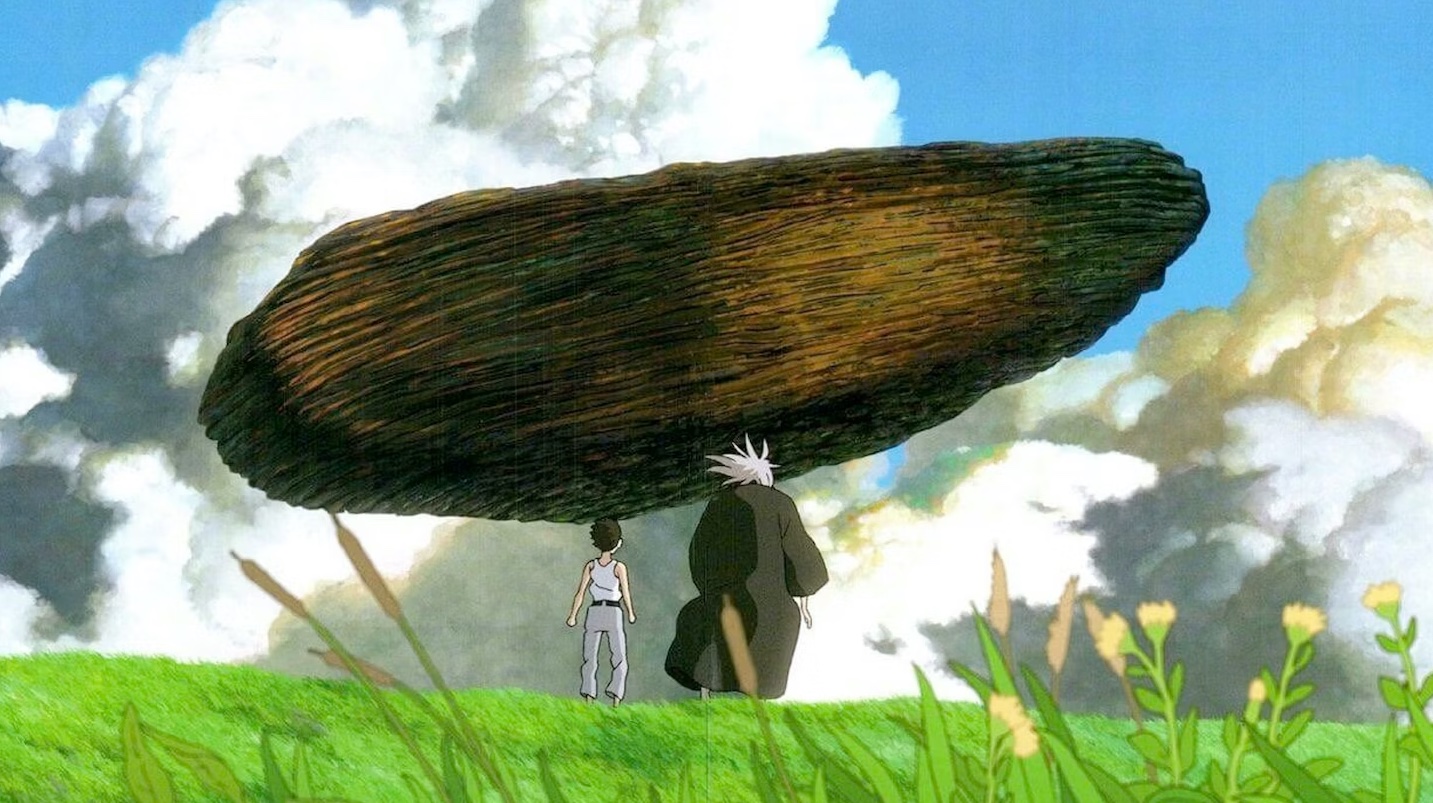
Perhaps it’s simply a case of an elderly man with a lifetime’s experience trying to cram all of it into a couple of hours. It’s hard not to see the mysterious wizard-like figure, obsessed with balancing various pieces of polished stone on top of each other in order to ‘make the world work’, as a version of the great director himself, trying to puzzle out the enormity of his own astonishing career.

As the credits roll, I find myself wondering if I might manage to slot this film in for a second viewing – maybe even the upcoming dubbed version with a host of Hollywood talent providing the voices. The Boy and the Heron is that kind of movie, the sort that has you pondering its various possibilities long after you’ve left the cinema. See it on the big screen, in IMAX if you can. You may be puzzled, but you won’t be disappointed.

4.2 stars

Philip Caveney

Your Name

15/01/20

We missed this smash hit by Makoto Shinkai on its release in 2016, but tonight’s double bill at the Cameo – pairing Your Name with his latest release, Weathering With You – gives us the opportunity to find out what the fuss was all about.

And wow. Each critical superlative, every bit of box-office lucre, is completely merited. Shinkai is, indeed, a worthy successor to Hayao Miyazaki, recently retired head of Studio Ghibli. This is a beautiful animation.

Mitsuha (Mone Kamishiraishi) is a teenage girl, living in the remote rural village of Itomori. Mitsuha feels stifled by her strict father, and by the ancient rituals she is obliged to follow. She dreams of being ‘a boy in Tokyo,’ with the freedom to do what she wants in a bustling city.

And sometimes, it seems, dreams can come true, because Mitsuha wakes up one day in an unfamiliar room – and body. She’s switched places with Taki (Ryûnosuke Kamiki), and suddenly finds herself forced to negotiate the intricacies of a stranger’s life. Where is his school? Who are his friends? Mitsuha embraces the opportunity to hang out in café bars and flirt with Taki’s colleague, Ms Okudera (Masami Nagasawa), at his part-time restaurant job. She relishes the new experience.

Taki, meanwhile, is less enthusiastic about the change, although he can’t help enjoying playing with ‘his’ breasts, much to the outrage of Mitsuha’s younger sister, Yotsuha (Kanon Tani). Still, he goes along with it; what option does he have? And, before long, the teens have navigated a way through their intermittent body swaps, using their cell phones to log notes and reminders to keep things running (relatively) smoothly. I particularly like the way suspense is generated via a repeated motif where their lives almost collide.

So far, so seen-it-done-it-Freaky-Friday, but Shinkai’s movie has another layer, a deeper, more engaging heart, encompassing (without saying too much) fate, time travel and natural disaster. It’s compellingly told, with warmth and sincerity.

But it’s the animation that really makes this film. It’s breathtakingly gorgeous, with a clear delineation between the hard lines of the city and the sumptuous, lush countryside. At times photo-realistic, at others impressionistic, each frame is perfect, each hand-drawn image exquisitely realised.

A masterpiece.

5 stars

Susan Singfield

Ponyo

16/08/18

During the month of August when the Edinburgh Fringe is in full swing, we don’t have a lot of time to visit the cinema – but when we saw that Ponyo was showing at the Cameo Cinema, we had to make an exception. We’ve only recently started to discover the joys of Studio Ghibli and this is, quite appropriately, the one that got away. This quirky ‘boy meets fish’ story has so much to recommend it – gorgeous visuals, a powerful ecological theme and an almost overwhelming cuteness that’s never allowed to tip over into full-blown mawkishness.

Scientist/magician Fujimoto (rather disturbingly voiced, in this version, by Liam Neeson) lives deep beneath the sea in a Nautilus-like submersible, where he conducts a series of mystical experiments. When one of those experiments, a little red-headed fish, goes exploring, she is swept up by a dredger net and carried far away. She eventually gets washed ashore where she hooks up with a boy called Sosuke (Frankie Jonas) and, when she licks a drop of blood from his hand, a weird transformation occurs…

There’s something of the selkie myth to this tale, but as ever it’s shot through with that unique Hayao Miyazake world view. Odd though the story is, it’s an absolute joy to watch. The animation of the water itself is a particular delight, at times recalling Hokusai’s famous watercolours and, while this might not be quite up there with the likes of Howl’s Moving Castle or Princess Mononoke, it’s nonetheless a charming and spellbinding film.

If the opportunity occurs to see this – particularly on the big screen – don’t miss your chance.

4.4 stars

Philip Caveney


Isle of Dogs

25/03/18

The arrival of a new Wes Anderson movie is generally a cause for excitement and Isle of Dogs has the added frisson of seeing him return to work with the London-based 3 Mills animation team, whom he employed to such great effect on Fantastic Mr Fox. It must be said, however, that this is an altogether more ambitious project than his previous stop-motion foray.

The story is set twenty years into the future in the fictional Japanese city of Megasaki. After a recent dog-flu epidemic, Mayor Kobayashi (Komichi Nomura) orders all the city’s dogs to be rounded up and exiled to an offshore island, essentially a rat-infested repository for much of Japan’s unwanted garbage.

On the island, a group of dogs are struggling for survival, led by Chief (Bryan Cranston), a battle-scarred stray who sees himself very much as the alpha male of the pack. His followers  are voiced by a whole menagerie of A-List talent (Bill Murray, Edward Norton, Jeff Goldblum, to name but three). The sudden arrival of Kobayashi’s twelve year old ward, Atari (Koyu Rankin), changes everything. Atari is in search of his beloved lost pet, Spot, who the mayor has insisted must follow the example of all the other four-legged offenders and be sent into quarantine off-shore. This sets Chief and his pack off on a quest to help Atari by locating the missing canine and, of course, they uncover some startling truths in the process. Meanwhile, a pro-dog student group led by the intrepid Tracy (Greta Gerwig) are leading an insurrection against Kobayashi, who, it seems, has not been as honest as he might have been…

Some critics of the film have accused it of cultural appropriation, but I can’t help hoping they are barking up the wrong tree. The love and respect for Japan and its traditions are evident in just about every frame of this delightful movie, from the Taisho drumming sequences to the visual references to veteran directors, Akira Kurosawa and Hayao Mizazaki. What’s more, the animation is so detailed and so brilliantly realised, it’s hard to suppress my gasps of admiration as the story scampers along at high speed from revelation to revelation. All the usual Anderson qualities are in evidence – witty one-liners, a steadfast refusal to get too sentimental about the characters and a delicious vein of dark humour that ties the whole package neatly together.

On the same day we viewed this, The Cameo Cinema hosted a dog-friendly screening, but, as we chose to attend the humans-only show, I cannot really comment on how it went down with its four-legged viewers.

But in my humble opinion, at least, this film is a howling success.

4.4 stars

Philip Caveney

Kiki’s Delivery Service

18/03/18

Our Studio Ghibli initiation continues apace, as we find ourselves – for the third week running – taking advantage of The Cameo’s most welcome retrospective. It’s snowing today, but that doesn’t appear to have deterred anyone from venturing out, and the audience figures seem very healthy for a Sunday afternoon. There’s a lovely atmosphere in the cinema, a sense of nostalgia and shared pleasure. It’s a delight to be here.

Based on the novel by Eiko Kadono, this screenplay by director Hayao Miyazaki is as delightful as even our brief acquaintance with Ghibli has led us to expect. Kiki (Minami Takayama) is a witch and, as she’s just turned thirteen, tradition has it that she must leave home and seek a town in which to complete her witch training. She’s sad to leave her family, of course, but keen to assert her independence, and she sets off in high spirits, determined to forge a new life in a big town near the sea. She strikes lucky, landing a job in a bakery in a bustling city, and accommodation with an ocean view. She and her sarcastic cat, Jiji (Rei Sakuma), settle in happily, and Kiki uses her broomstick skills to set up a speedy delivery service.

But this is a coming-of-age story, and adolescence – it turns out – is as tough for a witch as it is for anyone. Kiki is tongue-tied and embarrassed when Tombo (Kappei Yamaguchi) invites her to a party; she’s self-conscious about her clothes; she becomes withdrawn and depressed. Worse, she loses the ability to understand what Jiji says (although this may have more to do with Jiji’s own growing up, as he falls for local cat, Lily, and fathers kittens with her) and then finds she can no longer fly. Still, we’re not kept in the doldrums for long, as we learn – alongside Kiki – that if we’re patient, rest, take care of ourselves, and allow our friends to help us, that our spirits will revive and we’ll become ourselves again.

If that sounds saccharine, it shouldn’t. The story is smartly told, and not overly sentimental. Not everything is resolved. Madame’s ungrateful granddaughter, for example, remains just that: not a character in need of redemption, simply a selfish girl. But it’s utterly adorable, just heart-warming and beautiful and a perfect way to spend a Sunday.

4.1 stars

Susan Singfield

My Neighbor Totoro

11/03/18

After the harrowing Grave of the Fireflies, the next film in the Cameo Cinema’s Studio Ghibli season comes as a slice of light relief. My Neighbor Totoro is the enchanting story of two intrepid young girls from the city, Satsuki (voiced by Noriko Hadaka) and her little sister, Mei (Chika Sakamoto). In the opening scenes, we watch as the girls move with their father to a dilapidated house in the Japanese countryside in order to be closer to their mother, who is ill in hospital (with what, exactly, we are never told).

The old house harbours some fascinating secrets, including the little creatures called ‘Soot Spreaders’, who haunt the dark corners of each room and scatter away whenever humans approach; but Satsuki and Mei seem to greet such visitors with interest and delight, rather than dread. If there’s a central message here it seems to be ‘embrace the inexplicable’ and that’s exactly what the girls do, encouraged by the enthusiasm and positivity of their father. They soon make friends with Granny (Tania Kitabayashi), an old lady who lives nearby and even with Kanta (Toshiyuki Amagasa), a teenage boy who initially appears to be unfriendly but who proves to be a friend when push comes to shove. The girls also discover that the nearby forest is home to a collection of mystical creatures, not least the strange shambling clawed beast known as Totoro, who, unlike most monsters, turns out to friendly and helpful.

As in ‘Fireflies,’ this story perfectly captures the essence of a moody but resourceful  little girl (Mei) and her interplay with Totoro provides much of the humour here. Their antics are often laugh-out-loud funny. The storyline has strong echoes of Alice In Wonderland, particularly in Mei’s pursuit of a rabbit-like creature down an underground opening and in the form of a Cheshire Cat-headed magical ‘coach’, summoned by Totoro to take the girls off on fantastic adventures. Written and directed by Hayao Miyazaki, this is a delightful film that has genuine appeal for all ages. It’s also quite beautiful to look at – some of the gorgeous woodland vistas captured here would not look out of place on the walls of an art gallery.

Utterly beguiling. The Cameo’s season continues on Sunday 18th of March with Kiki’s Delivery Service. Get those tickets booked now!!

4.2 stars

Philip Caveney