Harrison Ford

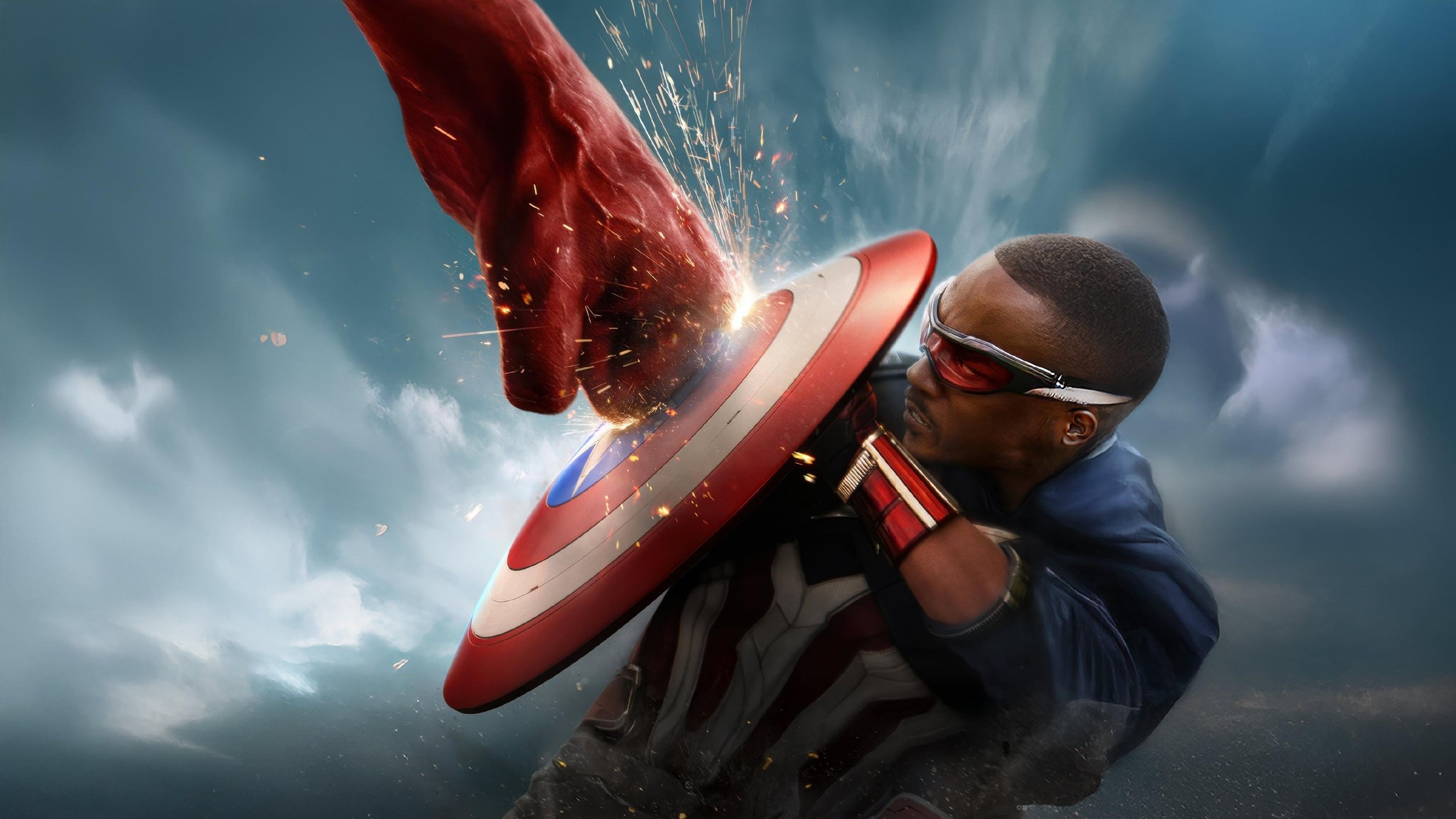
Captain America: Brave New World

18/02/25

Cineworld, Edinburgh

Heading to the screening for this, I have a wistful recollection of earlier times, when going to see the latest Marvel movie was actually something to look forward to. You know, Avengers Assemble, Guardians of the Galaxy, that kind of thing. It wasn’t so very long ago and yet it already feels like a distant memory. These days, the best I can hope for is, ‘Maybe it won’t be terrible.’

Marvel Studios are victims of their own success. Too many sequels, too many prequels, too much product. But as long as the crowds keep coming, they’ll continue, right?

There are maybe eight people in the huge IMAX auditorium this afternoon, which makes me suspect that I’m not the only one who’s bored with the MCU’s recent output. And okay, Deadpool & Wolverine did make an almost indecent amount of money – largely, I think, by daring to opt for a 15 certificate instead of the more usual 12A, but it was no masterpiece. It makes me wonder how much longer the studio can survive offering insipid releases like Captain America: Brave New World.

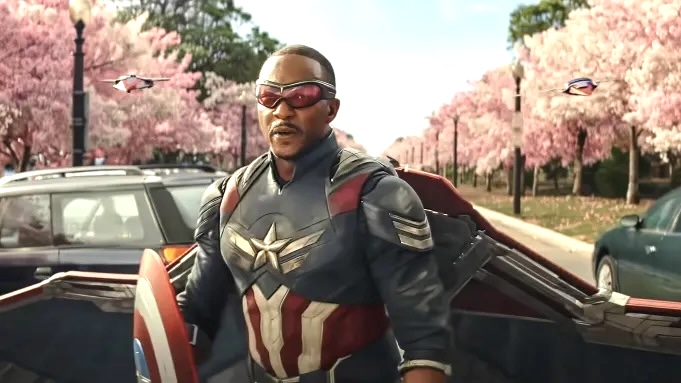
Mind you, on paper, it sounds surprisingly promising. Get this: recently elected American president, Thaddeus Grant (Harrison Ford) is showing signs of instability. (Given the current situation in the USA, this could have played out like a clever satire, but all too predictably, it doesn’t.) Grant sends Sam ‘Cap’ Wilson (Anthony Mackie) and Joaquin ‘Falcon’ Torres (Danny Ramirez) to Mexico to combat sneering villain, Sidewinder (Giancarlo Esposito), who has stolen some… er… classified items. A massive punch-up duly ensues. Lots of people die in polite 12A fashion – there’s no blood to speak of and the cameras never really register the impact that big explosions have on the human anatomy.

When Sam and Joaquin return victorious, exhibiting a kind of smug self-satisfaction that’s hard to endure, they discover that President Grant is acting very strangely indeed. He appears to have become fixated on the discovery of a new metal called adamantium, which can only be found on the mysterious ‘Celestial Island,’ and which he’s desperately keen to get his mitts on. On a trip to the White House, Sam and Joaquin witness an assassination attempt on the president, which is initiated by their old friend, super soldier Isaiah Bradley (Carl Lumbly). Afterwards, he has no explanation for his behaviour…

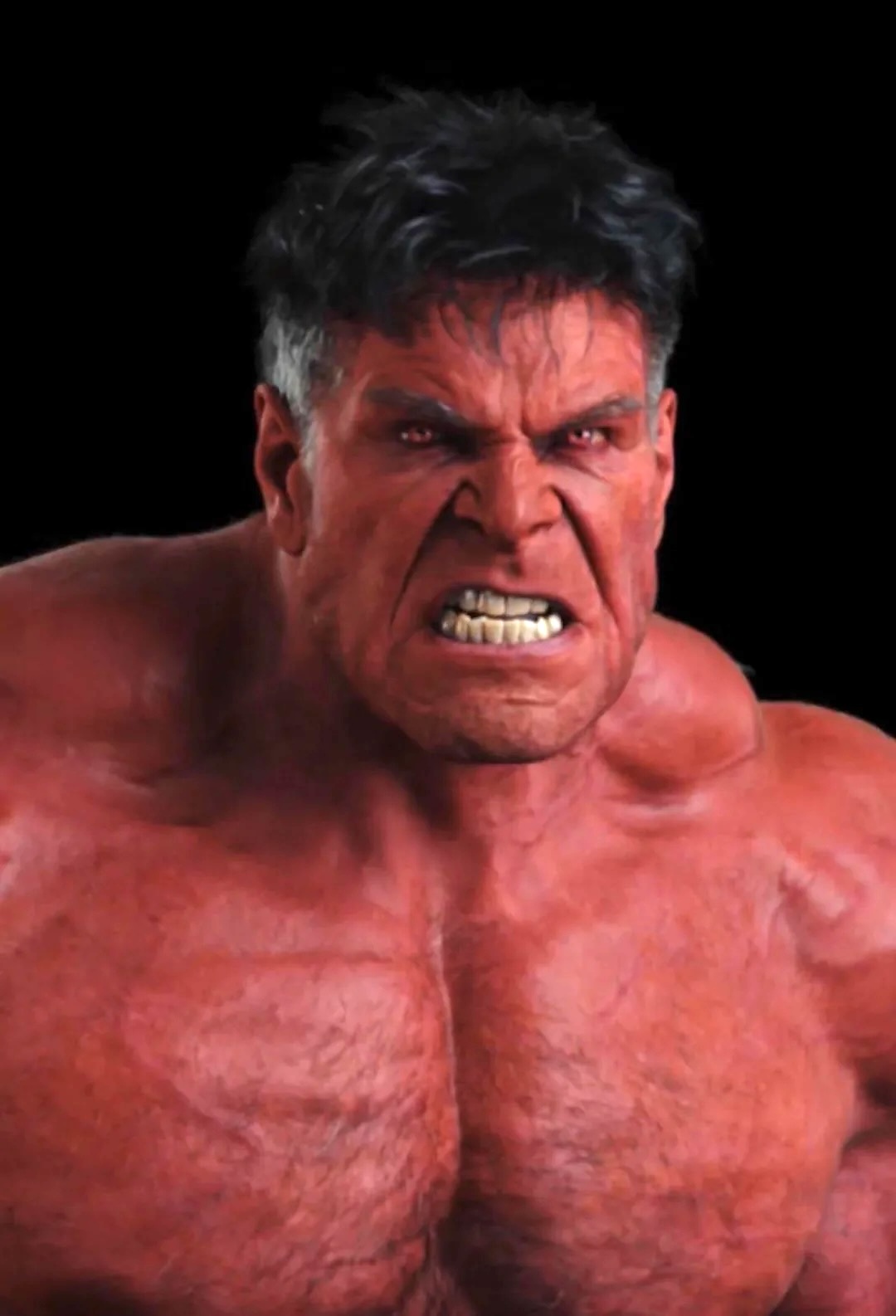
But look, I don’t know why I’m bothering to go into the alleged ‘plot’, which took no less than five screenwriters to create, since it’s mostly an excuse to throw together a series of action set-pieces, leading up to the penultimate scene where Grant mutates into… well, if I say it here, there will doubtless be indignant cries of, ‘Plot spoiler!’ – even though what happens has been blatantly revealed in all the film’s trailers and even features on the poster. I hope they paid Ford a lot of money to converted into pixels and I also hope that ace actor Tim Blake Nelson was paid a shit-ton of the stuff to wander about sporting a head like a rotting cauliflower and muttering dark threats in the role of evil genius Samuel Sterns.

I’m left with the inevitable questions. Why does Torres talk and act like a hyperactive teenager when he’s clearly in his 30s? What were those ‘classified items’ anyway? And how come, when a man turns into a Hulk, he still has a pair of pants that fit him?

At least this one comes in at just under two hours, for which relief much thanks, but if ever proof were needed that Marvel have squeezed this franchise as thin as it will go, surely here it is. But no, as the inevitable post-credit sequence grimly intones, Captain America will return…

Which sounds more like a threat than a promise.

2. 3 stars

Philip Caveney
Indiana Jones and the Dial of Destiny

28/06/23

Cineworld, Edinburgh

Steven Spielberg’s Raiders of the Lost Ark (1981) was a near-perfect movie, a fast-paced action adventure that harked back to the classic serials of the 1940s. It made a huge profit off a comparatively low budget, so – inevitably – there were going to be sequels. Indiana Jones and the Temple of Doom (1984) and Indiana Jones and the Last Crusade (1989) may not have had the perfection of their whip-tight progenitor, but were decent enough efforts in their own right. And that’s probably where the whole enterprise should have ended. 2008’s The Kingdom of the Crystal Skull was – to put it mildly – a major miscalculation, despite being helmed by the usually dependable Spielberg. For a very long time, there were vague rumours of a fifth outing which remained exactly that. Rumours.

After all, Harrison Ford was getting a bit long in the tooth, so… maybe not?

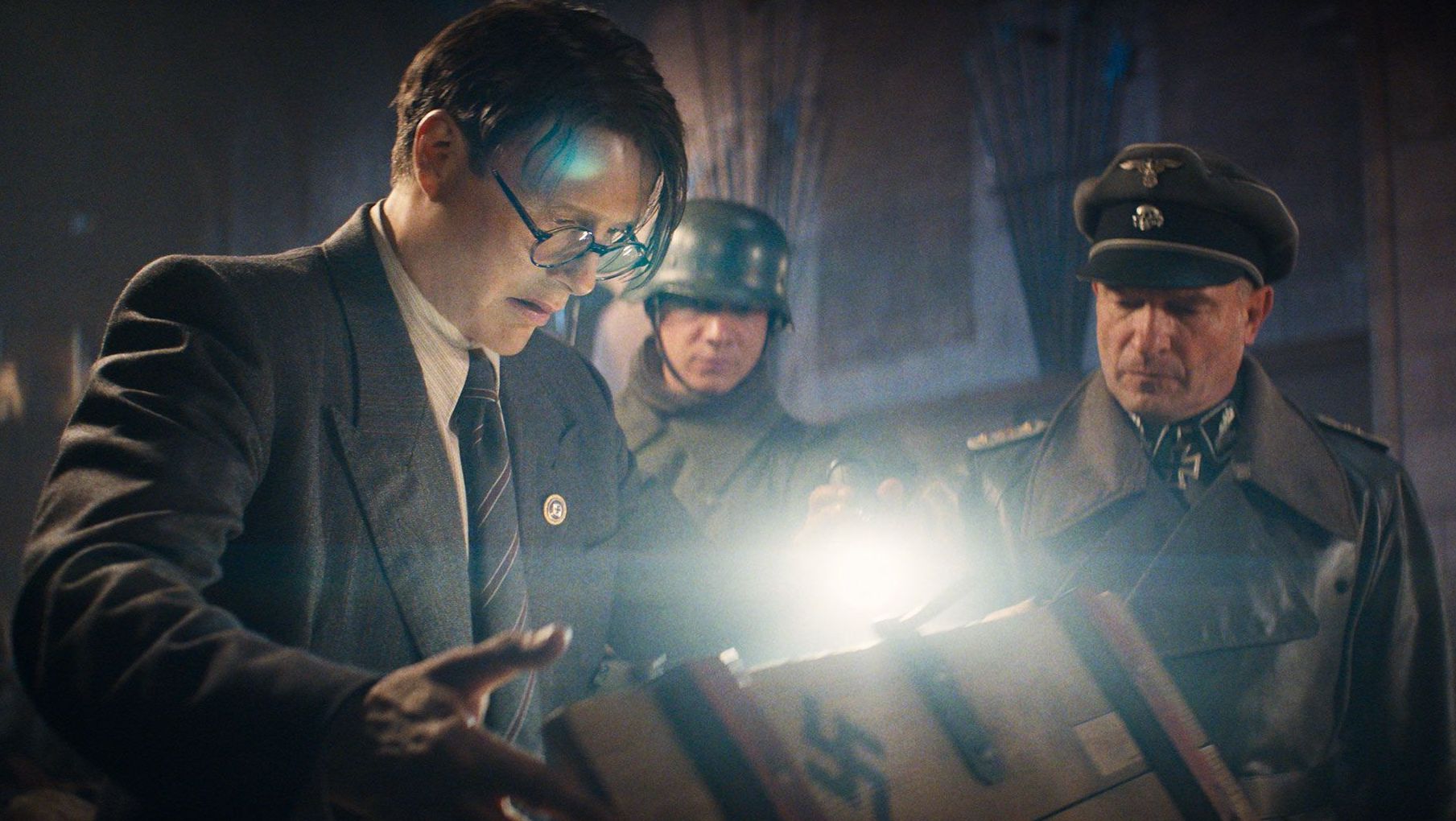
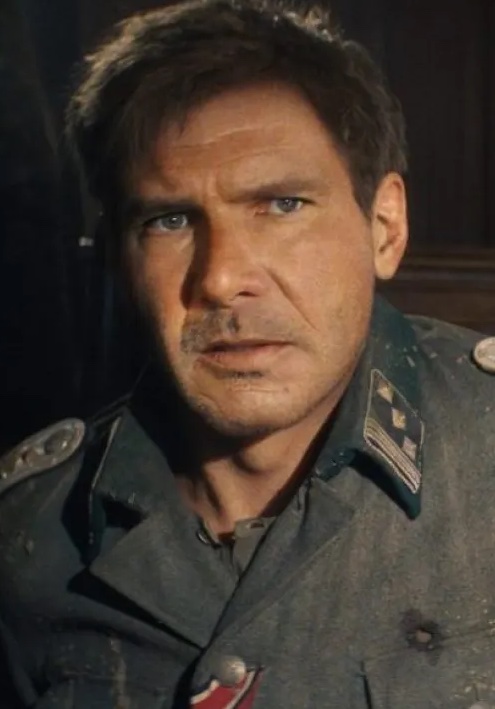
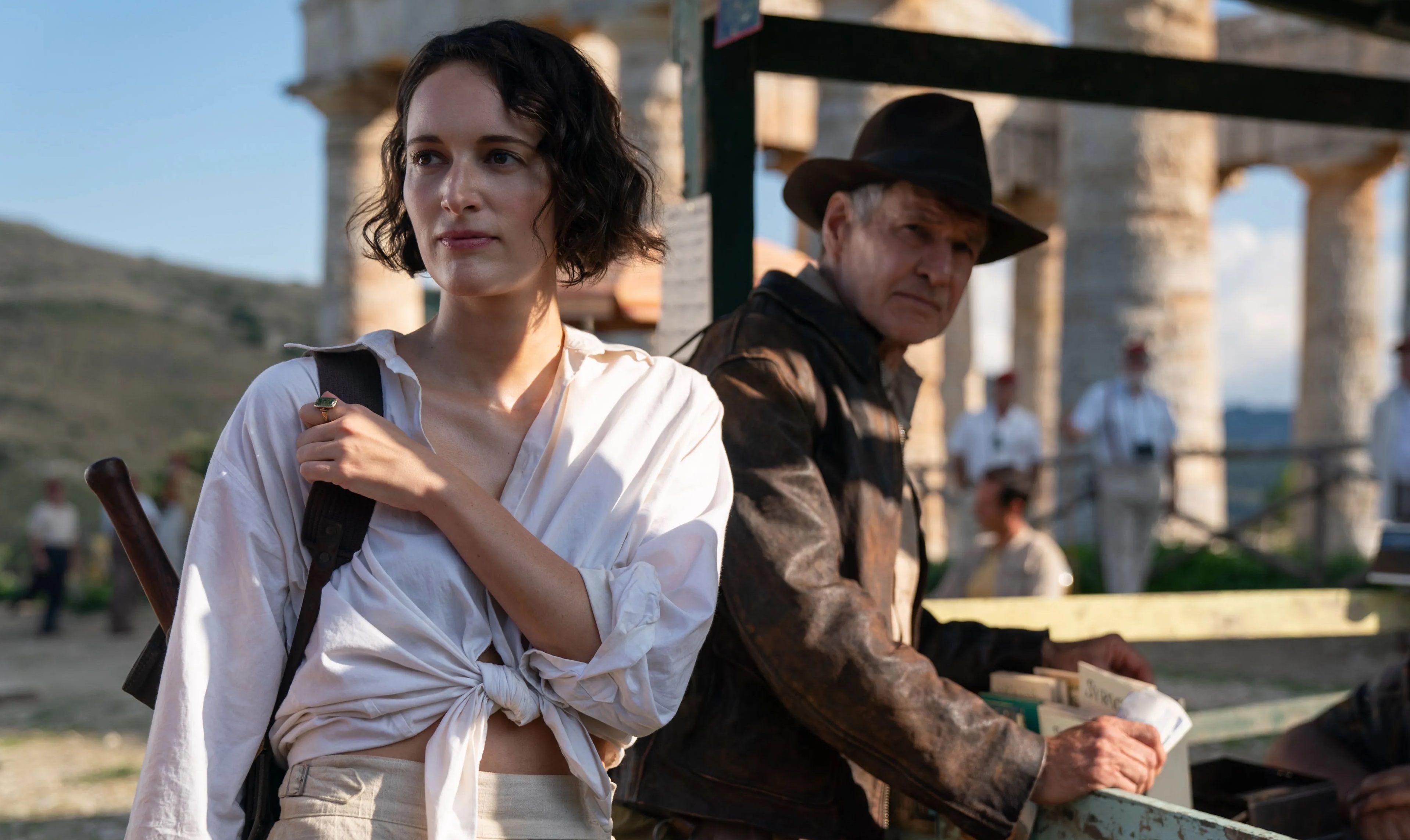
But now, directed by James Mangold, and written (mostly) by Jez Butterworth and his brother John Henry, everyone’s favourite archeologist is back in the game. When we reunite with him it’s via a flashback. It’s 1944, the Germans are rapidly losing the war and, thanks to the wonders of de-aging software, Indy looks like his former self. He’s working alongside his old pal Basil Shaw (Toby Jones) and the two of them are attempting to rescue an ancient antiquity, the Lance of Longinus, from a Nazi train packed with loot. Indy has just been taken prisoner, but needless to say, he’s soon free and wandering the length of the train, looking for the artefact. Also present is Dr Voller (the always excellent Mads Mikkelson), who has already decided the lance is a fake but has discovered instead, on the same train, the titular device (or at least half of it), built by Archimedes and capable of… well, that would be telling. A lengthy action set-piece ensues and it’s pretty good, serving as a promising opener.

But then we move to 1969. Mankind has just landed on the moon and Dr Jones is now earning a crust as a University lecturer, though his students seem much more interested in listening to rock music and smoking dope. Retirement beckons and it’s made very clear that Indy has lost his mojo. Then along comes his Goddaughter, Helena (Phoebe Waller-Bridge), who is also very interested in the Dial of Destiny, but mostly because she plans to sell it to the highest bidder. To give her fair credit, Waller-Bridge gives the franchise a much-needed update, and she’s good on the smart-arse wisecracks, but I’m not sure I quite buy her as an adrenalin-powered action hero. Then again, if I can accept an eighty-year-old male in the role, maybe anything is possible.

The bad guys soon come a-calling and, what do you know, they’re being led by Dr Voller, who has his own unthinkable plans for Archimedes’ invention and won’t hesitate to carry them out. Indy and Helena team up and a game of cat and mouse ensues with some protracted chases. A lengthy sequence featuring Ford on horseback (or at least, his stunt double) is perhaps the film’s standout, but the problem here is that there are just too many of these pursuits. A really complicated one featuring our heroes in a tuk tuk definitely overstays its welcome.

There are frequent nods to those earlier films – some of which work, others which feel meh – and there’s a surprisingly touching scene when Indy tells Helena about what happened to his son and why he and Marion Crane (Karen Allen) are no longer an item. John Rhys-Davies shows up once again as Sallah, but is given very little to do here and, naturally, Helena has a keen young assistant in the shape of Teddy (Ethan Isadore), who seems able to turn his hand to most things, including at one point piloting a plane. As you do.

With a running time over two-and-a-half hours, it’s to Dial of Destiny’s credit that it never really runs out of steam and, if the final conceit is hard to swallow, well, this is a series that’s known for it’s supernatural reveals. (Just don’t overthink the space-time continuum stuff because, on reflection, much of it really doesn’t add up.) I leave feeling that I’ve been suitably entertained but, before I’ve even made the short walk home, I’ve thought of at least half a dozen questions that remain maddeningly unanswered.

So, this is far from the disaster I anticipated but, when held up against that brilliant opening shot of Raiders, it’s frankly not in the same league. I can’t help feeling that, now it’s out in the world, this particular treasure chest should be triple-locked and left in a quiet place to gather dust.

3.8 stars

Philip Caveney

The Call of the Wild

23/02/20

Jack London’s 1903 novel, The Call of the Wild is a classic adventure story – though I suspect it’s much better known in America than it is here in the UK. It’s been filmed several times over the years, but what makes Chris Sanders’ 2020 version different from its predecessors is that all the canines featured here are CGI creations. (At least there’s no need for a ‘no animals were harmed in the making of this film’ caption.) For the most part, you wouldn’t know it if you hadn’t been told, but there are ocasional moments when something doesn’t look quite right, usually when the filmmaker’s desire to anthropomorphise his doggy cast slightly oversteps the mark.

It’s 1897 and Buck, a St Bernard/Collie cross, is the beloved pet of a California-based judge. Buck is adorable but extremely clumsy, always managing to leave a trail of devastation in his wake. It’s therefore hard to believe that his owner sheds too many tears when Buck is dog-napped and sent to Alaska, where the gold rush has created a lively market for his sort.

Initially Buck becomes a member of a sled team, taking the mail to far flung parts of the Yukon, under the command of the kindly Perrault (Omar Sy) and Françoise (Cara Gee). But a dog’s fortunes can change and he soon finds himself owned by the cruel, dastardly, gold-obsessed Hal (Dan Stevens), and  – later on – by the (much nicer) John Thornton (Harrison Ford), who has come out to the wilderness after a family tragedy.

It’s all handsomely mounted with sweeping landscapes and big skies and you’ll probably  find yourself pining for the wide open spaces and the Northern Lights. The story however, is somewhat fitful, most exciting in its earlier stretches (a sequence where the mail sled has to outrun an avalanche is so thrilling that it unbalances the movie somewhat). Later on, the tale becomes decidedly more somnolent as Thornton seeks solace in drink and Buck acts as his canine conscience. Those familiar with the novel will know that, through the last act, Buck is increasingly impelled to interract with the local timber wolves. This final stretch has, for understandable reasons, been changed somewhat from the original tale, but – as a result – feels a little too foreshadowed for comfort.

Niggles aside, this is a thoroughly decent adaptation, particularly suitable for younger viewers, though I can’t see it dragging too many of them away from the comic book franchises which still hold sway over their affections. Lovers of the orginal novel will, I’m sure, feel that Jack London’s brainchild has been treated with the respect it deserves.

3.5 stars

Philip Caveney

Apocalypse Now: The Final Cut

04/09/19

Some film directors have an unfortunate habit of revisiting their earlier successes and producing new versions of them. But is it always the wisest move?

Apocalypse Now is a good case in point. It’s rightfully acclaimed as one of the greatest war (and anti-war) movies ever made, but Francis Ford Coppola will keep returning to the well and tinkering with his masterpiece. Now here we are on the 40th anniversary of its release and he’s gone and done it again, assembling a version that weighs in at a hefty three hours and two minutes.

I first saw the original in 1979, when it was a mere at two hours and twenty-seven minutes. It had been a weird kind of day. Cycling through Manchester, I was kicked off my bike by a football supporter through the open window of a passing car. Understandably shaken, I found a young policeman, helpfully hiding in a shop doorway, who told me that a visiting football team was running riot in the city centre. He advised me to ‘lie low’ for a while.

A bit further along Deansgate, the ABC Cinema was showing Apocalypse Now, and a war movie felt somehow appropriate. So in I duly trooped and was promptly blown away by what I saw. Coppola’s transposition of Joseph Conrad’s Heart of Darkness to the jungles of war-torn Vietnam felt masterful. Indeed, I watched it again only a few weeks later at the infamous Aaben cinema, where it was given added mystique by the fact that pretty much everybody at the screening was smoking dope. Er… far out.

But then in 2001 along came Redux and, with it, an extra forty-nine minutes of footage that had been excised from the theatrical release, including the French Plantation Sequence – three words that still strike horror into my heart. This seemingly interminable section where Captain Willard (Martin Sheen) eats a meal and is given a long lecture on Vietnam’s troubled history by the plantation owner has the unfortunate effect of stopping the film dead in its tracks. Was I the only movie fan who, on seeing the words ‘The Final Cut,’ fervently hoped that Coppola had actually shortened the running time by taking a large pair of scissors to this bit?

No such luck. There’s even more of it now. And it fatally wounds the film.

The problem is, it’s followed by the (already glacially slow) final set piece and any goodwill that the previous two thirds has earned itself evaporates all too quickly, as we watch Marlon Brando sitting in the darkness and mumbling incoherently.  Also, it must be said, that the ending – based on Conrad’s colonial-era novel with its white saviour storyline – looks a little dodgy when examined in the cold light of the present day.

A pity then, because – as ever – the film looks absolutely gorgeous, especially on the huge Imax screen. Many of the scenes have passed into movie legend, together with quotes from John Milius’s script (‘I love the smell of napalm in the morning’ – ‘Charlie don’t surf!’ – ‘Terminate with extreme prejudice,’ to name but three). The helicopter battle scenes are unparalleled and the film expertly portrays the complete insanity of war, depicting Willard’s upriver journey as a dark descent into his own battle-damaged psyche. Oh, and there’s also fun to be had watching out for early performances by Harrison Ford and Laurence Fishburne in supporting roles.

The original Apocalypse Now is undoubtedly a brilliant and unforgettable piece of cinema. This version (and it almost hurts me to say it) squanders its own strengths by giving its director free reign to put back things that were, for very sound reasons, removed in the first place. Those with weak bladders take note: time your toilet break to coincide with Willard’s arrival at the French plantation.

And take your time. Trust me, you won’t miss anything.

4 stars

Philip Caveney

Blade Runner: The Director’s Cut

5172CDVME5L

09/04/15

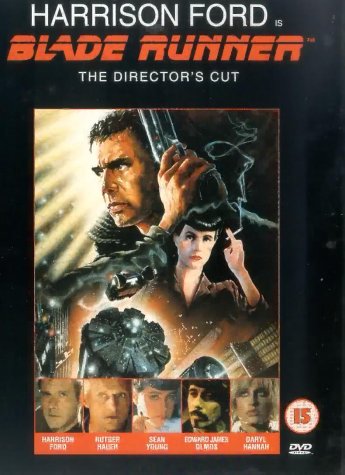
Thirty three years ago, as a raw recruit with Piccadilly Radio, I was sent to review Ridley Scott’s Blade Runner. The film was far from perfect (a Chandleresque voiceover by Harrison Ford, one of the chief offenders) but nevertheless, it blew me away. I couldn’t remember seeing a more credible vision of the future. Since then, Scott has revisited the film several times, trimming it, tuning it, reworking certain scenes with new technology as it became available. This version, originally released in 1992, now receives another showing on the big screen and if ever there was a film that deserved to be viewed that way, this is the one. Scott’s dystopic vision of Los Angeles in 2019 is a twelve course feast for the senses – a world dominated by acid rain, Japanese technology and endless adverts for Coca Cola. The visual effects are quite extraordinary (all the more so when you consider that this was before the days of CGI), but they don’t dominate proceedings, while Vangelis’s pulsing electronic score makes a perfect marriage with the onscreen action.

Rick Deckard (Harrison Ford) is a Blade Runner, a man charged with the tricky task of hunting down and eliminating rogue Replicants (incredibly realistic androids, generally used as workers on off-world colonies.) Four particularly resourceful Replicants led by Roy Batty (Rutger Hauer) are hiding out in Los Angeles and Deckard is recruited by his old boss to hunt them down. Visiting the Tyrell Corporation, who manufacture the replicants, he meets Rachael (Sean Young) an intelligent young woman who it seems, might not be quite as human as she appears…

In futuristic movies, it’s always fascinating to see how many unlikely predictions are made. In 2019, apparently, Deckard is still reading old fashioned newspapers and loading printed snapshots into what looks like a CD deck (though he can admittedly do amazing things once they’re in there). Meanwhile, people are zooming around in flying cars! But this matters not. The film goes deeper than most sci fi stories to ask some challenging questions. Does artificial life have as much right to exist as the creatures that have created it? And do those creators have the right to take that life away, when the creation fails to meet their expectations? The final sequences in J.S. Sebastian’s toy shop/apartment in ‘The Bradbury Building’ build to a compelling conclusion and Hauer has never been as enigmatic as he is here.  Blade Runner is serious film-making on a grandiose scale. Scott has made many films since, but this will probably remain his undisputed masterpiece. It’s stood the test of time and passed with flying colours.

5 stars

Philip Caveney