Harris Dickinson

Urchin

11/10/25

Cineworld, Edinburgh

Actor Harris Dickinson makes an assured directorial debut with this intriguing story, which concentrates on the misadventures of young man called Mike. Frank Dillane gives a beguiling performance in a role that has already won him the Un Certain Regard prize at this year’s Cannes Film Festival. Dickinson also wrote the screenplay, which immediately evokes my sympathy for its troubled, self-destructive protagonist.

The film opens with Mike wandering the streets of London, feverishly strung-out on drugs and constantly searching for ways to procure money to pay for his next fix. He clashes with Nathan (Dickinson), another young man in a similar situation and, after a fight between them, passer-by Simon (Okezie Morro) attempts to help Mike, offering to buy him a meal. Mike accepts the offer – and then punches Simon unconscious before stealing his designer watch, which he sells for a measly £40. Shortly afterwards, he’s arrested and sent to prison.

We don’t see anything of his time in captivity but, some months later, he’s released back into the community, given a temporary place in a hostel and sent to work in the kitchen of a down-at-heel hotel under the direction of Chef (Amr Waked). Mike is off the drugs now and determined to make a fresh start, but he is told that part of the process will include him sitting down with Simon and expressing regret for what he’s done…

It’s a simple premise, with a deeper subtext. Dickinson’s script has the brutal smack of realism and Dillane is extraordinarily compelling. There’s something innately likeable about Mike, something so utterly helpless that I watch this on tenterhooks, dreading every step he takes in the wrong direction. The film has the verité quality of Ken Loach, cinematographer Joseé Deshaies filming in long, naturalistic takes, mostly on the streets. But every so often, the scene shifts to a mysterious, labyrinthine setting, an underground cavern, as though we’ve been granted access to somewhere deep within Mike’s psyche: a strangely tranquil place, where all his woes are momentarily forgotten.

But we’re only in there for short intervals, before being wrenched rudely back into reality, where Mike’s slow slide to oblivion continues. Dickinson is a chameleon of an actor, who has a whole range of disparate characters to his credit, so it’s perhaps unsurprising that he displays this same quality as a director. Urchin is one of those hard-to-quantify features, a unique and impressive first foray.

If the acting work ever dries up, Dickinson clearly has another talent to explore.

4.4 stars

Philip Caveney

Babygirl

06/01/25

Cineworld, Edinburgh

It’s ironic to note that while most 18 certificate films released in recent times have been perfectly happy to depict characters being shot, stabbed and bloodily hacked to pieces, when it comes to scenes of a sexual nature, all but the most fearless filmmakers shy away from the subject. Writer/director Halina Reijn’s last film, the enjoyable slice-and-dice romp, Bodies Bodies Bodies belongs squarely in the first camp. Babygirl, on the other hand, sets out its stall in the latter and strides boldly across a landscape where few others dare to tread.

Romy (Nicole Kidman) is to all intents a powerful woman, the CEO of a major company and married to a (presumably successful) theatre director, Jacob (Antonio Banderas). The couple have two teenage daughters to their credit and seem to be blissfully happy. When we first meet them, they’re having sex. Romy appears to achieve an enthusiastic climax – so why does she feel compelled to slip away immediately afterwards and watch porn on her laptop, a submissive woman being sexually dominated by a man? The quiet orgasm she has this time, we feel sure, is more genuine than its noisy predecessor.

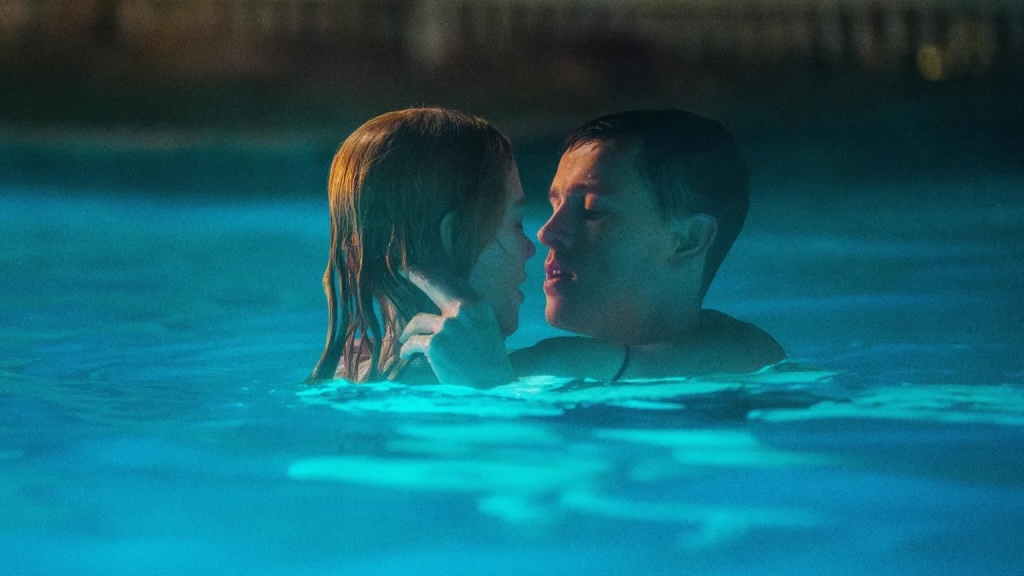
On her way to work, Romy chances upon an incident in the street, a young stranger handling an aggressive dog, making it obey him with a single word. This event kindles something within Romy and when, shortly afterwards, she is introduced to a bunch of new interns, she instantly recognises Samuel (Harris Dickinson), as the guy she saw earlier. Something clicks between them and it isn’t very long before the two of them have launched themselves into an intense, secret and potentially dangerous sub-dom affair. As things begin to develop between them, the relationship threatens to cost Romy everything: her family, her job, her sanity…

If this sounds like the plot of some second-rate bodice ripper, don’t be misled. Babygirl is much more nuanced than a plot summary might ever suggest. Kidman launches herself fearlessly into the piece, demonstrating how somebody can be compelled and pushed to the limit by their inner yearnings, how these compulsions can shape and dominate her life, pushing beyond the boundaries of her carefully constructed persona. Dickinson offers the latest chameleon change in his varied career, playing Samuel as an opportunistic hustler: gauche, unpredictable, never entirely in control of his own impulses, but happy enough to take the ride and see where it leads him.

While the film’s intentions are evident, it perhaps pulls too many punches in its second half, when, after a messy confrontation, Romy realises that the real problem is her own sense of shame. If she can embrace her kink, then she can be true to herself – and maybe Jacob can accept her as she really is. But perhaps this is a little too pat to be entirely convincing.

Babygirl is, for the most part, well-handled, but it does feel ultimately like a missed opportunity. I’d like to have seen it take some wilder swings in its latter stages, but I applaud Reijn’s courage for daring to go there in the first place. Anyone hoping for a violent and bloody conclusion will be very disappointed.

3.6 stars

Philip Caveney

The Iron Claw

14/02/24

Cineworld, Edinburgh

As I sit watching this film unfold, I can’t help picturing writer/director Sean Durkin’s hopeful pitch to a room full of potential financiers.

“So Sean, what’s this film about?”

“It’s about the world of wrestling – and it’s inspired by a real-life family drama. Oh, and it will star Zac Efron. You know, from High School Musical?”

Whatever those execs pictured in that moment, I’m pretty sure it was nothing like The Iron Claw, but – trust me – the resulting movie is about a hundred times better than it could ever sound as a pitch. If you have expectations, prepare to adjust them.

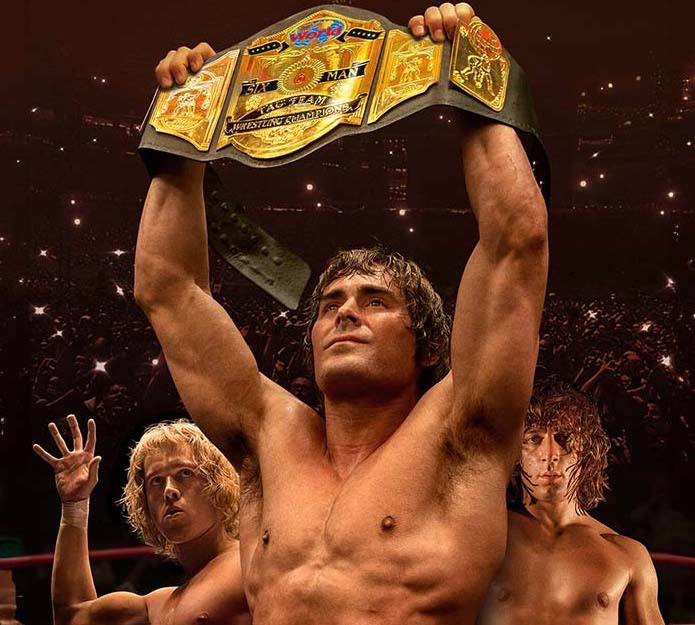
We first meet the Von Erich clan in the 1970s, when they are conducting their lucrative tag-wrestling partnership and going from strength to strength under the tutelage of their father, Fritz (Holt McCallany), a veritable toxic stew of a man. Fritz thinks nothing of flinging his boys headlong into the wrestling life, even those who are not cut out for it. The Von Erichs have the physiques of Greek gods and the hairstyles to match and, as all-American boys, they do whatever Daddy says, getting little in the way of guidance from their mom, Doris (Maura Tierny), who seems mostly preoccupied with putting gargantuan amounts of carbs on the table.

The oldest (surviving) boy is Kevin (Efron), who, though built like the proverbial stone sewage outlet, somehow manages to maintain his good humour even when being passed over in favour of one of his younger siblings. These include human chameleon Harris Dickinson as David, whose good looks and articulacy make him an ideal frontman and Kerry (Jeremy Allan White), whose dream of throwing the discus at the 1980 Moscow Olympics are scuppered when America withdraws for political reasons. And then there’s young Mike (Stanley Simons), a gentle, optimistic teenager who hankers after a career as a musician – until Fritz derides this as a pipe dream and demands he become a wrestler like his brothers…

As you might expect, the Von Erichs come in for more than their fair share of tragedy; indeed, their story is so overloaded with the stuff that Durkin has removed some of the bleaker occurrences and completely eliminated one member of the clan – Chris, if you’re wondering – arguing that there’s only so much misery an audience can endure in a two-hour cinema visit. Put it this way: if this was fiction, nobody would believe that one relatively small bunch of people could possibly encounter so many slings and arrows in their journey through life. Little wonder that rumours of a ‘Von Erich curse’ proliferated as the family was hit with one terrible disaster after another.

Don’t get me wrong, The Iron Claw (named for Fritz’s signature technique) isn’t one endless blub-fest. Indeed, Durkin ensures that there’s plenty here to lift the mood as the action unfolds. There’s a wonderfully cheesy evocation of the 70s and 80s, with an upbeat soundtrack comprising some of the biggest rock songs of the era, and there’s a whole raft of superb performances from the ensemble cast. Lily James, in a change from her usual ‘middle-class posh girl’ roles, delivers what may be a career-best performance as Kevin’s vivacious and resourceful partner, Pam. And there’s a delightful cameo from Aaron Dean Eisenberg as motor-mouthed wrestling champion, Ric Flair, who comes across as a nasty piece of work on TV, but is revealed to be a nice guy when he’s allowed to be himself.

I was warned to bring some Kleenex to this, but though I’m often shocked by the constant barrage of bad luck the family encounters, I remain resolutely dry eyed throughout. But maybe that’s just me. The Iron Claw is a brilliantly-nuanced story that looks at the toxic nature of the wrestling industry, skilfully eviscerates it and reveals the genuine humanity that lurks behind all that pantomime posturing. 

And it’s clear from the word go which member of the family is chiefly responsible for all that heartbreak.

4.7 stars

Philip Caveney

Scrapper

29/08/23

Cineworld, Edinburgh

Georgie (Lola Campbell) is just thirteen years old and, since the recent death of her mother, she’s managing to fend for herself in a council flat somewhere in London, all on her own. The neighbours know of her situation but turn a blind eye to it, not wanting to see her engulfed and spat out by the system. Meanwhile, with her best friend, Ali (Alin Uzan), Georgie is making ends meet by stealing second-hand bikes and selling them on to local shopkeeper, Zeph (Ambreen Razia).

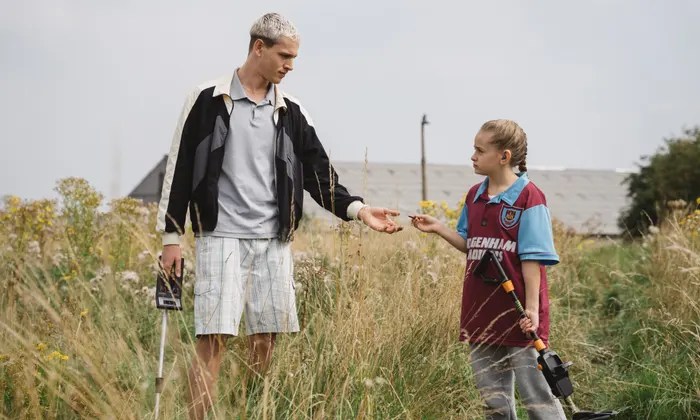
Georgie is determinedly self-sufficient and precocious beyond her years, even able to smoothly talk her way out of trouble when a woman finds her trying to remove her bike-lock. But then one day, Jason (Harris Dickinson) climbs over the garden fence and introduces himself to Georgie as the father she’s never met. He’s been over in Spain working as a ticket tout, but has returned with the intention of getting to know his daughter. Georgie is initially suspicious of him, not allowing him to sweet-talk her, the way he’s already doing with Ali – but, bit by bit, her defences begin to crumble…

This is the feature debut of young writer/director Charlotte Regan and it’s been compared to Aftersun, with which it does perhaps share some DNA – though that’s perhaps unfair, because Scrapper is its own beast.

Steadfastly refusing to play to the usual poverty porn clichés, Scrapper depicts the estate where Georgie lives in bright, primal colours and offers us short, direct-to-camera comments from some of the other local inhabitants – even the spiders in Geogie’s house manage to have their say! Campbell’s performance is extraordinary, while Dickinson is totally convincing as Jason, a man who has never really matured but is doing the best he can to meet the demands of fatherhood.

I like too the scenes that are shown from Georgie’s own POV – the weird assemblage of bicycle parts she has constructed in the spare room, which in her mind’s eye assumes gigantic proportions: a dizzy ladder climbing to heaven, where she hopes her mother is waiting for her.

Sweetly sad and often affecting, Scrapper is a delightful low-budget gem from a young director with plenty of potential.

4 stars

Philip Caveney

Triangle of Sadness

18/12/22

Amazon Prime Video

Writer/director Ruben Östlund clearly has an axe to grind with the rich and privileged. This film amounts to a pretty effective take-down of such people, skewering their pretensions and their innate sense of ownership. Most of the characters depicted are repellent in their own individual ways, so it’s very much to Östlund’s credit that he actually manages to make me care so much about what happens to them.

Carl (Harris Dickinson) is a male model, already suffering the indignities of casting agents muttering that he ‘may need some botox’ just three years after hitting it big in a series of fragrance ads. His ultra-manipulative girlfriend, Yaya (Charlbi Dean), is an influencer, unable to eat a meal without taking thirty shots of herself supposedly enjoying the food. The two maintain a prickly relationship.

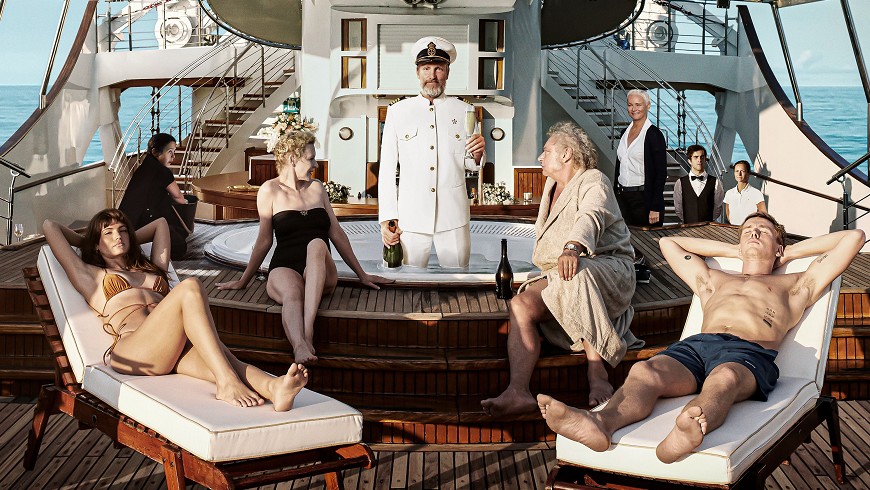
Yaya has recently wangled an invitation for her and Carl to go on an ultra-luxurious ocean cruise, along with a collection of super-rich guests, including oligarch, Dimitri (Zlatko Buric),  who’s made his fortune from selling manure, and charming old couple, Winston (Oliver Ford Davies) and Clementine (Amanda Walker), who have become filthy rich from selling military grade weapons. ‘Our hand grenades are very popular,’ they tell Carl, proudly.

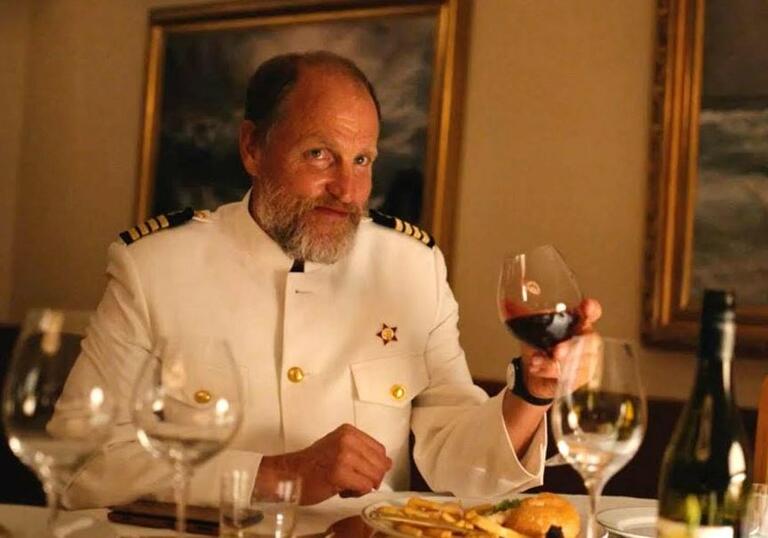
Urged on by head of staff, Paula (Vicki Berlin), the ship’s crew do everything they can to fulfil their guests’ every whim, no matter how demeaning, how utterly facile it might be. Meanwhile, Captain Thomas Smith (Woody Harrelson) skulks alone in his cabin, drinking too much alcohol and attempting to keep his distance from the passengers he clearly despises… 

But a storm is coming and, when it coincides with the Captain’s Dinner, it soon becomes apparent that this trip is going to be anything but plain sailing…

Like an Admirable Crichton for our time, Triangle of Sadness is full of delights, by turns excoriating, hilarious and insightful. At times it’s also unpleasant – scenes where an ocean storm induces an outbreak of mass vomiting amongst the passengers are really not for the faint hearted. While the film admittedly loses a little momentum in its final third, when the action transfers to a desert island, it nonetheless still has plenty to say about the human condition, when former toilet cleaner, Abigail (Dolly Le Leon), spots an opportunity to take on the role of leader, by simple virtue of the fact that she’s the only one capable of doing anything practical. Östlund seems to be pointing out that no matter how much we might hate the privileged, when offered the chance to step into their shoes, few of us are willing to pass it up. And to what lengths are we prepared to go to in order to cling onto it?

A late revelation leaves Abigail with a difficult decision on her hands and brings the film to a breathless conclusion. I’ve always hated the idea of going on an ocean cruise and Triangle of Sadness hasn’t made me change my mind. But this film is well worth embarking on.

4.2 stars

Philip Caveney

See How They Run

14/09/22

Cineworld, Edinburgh

The recent success of Rian Johnson’s Knives Out seems to have rekindled a cinematic interest in whodunits. Johnson’s sequel, Glass Onion, is due out soon (on Netflix) but, meanwhile, on the big screen there’s See How They Run, a lighthearted spin on the genre, directed by Tom George (previously best known for TV’s This Country) and written by Mark Chappell.

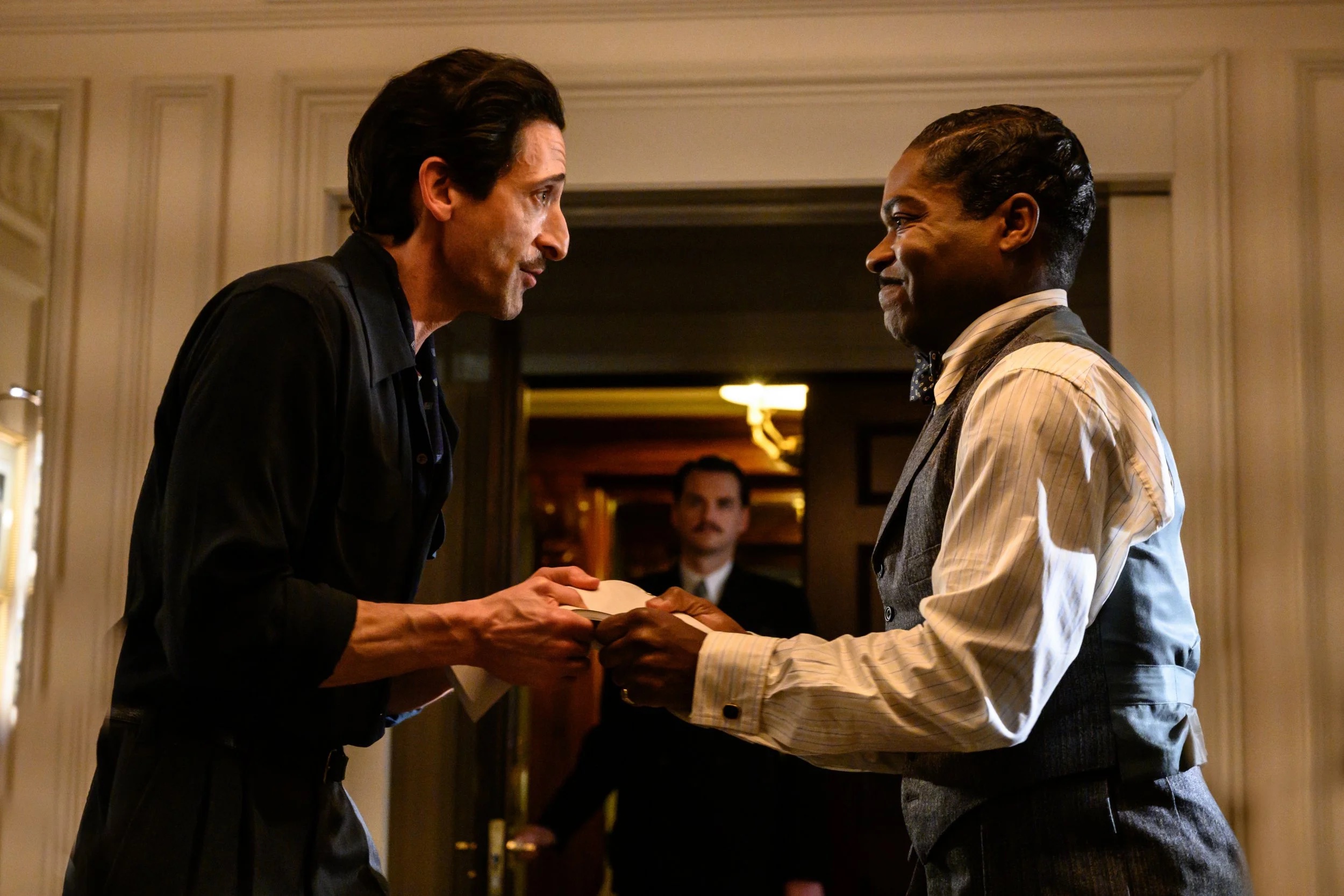
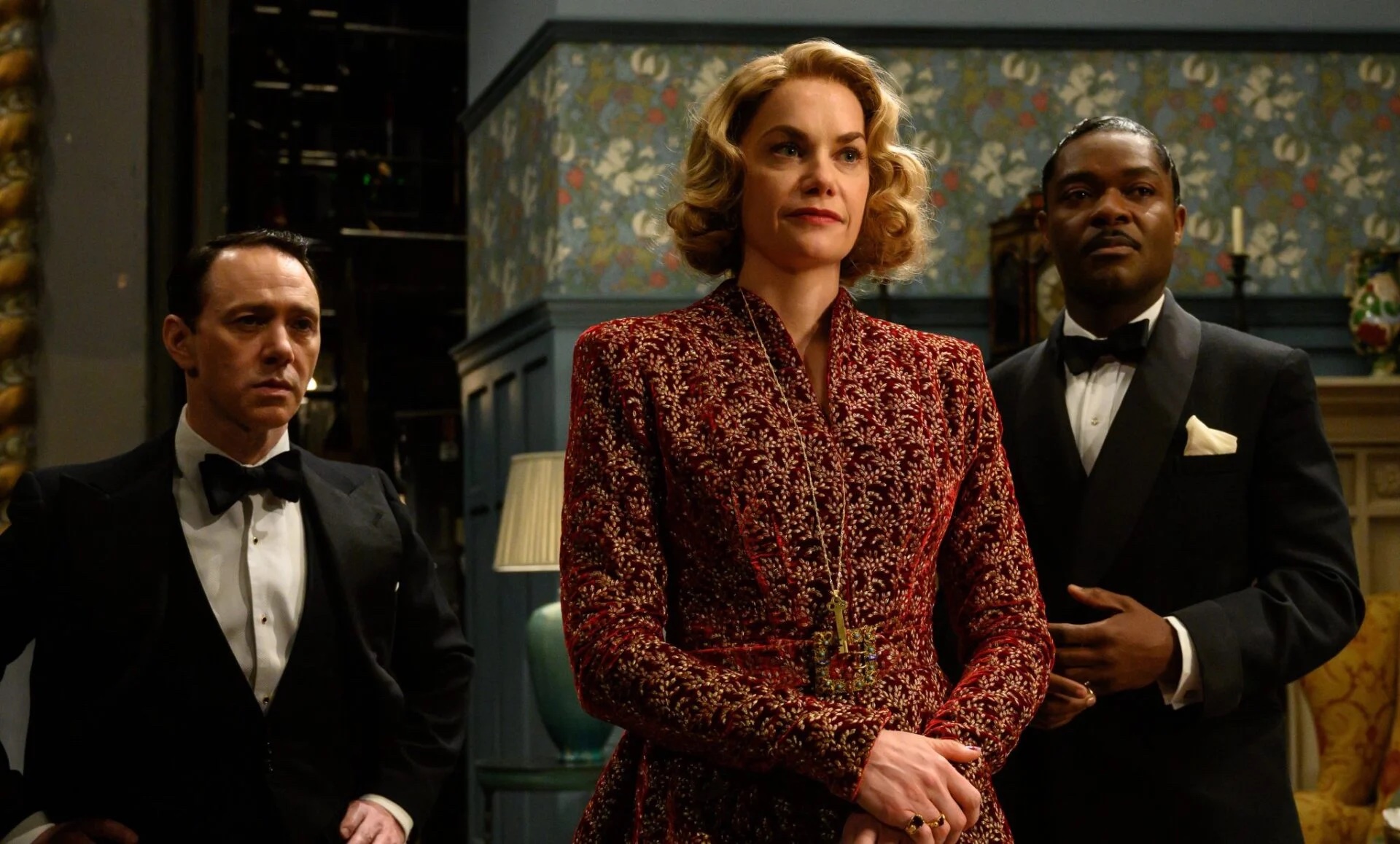
It’s 1953 and Agatha Christie’s The Mousetrap is already approaching its one hundredth performance. Moves are afoot to turn it into a motion picture, spearheaded by odious American screenwriter Leo Kopernick (Adrien Brody) who wants the chosen screenwriter, Mervyn Cocker-Norris (David Oyelowo), to amp up the sex and violence to make it more screen-worthy. Okay, so there is a clause in the play’s contract, stating that it can never make the transition into film until its theatrical run has ended… but that won’t be long, surely?

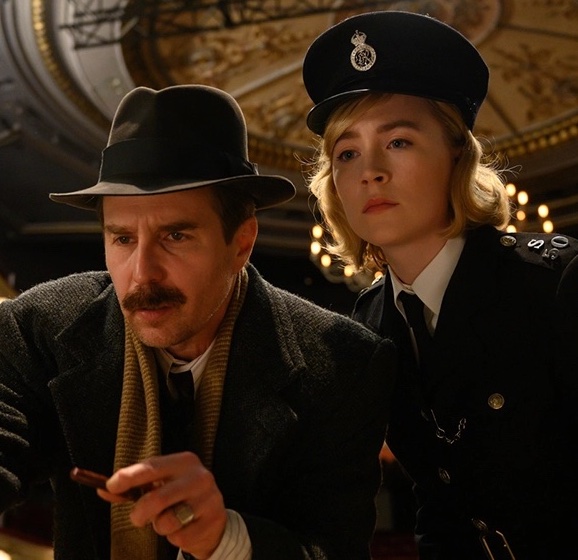
Kopernick quickly winds up dead (don’t worry, this is in no way a spoiler) and suspicion initially falls on Cocker-Norris. But, as rumpled, hard-drinking Inspector Stoppard (Sam Rockwell) soon begins to discover, there are lots of people in the cast and crew who have reasons to bear a grudge – and anyway, he has his hands pretty full with his over-eager assistant, Constable Stalker (Saoirse Ronan).

See How They Run is a tremendously likeable film, virtually stuffed to the gills with big-name actors having a ball in small roles, many of them based on real life characters. Harris Dickinson offers a nicely judged Richard Attenborough (who starred in The Mousetrap‘s original production) and Pearl Chanda is excellent too as his wife and co-star, Sheila Sim. Rockwell does a suitably world-weary turn as Stoppard, but for my money it’s Ronan who really makes this fly, creating an absolutely adorable character, determined to make her mark in a world that has until now been entirely dominated by men. Plaudits should also go to comedian Tim Key, who does a brilliant job of embodying a loathsome police commissioner.

As you might expect, the script is as meta as you like, with plenty of in-jokes and sly references for theatrical fans to pick up on – but, more importantly perhaps, this is funny throughout, with some perfectly timed pratfalls thrown in for good measure. While it’s hardly destined to linger for long in a viewer’s mind, it’s nonetheless a very pleasant way to spend a well-paced hour and thirty-eight minutes.

4.2 stars

Philip Caveney
Where the Crawdads Sing

23/07/22

Cineworld, Edinburgh

Delia Owens’ blockbuster novel Where the Crawdads Sing makes the transition into film, thanks to Reece Witherspoon’s production company, Hello Sunshine. I’ve never read the book but it’s probably just as well. The fact that it’s sold twelve million copies worldwide would make anything I have to say about it sound suspiciously like sour grapes. Suffice to say, I really hope it’s more convincing than the film.

This is the story of Kya Clark, a little girl living with her family in a remote shack, deep in the marshes of North Carolina. Kya’s Pa (Garret Dillahunt) is a violent drunk, a man so odious that first his wife leaves him, then his two daughters, then his son. None of them bothers to take poor little Kya, so she has to look after him on her own (thanks, guys!) Then Pa abandons Kya and she is obliged to fend for herself, grubbing a living by digging up mussels and selling them to the nice couple who run the local store. She tries a day in school, but is subjected to so much sniggering and cruelty from the other pupils that she runs home and never goes back. Somehow she manages to evade the authorities for… well, years. Mind you, this is the 1960s. It was a different time.

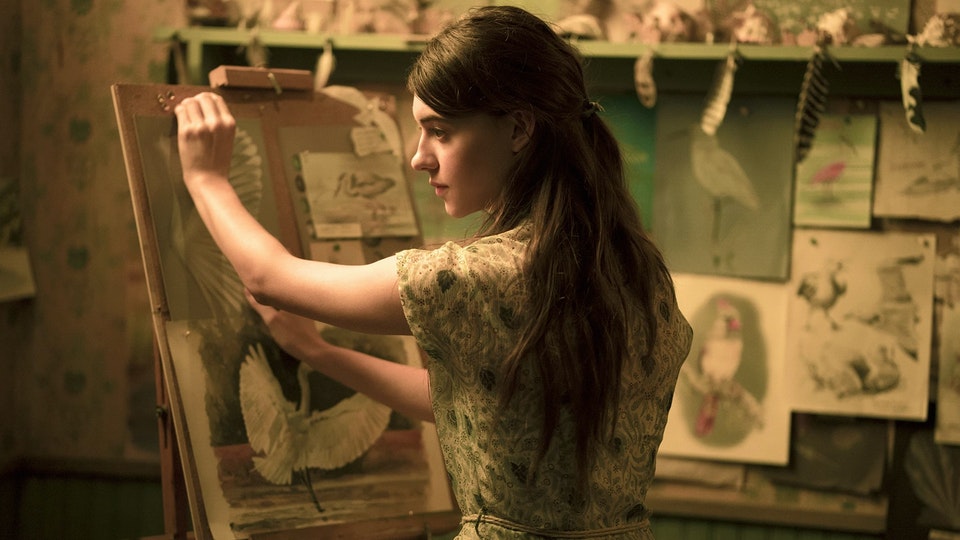
Quite how grubby little Kya metamorphoses into the impeccably turned-out Daisy Edgar-Jones is only one of the many mysteries here, but perhaps it’s something to do with washing your hair in swamp water. Eventually, Kya has a romantic dalliance with ‘nice’ Tate (Taylor John Smith) who teaches her to read (apparently in a matter of weeks). Then, when Tate heads off to college, she hooks up with the rather less cuddly, Chase (Harris Dickinson), who seems to be on a mission to be even more toxic than Kya’s Pa. We know from the film’s opening that Chase has ended up dead at the bottom of a lookout tower and that Kya is on trial for his murder. Luckily, she has the help of ‘nice’ lawyer Tom Milton (David Strathairn), who has come out of retirement in order to defend her…

If I’m making this sound unbelievable that’s because it really is – and it doesn’t help that its all painted in such broad brush strokes that nuance doesn’t get a look in. The people are overblown caricatures and the eyebrow-raising events just keep right on coming. Kya, it turns out, has the ability to draw and paint like a pro (without any formal training) and her very first submission to a publisher results in a life-changing publishing deal! Yeah, right. Apparently, there’s a massive demand for a book about swamp shells.

Edgar-Jones does the best she can with the thankless lead role, but she struggles as her character progresses through a series of dull events, which have the eerie ability to make a two-hour movie feel more like three. It’s not just me. The audience starts filtering out long before the final scene but I stick resolutely in my seat to see the film’s final – heavily-signposted – ‘twist’.

Of course, crawdads can’t actually sing, so Taylor Swift steps in with a specially-written ballad over the credits. Which is arguably the best thing here, but it’s a very low bar. Those who enjoyed the book might want to give this a go, but be warned: it’s underwhelming to say the least.

2.6 stars

Philip Caveney

The King’s Man

02/01/22

Cineworld, Edinburgh

I enjoyed Matthew Vaughn’s two Kingsman movies. A refreshing take on the spy genre, written with a nod and a cheeky grin, they provided easy, if undemanding, entertainment. After long delays caused by the pandemic, we finally get to see The King’s Man, a sort of origins tale, which explains how the Kingsman Agency came into being.

And, not to put too fine a point on it, this is a very different kettle of fish – some of which is well past its sell-by date. It isn’t that Vaughn’s screenplay (written this time without Jane Goldman) is short on ideas. There are just too many of them, fighting with each other for breathing space and frankly as risible as the proverbial box of frogs.

After the violent death of his wife in South Africa, Lord Oxford (Ralph Fiennes), a rich pacifist do-gooder swears to shield his young son from any possibility of warfare. Twelve years later, Conrad (Harris Dickinson) has grown to be a young man and, with the world hurtling headlong towards the conflict of the First World War, he decides he wants to be involved. He’s blissfully unaware that, over the intervening years, his father has created a special network of spies, working alongside two of his trusted servants, Polly (Gemma Arterton) and Shola (Djimon Hounsou). Working with other ‘domestics’ across the world, all with access to centres of government, the trio are able to gather evidence of any approaching catastrophe and take steps to avoid unnecessary lives being lost… yes, that really is the premise!

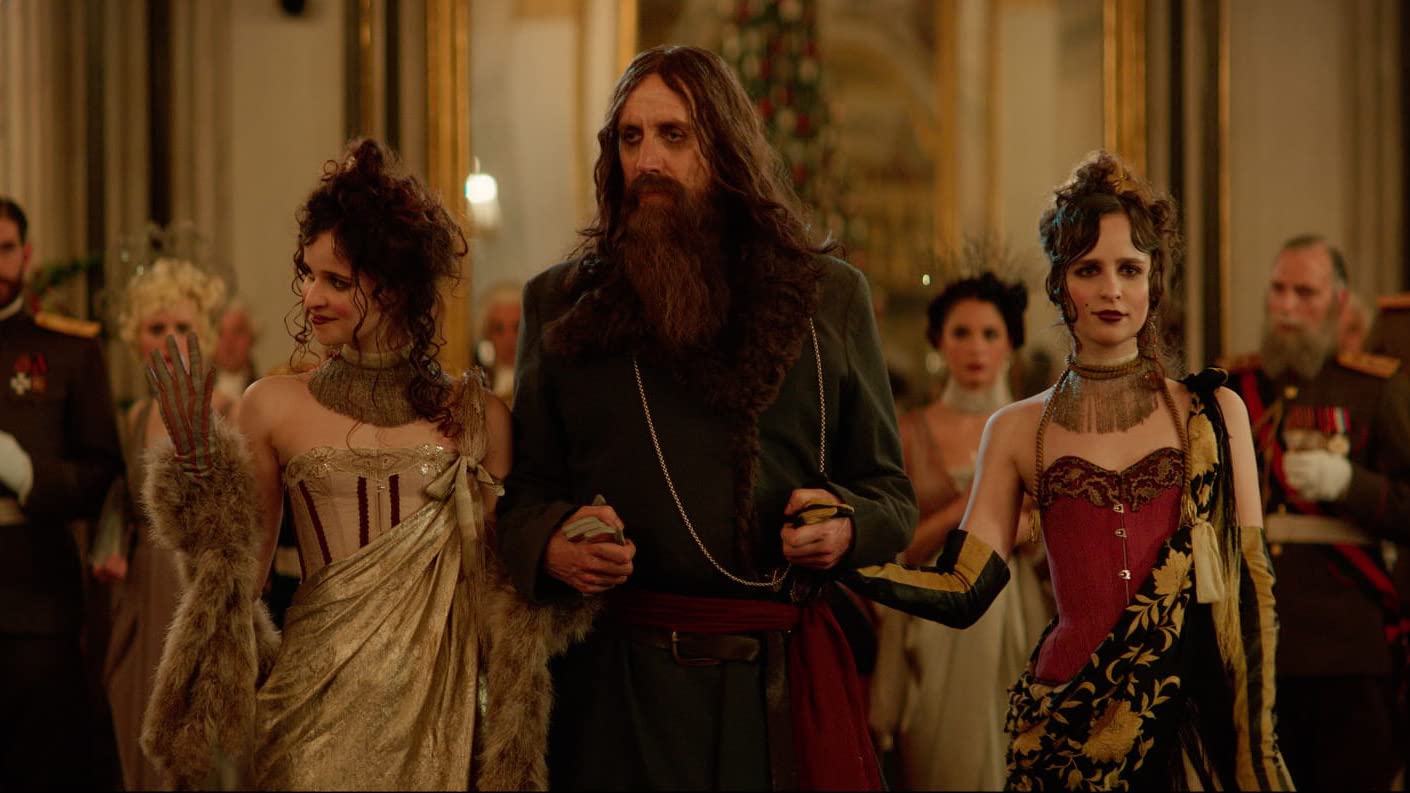
Cue a series of unlikely adventures, with Oxford and son working alongside Lord Kitchener (Charles Dance), being present at the assassination of Duke Franz Ferdinand and even taking on Grigori Rasputin (Rhys Ifans) in a martial-arts infused punch-up (actually one of the films better sequences). Meanwhile Tom Hollander struggles with a triple role as three of history’s most famous cousins – King George, Kaiser Wilhelm and Czar Nicholas – and ultimately, we learn that the entire war has been engineered by… No, I can’t tell you. Not without being embarrassed by the sheer absurdity of it. Put it this way. I seriously doubt you’ll see it coming.

While it’s true there are a couple of excellent action set-pieces in the later stretches of the film, there’s a long grim wait before we get to them, during which we are treated to a parade of caricatures that wouldn’t seem out of place in a Carry On film. There are also some conspiracy theories that frankly beggar belief. The final straw is the use of Dulce et Decorum est to pass comment on the senseless slaughter of the First World War. While Fiennes reads it beautifully, it’s hard not to imagine Wilfred Owen spinning in his grave as Vaughan makes a desperate attempt to have his Bakewell Tart and eat it.

The overall message here seems to be that humanity always depends on rich toffs to step in and bail them out of trouble when, once again, the rest of us make a mess of things. Fiennes, a superb actor, is worthy of better material than he’s given here and I’m not referring to the tailoring.

It’s a great shame, because clearly a lot of time, effort and money has been expended on this production. Released on Boxing Day in an apparent attempt to hoover up the Christmas market, I seriously doubt this will recoup what must have been a considerable investment.

Even during the festive season, there’s only so much cheese an audience can swallow.

2.8 stars

Philip Caveney