Hannah Jarrett-Scott

Maybe Tomorrow

14/10/25

Traverse Theatre, Edinburgh

Glamour and strife! Bigger than life!”

Siân Silver (Liz Ewing)’s showbiz career is careering towards the end of Sunthorpe-on-Sea’s dilapidated pier, where the seventy-five-year-old singer is gamely touting her outmoded razzle-dazzle to ever-smaller audiences for a measly £250 a week. It’s a long way from the stardom she dreamed of, but at least she’s still on stage, performing – until the theatre manager tells her she’s no longer required. Siân doesn’t know who she is if she’s not sparkling in the spotlight. What’s left when even the dregs she’s settled for are so cruelly stripped away?

Forced to confront her failure, Siân is visited by the ghost of Siânny past (Julia Murray). Young Siânny is brimming with hope and vitality, urging her future self to embody the spirit of her long-time heroine, Little Orphan Annie. Instead of bemoaning her hard-knock life, Siânny thinks Siân should focus on making the most of the years she has left. “Maybe now it’s time…”

At first, Siân’s having none of it but she soon realises she has nothing to lose. Why not step into the plucky red-head’s ankle socks and Mary Janes? After all, why should little girls have all the fun? The role of Annie is wasted on a ten-year-old! If she has to bow out, then she’ll do it on her own terms…

Written by Hannah Jarrett-Scott with music and lyrics by Brian James O’Sullivan, Maybe Tomorrow is a decidedly quirky piece of musical theatre, rife with heart and humour. The songs work well, paying homage to Charles Strouse’s original score without allowing it to overwhelm this play. Under Lesley Hart’s direction, Ewing shines as the protagonist (and not just because of her sequinned costumes), imbuing the fading performer with pathos. Siân is talented but unappreciated: of course she’s resentful; of course she’s angry at her producer-ex, who promised her centre-stage but left her in the wings. Murray provides excellent support, not only as the vivacious Siânny, but also as a series of minor male characters, with an impressive range of hats, accents and, um, farts.

An ageing Annie-fan myself, I enjoy this show immensely. It’s undeniably absurd, but somehow rather beautiful. It feels like the start of something that could easily evolve into a full-length musical production, where both themes and characters would have more space to breathe. Why not pop along to the Traverse this week and see for yourself? “You’re gonna have a swell time.”

4 stars

Susan Singfield

Wild Rose

20/03/25

Lyceum Theatre, Edinburgh

Rose-Lynn Harlan (Dawn Sievewright) has a dream: to appear on the stage of Nashville’s legendary Grand Ol’ Opry, belting out a country song – not a country and western song, mind you. It’s an important distinction. So, being banged up in prison for a year wasn’t part of the grand ol’ plan – but now she’s served her time and is finally able to head back to her mum, Marion (Blythe Duff), who has been dutifully looking after Rose-Lynn’s two young children, Lyle (Leo Stephen) and Wynonna (Jessie-Lou Harvie).

Rose-Lynn is dismayed to find that her kids have become disaffected by her long absence and that their former trust in her has been all but eroded. What’s more, they view her long-cherished dream as selfishness. And that’s not all that has changed. When she calls in at the Grand Ol’ Opry, Glasgow – where she previously had a residency – she discovers that her regular slot has been handed to the dreaded Alan Boyne (Andy Clark), a long-haired carpet fitter with a sideline as a charisma-free country singer.

Desperate to keep her head above water, Rose-Lynn takes a part-time post as a cleaner, working for the highly-privileged Susannah (Janet Kumah). She’s a go-getter and, once she’s heard Rose-Lynn sing, she becomes determined to put her in touch with legendary DJ Bob Harris, who Susannah believes might be able to offer some good advice.

Rose-Lynn realises that her long-cherished ambitions are still burning as fiercely as ever…

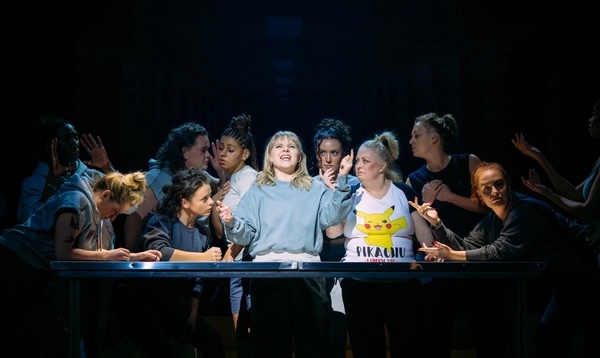
This assured version of the 2018 film (adapted by its original screenwriter, Nicole Taylor) makes a seemingly effortless transition to the stage. A prison-set opening where Rose-Lynn and her fellow inmates launch headlong into a propulsive rendition of Country Girl sets the tone perfectly, with Sievewright stepping into Jessie Buckley’s cowboy boots with absolute authority. An eight-piece band ranged across the back of the stage performs a varied selection of numbers, from banging rockers to lilting, steel-guitar layered ballads. And it’s not just Sievewright supplying the singing.

As bar-owner, Jackie, Louise McCarthy belts out her own fair share of raunchy vocals, Duff does a fabulous job with a haunting song of regret and even the two youngest members of the cast have the opportunity to shine as vocalists. Clark – who takes on a number of roles – proves himself an invaluable asset to the production, as does Hannah Jarrett-Scott, who appears as two (very different) characters.

Chloe Lamford’s simple but effective set design works beautifully alongside Jessica Hung Han Yun’s inventive lighting and Lewis den Hartog’s simple-but-effective video design. John Tiffany handles the directorial reins with absolute aplomb. It’s worth mentioning, I think, that Wild Rose will be the final production under David Greig’s eight-year spell as the Lyceum’s artistic director. He leaves on an impressive high note.

Wild Rose is a fabulously entertaining story about ambition and acceptance, anchored by a knockout performance from Dawn Sievewright. Anyone in search of an uplifting night at the theatre will find it here. And you don’t have to be a die-hard country fan to enjoy this fabulous show.

5 stars

Philip Caveney

Same Team – A Street Soccer Story

12/12/23

Traverse Theatre, Edinburgh

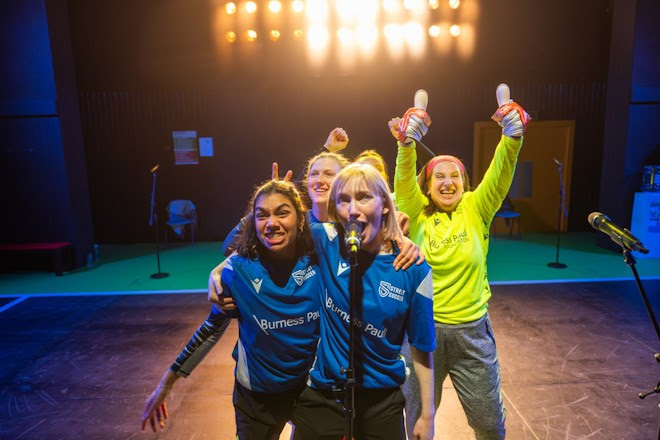
Street Soccer Scotland is a charity using football for positive social change, and Street 45 is its women’s programme. It makes perfect sense. Team sports promote both physical activity and social connection; they provide a sense of purpose and help build self-esteem. People experiencing poverty, homelessness or addiction; those in the care or criminal justice systems; those with mental illness or other support needs: all too often, they’re marginalised, excluded. Street Soccer Scotland aims to create a sense of hope and opportunity for them.

Same Team – A Street Soccer Story serves a similar purpose: to remove the stigma associated with certain life experiences, to celebrate the women at the centre of the tale – and to raise awareness of this most deserving charity. It’s also a cracking good play.

As we take our seats, five women drift onto the stage dressed in sports gear, stashing their belongings in lockers and beginning to warm-up. “Are you here for the try-outs?” they ask us. Several audience members get up and join in the running drills. (Spoiler: they don’t make the squad.)

Jo (Chloe-Ann Tylor) is chosen as captain. Of course. She’s the star player, and this is Scotland’s chance to win the Homeless World Cup. “There are five rules,” she tells her team. “Players always come first. We look to the future. We never leave anyone behind. We place others before ourselves. We keep our promises.”

The rules are not always easy to follow. The women’s lives are complicated. Single parent Sammy (Kim Allan) is facing eviction – again. Her teenage sons are hard work, and she’s not looking forward to moving back in with her disapproving mother. Middle-class Lorraine (Louise Ludgate) has been unceremoniously dumped by her husband after twenty years. She’s staying on a neighbour’s couch and fretting about her perilous finances.

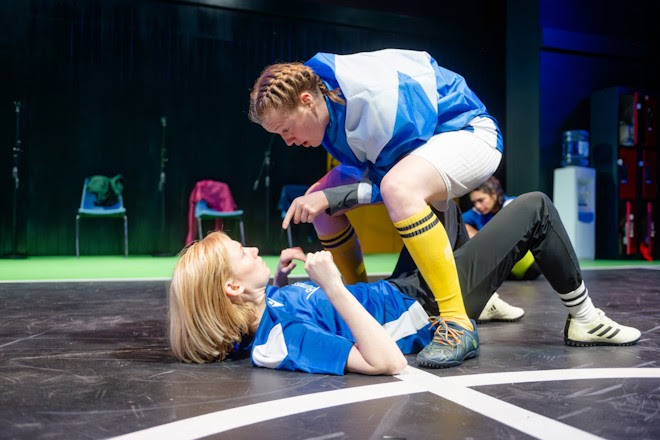
Things are even harder for teenager ‘The B’ (Hannah Jarrett-Scott), who has only just come out of prison. She’s brittle and defensive, unable to secure a job. Meanwhile, her ex-classmate Noor (Hiftu Quasem) is still at school. She lives with her grandfather – her Nana – and he’s got dementia. A chance meeting between the pair proves fortuitous, as The B tells Noor about the Change Centre. “There’s loads going on, like fitba… You were always a good player. There’s trials on for my old team. You should come along.”

And Jo. Well. Jo’s got problems of her own.

But for a few hours each week, the women leave their troubles at the edge of the pitch and focus on the game. Their commitment to the team and to each other gives them something important to feel proud of. Slowly, they let their guards down, opening up to one another and forging friendships. Their shared sense of purpose binds them together.

Written by Robbie Gordon and Jack Nurse in collaboration with the women from the Dundee Change Centre, Same Team is a heartwarming and affecting piece of drama. The narrative is clear-eyed and unsentimental, affording the characters the dignity and respect they deserve. Director Bryony Shanahan maintains the kinetic pace appropriate to the theme, with softer, sadder moments punctuated by riotous cheering or flashes of anger. The movement feels real – even though we never see a ball or an opposing team. The light and sound (by Lizzie Powell and Susan Bear respectively) are integral to the atmosphere, especially once we arrive at the World Cup in Milan. I particularly like the way the different countries’ flags appear in the floodlights.

Perhaps I don’t quite buy finicky Lorraine’s inclusion in the team; perhaps some of The B’s jokes don’t need explaining by the other characters, but this is compelling and important theatre, with five impressive performances from the ensemble cast. Jarrett-Scott is a gifted comic actor, always able to undercut even the most heart-breaking scenes at exactly the right moment. Tylor brings the emotional heft, her Jo a smouldering fuse just waiting to explode.

Same Team – A Street Soccer Story is playing at the Traverse until the 23rd December, and – although it’s not a festive tale – it embodies the spirit of the season. Grab yourself a seat in the stands and get ready to cheer.

Oh, and make sure you know the words to Flower of Scotland.

4 stars

Susan Singfield

Burning Bright

07/03/23

Traverse Theatre, Edinburgh

This latest season of A Play, A Pie and A Pint promises to be a good ‘un. Hot on the heels of last week’s sprightly Until It’s Gone comes Burning Bright, Áine King’s apocalyptic depiction of the climate crisis engulfing us. It’s no surprise to learn that this play won the 2022 David MacLennan award: it’s evocative and visual, a big story told in small fragments, as economical as poetry.

We are presented with three disparate narratives, linked by an over-arching theme of environmental collapse. Suzanne Magowan is a TV journalist desperately chasing a story about Australian wildfires, more interested in saving her career than in saving the earth. Hannah Jarrett-Scott plays a grief-stricken young woman with an eco-tourism business, taking rich adventurers on her boat, The Ice Princess, to see the polar ice caps before they’re gone. And Adam Buksh is a survivor: he’s escaped floods and tigers in his native India, and now he’s navigating racism on his Glasgow street.

The performances are all strong, the characters compellingly portrayed, and the writing is gorgeously cinematic – the image of a blazing horse, for example, is horribly mesmerising. Roxana Haines (director), Gemma Patchett and Jonny Scott (designers) achieve astonishing things with a tiny stage and a minimal set, so that it’s easy to suspend my disbelief and accept that I am, simultaneously, in the Arctic, Australia, Scotland and India, witnessing fire, floods and melting ice caps.

The conceit works to emphasise the ubiquity and urgency of climate breakdown. Even these characters, closer to the epicentres of disaster than most of us, are each only aware of one aspect of the problem. But here in the audience, we are shown the cumulative effect: their monologues are tangled and entwined, so that we see their interdependence and the extent of the catastrophe that’s looming over us. The image is there throughout, cleverly captured in the juxtaposition of the encroaching wave of plastic waste that dominates the set, and the tiny dinghy representing our precarious position.

Burning Bright is a superbly accomplished piece of theatre, skilfully illuminating why climate change is an issue we can’t afford to ignore.

4.7 stars

Susan Singfield

Pride and Prejudice* (*sort of)

20/10/22

Lyceum Theatre, Edinburgh

It’s a real treat to revisit writer/director Isobel McArthur’s rambunctious retelling of Jane Austen’s best-loved novel. Since we last saw it in January 2020, a lot has happened – and I’m not referring to the pandemic. Pride and Prejudice* (*sort of) has wowed the West End and bagged itself a well-deserved Olivier award. McArthur must be buzzing.

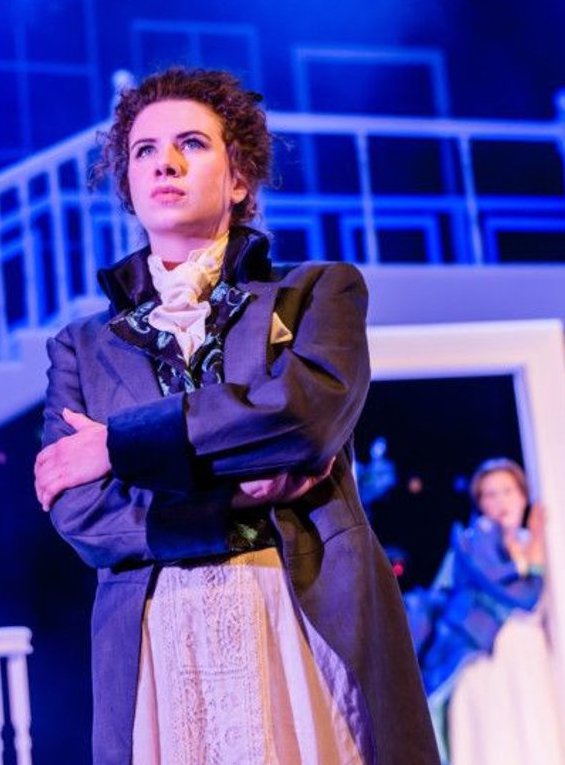
This adaptation is actually pretty faithful to the original. The set-up is intact: we have the Bennett family facing financial ruin, and Mrs Bennett (McArthur) desperately trying to marry off her five daughters. And the central romance is intact too: we have sparky, reckless Lizzy (Leah Jamieson), determined to marry for love or not at all – consequences be damned – and we have Darcy (McArthur again). Her portrayal of the enigmatic, uptight ‘hero’ is as exquisite as I remember. She nails his inarticulacy, highlighting his inability to express himself, rendering him sympathetic, despite his brusque manner.

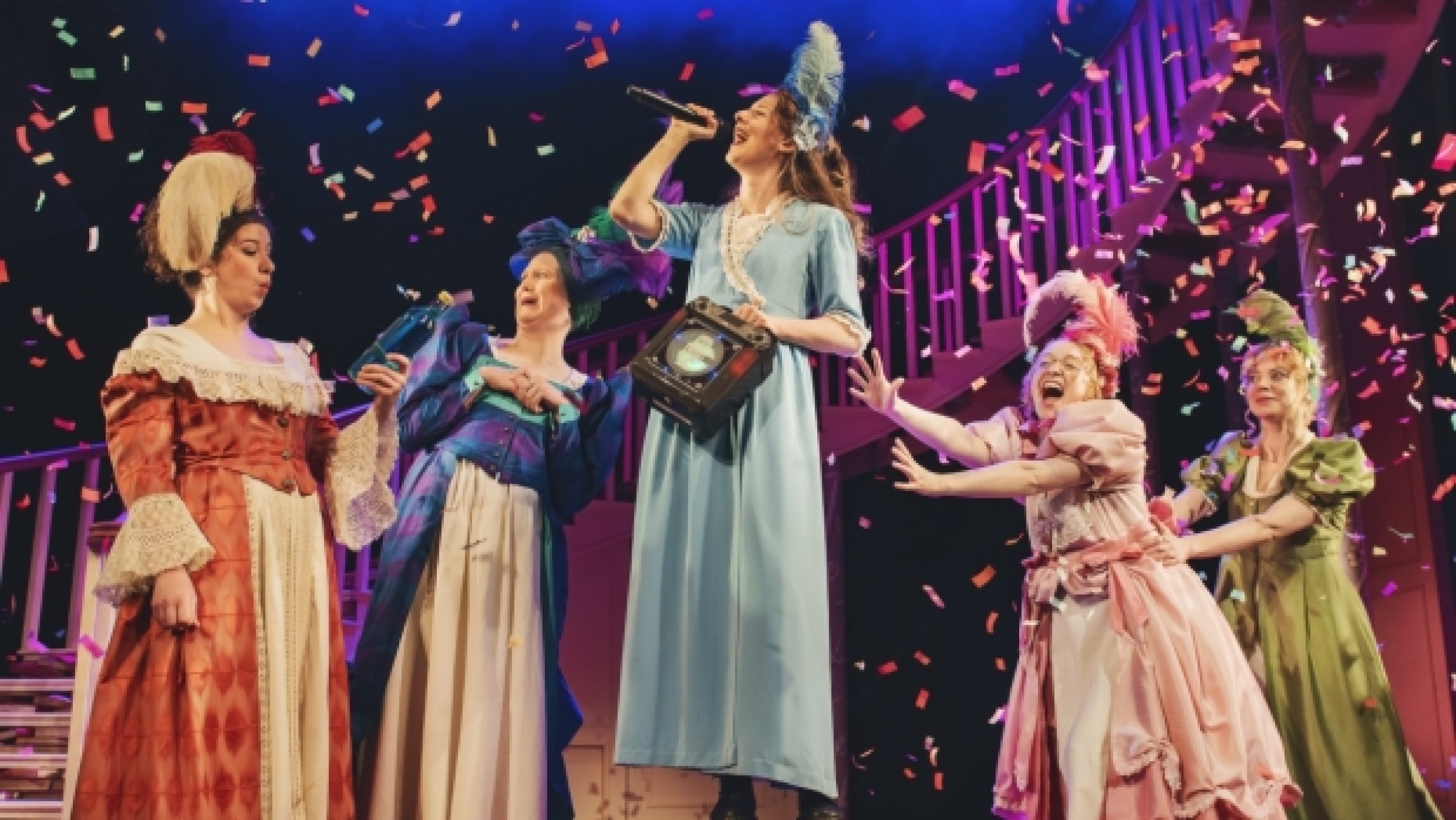
The difference lies in the telling. The conceit is that five servants are dressing up, playing, showing us what they’ve observed in the houses where they work. Thus class barriers are broken down, and so is the gap between the 19th century gentry and the theatre-goers of the 21st. McArthur’s talent lies in unveiling the jokes, so that Austen’s satire – hidden from a modern audience behind bonnets and mannered language – is exposed to the light. Via karaoke and biting sarcasm.

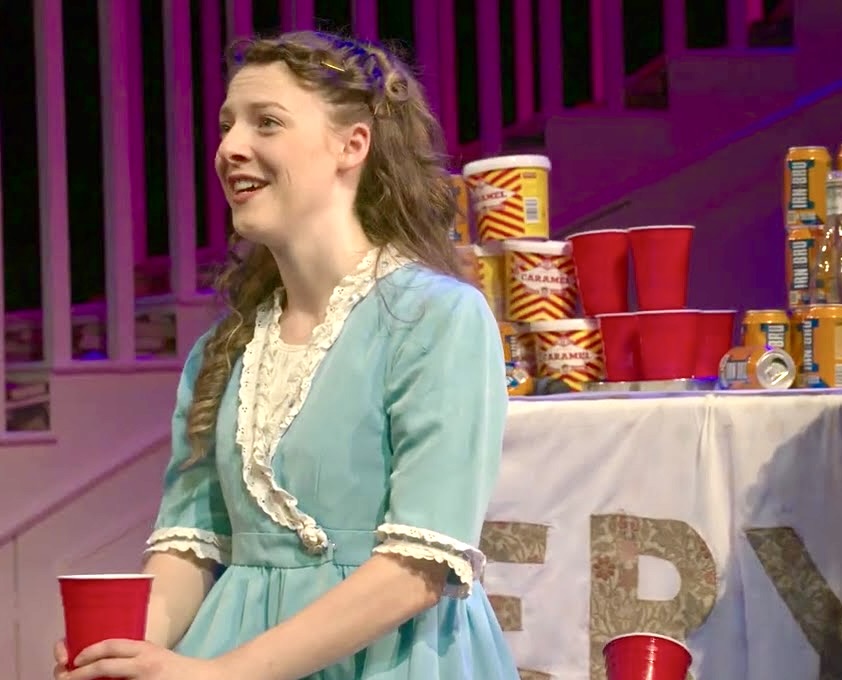
Hannah Jarrett-Scott almost steals the show: she’s a natural clown, clearly relishing the twin roles of Caroline and Charles Bingley, but also flashing her acting chops in a nuanced depiction of Charlotte Lucas, repressing her feelings for Lizzy. Christina Gordon (as Jane, Wickham and Lady Catherine) and Tori Burgess (as Lydia, Mary and Mr Collins) are both excellent too. I’ve nothing negative to say.

Pride and Prejudice* (*sort of) is at the Lyceum until November 5th, which seems appropriate for such a dazzling firecracker of a show.

4.6 stars

Susan Singfield

Pride & Prejudice* (*Sort Of)

24/01/20

Lyceum Theatre, Edinburgh

I’m enjoying the current flush of period drama adaptations on both stage and screen: Greta Gerwig’s Little Women, Armando Iannucci’s The Personal History of David Copperfield, Zinnie Harris’s The Duchess (Of Malfi). The staid and starchy interpretations I remember from my youth are long gone. Now there’s verve, vigour and a sense of fun, an assertion of the protagonists’ youth and the authors’ humour, a sharp incision that takes us to the beating heart of classic texts.

And Jane Austen is especially funny, isn’t she? (I come to this version as, if not quite a Janeite, then at least a fan of her writing.) It’s easy to lose sight of how bitingly satirical she was because her sarcasm is couched in antiquated politenesses, her characters’ bound by alien social mores. Here, writer Isobel McArthur strips away these obstacles to modern understanding, offering us a cast of refreshingly familiar wine-quaffing, lustful young women, whose potty-mouths are endearing and hilarious. Hurrah! These are people we can recognise and revel with, whose broken hearts and thwarted ambitions we can really care about.

It’s Pride & Prejudice through and through; we don’t really need the ‘sort of’ to qualify anything; the changes here are only superficial. The story is intact: the five Bennett girls and their parents are hostages to a dodgy will that determines only a man can inherit their father’s home and (modest) fortune. If he dies, the women will be destitute. No wonder Mrs Bennett is desperate to see her daughters married: their very livelihoods depend on it. No wonder either that a rich man is preferred; if he has a good income, he can take care of all of them. A shame, then, that they live in Meryton, where eligible bachelors are few and far between, and that firebrand Lizzie (Meghan Tyler) is so choosy about who she’ll shack up with. Until she meets the enigmatic Darcy (Isobel McArthur), and their love-hate relationship begins…

Directed by Paul Brotherston, Pride & Prejudice* (*Sort Of) is a glorious, riotous romp of a play, a bawdy, feminist iteration of the tale. The deployment of a karaoke machine is inspired, a perfect reimagining of the piano and singing performances required of young ladies in Austen’s time. The six-strong cast are all magnificent, but the standout moments belong to Hannah Jarrett-Scott, who switches effortlessly between a Tim-Nice-But-Dim-style Bingley and a tragic, lovelorn Charlotte Lucas. McArthur’s repressed, inarticulate Darcy is also a sheer delight, and props too to Mr Bennett, performed by a backward-facing armchair and an ever-present newspaper.

The only false note for me is the servant girl conceit. At the play’s opening, we’re introduced to the domestic help, reminded of their presence in the novels, told of how they are ignored. From thereon in, what we’re witnessing is supposed to be their play-acting, their impersonations of their employers, their interpretation of the landed gentry’s world. But we don’t learn anything about them, nor about their opinions, their deprivations, their own hopes and dreams. We just get Austen’s story; the working class is still ignored.

Still, it doesn’t detract too much. This is a sprightly, engaging, laugh-out-loud piece of theatre, richly deserving of tonight’s standing ovation.

4.6 stars

Susan Singfield