Grace Ava Baker

[Un]lovable: a Work-in-Progress Performance

13/02/26

Traverse Theatre, Edinburgh

Not So Nice Theatre Company presents a Valentine’s scratch-night with an acerbic edge, showing excerpts from five works-in-progress, all inspired by the prompt, ‘Unlovable’. In the run up to February 14th, the world is awash with heart-shaped tat and exhortations to be romantic. But sometimes life just doesn’t pan out that way…

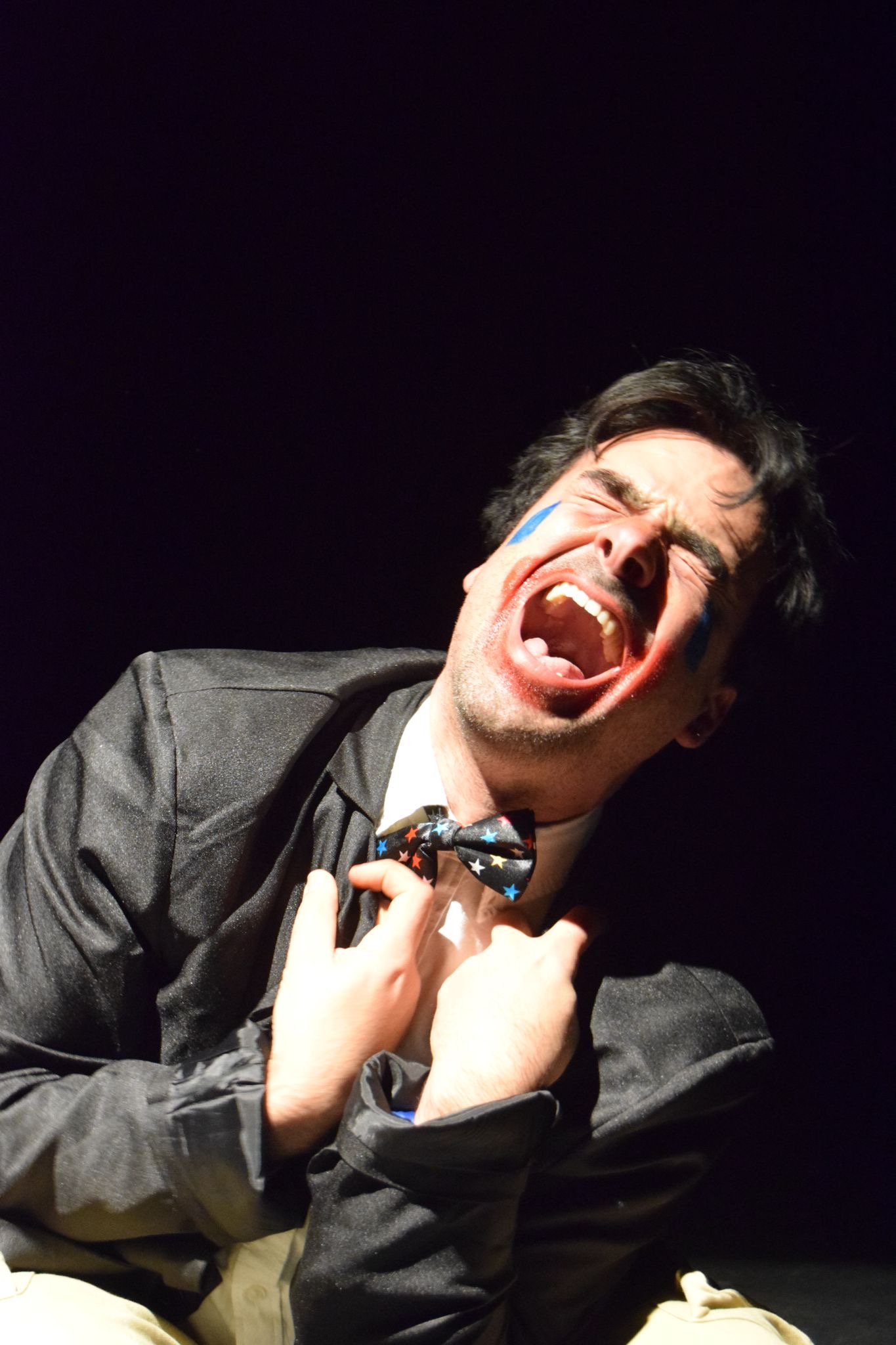
First up is Clown Divorce, written by Russ Russell and directed by Sarah Docherty. We first meet Clown (Chris Veteri) as he struggles to push a suitcase across the stage. The visual gag is funny precisely because of its predictability: as the drawn out routine builds to its inevitable conclusion, the laughs it receives are very well-earned. Along the way, we begin to notice small details. Clown isn’t wearing any shoes, his socks have blood on them – and where is his red nose? The clue is in the title. Clown has recently divorced, and has lost half of his identity in the process…

Next, we have Wish Me Luck by Melissa Ainsworth. Cassie (Hannah-Mae Engstorm) has just been dumped and is contemplating jumping in front of a bus. Not that she wants to kill herself, mind. She just wants to grab her ex’s attention. But passer-byJamie (Jamie Cowan) isn’t about to stand by and watch it happen. Not after everything he’s been through… Directed by Adele Tunnicliff, WML has an intriguing premise, but needs more time to do justice to the complex issues it raises.

The final piece of the first act is Ryan Lithgow’s three-hander Tit for Tat, starring Veteri (again) as Nathan, Stan Ross as Darcey and Samuela Noumtchuet as Ellie. Under Cormac Myles’ direction, this is a tense dissection of a relationship, the two men veering from hurt and hostility to an uneasy admission that their anger stems from a place of love. However, Noumtchuet is under-used as Ellie: the character’s sudden, unexpected appearance ought to herald a change in pace or tone, but the men’s dialogue continues in much the same vein as before, as they rehash their past.

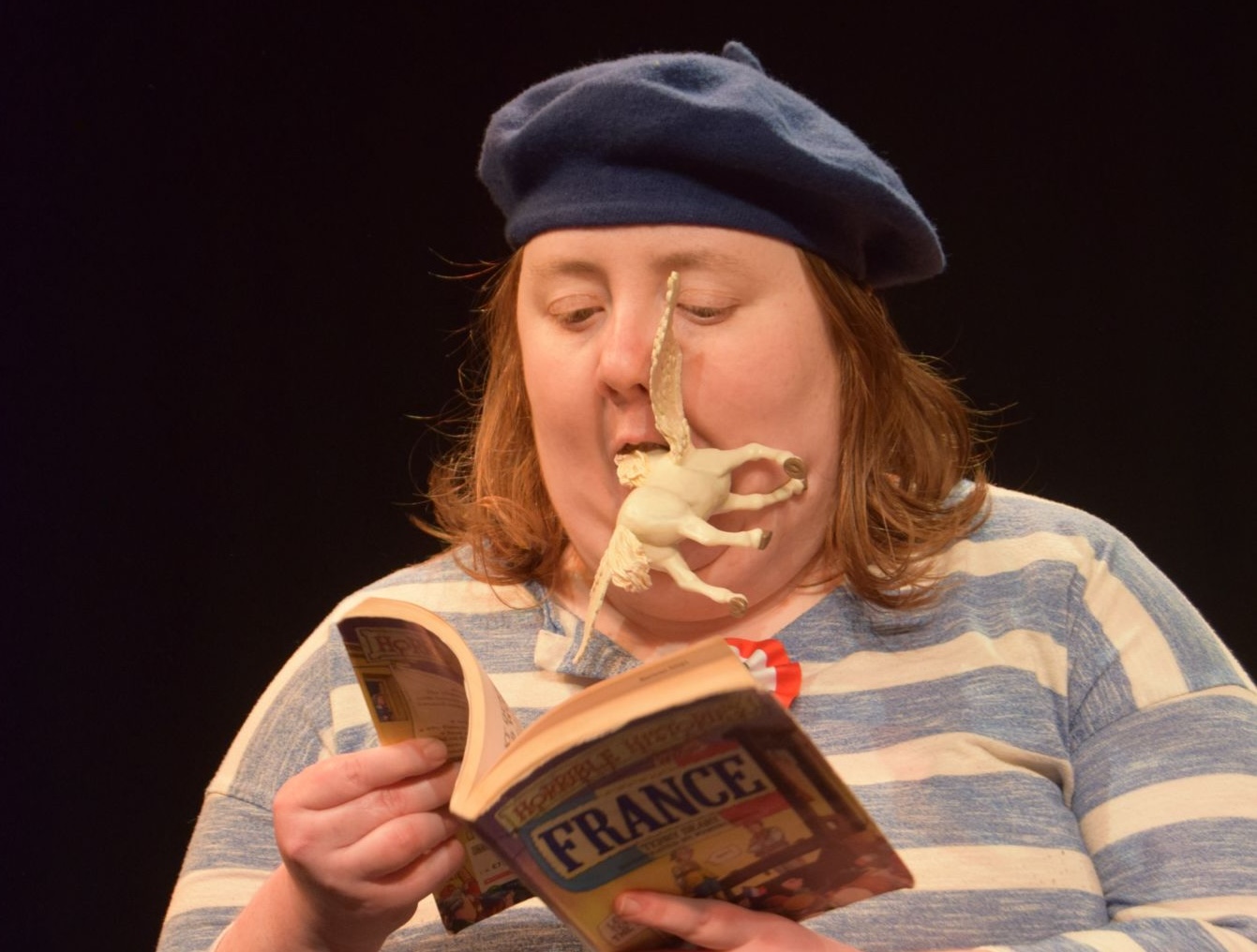
The standout piece comes after the interval: Emma McCaffrey’s funny and heartbreaking monologue, La Solitude, directed by Becca Donley. We’re well aware of McCaffrey’s prowess as a performer (we have seen them in Lung Ha’s Castle Lennox and Stella Quines’ Disciples) but this is our first experience of them as a playwright and I suspect it won’t be the last. The piece is beautifully written with just the right amount of levity to carry its serious points. At once laugh-out-loud funny, poignant and provocative, this is an intensely thought-provoking play. McCaffrey is Lee, a lively, engaging young woman, who – like McCaffrey – has autism and learning difficulties. We first meet her as a child, eight years old, receiving a diagnosis she doesn’t understand and which nobody explains to her. All she knows is that it makes her parents cry. As a teenager, she is isolated at school, infantilised by teachers and support workers, unable to make friends. And things don’t improve when she reaches adulthood: Lee can’t live independently, but that doesn’t mean she’s a child; it doesn’t mean she doesn’t want a job, a social life, or – heaven forfend – a love life. Why shouldn’t she?

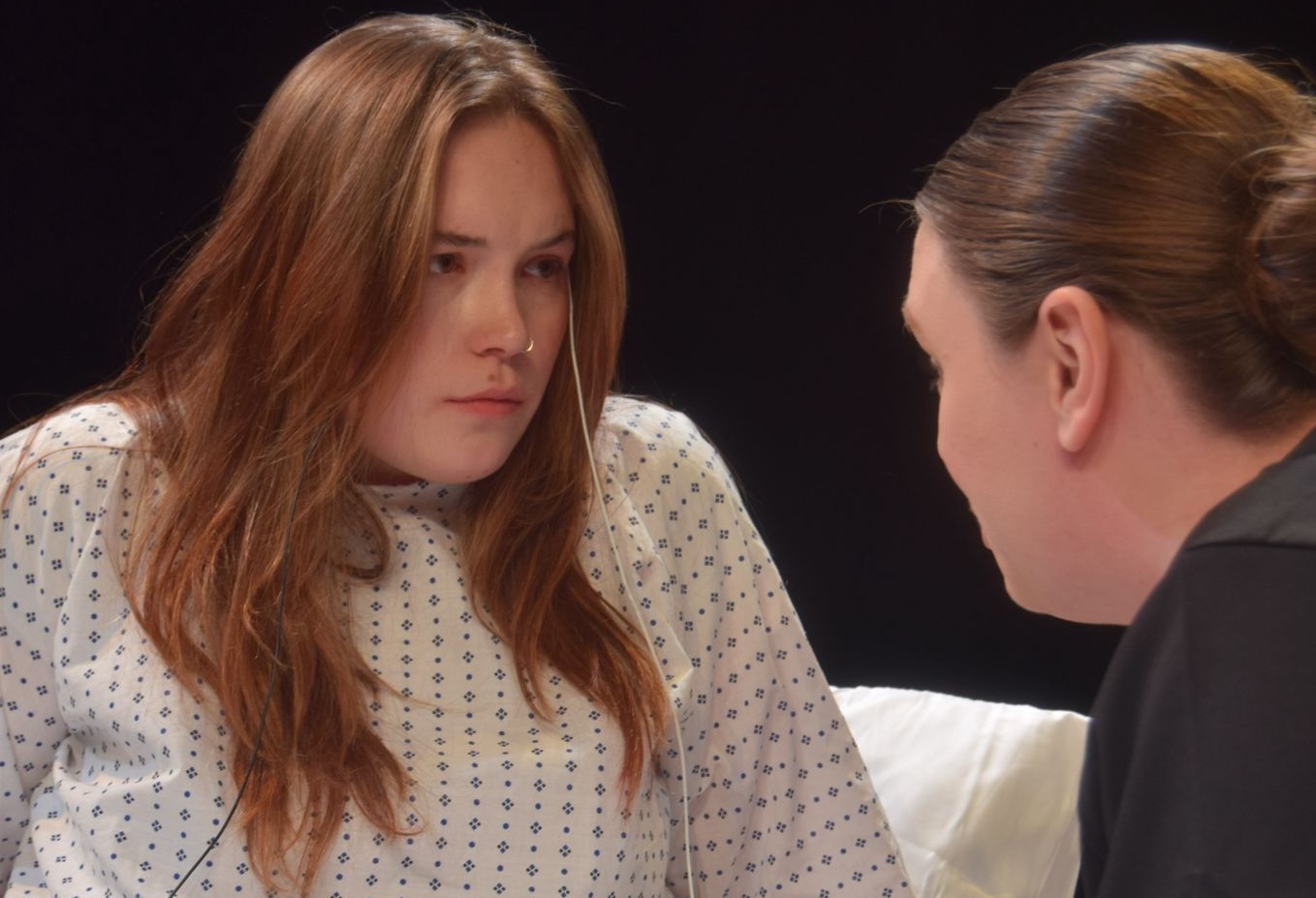
Last up, we have Defective, written and directed by Not So Nice’s own AD, Grace Ava Baker. We’re in the near future and Abigail (Indigo Buchanan) has just given birth. The Assessor (Eleanor Tate) has some bad news… With a premise akin to Minority Report, Defective explores the idea of original sin from a mother’s perspective. Is nature really so much more important than nurture? What price are we prepared to pay for a safer society? And whose word should we accept about our children’s destiny? Although the ending is a little muddled – without giving too much away, I don’t understand what Abigail does with that syringe – this is a compelling piece, raising some important questions about autonomy.

All in all, this is an thoroughly entertaining evening, a welcome antidote to all the red roses and slushy poetry.

4 stars

Susan Singfield

4PLAY: 4 New Plays from 4 Edinburgh Playwrights

05/12/2406/12/24

Traverse Theatre, Edinburgh

As Scotland’s new writing theatre, the Traverse is the natural home for the 4PLAY collective to showcase their work. Over four nights, four emerging Edinburgh playwrights see their stories brought to life on the iconic Trav 2 stage – and all are greeted with delight by enthusiastic audiences.

First up is Fuckers by Ruaraidh Murray. From its opening moments, it’s clear that this is the no-holds-barred production its title suggests. In blackout, we listen to a noisy orgasm and then, as the lights go up, we’re confronted with a naked couple, daring each other to try a new sex act. As beginnings go, this is undeniably memorable! The pair are Andrew (Liam Ballantyine), a Scot, and Lois (Olivia Caw), an American, two performers who fall in love at the Fringe. But their sexual attraction is soured by their vaulting ambition, which o’erleaps itself and dooms their relationship. Directed by Eleanor Felton – aided by Sasha Harrington as a very necessary intimacy coordinator – this is a high-octane piece with an engaging energy. However, although the nudity works at first, establishing the physical nature of the affair, the constant dressing and undressing disrupts the flow and slows down the action, which is a real shame for such a kinetic piece.

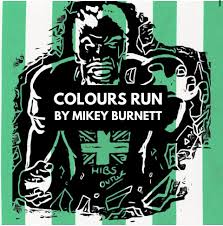
Colours Run, written by Mikey Burnett and directed by Grace Ava Baker, tells the story of self-professed Hibs-loving hardman, Pongo (Ruaraidh Murray), who may have finally taken his nihilistic antics a step too far. Fearing retribution after handing out one beating too many, he heads home, anticipating the knock at the door that could come at any moment. Pongo lives with his younger brother, Pete (Sean Langtree), who openly idolises his big bruv and does everything he’s told, which means that he rarely goes out into the real world. Both Murray and Langtree are utterly compelling in their respective roles, Langtree appealingly vulnerable, Murray cold and calculating. The section where the pair play Who Wants to Be a Millionaire is wildly funny – but in the play’s latter half, Burnett’s script takes a confident step into darker, more transgressive territory. The nail-biting conclusion (which seems to echo Of Mice and Men) is simply but brilliantly handled.

Butterflies and Benefits, written and directed by Andrea McKenzie, boasts a cast of five and looks at the lives of four young protagonists enjoying a hedonistic lifestyle in the Edinburgh of the 1990s. Maz (Amy Glass) is having a great time partying until she falls under the spell of Mik (Michael Francis), an opportunistic coke-fiend who cannot extricate himself from the grip of the drug. Pretty soon, Maz falls pregnant and her close friends Abs (Lex Joyce) and Dee (Isla Campbell) can only look on in dismay as Maz and Mik enter a spiral of destruction. The long trance/dance sequences scattered throughout the narrative occasionally impede the momentum, and a single scene featuring health worker, Doc (Laverne Edmonds), doesn’t do enough to earn the character’s place in the story. This is an all-too-familiar warning about the dangers of drug addiction and the importance of friendship.

Last, but certainly not least, is Cheapo by Katy Nixon. A tight two-hander, this is our favourite of the four plays, deftly exploring the impact of a traumatic event on a pair of frightened teenagers. Something happened to Kyla (Heidi Steel) at a recent party, and she needs Andrew (Dayton Mungai) to help her sort it out. But he knows that her version of events is just a form of self-protection, and he’s not prepared to go along with the lies she’s telling herself. In a not-especially-subtle-but-nonetheless-effective metaphor, they play a game of chess, arguing about their possible moves while fighting to avoid checkmate. Under Gwen M Dolan’s direction, the tension is undercut by some beautifully-realised flights of fancy, as the duo imagine how their lives might have played out in alternate realities. Nixon’s script is spare and succinct, without a wasted word. She’s certainly one to watch.

What a treat it has been to see this quartet of plays, exploring stories from the edges of society. We look forward to seeing what these playwrights do next, and also to 2025’s 4PLAY.

4 stars

Susan Singfield & Philip Caveney