
24/11/23
Traverse Theatre
Framework Theatre is a rather special support organisation for emerging theatre-makers in Scotland, helping to build a “better, stronger, Scottish theatre sector”. It’s often said that you should write about what you know, and playwright Katie Fraser certainly does that, with this self-referential piece about, um, emerging theatre-makers, battling the old guard and forging a new way.
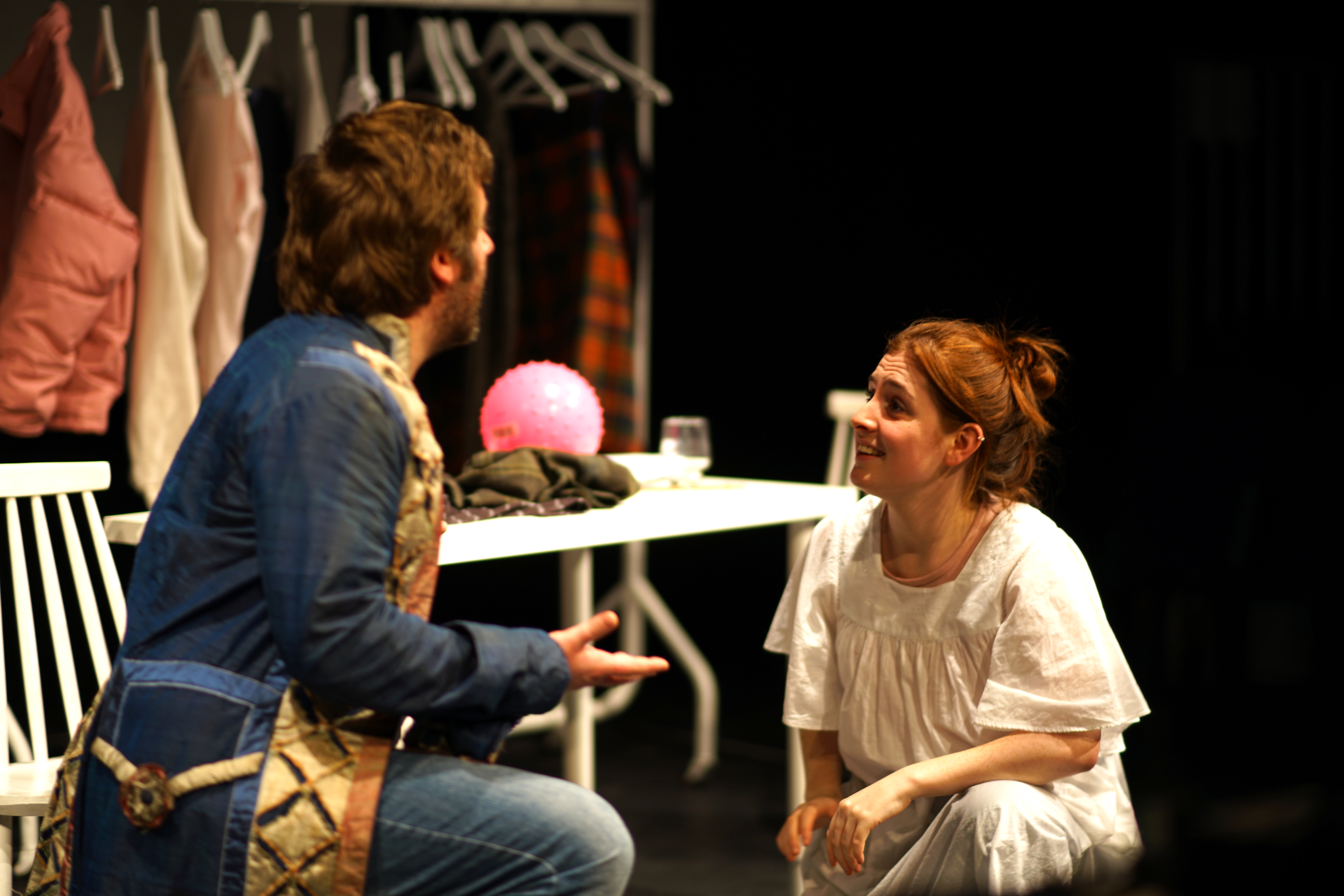
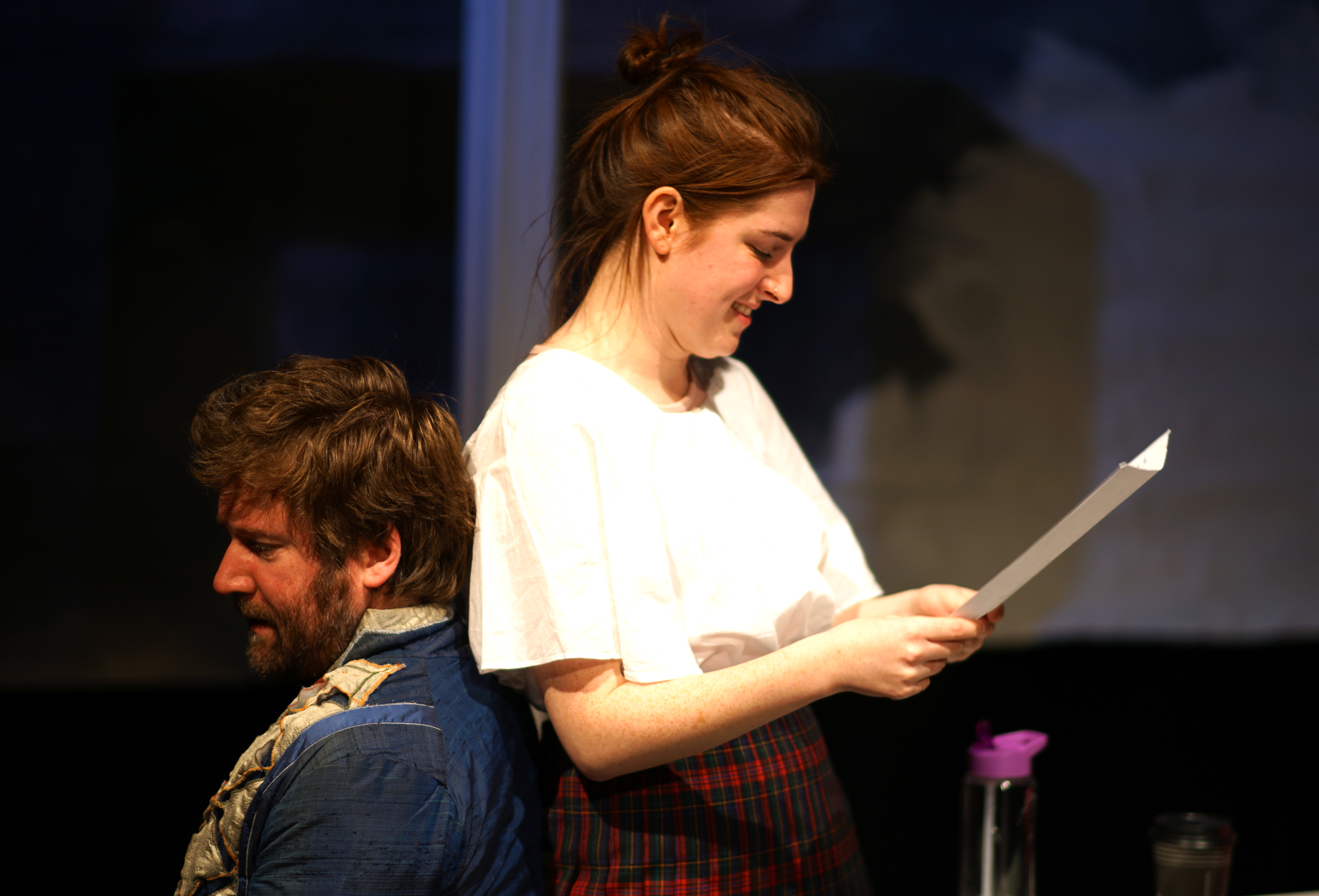
Actors Amy (Claire Wootton) and Greg (Gerry Kielty) are rehearsing a new piece about Flora MacDonald and Bonnie Prince Charlie. For her, it’s an exciting opportunity, her first professional role since leaving drama school. For him, it’s a backwards step; his career trajectory has been stymied by an unspecified scandal, so he’s slumming it, waiting out his time on the naughty step by directing and starring in this ‘little’ play.
To begin with, Amy is deferential, and Greg responds well to this. He’s pleasant, happy to share the benefits of his experience. But we soon see his darker side as Amy gains confidence and begins to question his peculiar interpretation of what is supposed to be a feminist play, written by ‘Harriet’, a young female playwright.
It makes sense that Greg should contrive to keep Harriet from the rehearsal room, as he tries to assert his dominance over the narrative. But Play Pretend suffers a little from the absence of this third character: I find my attention diverted from the action on stage as I wonder why she doesn’t ignore his instructions and come to see what’s happening to her play. It might be more convincing if we were to hear Greg making up outrageous excuses about why she can’t attend.
Fraser’s script comprises a series of vignettes, from which the story emerges bit by bit, the two actors learning more about each other as the rehearsal process goes on. It’s a strong idea and generally works well, although I do find myself wishing for higher stakes, and for a bolder, more cathartic climax.
Laura Valerie Walker’s sprightly direction highlights the meta-theatricality of the piece. The slow-motion transitions are effective in conveying the passing of time, moving us from one snapshot to the next, reminding us that this is all a performance, but they are too protracted, and start to become a little wearisome towards the end. The set, by Isadora Gough, with its over-abundance of tape marks on the floor and moveable furniture, reinforces the point that this is a constructed image, an illusion, designed to tell a tale.
Both Wootton and Kielty inhabit their dual roles convincingly. Wootton nails Amy’s mixture of self-assurance and desperation, her superficial politeness masking her frustration with Greg’s pomposity. She needs this part to kickstart her career, so she forces herself to put up with his condescension – but Wootton shows us what a struggle this is. It is to Kielty’s credit that we feel any sympathy for Greg: he is a bombastic, arrogant man, showing no contrition for his past aberrations and riding roughshod over the two young women he’s working with, assuming that he knows more than both the playwright and female lead about what this feminist drama needs. Nonetheless, Kielty manages to convey Greg’s underlying vulnerability, his fear at being left behind as the tide turns, his self-esteem dependent on his status.
With its artfully-woven historical and contemporary strands, Play Pretend is a thought-provoking and insightful piece about the struggles we face as we try to move towards a more egalitarian society. When you’re used to privilege, as the saying goes, equality feels like oppression.
4 stars
Susan Singfield


 Bouquets & Brickbats