Garrett Dillahunt

The Dead Don’t Hurt

10/06/24

Cineworld, Edinburgh

I’ve always had a soft spot for Westerns but these days (on the big screen, at least) they’re about as rare as hens’ teeth. The Dead Don’t Hurt is clearly a passion project for Viggo Mortensen. As well as starring, he wrote it, directed it and even created the distinctive folk-tinged score. (For all I know, he did the catering as well.) As Westerns go, this is an atypical example, featuring few of the genre’s familiar tropes and cleverly subverting the ones that it actually does borrow. It’s handsomely mounted and beautifully filmed by cinematographer Marcel Zyskind.

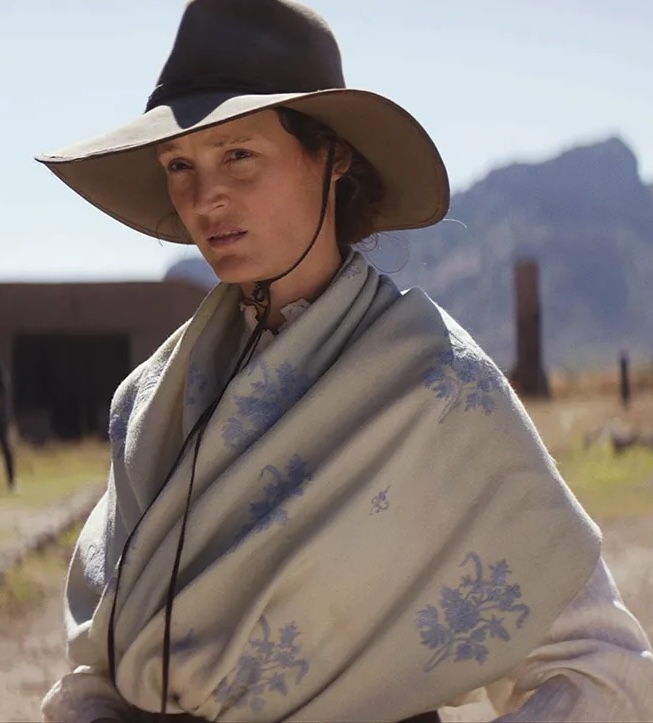
Mortensen plays Danish immigrant carpenter, Holger Olsen, who, when we first encounter him, is bidding a sad farewell to his dying partner, Vivienne Le Coudy (Vicky Krieps), watched by their young son, Vincent (Atlas Green). From here the story flashes back to Holger’s first meeting with Vivienne, showing how he instantly falls under the spell of this headstrong, unconventional young woman.

The main action of the story occurs when Holger and Vivienne set up home together in a remote cabin, close to the town of Elk Flats, Nevada, a place dominated by corrupt landowner, Alfred Jeffries (Garret Dillahunt) and his violently-inclined son, Weston (Solly McLeod). Together with crooked Mayor Rudolph Schiller (Danny Huston), the Jeffries have the place pretty much under their collective thumbs – the evils of capitalism are already exerting a powerful influence and God help anyone who dares to oppose it.

When Holger decides to enlist in the Union Army to fight in the Civil War, his only option is to leave Vivienne alone to run the homestead and, of course, he is away for years. While he’s gone, Vivienne is at the mercy of Weston, who has had his eye on her from their first meeting…

The Dead Don’t Hurt unfolds a compelling story of anger and retribution and both Krieps and Mortensen portray their characters with sensitivity. The various shifts in time and place are handled with considerable skill and the scenes where Vivienne manages to grow exotic flowers in the heart of the Nevada badlands are particularly memorable. It’s clear from the outset that the story is heading (inevitably) towards darker territory and, while Weston is a relentlessly unpleasant character, there’s some explanation for why this might be the case.

Even a climactic showdown between hero and villain is understated and the film is brave enough to offer an open-ended conclusion as to where Holger and Vincent may be headed next.

While it’s unlikely to make much of a dent at the box office, this is enjoyable stuff and those who have a hankering for a decent Western should seek it out on the big screen, where those Nevada landscapes will look more impressive than on streaming.

3.8 stars

Philip Caveney
Where the Crawdads Sing

23/07/22

Cineworld, Edinburgh

Delia Owens’ blockbuster novel Where the Crawdads Sing makes the transition into film, thanks to Reece Witherspoon’s production company, Hello Sunshine. I’ve never read the book but it’s probably just as well. The fact that it’s sold twelve million copies worldwide would make anything I have to say about it sound suspiciously like sour grapes. Suffice to say, I really hope it’s more convincing than the film.

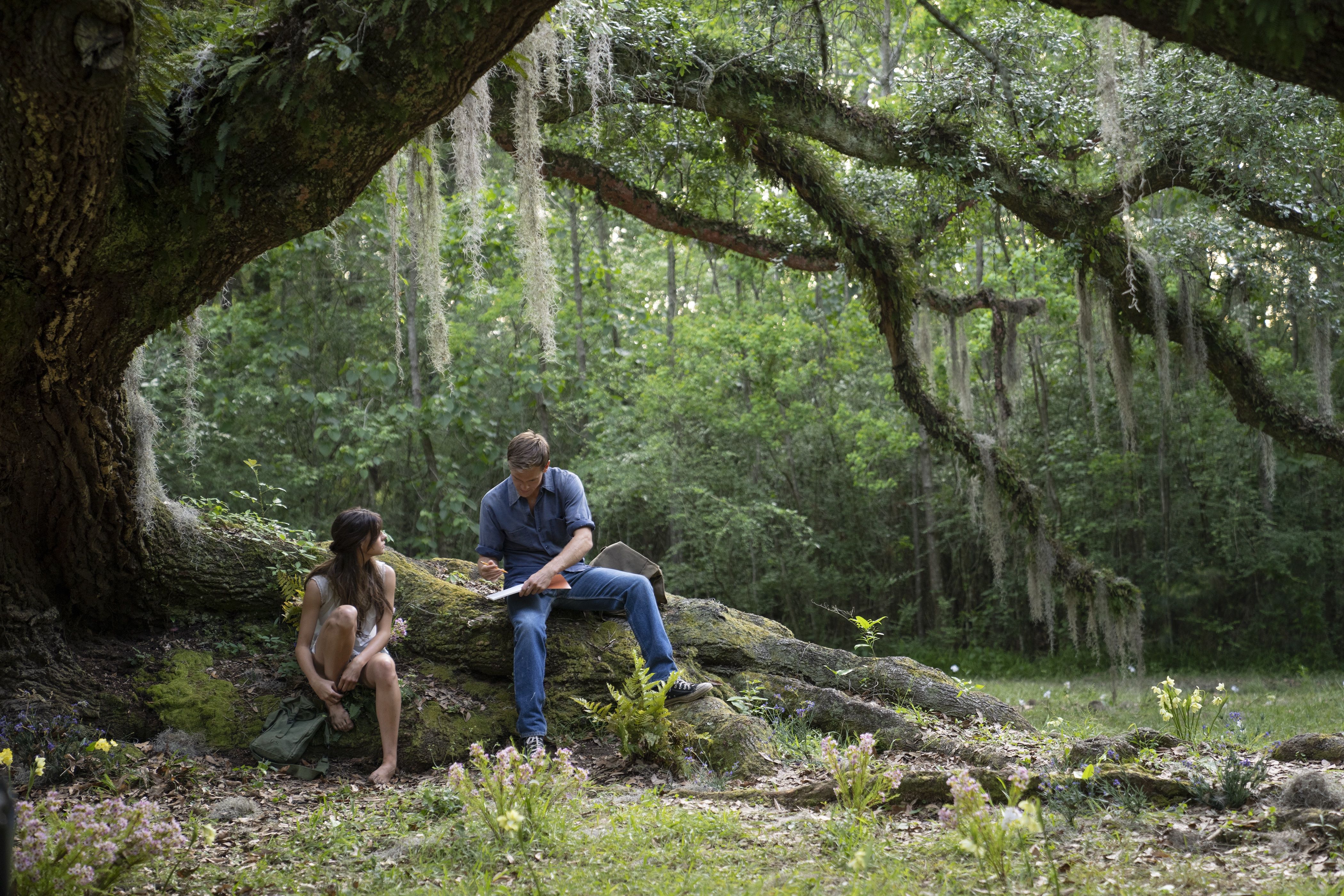
This is the story of Kya Clark, a little girl living with her family in a remote shack, deep in the marshes of North Carolina. Kya’s Pa (Garret Dillahunt) is a violent drunk, a man so odious that first his wife leaves him, then his two daughters, then his son. None of them bothers to take poor little Kya, so she has to look after him on her own (thanks, guys!) Then Pa abandons Kya and she is obliged to fend for herself, grubbing a living by digging up mussels and selling them to the nice couple who run the local store. She tries a day in school, but is subjected to so much sniggering and cruelty from the other pupils that she runs home and never goes back. Somehow she manages to evade the authorities for… well, years. Mind you, this is the 1960s. It was a different time.

Quite how grubby little Kya metamorphoses into the impeccably turned-out Daisy Edgar-Jones is only one of the many mysteries here, but perhaps it’s something to do with washing your hair in swamp water. Eventually, Kya has a romantic dalliance with ‘nice’ Tate (Taylor John Smith) who teaches her to read (apparently in a matter of weeks). Then, when Tate heads off to college, she hooks up with the rather less cuddly, Chase (Harris Dickinson), who seems to be on a mission to be even more toxic than Kya’s Pa. We know from the film’s opening that Chase has ended up dead at the bottom of a lookout tower and that Kya is on trial for his murder. Luckily, she has the help of ‘nice’ lawyer Tom Milton (David Strathairn), who has come out of retirement in order to defend her…

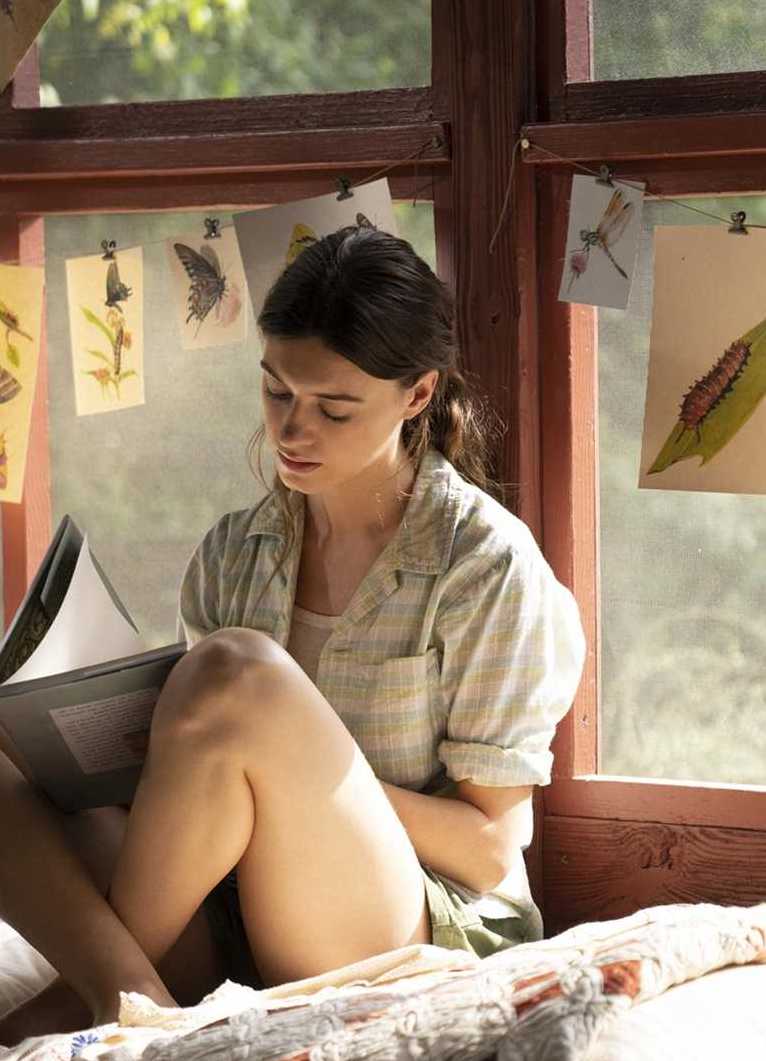
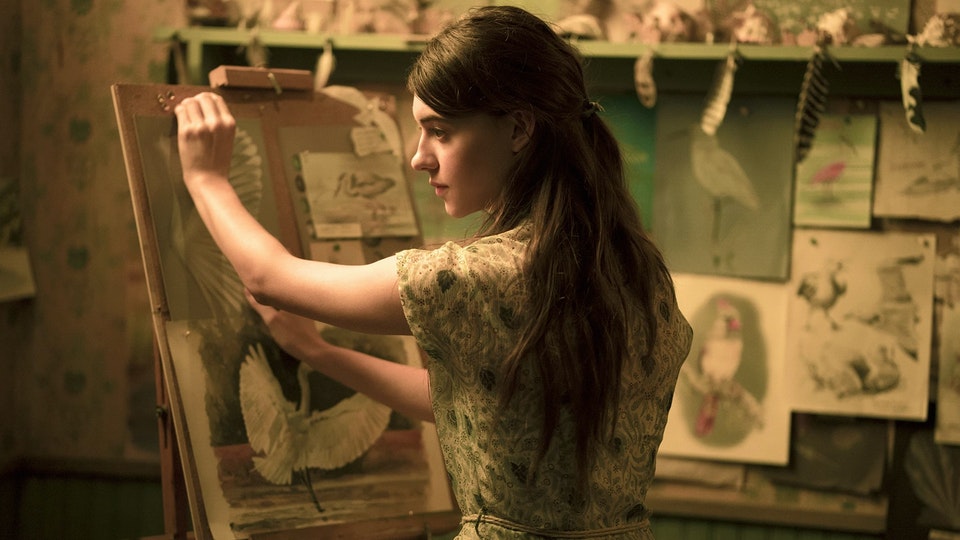
If I’m making this sound unbelievable that’s because it really is – and it doesn’t help that its all painted in such broad brush strokes that nuance doesn’t get a look in. The people are overblown caricatures and the eyebrow-raising events just keep right on coming. Kya, it turns out, has the ability to draw and paint like a pro (without any formal training) and her very first submission to a publisher results in a life-changing publishing deal! Yeah, right. Apparently, there’s a massive demand for a book about swamp shells.

Edgar-Jones does the best she can with the thankless lead role, but she struggles as her character progresses through a series of dull events, which have the eerie ability to make a two-hour movie feel more like three. It’s not just me. The audience starts filtering out long before the final scene but I stick resolutely in my seat to see the film’s final – heavily-signposted – ‘twist’.

Of course, crawdads can’t actually sing, so Taylor Swift steps in with a specially-written ballad over the credits. Which is arguably the best thing here, but it’s a very low bar. Those who enjoyed the book might want to give this a go, but be warned: it’s underwhelming to say the least.

2.6 stars

Philip Caveney