Frank Dillane

Urchin

11/10/25

Cineworld, Edinburgh

Actor Harris Dickinson makes an assured directorial debut with this intriguing story, which concentrates on the misadventures of young man called Mike. Frank Dillane gives a beguiling performance in a role that has already won him the Un Certain Regard prize at this year’s Cannes Film Festival. Dickinson also wrote the screenplay, which immediately evokes my sympathy for its troubled, self-destructive protagonist.

The film opens with Mike wandering the streets of London, feverishly strung-out on drugs and constantly searching for ways to procure money to pay for his next fix. He clashes with Nathan (Dickinson), another young man in a similar situation and, after a fight between them, passer-by Simon (Okezie Morro) attempts to help Mike, offering to buy him a meal. Mike accepts the offer – and then punches Simon unconscious before stealing his designer watch, which he sells for a measly £40. Shortly afterwards, he’s arrested and sent to prison.

We don’t see anything of his time in captivity but, some months later, he’s released back into the community, given a temporary place in a hostel and sent to work in the kitchen of a down-at-heel hotel under the direction of Chef (Amr Waked). Mike is off the drugs now and determined to make a fresh start, but he is told that part of the process will include him sitting down with Simon and expressing regret for what he’s done…

It’s a simple premise, with a deeper subtext. Dickinson’s script has the brutal smack of realism and Dillane is extraordinarily compelling. There’s something innately likeable about Mike, something so utterly helpless that I watch this on tenterhooks, dreading every step he takes in the wrong direction. The film has the verité quality of Ken Loach, cinematographer Joseé Deshaies filming in long, naturalistic takes, mostly on the streets. But every so often, the scene shifts to a mysterious, labyrinthine setting, an underground cavern, as though we’ve been granted access to somewhere deep within Mike’s psyche: a strangely tranquil place, where all his woes are momentarily forgotten.

But we’re only in there for short intervals, before being wrenched rudely back into reality, where Mike’s slow slide to oblivion continues. Dickinson is a chameleon of an actor, who has a whole range of disparate characters to his credit, so it’s perhaps unsurprising that he displays this same quality as a director. Urchin is one of those hard-to-quantify features, a unique and impressive first foray.

If the acting work ever dries up, Dickinson clearly has another talent to explore.

4.4 stars

Philip Caveney
Harvest

22/07/25

Filmhouse, Edinburgh

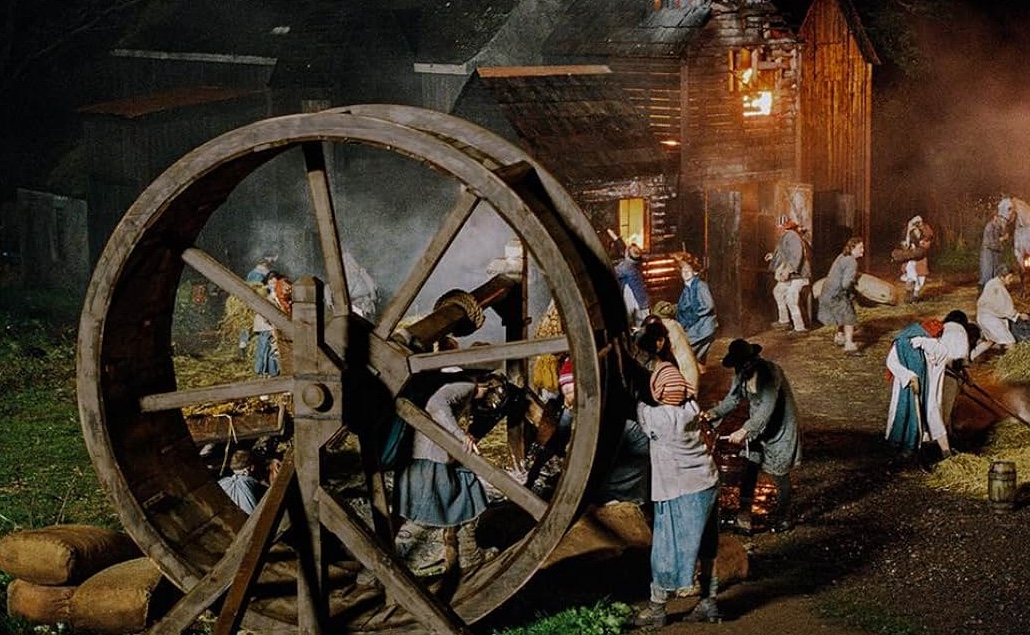
Set at some unspecified time in the middle ages, somewhere in the Highlands of Scotland, Harvest is an allegory about land – about the people who work on it and the people who own it. Adapted from Jim Crace’s 2013 novel by Joslyn Barnes and the film’s director Athina Rachel Tsangari, the story plunges us headlong into the lives of a group of villagers, who spend their days toiling endlessly on a farm under the watchful gaze of Mayor Charles Kent (Harry Melling, doing his utmost to distance himself from the role of Neville Longbottom).

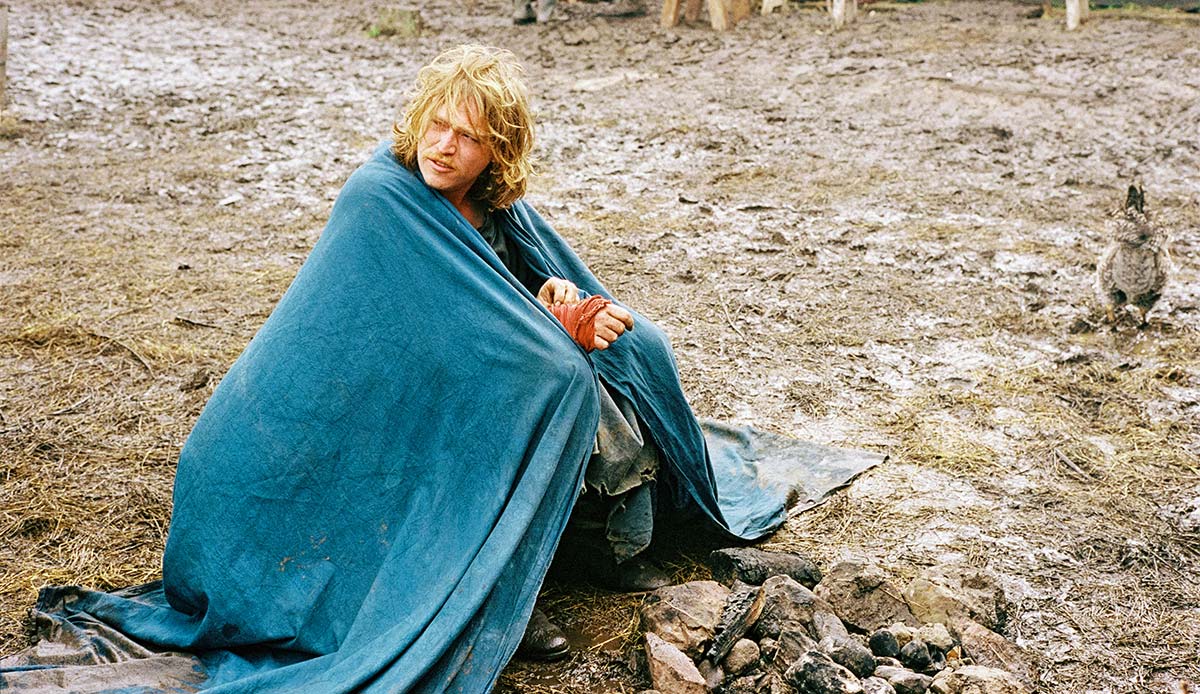
Kent seems a considerate and generous employer, who dresses much like his employees and goes to great lengths to reward them for their efforts. Amongst the workforce is Walter Thirsk (Caleb Landry Jones), who was Kent’s childhood companion. The two men endeavour to keep their friendship going, even if this alienates Thirsk from his fellow-workers, who see him as ‘privileged’.

Both men have lost their wives. Thirsk is now trying to forge a new relationship with Kitty Gosse (Rosey McEwen) but Kent has no partner and, more significantly, no heirs to whom he can pass ownership of the land. When Kent introduces Thirsk to Philip ‘Quill’ Earle (Arinzé Kene), it becomes clear that a change is coming. Quill is a cartographer, here to make a map of the farm and its surrounding land. Thirsk finds himself wondering what all this is in aid of.

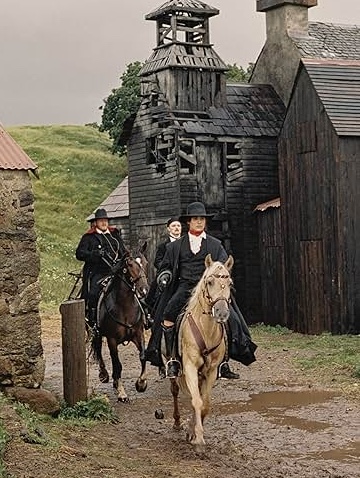
Sure enough, it isn’t long before Kent’s supercilious cousin, Edmund (Frank Dillane), arrives on horseback with a retinue of heavies to back him up. It turns out that the estate belongs to him, and that his intention is to plunder its natural resources, before adding sheep and fences and forcing the residents to leave.

This sensual and atmospheric tale, which was nominated for The Golden Bear at the Venice Film Festival, plays fast and loose with historical authenticity. While the story clearly evokes the Highland Clearances of the eighteenth and nineteenth centuries, Edmund and his followers have the black-clad look of Puritans from an earlier period. Furthermore, much of the dialogue sounds suspiciously contemporary: especially the banter of a couple of neighbouring men, who have ventured too close to the village and find themselves treated very roughly for their transgression. The decision to adopt these anachronistic elements is, I’m sure, deliberate – an attempt perhaps to point out that the disparity between the classes is an age-old issue and that very little changes with the passing years.

The film is at its best in the psilocybin-fuelled harvest celebrations, where masked figures leap and cavort across the screen like characters from a Hieronymus Bosch painting; and I particularly enjoy the sequences where Quill shows Thirsk how he goes about mapping land. But not everything here is quite so assured – and, with its lengthy running time, the film occasionally feels a little too ponderous for its own good. Furthermore, I’m mystified by the fact that this has earned an 18 certificate, presumably for a brief scene that strikes me as merely unpleasant, but hardly on a par with many of the blood-soaked 15 certificate folk-horror movies that have aired in recent years.

For the most part, I enjoy Harvest, but with some reservations. Ultimately, it won’t be for everyone, but those looking for an alternative to the latest glut of superhero movies, this may be worth seeking out.

3.6 stars

Philip Caveney