
Fiona Shaw

IF

18/05/24

Cineworld, Edinburgh

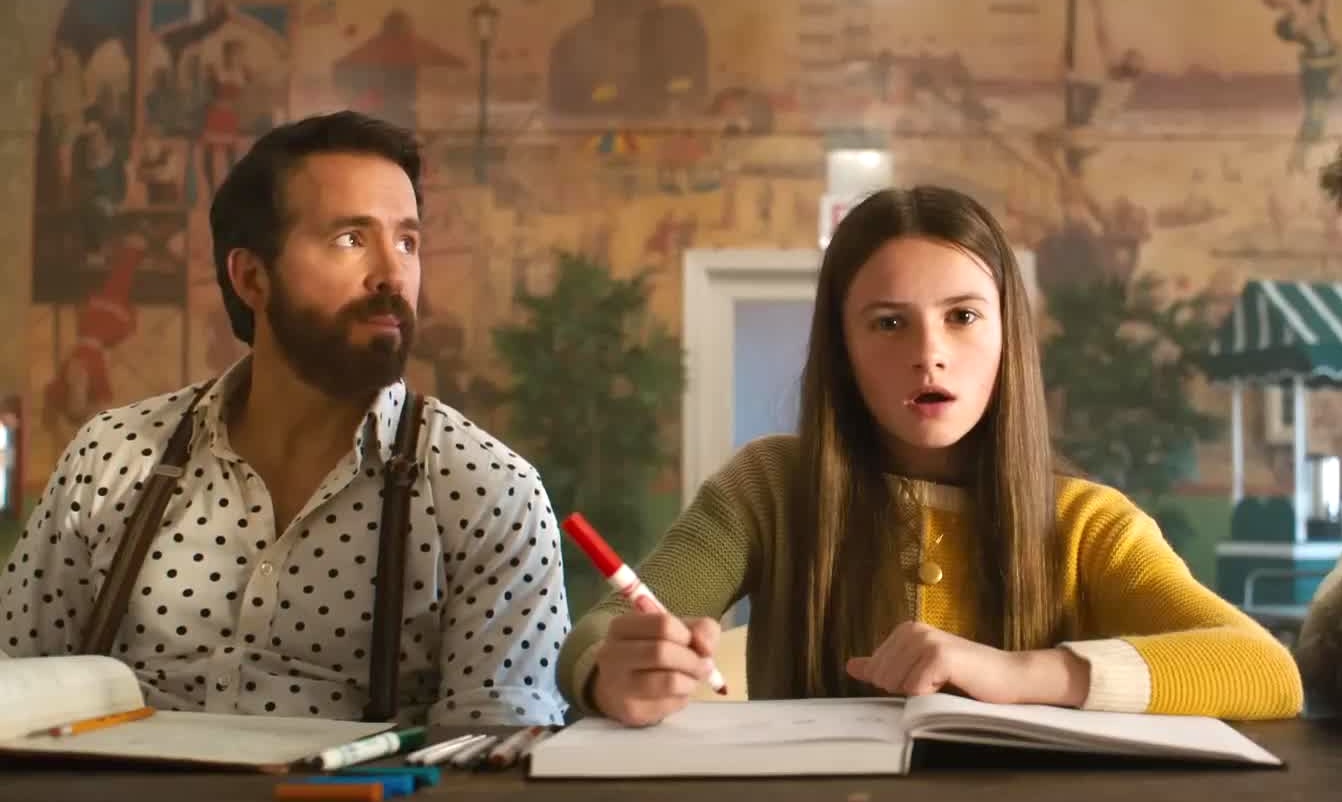
Written, produced and directed by John “A Quiet Place” Krasinski, IF is quite a departure for the filmmaker. Instead of the unsettling horror and dread he’s renowned for, this sentimental kids’ film is essentially an exhortation not to put away childish things. “You have to stop,” says twelve-year-old Bea to her prankster dad, who needs surgery for his broken heart. “Never!” he responds, twirling his IV pole in a tango, smiling into the googly eyes he’s placed on its bag.

Bea (Cailey Fleming) has been through the mill. Her mom (Catharine Daddario) died of cancer a few years ago, so she’s understandably terrified when her dad (Krasinski) falls ill. His hospital is in New York, so Bea stays with her granny (Fiona Shaw) in Brooklyn Heights for the duration. It’s close enough for her to visit every day, and also gives her a chance to reconnect with some early memories – although she’s quick to remind her well-meaning granny that she’s not a kid any more.

But Bea soon realises that something strange is happening in the apartment building. Catching a glimpse of a girl-sized ballerina-butterfly, she follows it up the stairs, where she discovers a room inhabited by a man called Cal (Ryan Reynolds), whose job is to care for the abandoned IFs of the title: imaginary friends whose children have grown up and forgotten them.

The IFs provide a welcome distraction. Of course, at twelve Bea is far too old for an IF of her own, but she’s more than happy to help Cal find new placements for all those languishing in a retirement home in Coney Island…

There’s a lot to like: Fleming is a delightful performer, there’s an impressive array of stars voicing the IFs, and the whole thing looks wonderful, the blend of live action and animation beautifully realised. The underlying message, though simple, is nicely conveyed, and there are some memorable set pieces, including a jubilant dance number to Tina Turner’s Better Be Good To Me.

But IF is a frustrating film. The storyline is muddled, with gaping flaws in its internal logic and some unconvincing details that distract from the flow. If it’s a contemporary piece – as it’s meant to be – why does no one have a smartphone? And why is a twelve-year-old girl allowed to wander around a strange city at night alone? The one time her granny asks where she’s been, Bea simply shrugs and tells her, “Out with friends.” If this were a tale of benign neglect, then that might suffice, but nothing else in the story suggests that’s the case.

What’s more, for something that’s supposed to be a comedy, it’s not very funny. Giant cuddly-monster Blue (voiced by Steve Carrell) sneezes a lot and blunders around banging into things, but never quite reaches the level of clowning that elicits a laugh. The emotional stuff is better: Bea’s fear of losing her father is tangible, as is her granny’s inept desire to make her happy. But even here, there are untapped resources: Nurse Janet and Benjamin, a sick little boy in the same hospital as Bea’s dad, are two great characters played by two great actors (Liza Colón-Zayas and Alan Kim), both criminally under-used.

All in all, IF is a perfectly watchable film – but there’s a better one in there, struggling to get out.

3 stars

Susan Singfield
Ammonite

26/03/21

Apple TV

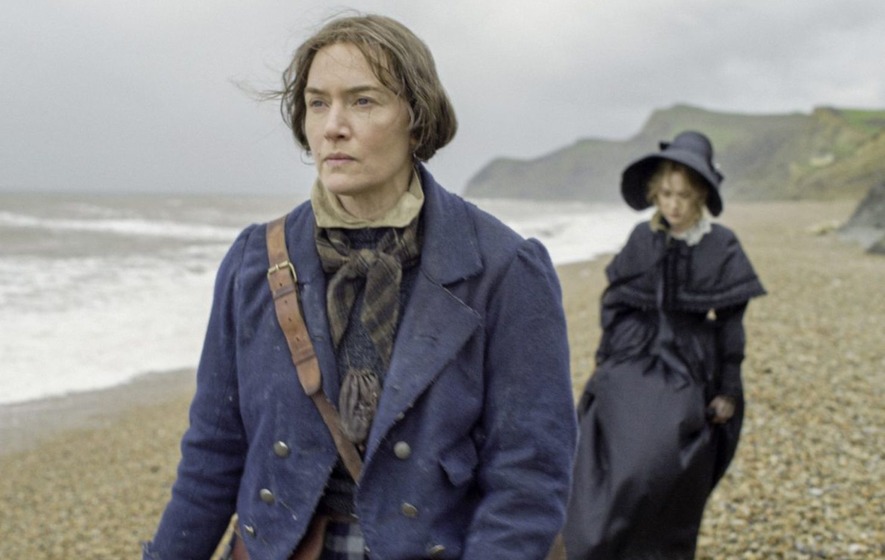
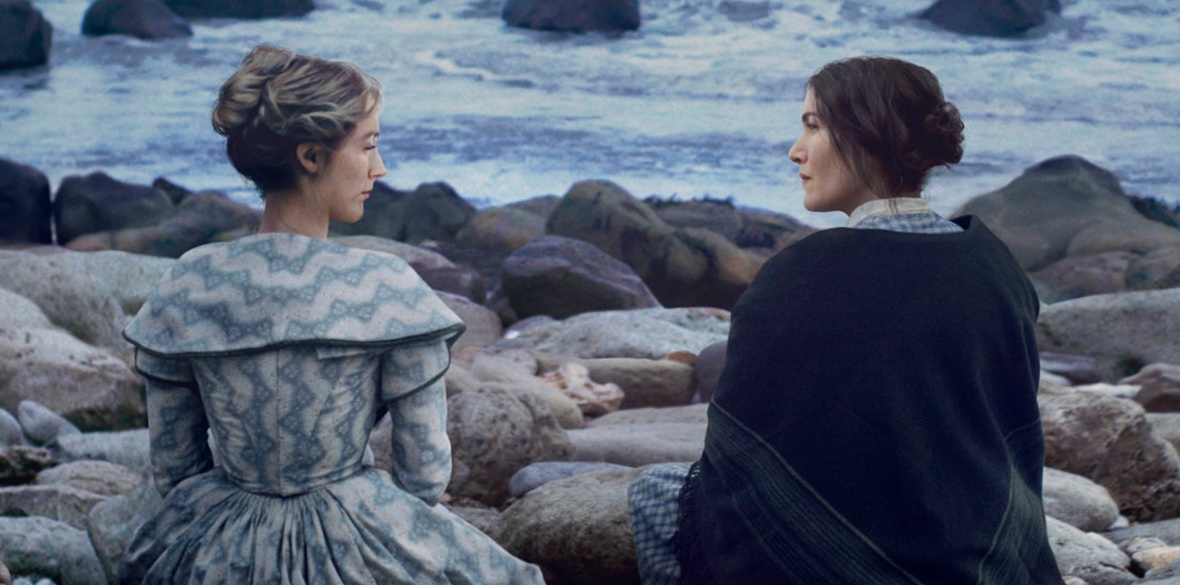
Francis Lee’s God’s Own Country was one of the most powerful film debuts of recent years – a visceral, unflinching exploration of rural life that would have had James Herriot hiding behind the sofa. For his sophomore effort, Lee has changed the era and the mood, taking us to Lyme Regis in the eighteen hundreds, where fossil hunter Mary Anning (Kate Winslet) plies her trade, selling the smaller pieces she finds on her daily visits to the seashore to holidaymakers. The larger pieces are sold to her male colleagues, who then blatantly take the credit for discovering them. Mary is all too aware of this and, as a result, she’s become a prickly and insular character, a quality that comes across as cantankerous to strangers.

Mary is approached by celebrated palaeontologist Roderick Murchison (James McCardle), who wants to learn from her. He brings with him his young wife, Charlotte (Saoirse Ronan), who is mourning a recent miscarriage and is quite unable to pull herself out of her melancholy. When Murchison is obliged to move on, he leaves Charlotte with Mary for a few weeks, hoping that working alongside the older woman will help her to recover. Mary is at first horrified at the idea – she values her privacy. But Murchison is wealthy and willing to pay for his wife’s internship – and Mary needs the money.

When Charlotte falls ill with a fever, Mary is obliged to nurse her – and, as the days unfold, the two women manage to breach the wall that has kept them apart – and start to realise they are falling in love…

Mary Anning was, of course, a real person, and very little is known about the reality of her personal life. Lee (who also wrote the screenplay) has been heavily criticised for portraying her as a lesbian, accused of taking liberties with the ‘truth’ about her – though I’m willing to bet that, if the film had featured a fictional heterosexual relationship, nobody would have turned a hair. But, having read up on her, it’s impressive to note how much of the story sticks closely to what we do know about the real Mary Anning. What’s most important here is that, because of her gender, she was discriminated against on a daily basis – even though it is now widely accepted that she was one of the most knowledgable people in her field. Like so many Victorian women, she was a victim of the patriarchy, robbed of the credit for so much of what she achieved.

Winslet is simply terrific in the central role, conveying Anning’s awkwardness and inner turmoil in the stolid set of her shoulders, the furtive glances that seem constantly to be seeking escape. She is a misfit, struggling to survive in a world she’s not cut out for. Ronan too, is completely believable as a young woman searching for consolation after an overwhelming loss – and finding it in an unexpected love affair. Shot in what looks like genuinely horrible weather conditions, Stéphane Fontaine’s cinematography captures the bleak, rugged beauty of Dorset and this is echoed by a sumptuous score courtesy of Volker Bertelmann and Dustin O’Halloran. If that’s not enough to entice you, there’s also a lovely cameo performance from Fiona Shaw as Mary’s old flame, Elizabeth.

Ammonite may not have the immediate impact of God’s Own Country, but it’s an exquisitely handled film with an absorbing tale to tell. Lee’s central premise seems to be about the trophies we collect in life, from fossilised remains in glass cases to the lives of those who follow us through the twists and turns of history. It’s well worth your attention.

4.4 stars

Philip Caveney

Enola Holmes

28/09/20

Netflix

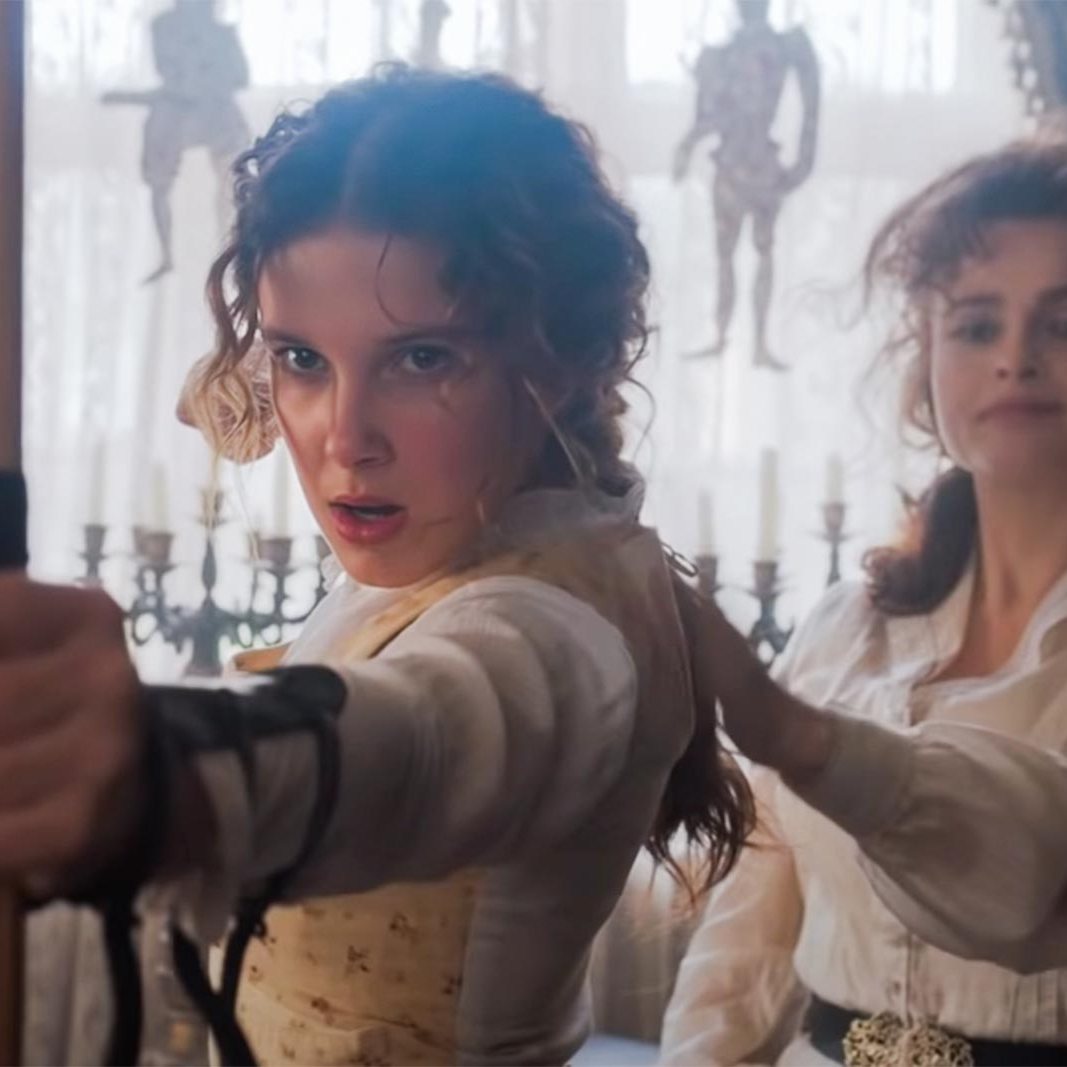
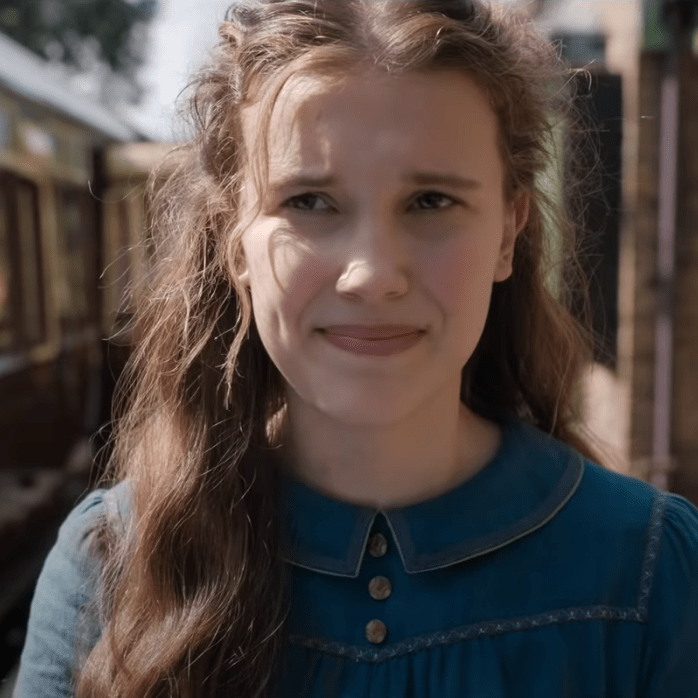
Let’s get one thing straight, shall we? Enola Holmes is an invention of American author Nancy Springer. The character does not appear in any of Sir Arthur Conan Doyle’s original stories. Furthermore, news that the Conan Doyle estate is in the process of suing Netflix for having the temerity to feature a ‘likeable’ version of the great detective strikes me as faintly absurd. Still, here is the aforementioned Enola, as portrayed by the immensely likeable Millie Bobby Brown, (better known as ’11’ in Stranger Things) in the first of what is intended to be a series of six films – and you know what? It’s really rather good.

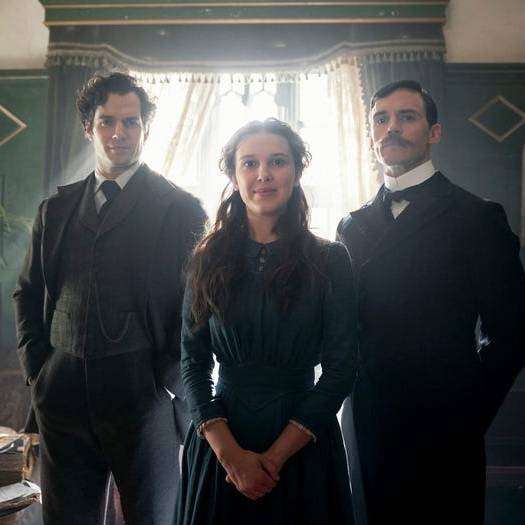
Enola is the estranged little sister of Sherlock (Henry Cavill) and Mycroft (Sam Claflin), though she hasn’t seen either of them since she was a toddler. Brought up by her reclusive mother, Eudoria (Helena Bonham Carter) she’s been home-schooled in a whole series of unusual subjects, all designed to develop her mind and (importantly) her martial arts skills.

When Eudoria suddenly disappears without explanation, Enola’s care passes to her humourless guardian, Mycroft, who decides to put her in a finishing school run by the dreaded Miss Harrison (Fiona Shaw being suitably repellent). But instead, Enola opts to go in search of her mother, using a series of disguises and the kind of detection skills that Sherlock would be proud of. Along the way, she encounters another runaway, Lord Tewkesbury (Louis Partridge) and it isn’t long before sparks begin to fly between them. But first, there’s a complicated mystery in need of unravelling…

Handsomely mounted and featuring a whole battalion of revered character actors, there’s much here to enjoy, though it really is Millie Bobby Brown who keeps everything bubbling along, maintaining a jovial conversation with the audience as she goes. This is witty, inventive and – unusually for a Holmes project – has a nicely handled feminist subtext at its heart.

Legal actions not withstanding, there’s every reason to believe that Enola Holmes could go on to be an engaging series, but – should it turn out to be a standalone – it’s still an enjoyable way to pass a couple of hours.

4.2 stars

Philip Caveney