Enda Walsh

Die, My Love

16/11/25

Filmhouse, Edinburgh

Die, My Love, based on Ariana Harwicz’s acclaimed novel, is another irresistible movie from Scottish director, Lynne Ramsay. With a script by Ramsay, Enda Walsh and Alice Birch, this unflinching study of a woman’s postpartum psychological breakdown is as compelling as it is harrowing – and Jennifer Lawrence is frankly wonderful in the lead role.

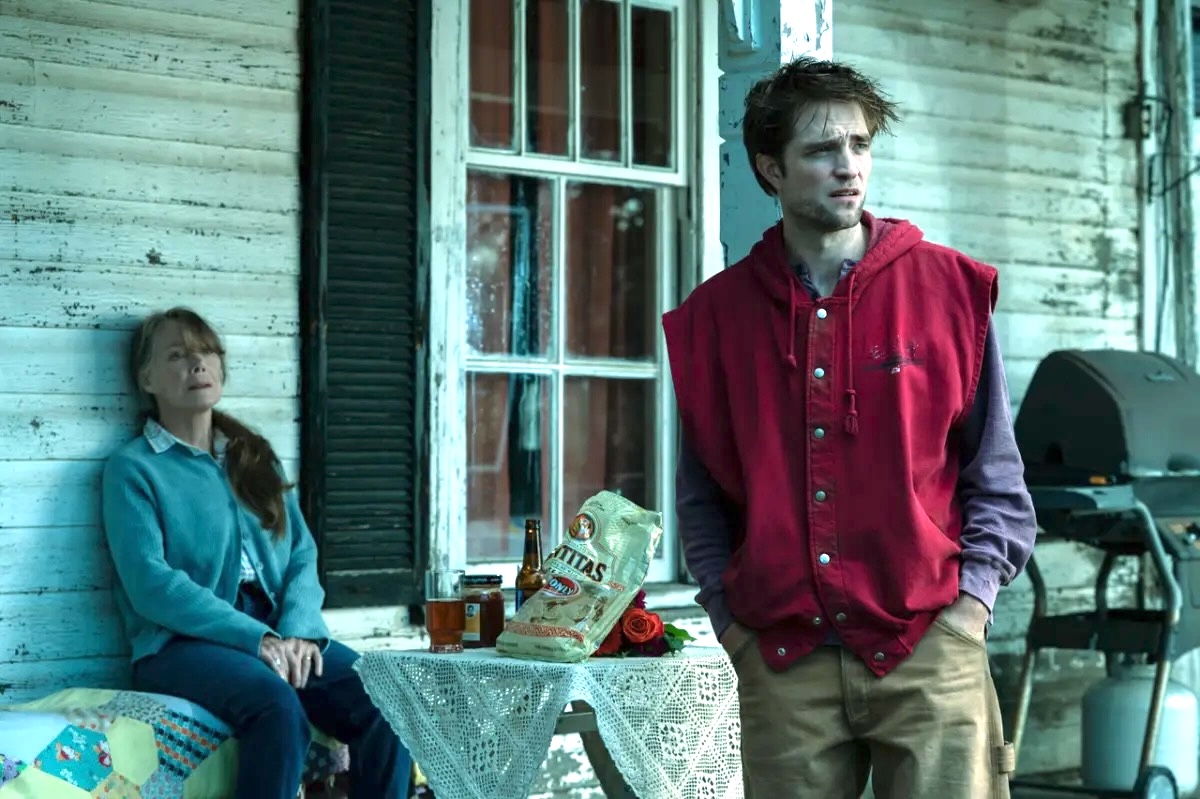
Grace (Lawrence) and Jackson (Robert Pattinson) are expecting their first baby and, in preparation for this new chapter of their lives, they move into Jackson’s deceased uncle’s house. They’re not fazed by the piles of leaves in every room, the old-fashioned decor or even a minor rat infestation: they’re young, excited and in love. They’ll make it work.

But once Grace gives birth to Harry, the spark between her and Jackson dies. She’s stuck at home: bored, resentful and unable to cope. Jackson’s job means that he can escape from the oppressive confines of their isolated house, but Grace’s work is writing; it doesn’t get her out and she can’t focus on it anyway. “I don’t do that any more,” she says.

She loves her baby but she feels trapped and abandoned. Jackson never wants to have sex with her any more, although the box of condoms in his car seems to be getting lighter by the week. She refuses to be just Harry’s mother: why can’t she also still be Grace-the-writer, Grace-and-Jackson, Grace-the-wild, the-impulsive, the-let’s-have-fun? With only Jackson’s bereaved mother, Pam (the fabulous Sissy Spacek), for company, Grace’s mental health begins to deteriorate, her behaviour becoming ever more erratic and dangerous.

Ramsay’s film is undoubtedly dark, but it’s bleakly funny too. Grace’s blunt responses to the platitudes she’s offered often fall into the “things-we-all-wish-we-could-say-but-can’t” category, and – if it weren’t for all the damage they cause – her devil-may-care actions are almost inspirational. I feel sorry for both Grace and Jackson, a couple trapped in a relationship that no longer works, dragging each other down in their attempts to meet society’s expectations of them. “Let’s get married,” says Jackson in desperation. Maybe a wedding is the glue they need to stick them back together?

Or maybe not…

More than anything, this movie reminds me of Charlotte Perkins-Gilman’s The Yellow Wallpaper; indeed, there are several overt references here to the 19th century short story, not least in Grace’s frantic stripping of the heavily-patterned wallpaper with her fingernails, or her crawling through the long grass just like Perkin-Gilman’s “creeping woman”. It’s not just the remote house and the remote husband, nor even the medicalisation of female emotions or the retreat into a fantasy world. More than any of that, it’s the mind-numbing boredom of the protagonist’s existence, and her refusal to accept this as her lot.

A real contender for my film of the year, Die, My Love is a bravura piece of movie-making: stark, beautiful and as uncompromising as its heroine.

5 stars

Susan Singfield

Arlington

06/11/25

Traverse Theatre, Edinburgh

Rarely has the word ‘challenging’ felt more appropriate. Set in a dystopian near future, where an unexplained catastrophe appears to have afflicted the world, Enda Walsh’s Arlington plays out like some kind of enigmatic parable and, even after it’s finished, I cannot honestly say that I fully understand what it’s trying to say to me. But I do feel powerfully affected by it.

The play is divided into three distinct sections. In the first act, we meet Isla (Aisha Goodman), a young woman who has been kept prisoner in a Rapunzel-like tower since childhood and has only ever communicated with the outside world via a microphone to an unseen assistant. But now that man has gone, and The Young Man (Alex Austin) takes his place. He’s unsure of himself and clearly unfamiliar with the recording equipment, which leads to some genuinely awkward happenings and some caustically funny exchanges. He also strikes up an immediate connection with Isla, which eventually leads them both somewhere unexpected…

There’s an abrupt cut to the second part, which is essentially an extended dance sequence, performed by Jack Anderson – and this is, I think, the element that many viewers will find divisive. This is not to say that the piece isn’t brilliantly performed; indeed, it’s quite extraordinary, its central premise based (I think) on the many numbing repetitions that life imposes on us. At times, Anderson seems to virtually float around the stage, an ecstatic expression on his face, only the occasional flurry of sweat bearing testimony to the incredible effort he’s putting into this.

The dance goes on for – whisper it – twenty-five minutes – which according to your individual preferences will be either a joyful revelation or an ordeal to be got through.

And then we cut to the final section, where a bloodied Young Man has been made to take Isla’s place and is now being cruelly interrogated by a sardonic female voice. He’s also obliged to take part in humiliating gameshow-like endeavours, simply to be allowed to sleep…

Co-directed by Lucy Ireland and Jim Manganello, Arlington is ingeniously staged, the main action taking place on a raised dais with banks of surveillance equipment ranged below it. All too often I find myself watching events unfold via the monitors, drawn I suppose to the prurient nature of it. There’s also a huge projection screen behind the main stage on which images sporadically appear. These are sometimes very effective, especially an almost transcendental scene where Isla describes an imagined walk through a forest and it magisterially appears as she talks.

Each viewer will take from this play what they think its intention is. For me, it seems to confirm that, no matter how cruel and distancing the world may become, a meaningful relationship can always survive whatever onslaught is thrown at it – and that perhaps, in the end, love really is all that matters.

But I could be way off beam and, in a strange way, that is the play’s main strength. Those who like their theatre cut-and-dried may not warm to it but, long after leaving the theatre, some of the images linger in my mind’s eye, waiting for me to come up with new explanations for what they might actually mean.

4 stars

Philip Caveney

Small Things Like These

03/11/24

Cineworld, Edinburgh

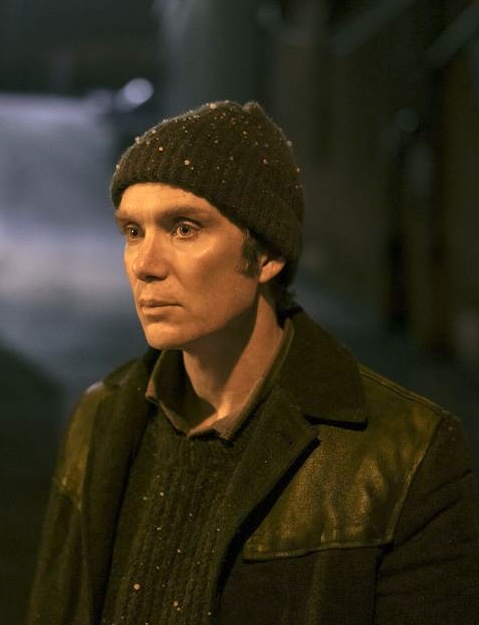
Some films are like icebergs. There’s a lot more going on beneath the surface than we are actually shown onscreen. Small Things Like These, directed by Tim Mielants and adapted by Enda Walsh from the novella by Claire Keegan, is a good case in point.

Set in a small town in Ireland some time in the early 1980s, it’s the story of Bill Furlong (Cillian Murphy), a mild-mannered coal man, who spends most of his time distributing sacks of fuel to the local community. He rises in the small hours every morning and plies his trade through all weathers. Every night he comes home to his wife, Eileen (Eileen Walsh), and his five daughters, living cheek by jowl in their little house. His first task is always to scrub his dirt-encrusted hands clean. But some things are not so easily erased.

One of his regular delivery slots is to the local convent and, when visiting the place, he cannot help but notice the seemingly endless ranks of teenage girls, pressed into service in the laundry and the kitchen, working like slaves for the nuns, under the steely command of Sister Mary (Emily Watson). When he finds one of the girls, Sarah (Zara Devlin), who is pregnant and being made to sleep in the coal shed as a punishment, the incident kindles a series of powerful memories from his childhood, when young Bill (Louis Kirwan) and his unmarried mother – also called Sarah (Agnes O’Casey) – were taken into the home of a kindly local woman, Mrs Wilson (Michelle Fairley).

In terms of plot, there isn’t much more to be said but what there is – in abundance – is a sense of steadily mounting pressure as older Bill, a man who finds is hard to be confrontational, who can barely muster half a dozen words in any given conversation, gradually arrives at the realisation that he has to do something about a situation that will allow him no rest.

Murphy manages to evoke so much with just smouldering expressions and the occasional panic attack, while Watson submits a powerful cameo as Sister Mary: cold, supercilious, calculating, willing to bribe Bill with cash to procure his silence about some of the things he’s witnessed. Meanwhile, everyone else in the community is urging him not to make waves, pointing out that the nuns have the power to make things really difficult for him and his family.

And Christmas is coming… why rock the boat?

As somebody who was raised as a Catholic, I identify with much of what I see here – and as the film builds to its powerful conclusion, I find my anger rising along with it. Small Things Like These won’t be for everyone – so much of the story is left for the viewer to mull over and conjecture about – but for my money it’s a little gem, a film that pins down the dark iniquities that are all too often committed in the name of religion. It’s possibly the bleakest ‘Christmas’ movie ever.

The film is dedicated to all the women who suffered in the ‘Magdalene laundries’ of Ireland before they were finally done away with in the – believe it or not – late 1990s.

4 stars

Philip Caveney

The House

06/02/22

Netflix

It’s a cold Sunday afternoon, with the threat of snow hanging over it. We’ve nothing pressing to do, and we’ve already braved the elements for a bracing walk. We don’t want to go out again. It’s warm in our lounge, and there must be something worth watching that we haven’t already seen… But what?

The House pops up as a suggestion, and we’re intrigued.

Originally billed as a miniseries, The House appears on Netflix as a portmanteau, and is – I think – all the better for it. Viewed as one, the themes coalesce, and the strange beauty of this piece is given time to develop.

The house in question is a rather lovely one: three storeys of opulence and grandeur. Enda Walsh’s script shows it to us in three different times: the past, the present and the future.

Chapter One, And Heard Within, a Lie is Spun, is an eerie origins tale, directed by Emma de Swaef and Marc James Roels, and brought to life via some very spooky felt dolls. Mabel (voiced by Mia Goth) is a little girl. It’s some time in the 1800s, and her father’s fecklessness means her family is impoverished. Raymond (Matthew Goode) is a decent man; it’s just that he’s not very good at making money or managing his alcohol intake. One night, he wanders drunkenly into the forest, and meets a mysterious being, who offers him a way out. The enigmatic architect, Mr Van Schoonbeek, will build him a house. It is a gift. The only catch is that they have to live there – and that doesn’t seem like a catch at all. What could go wrong?

A lot, as it happens. Mabel is disconcerted to discover that Mr Van Schoonbeek keeps making changes. Big changes. Such as removing the staircases, so that she and her baby sister, Isobel, are trapped on the upper floor. Her parents seem caught up in the house’s spell, lured by its riches, and all too soon are literally defined by what they own…

Chapter Two, Then Lost is Truth That Can’t Be Won, directed by Niki Lindroth von Bahr, takes us to the present day. The house is now part of a suburban row, and is in the process of being renovated.

By a rat.

Said rat, known only as The Developer and voiced by Jarvis Cocker, is a hard-working soul. He has everything riding on the success of what seems to be a solo project, and – as his constant calls to the bank confirm – is relying on a quick sale. At first, he’s confident. His plans are meticulous. He has dedicated his life to this money-making scheme, sleeping in the basement for months, doing the place up room by room. It’s a wonder of high-spec luxury. But when he spies a fur beetle scurrying along the kitchen floor, he realises he has a problem. He fills in gaps in the skirting boards and throws around a liberal amount of beetle-poison, but all to no avail. He has an open viewing scheduled. What is he to do?

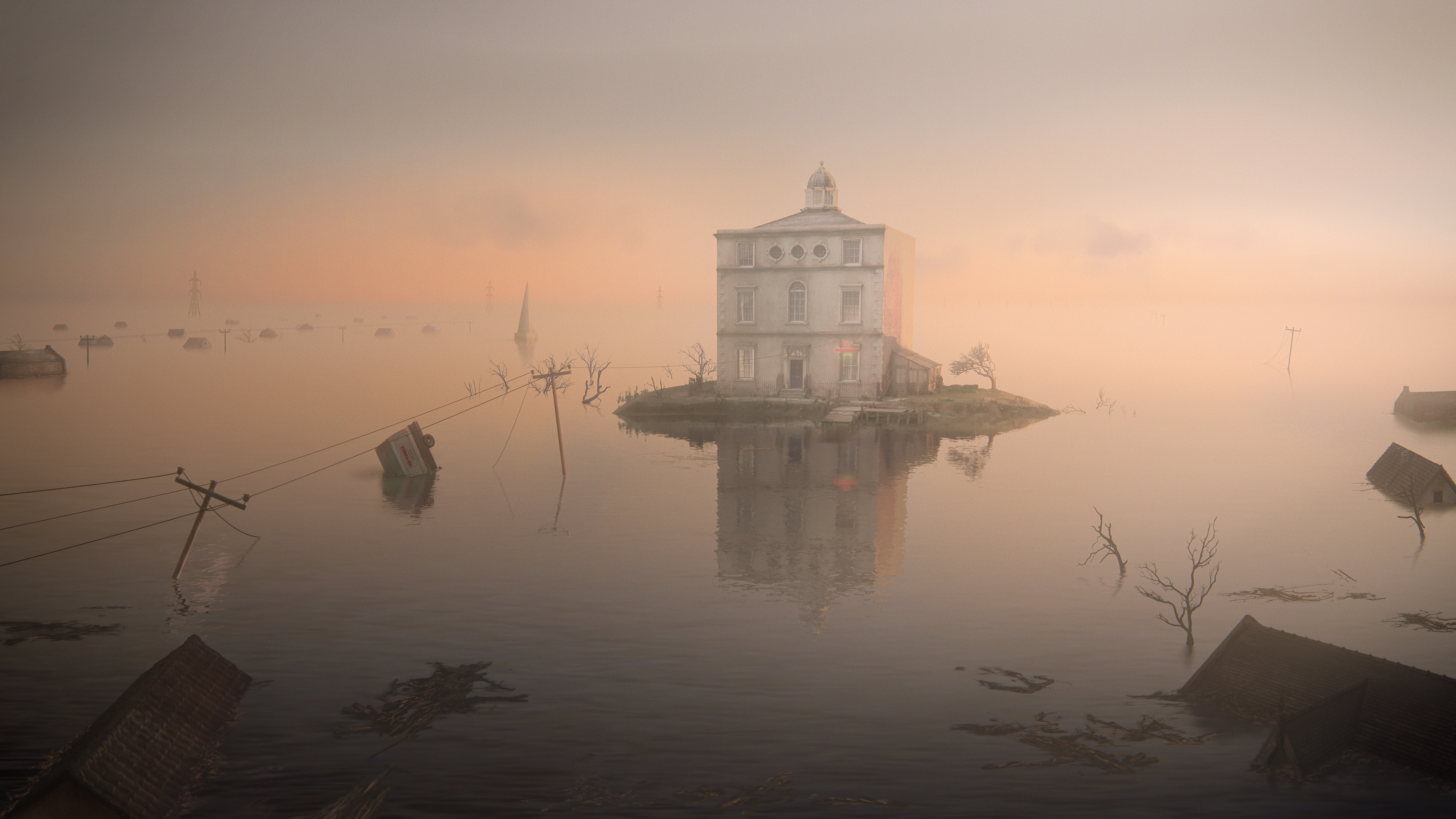
In Chapter Three, Listen Again and Seek the Sun, director Paloma Baeza offers us a washed out dystopia, set in the near future. Floods have risen, and the house looms precariously out of the water, an island in a never-ending sea. It’s all studio apartments now, owned by a cat called Rosa (Susan Wokoma), who dreams of restoring the dilapidated building to its former glory. The Pinterest-style boards attached to her wall show an ambitious vision, but she’s fighting a losing battle. All but two of her tenants have left, and those who remain, Jen (Helena Bonham Carter) and Elias (Will Sharpe), pay their rent, respectively, in crystals and fish. Which is all very well, Rosa tells them crossly, but no plumber will accept them as currency so no, sorry, she can’t do anything about the horrible brown water that’s coming out of the taps.

When Cosmos (Paul Kaye) arrives, the truth becomes clear: Rosa needs to let go of her attachment to the house if she wants to survive.

Taken as a whole, these three stories amount to a gentle polemic, an admonishment to us all to realise what really matters before it’s too late to save the world. It’s beautifully done. The tales are fresh, engaging, and quirkily animated – a lovely way to while away an hour and a half.

4.1 stars

Susan Singfield