Emily Watson

Steve

05/10/25

Netflix

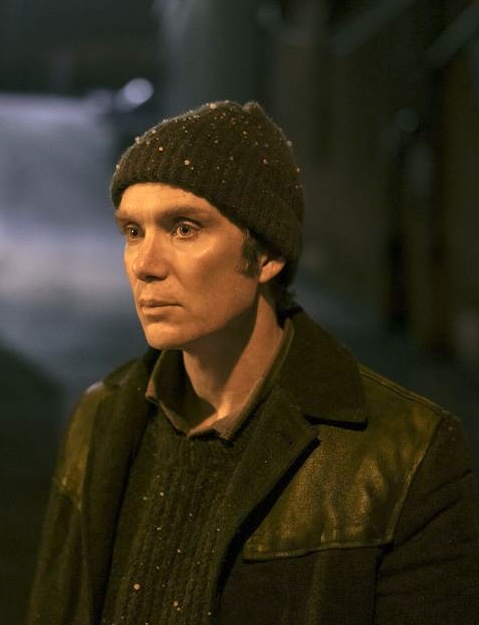
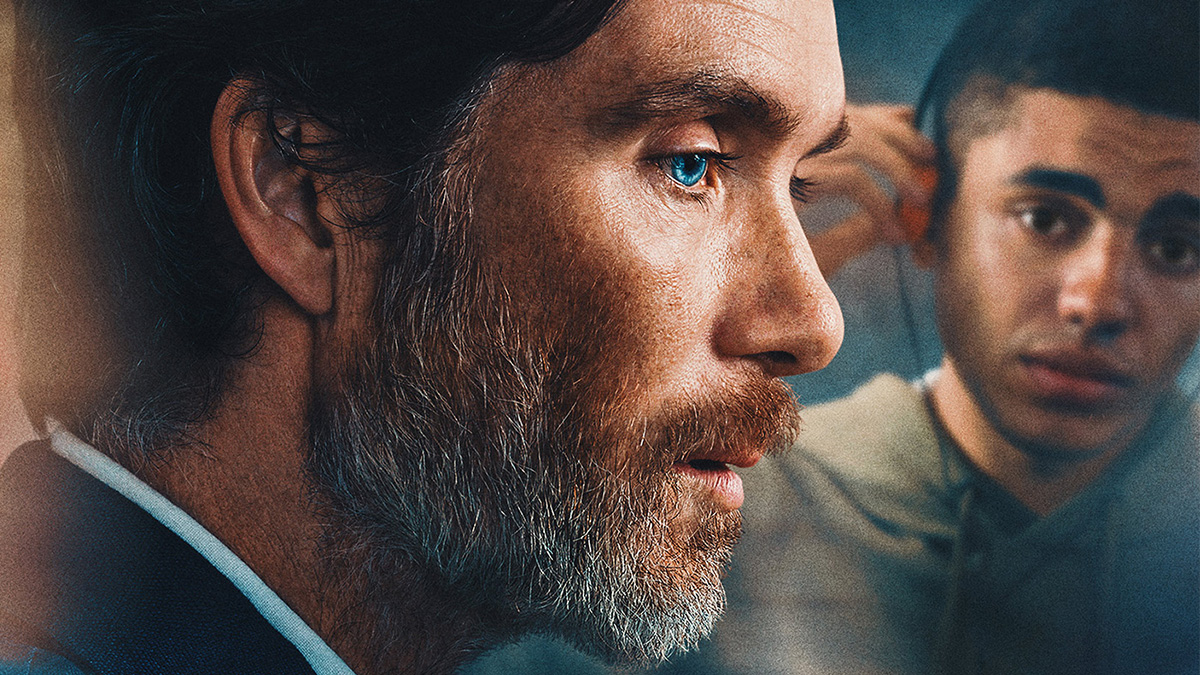
Adapted from his own book, Max Porter’s screenplay is a heart-wrenching tragedy, castng a merciless light on what we’re up against when it comes to helping troubled kids. There’s a change of title – the novella Shy becomes the movie Steve, indicating a shift in focus, from teenage protagonist (Jay Lycurgo) to forty-something headteacher (Cillian Murphy).

Shy and Steve are two sides of the same coin: two clever, gentle, unhappy men, with substance-abuse issues and deep seams of anger, always bubbling, ready to erupt. If Steve has better control of his problems, it’s only because he’s older and more experienced at hiding things.

Directed by Tim Mielants, the movie opens on an auspicious morning: a local news crew is visiting Stanton Wood, filming a segment about Steve’s experimental boarding school for challenging students. It’s a last-chance saloon for those who’ve been excluded from everywhere else, described by TV host Kamila (Priyanga Burford) as “a pre-Borstal”. The model is a Finnish one, Steve explains. We never quite learn what this entails – what pedagogical theories are being employed – but we do see that the staff genuinely care for the boys, treating them with love and respect and never talking down to them. Unlike their out-of-touch local MP, the loathsome Sir Hugh Montague Powell-pronounced-Pole (Roger Allam), who soon comes unstuck when he tries to patronise Shy.

Sadly, the institution is teetering on a knife-edge as sharp as any wielded by its inmates. Funding is an issue, of course, as is public perception. It costs £30k per annum to house a single young offender here. Are these “losers” worth it?

For Steve, the answer is a resounding yes – a sentiment echoed by his deputy, Amanda (Tracey Ullman), school therapist, Jenny (Emily Watson), and teachers, Andy and Shola (Douggie McMeekin and Little Simz). But there’s no denying it’s a taxing job, breaking up the near-constant fights between wind-up merchant Jamie (Luke Ayres) and coiled spring Riley (Joshua J Parker), dealing with the boys’ emotional trauma and protecting the grown-ups from their worst excesses.

In hindsight, maybe inviting a TV crew to immortalise the chaos isn’t the best idea Steve’s ever had…

And when two representatives of the school’s trust, Charlotte and Julian (Ruby Ashbourne Serkis and Ben Lloyd-Hughes), inform Steve that the school is being shut down, it’s more than he can bear. What will happen to the damaged children he’s worked so hard to protect? For most of them, Stanton Wood represents the only stability they know.

Murphy is riveting as the desperate Steve, and it’s heartbreaking to watch his hope unravel as the film goes on. The boys provide some light relief, their devil-may-care fuck-you attitudes affording some real laughs, even as they squander their chances, fail to live up to the goals they’ve been set. At Stanton Wood, they’re allowed to pick themselves up and try again. Shy serves as a symbol of redemption, and Lycurgo imbues him with a beautiful naïvety, so that we’re rooting for him every step of the way.

A thought-provoking indictment of a broken system, Steve is available to stream from Netflix, and – despite its title being the dullest I’ve ever come across – the film is well worth your attention

4.1 stars

Susan Singfield

Small Things Like These

03/11/24

Cineworld, Edinburgh

Some films are like icebergs. There’s a lot more going on beneath the surface than we are actually shown onscreen. Small Things Like These, directed by Tim Mielants and adapted by Enda Walsh from the novella by Claire Keegan, is a good case in point.

Set in a small town in Ireland some time in the early 1980s, it’s the story of Bill Furlong (Cillian Murphy), a mild-mannered coal man, who spends most of his time distributing sacks of fuel to the local community. He rises in the small hours every morning and plies his trade through all weathers. Every night he comes home to his wife, Eileen (Eileen Walsh), and his five daughters, living cheek by jowl in their little house. His first task is always to scrub his dirt-encrusted hands clean. But some things are not so easily erased.

One of his regular delivery slots is to the local convent and, when visiting the place, he cannot help but notice the seemingly endless ranks of teenage girls, pressed into service in the laundry and the kitchen, working like slaves for the nuns, under the steely command of Sister Mary (Emily Watson). When he finds one of the girls, Sarah (Zara Devlin), who is pregnant and being made to sleep in the coal shed as a punishment, the incident kindles a series of powerful memories from his childhood, when young Bill (Louis Kirwan) and his unmarried mother – also called Sarah (Agnes O’Casey) – were taken into the home of a kindly local woman, Mrs Wilson (Michelle Fairley).

In terms of plot, there isn’t much more to be said but what there is – in abundance – is a sense of steadily mounting pressure as older Bill, a man who finds is hard to be confrontational, who can barely muster half a dozen words in any given conversation, gradually arrives at the realisation that he has to do something about a situation that will allow him no rest.

Murphy manages to evoke so much with just smouldering expressions and the occasional panic attack, while Watson submits a powerful cameo as Sister Mary: cold, supercilious, calculating, willing to bribe Bill with cash to procure his silence about some of the things he’s witnessed. Meanwhile, everyone else in the community is urging him not to make waves, pointing out that the nuns have the power to make things really difficult for him and his family.

And Christmas is coming… why rock the boat?

As somebody who was raised as a Catholic, I identify with much of what I see here – and as the film builds to its powerful conclusion, I find my anger rising along with it. Small Things Like These won’t be for everyone – so much of the story is left for the viewer to mull over and conjecture about – but for my money it’s a little gem, a film that pins down the dark iniquities that are all too often committed in the name of religion. It’s possibly the bleakest ‘Christmas’ movie ever.

The film is dedicated to all the women who suffered in the ‘Magdalene laundries’ of Ireland before they were finally done away with in the – believe it or not – late 1990s.

4 stars

Philip Caveney

On Chesil Beach


27/05/18

I’m surprised to realise I haven’t read On Chesil Beach. I’ve read most of Ian McEwan’s ouvre, but not this slim novella. Maybe I’ve just balked at paying a standard paperback price for so few pages. Whatever. When friends suggest we meet up and make a day of it – a film in the afternoon; a meal in the evening – I’m more than happy to give this one a go.

It’s a decent movie, adapted by the author. Saoirse Ronan and Billy Howle give excellent central performances as Florence and Edward, the clever young couple whose love for one another is evident, but who cannot negotiate the weight of expectation on their wedding night. They are wounded and humiliated by their failure to consummate their marriage; their naivety and innocence is heartbreaking to see. Too angry, too proud, too fragile, they don’t give themselves a chance, and their relationship is over before it’s even really begun. Their excruciating attempts to initiate sex are depicted here in agonising detail, their awkwardness and vulnerability cleverly conveyed.

We learn their history through flashbacks, which is quite effective in slowing down the pace and emphasising the couple’s interminable embarrassment. They meet when Edward blunders into an Oxford student CND meeting, bursting with the news that he’s gained a first in his degree. With no one to tell, he turns to a stranger – and Florence, who has just graduated with the same grade, is happy to help him celebrate. They come from very different backgrounds: she from the status-obsessed upper middle-classes, with an academic mother (Emily Watson) and an angrily competitive father (Samuel West); he from a more bohemian country life – his mild-mannered father (Adrian Scarborough) is head teacher of the village school; his mother (Anne-Marie Duff) is an artist, ‘brain-damaged’ after an accident. No matter; Florence and Edward fall in love. And, after their disastrous wedding night, they fall apart.

Much has been made of McEwan’s ingenuity in condensing the rest of the couple’s lives to a kind of footnote, thus highlighting the significance of their failure on that fateful day. But –  for me at least – this is the film’s failing. It feels like a careful set-up followed by a sketchy summary, and I am disappointed by the broad strokes of the final third.

Still, I’m glad I’ve seen it. It’s a sad tale of an experience that is hopefully far less commonplace, now that the silly notion of ‘saving oneself’ for a wedding night is a thing of the distant past.

3.8 stars

Susan Singfield