

Emerald Fennell

Saltburn

22/11/23

Cineworld, Edinburgh

Emerald Fennell’s second film shares some DNA with her debut: they’re both stories of revenge writ large, of simmering grievance metamorphosing into violence. But, while Promising Young Woman was an out-and-out success, Saltburn is more of a mixed bag.

Oliver (Barry Keoghan) is a fish out of water at his Oxford college. Not only has he made the terrible faux pas of devouring every book on the summer reading list, he’s also got a Scouse accent and his tuxedo is rented. “The sleeves are too long,” sneers his tutorial-mate, Farleigh (Archie Madekwe). “Still, you almost pass.” Frustrated by his outsider status and bored rigid by Jake (Will Gibson), apparently the only other non-posh person in the city, Oliver becomes obsessed with Felix (Jacob Elordi), insinuating himself into the young aristocrat’s circle. Felix warms to Oliver, taking him under his wing and inviting him to spend the summer at his family home. Oliver is delighted: the titular Saltburn is a bastion of excess and he is more than ready to indulge himself. But, as the weeks slip by and real life looms, things begin to take a darker turn…

The first third of this film is anachronistic. It’s supposed to be set in 2006, but the Oxford we see here feels like a throwback to the 1920s. Although there’s no denying that the university is still disproportionately posh, by the time the movie’s events occur, about 50% of Oxford undergraduates came from state schools (the figure is 68% now) – and, even among those who were privately educated, only a tiny number were as privileged as Felix and his friends. I find myself rolling my eyes at the idea that Oliver and Jake might stand out amongst their peers, or that anyone would notice them enough to bellow “scholarship boy” as they pass by. It’s unnecessary too: Oliver’s desire to move in Felix’s orbit doesn’t need to be dependent on the absence of any other working or middle-class people.

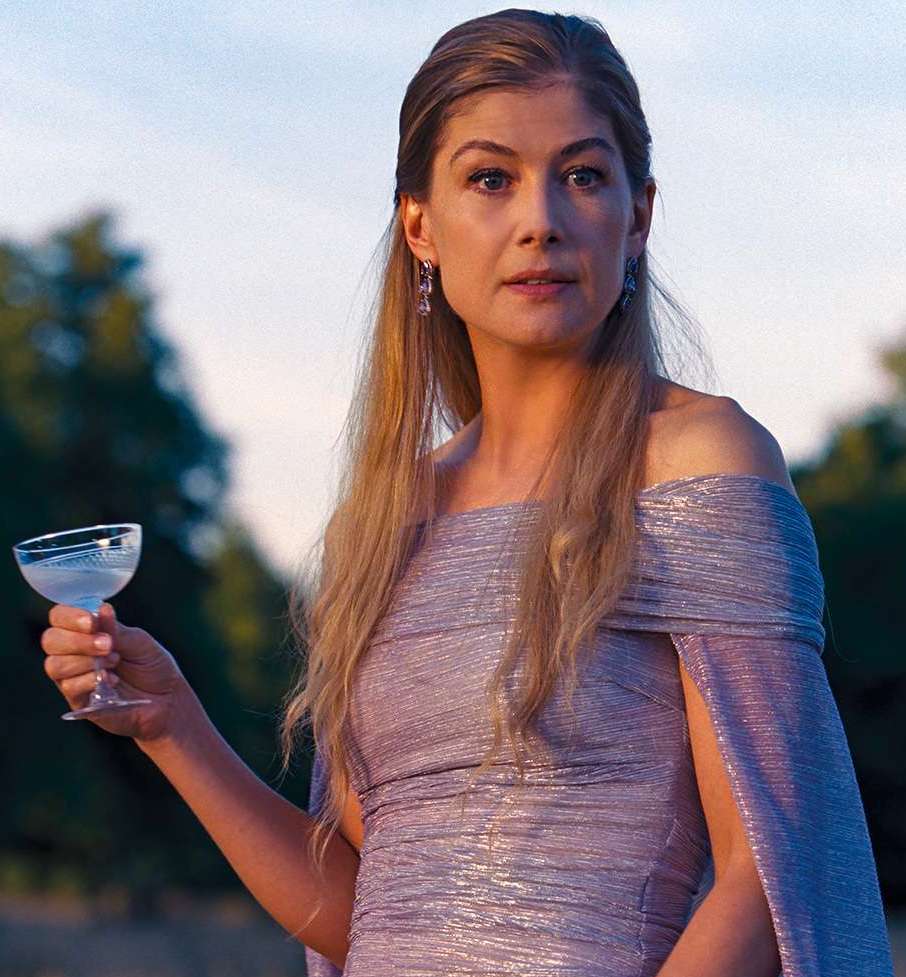
When the action moves to Saltburn, things improve dramatically – although the sense of stepping back in time might be heightened if Fennell were more effective in capturing the early noughties in the opening stretch. Here we meet Felix’s parents, Sir James (Richard E Grant, on top form) and Elspeth (played with obvious glee by Rosamund Pike). “Mummy” is the best thing about the whole movie, delightfully lacking in self-awareness, blithely callous in every word and deed. She gets the funniest lines too, and Pike delivers them with deadly precision: when Elspeth hears of her erstwhile friend’s death, for example, she responds with a scathing, “She’ll do anything to get attention.”

If the revenge, when it comes, is faintly ridiculous, then it’s found a suitable home in Saltburn, where everything is magnified, where there’s too much space, too many artefacts, too many people and too much money. The house and grounds provide a perfect backdrop for this illustration of careless privilege, and Linus Sandgren’s cinematography is almost hallucinogenic, reinforcing the sense of dislocation from the outside world.

Of course, there are many ways to read this sly, allusive story, with its Brideshead references and satirical tone. The most generous interpretation is that the joke is on the upper classes, depicted here as shallow and vacuous, playing games with other people’s lives to relieve their louche ennui. But it also comes across as a warning to the toffs to beware the pesky proles. Give us an inch and we’ll take a mile; we just don’t know our place. Fennell (whose own rarefied life is far closer to the Cattans’ than to Oliver’s) reveals an unfortunate blind spot when it comes to class. Elspeth references Pulp’s Common People early on, refuting the idea that the lyrics refer to her. “No, it wasn’t based on me. She had a thirst for knowledge. I’ve never wanted to know anything.” But there are a few lines later in the song that are perhaps more relevant: “Like a dog lying in a corner, they will bite you and never warn you. Look out! They’ll tear your insides out.” There appears to be an underlying (perhaps unconscious) snobbery at play.

Despite its dodgy subtext, Saltburn is a curate’s egg of a movie, with some very good parts indeed, and the final sequence – set to Murder on the Dancefloor – is utterly glorious. I look forward to what Fennell does next, albeit with some trepidation.

3.3 stars

Susan SIngfield

Fresh

17/06/22

Disney+

I have high hopes of this comedy-horror, where the feminist sub-text is right there on the surface. It promises to be a ‘fresh’ take on a well-worn trope, written and directed by two women (Lauryn Kahn and Mimi Cave respectively). So imagine my disappointment when I find myself watching an all-too familiar extended sequence: a beautiful young woman chained up in a cruel madman’s basement, crying and begging for her freedom. Surely I can’t be alone in thinking that it’s not enough to subvert the ending (spoiler: it’s not a man who saves the day)? That, actually, you can’t make a valid point about the exploitation of women by exploiting them further? Or that a film that lingers unironically on images of women’s suffering loses its claim to be a fucking comedy?

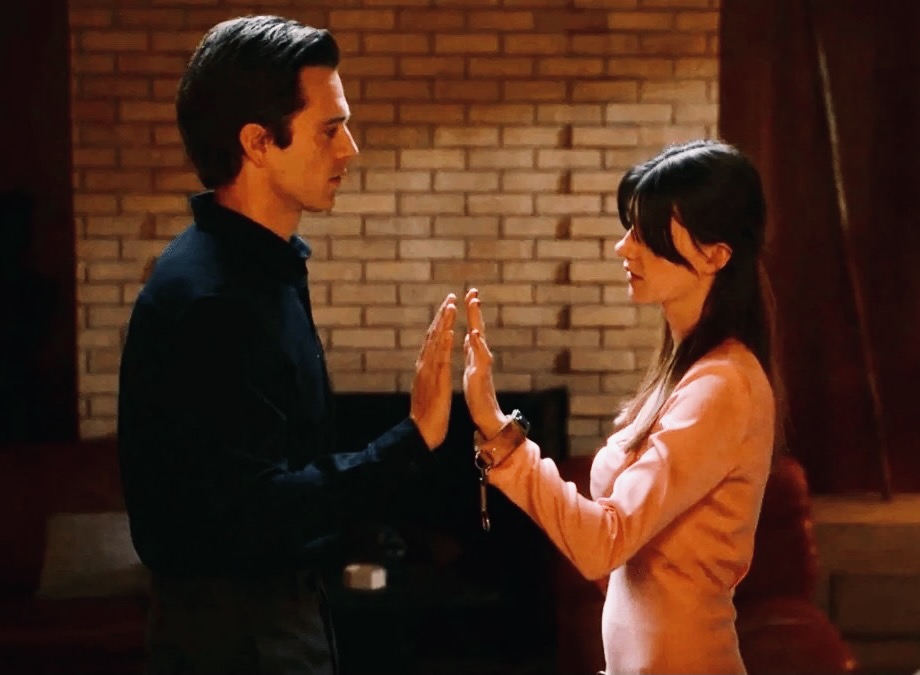
It starts off promisingly. Okay, so it’s not exactly subtle. Noa (Daisy Edgar-Jones) is single and sick of the dating scene. We see her out with a cartoonish man, all wafting scarf and pronouncements about how women just aren’t as feminine as they used to be. It’s mildly amusing: recognisably awful, but also (whisper) a bit hack. Later, she texts another guy, who immediately sends her a dick pic. Maybe love just isn’t for her, she tells her best pal, Mollie (Jojo T Gibbs). But then she meets Steve (Sebastian Stan), who seems too good to be true. He’s sweet, polite, engaging, kind.

And yeah, too good to be true. Because Steve is a cannibal, who butchers women. It’s an obvious metaphor for the romance meat market – and, sadly, the film’s charm wears off as quickly as Steve’s. The lengthy pre-credit sequence hints at something gentle and quirky; what follows is almost gore-by-numbers, albeit with some gorgeous cinematography (by Pawel Pogorzelski) and a banging 80s soundtrack.

Ach, I don’t know. It makes me weary. I hated rape-revenge movies The Girl With the Dragon Tattoo and Elle for the same reason: I don’t want to watch women being victimised, and then emerging, brutalised, to re-enact the same violence against men. That’s not redemption; it’s having your steak and eating it: a tone-deaf definition of a ‘strong woman’ – and we shouldn’t let the film-makers off the hook. Emerald Fennell nails feminist vengeance in Promising Young Woman, proving it can be done.

That’s not to say there’s nothing good about this film. The actors are all impressive, although Gibbs is criminally under-used as Mollie (of course she is, because Mollie is black and gay, only ever destined for a sidekick role alongside the straight, white heroine). I like the device of setting up Paul (Dayo Okeniyi) as a potential hero, and then deflating that hope. Stan is well-cast as the killer, plausibly likeable, so that his success in charming Noa seems credible enough. The initial meat-packing sequences are wonderfully stylised, hinting at the better movie this could have been.

In many ways, the whole thing works better as an analogy for farming, where animals live in captivity, and where ‘kindness’ only extends as far as keeping them warm and fed so that they’re tender and disease-free when we come to eat them. That’s not the intended message, but it’s the one I’m taking home.

This movie just doesn’t work for me: the ‘comedy’ never raises more than a small smile, and the ‘horror’ is nasty rather than scary. Sadly, in the end, Fresh is more than a little bit stale.

2.2 stars

Susan Singfield

Promising Young Woman

20/04/21

Now TV

Emerald Fennell’s Promising Young Woman is a remarkable debut, at once fresh, funny, terrifying and compelling. Starring Carey Mulligan, it tells the tale of Cassie, a med-school dropout with a mission. Cassie is thirty, but she still lives at home with her parents; she works part-time in a coffee shop and has no friends at all. Something calamitous happened back in her uni days, and Cassie wants revenge…

Except she doesn’t; not really. I keep reading that PYW is a ‘rape revenge movie,’ but Cassie doesn’t seem to want revenge at all. Instead, she confronts people with a metaphorical mirror, so that they can’t help but see how shitty their behaviour is. The ‘nice guys’ who approach her with dispiriting predictability when she pretends to be drunk and alone in nightclubs, offering to ‘help’ by getting her home; the girls who slut-shame their peers; the figures of authority who brush sexual attacks under the carpet – Cassie just wants them to acknowledge that they’re wrong. She wants to effect change.

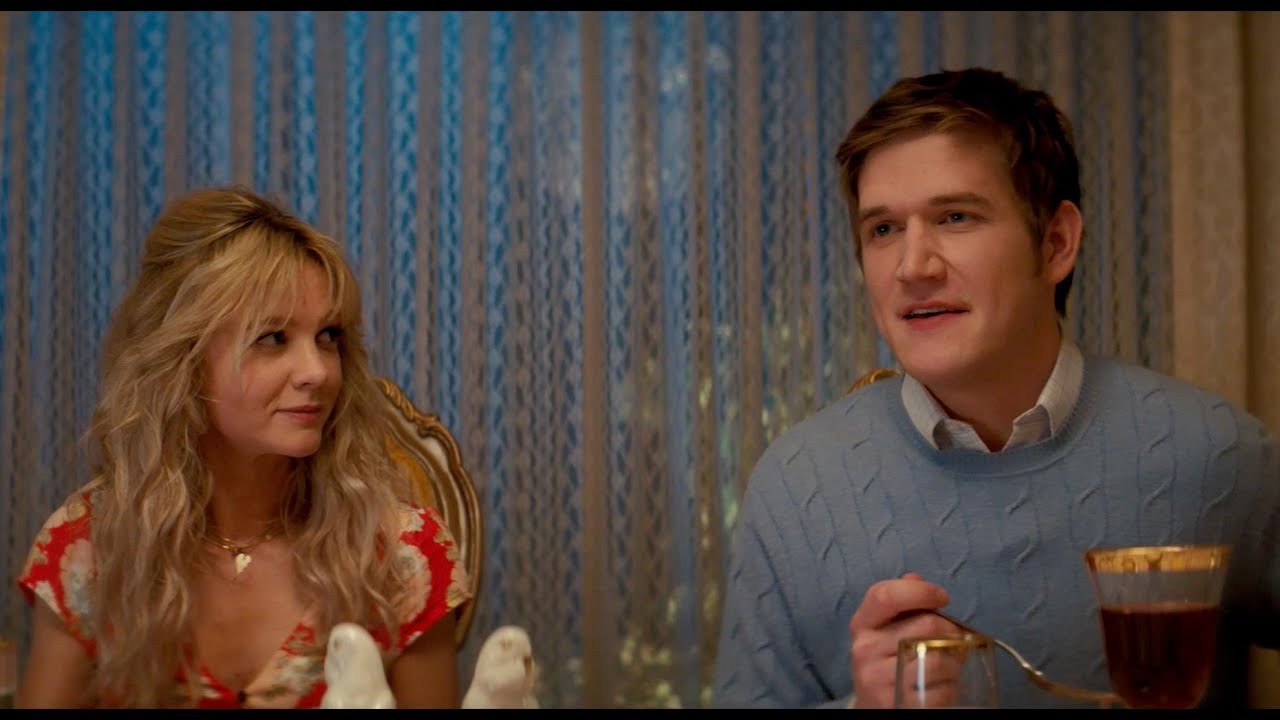
This is a zippy, witty piece of writing, that often feels surprising, and Mulligan is on fine form here. She’s perfect for the role: one minute she’s all sweet vulnerability, the next a steely avenging angel. Writer/director Fennell makes important points about the way our whole society protects and enables those who perpetrate assault whilst punishing their victims, but the film never feels preachy or didactic; she has an admirable lightness of touch. The bubblegum shades and kitsch soundtrack give us hints of rom-com (the scene in the pharmacy, where Cassie and her new boyfriend, Ryan (Bo Burnham), dance to Paris Hilton’s Stars are Blind is a particular delight), but Fennell repeatedly pulls the rug out from under our feet and takes us to some unexpected places. The bold references to Charles Laughton’s classic Night of the Hunter, for example, work well to underscore the bleak reality the story unveils.

The violence, when it comes, is shocking in its understatement. There is no blood and gore here, but neither is there any let up – I don’t think it’s too much of a spoiler to say that what we witness is a deliberate, protracted act. It works though, and I applaud Fennell for eschewing the salacious prurience that often dominates such scenes (Paul Verhoeven’s Elle being a case in point, a movie spoiled for me by its focus on the very acts it claimed to rail against).

It’s easy to see why Promising Young Woman has made such a splash, and appears to be a real Oscar contender. If Fennell wins, it will be well-deserved.

4.7 stars

Susan Singfield