Elisabeth Moss

Run Rabbit Run

29/06/23

Netflix

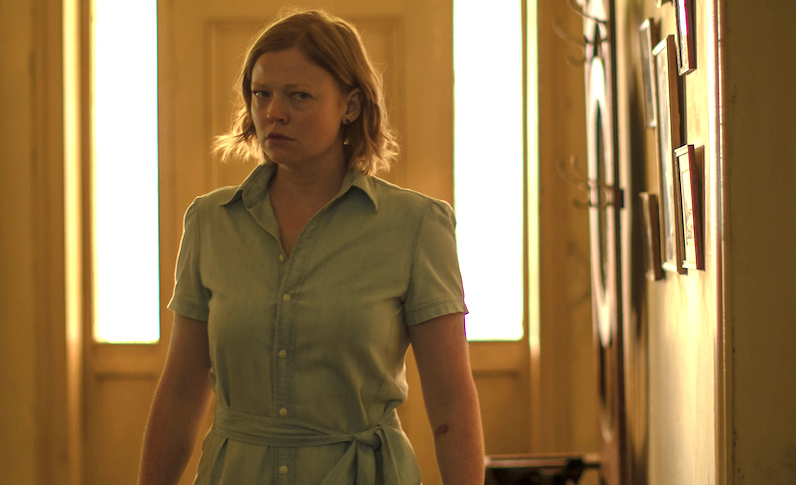
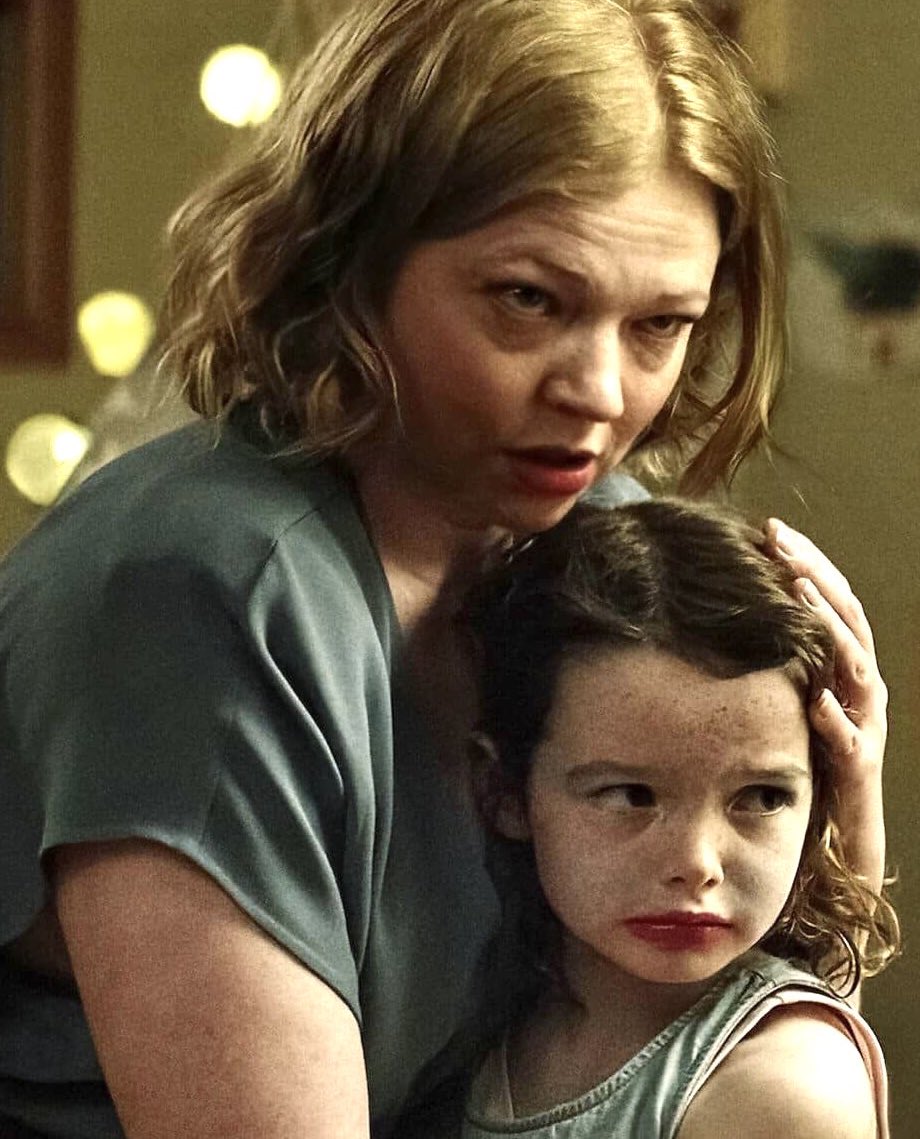
Run Rabbit Run is an unsettling psychodrama, set in an Australia that’s a lot darker and less sun-kissed than we usually see on screen. Woman of the moment, Sarah Snook, stars as single mother Sarah, whose orderly life disintegrates when her young daughter, Mia (Lily LaTorre), begins to exhibit some disturbing behaviours.

On the surface, Sarah seems to have it all: a good job, a nice house, a sweet kid and a civilised relationship with her ex (Damon Herriman). But underneath, she’s struggling. Her dad has just died, and her garage is full of his things, forcing her to confront a childhood trauma she’d rather forget. On Mia’s seventh birthday, a white rabbit appears from nowhere and the little girl adopts him as her pet. And then she starts to talk about things from Sarah’s past, things that she can’t possibly know…

It’s a simple enough story, but director Daina Read manages to generate real tension, despite what is obviously a low-budget, proving that you don’t need expensive gimmicks to make a scary, unnerving film. Sarah’s unravelling is slowly and meticulously examined, so that I’m holding my breath for much of the running time, genuinely fearful, wondering what is going to happen next.

I do suspect that much of the movie is on the cutting room floor. Early press releases (back when Elisabeth Moss was attached, before ‘scheduling conflicts’ meant she had to pull out) make much of the fact that Sarah is a fertility doctor, forced to confront her beliefs about life and death, but there’s not a lot of that in the version before me. True, we see Sarah wearing scrubs, and there’s one scene where she scans a pregnant woman, locating her foetus’s heartbeat, but beyond that and a solitary reference to her as ‘Doctor’, her job isn’t mentioned at all. In fact, when the rabbit bites her, she doesn’t seem to know how to treat the cut, so it’s hard to believe she’s even got a first aid certificate, let alone a medical degree. In addition – and I’m being deliberately vague here so as to avoid a spoiler – there’s quite a big event at the end that isn’t flagged up at all, so that I have to rewind to check if it really happened.

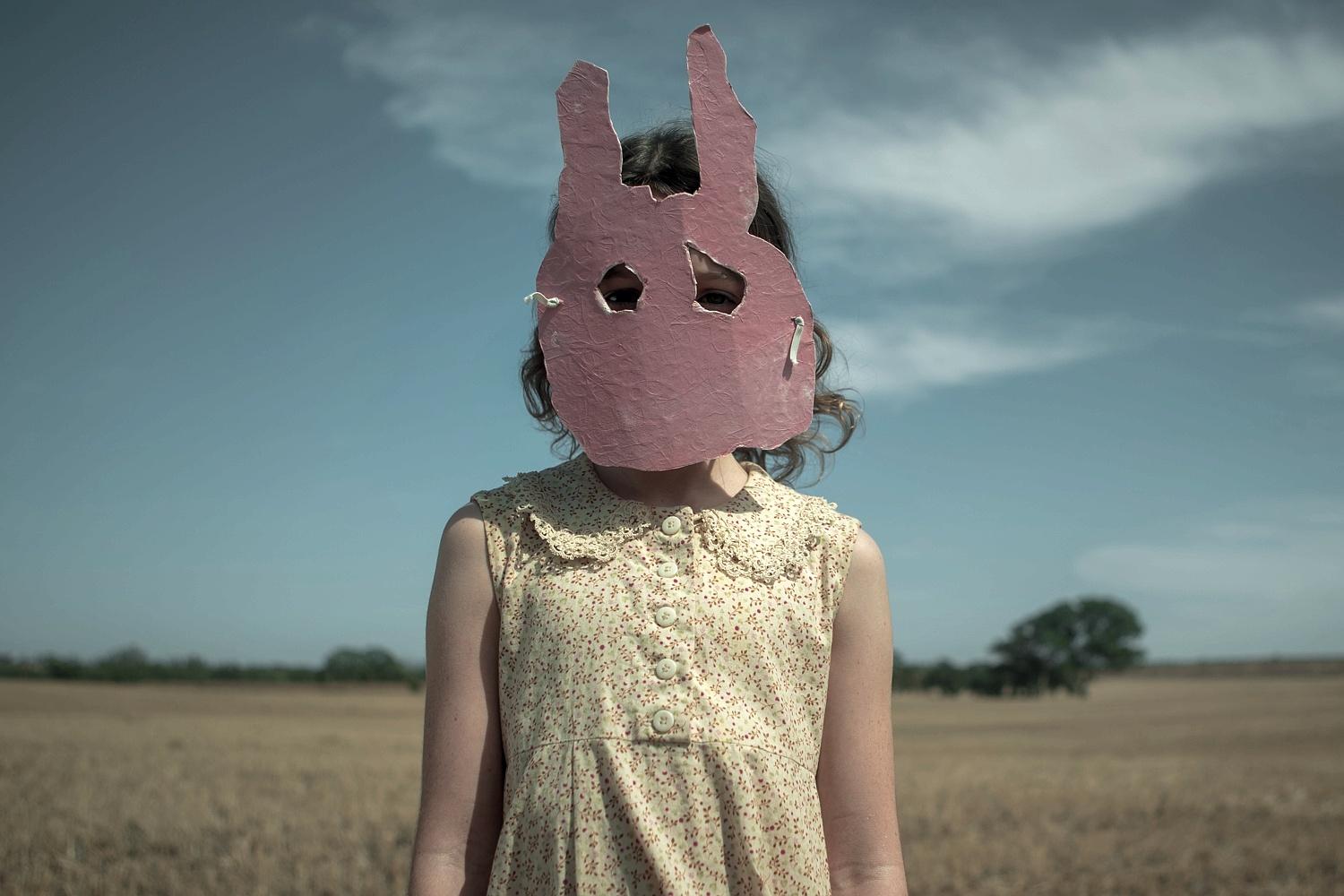
Despite these niggles, Run Rabbit Run is an enjoyably thrilling watch, and Sarah Snook and Lily LaTorre both carry it really well. Mia’s rabbit mask and the oblique Alice in Wonderland imagery are horribly spooky, and I find myself still thinking about this film when I wake up the next day.

3.8 stars

Susan Singfield
Shirley

06/11/20

Curzon Home Cinema

The Shirley of the title is, of course, Shirley Jackson, the much lauded author of short horror stories and novels, now back in the public consciousness after the recent success of Netflix’s The Haunting of Hill House.

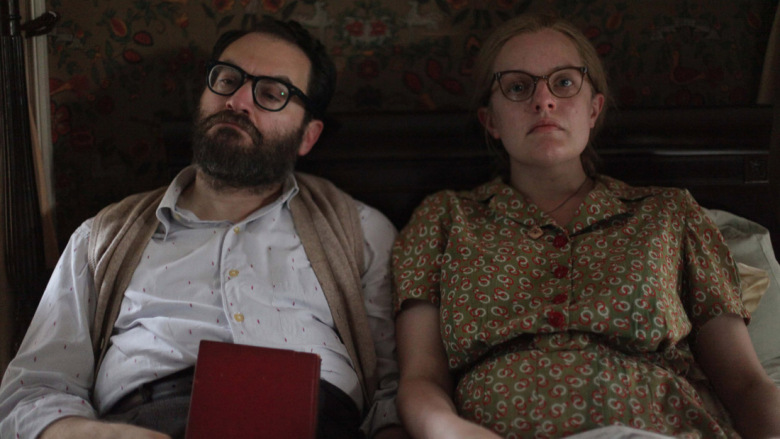
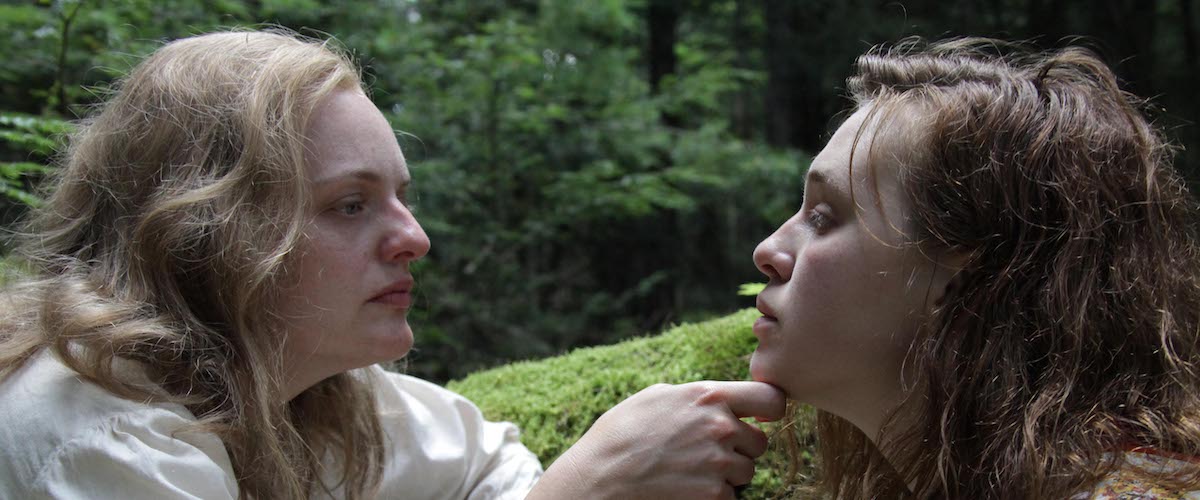
As portrayed by Elisabeth Moss, the author is a bundle of neuroses, afflicted by agoraphobia, alcoholism and a seeming inability to stop smoking for more than ten seconds at a time. It’s the 1960s and Jackson is living with her pompous and manipulative university lecturer husband, Stanley (Michael Stulhbarg, brilliantly insufferable). She’s also struggling to rediscover her writing mojo.

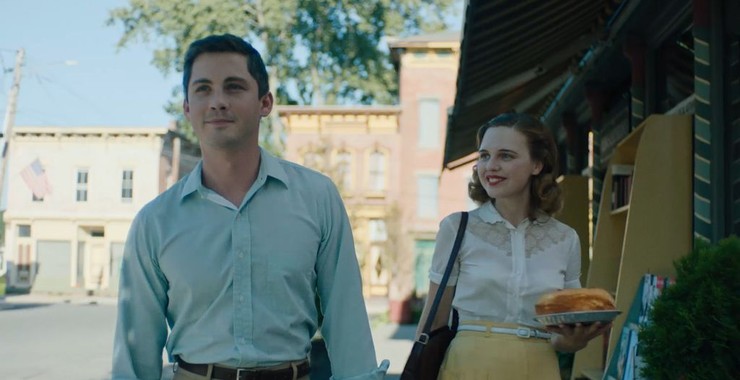
And then along comes Fred Nemser (Logan Lerman), an aspiring junior professor and his pregnant wife, Rose (Odessa Young). Fred is seeking Stanley’s endorsement for a post at his college in Vermont and the young couple have been invited to live in the rambling family home. This initially seems appealing, but the upshot is that poor Rose finds herself cast as a kind of housekeeper, cooking meals and cleaning up around the place, while her husband throws himself headlong into the world of academia, (which seems to mean throwing himself at some of his young female students into the bargain.)

Rose also finds herself fascinated and disturbed in equal measure by Shirley’s writing, and it isn’t long before she’s become some kind of muse to the older woman. As their relationship deepens, it initiates changes in Rose’s persona and prompts her to look more deeply into the ‘based-on-true-life’ story that Shirley is currently working on…

This is a complex piece that takes its own sweet time to set out its stall and, in the process, it manages to create a convincing and suffocating world that is shot through with toxic domesticity. However, though it occasionally seems to hint at revelations hovering just out of our reach, it never seems to quite deliver them. This is a shame, but there are compensations, not least the performances, which are all accomplished.

Moss gets the showier role, portraying a character who can be as sweet as apple pie one moment and spitting venom the next, but it’s arguably Young who has the most difficult part, showing Rose’s gradual transition from a glamorous, passionate young woman into the twitchy, nervy receptacle of all of Shirley’s insecurities.

Based on a novel by Susan Scarf Merrell and adapted by Sarah Gubbins, the plot also seems to take a few liberties with the truth, but – when the main subject is a writer of fiction – perhaps this is excusable. In many ways, the film reminds me of Who’s Afraid of Virginia Woolf, another story where an older university lecturer and his alcoholic wife leech all of the life out of a younger, more optimistic couple.

Shirley may not quite add up to a perfect movie, but its nonetheless worth your attention, if only to relish those fine performances.

3.7 stars

Philip Caveney

The Square

18/03/18

In The Square, writer-director Ruben Östlund posits an age-old question: what is art? The response he offers, however, is original and refreshing, and we leave the cinema with a lot to think about.

Claes Bang is Christian, chief curator of a prestigious Swedish gallery. He talks of pushing boundaries, seeking truths about humanity, attracting audiences beyond the usual ‘culture-vulture’ crowd. He’s a sympathetic character with a gentle demeanour and an affable charm – and he appears to have a genuine curiosity about what art can achieve.

When he’s mugged, though – in broad daylight, on a busy street, amidst a sea of commuters  – the lines between art and life are blurred. He’s scammed by a trio of actors – a fake cry for help (a sound that echoes throughout the movie), a fake attacker, a fake would-be-hero who enlists Christian’s support. Excited rather than irked by the robbery – he’s rich; he can afford to lose what they take – Christian decides to play them at their own game, embellishing his account of what’s occurred, and engaging in an equally audacious and staged riposte. We never know if any of the consequences are real – or if they’re just a continuation of the prank.

Is this art? If not, why not? What makes it different from Oleg (Terry Notary)’s ape performance at a charity dinner, where he terrorises the guests, first humiliating Julian (Dominic West) and then brutally attacking Prinsessan Madeleine (Madeleine Barwén Trollvik)? And how much of this is real, anyway? Are the victims actors too? And what about their rescuers? We’re left to ponder these ideas.

Despite its esoteric leanings, Östlund’s film is admirably accessible. There are numerous story strands, but they’re all as well lit as the exhibits in the gallery, with space for the audience to stand back and think. It’s funny too – and cynical. Even when a gag seems obvious, such as the unpopular ‘mirrors and piles of gravel’ exhibition being hoovered up by an over-enthusiastic cleaner, we’re pushed to think beyond our first response, as Christian whispers to his assistant, “We’ve got photographs, we’ve got the gravel; we’ll rebuild it ourselves; no one will know.” And so we’re forced to ask: if they succeed in replicating it, will it still be the same piece of art?

The over-arching story is one of personal development: Christian is not without his flaws, and he learns much as he confronts his privilege and prejudice. Elisabeth Moss is fabulous (of course) as Anne, with whom he has a one-night stand, and Daniel Hallberg and Martin Sööder provide some welcome light relief as trendy PR gurus, charged with sending new commission ‘The Square’ viral (they’re not dissimilar to Siobhan, Jessica Hynes’ W1A character; PR is obviously a target ripe for satire). Their ‘art’, of course, is considered beyond the pale, even though it garners the attention the ‘real’ artists crave.

This is a fascinating movie, eminently watchable and thought-provoking too. A tad too long, perhaps – a twenty-minute trim would have improved things for me – but all-in-all, definitely one to watch.

4.4 stars

Susan Singfield