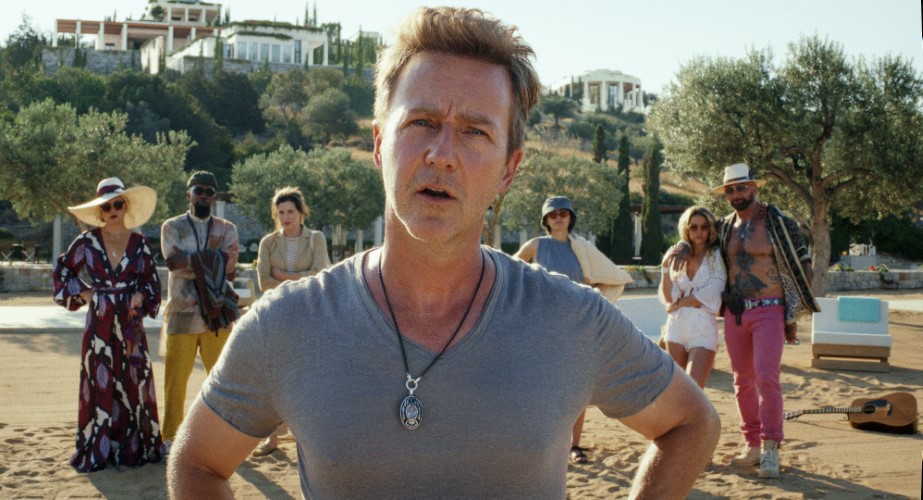

Edward Norton

A Complete Unknown

17/01/25

Cineworld, Edinburgh

Writer/director James Mangold has been down the music biopic route before with 2005’s Walk The Line (featuring Joaquin Phoenix as Johnny Cash), but the news that he was planning a film about Bob Dylan felt like a decidedly tall order. After all, Robert Zimmerman is the proverbial mystery wrapped up in an enigma, a man who has unabashedly invented (and reinvented) the details of his own story from the very start of his career. It’s to Mangold’s credit then, that A Complete Unknown is such a triumph, eschewing the idea of a ‘whole life’ depiction and choosing instead to focus on five turbulent years from the musician’s life.

it’s 1961 and a twenty-year-old Dylan hitchhikes from his home in Duluth, Minnesota to Greystone Park Psychiatric Hospital in New Jersey, where folk legend Woody Guthrie (Scoot McNairie) is slowly succumbing to the ravages of Huntingdon’s Disease. Guthrie is Dylan’s hero and he has come here to sing to him, as song he’s written all about the man. Present at the impromptu performance is Guthrie’s friend and fellow folk stalwart, Pete Seeger (Edward Norton). He’s impressed both by the song and the performer’s confidence, so he takes Dylan under his wing and starts introducing him to the flourishing folk scene in the coffee houses of New York City.

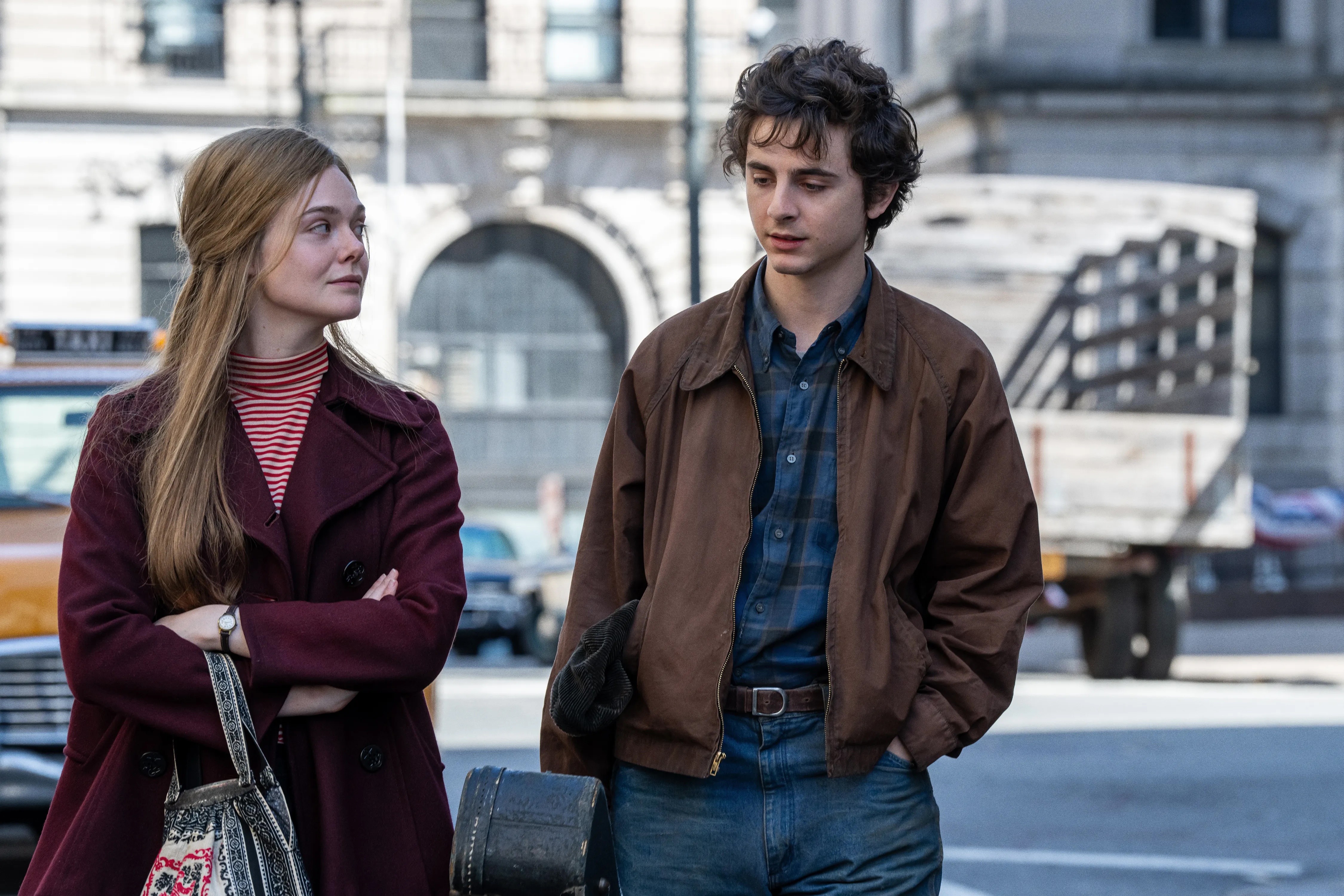
It isn’t long before his regular appearances start to gain him a reputation. At one concert he meets Sylvie Russo (Elle Fanning, a thinly disguised version of Dylan’s real life muse, the late Suze Rotolo), and the two of them become lovers and constant companions. He also meets folk singer Joan Baez (Monica Barbaro), already something of a star on the folk circuit. Baez covers some of Dylan’s songs and helps to bring his work to a wider audience, and inevitably, a romantic entanglement ensues between them.

And then, Dylan begins to tire of the strictures of the folk scene and finds himself increasingly drawn to the trappings of rock music – the fashions, the poses, the volume. But he is to discover that folk puritans are opposed to sullying ‘their’ music with electric guitars and keyboards. It becomes clear that the transition won’t be an easy one to make…

These days, I am by no means a Bob Dylan fan, but I did follow him during the mid sixties and have always held a soft spot for Highway 61 Revisited – which, coincidentally, is the album around which this film reaches its climax. In the lead role Timothée Chalamet is quite simply astonishing, offering a performance that goes beyond the realms of mere impersonation. He actually performs all the songs and plays guitar on them. (A post screening Q & A tells me that he didn’t play the instrument before this film, but had the opportunity to work on his character for five years and figured he might as well go all-in). Co-star Barbaro had barely sung a note before she landed the role of Joan Baez, but she somehow nails the woman’s unique vocal style effortlessly.

And then of course, there are the songs, each one indelibly memorable and delivered with enhanced power at this IMAX screening, so that the film’s two hour plus running time seems to positively flash by. Dylan, as portrayed by Chalamet, is a whole contradiction of characters, by turns vulnerable, scheming, hard bitten and amorous, sneering, vindictive, reckless and determined. Of course, Chalamet has been nominated for an Oscar and, should he be successful, then it will be well-earned.

A Complete Unknown is a remarkable achievement, a film that captures the era in which it’s set with absolute veracity and which chooses to focus on one of the most important moments in music history. It’s fascinating to watch it unfold. (Okay, so a few small details have been tweaked – that infamous cry of ‘Judas!’ occurred at the Free Trade Hall, Manchester, not the Newport Folk Festival, but it matters not one jot.) This is a movie to enjoy on the big screen with the best sound system available. After the recent financial failure of the brilliant Better Man, I’m reluctant to speculate on what this film might achieve at the box office, but for my money, it ticks all the boxes.

It’s a musical feast. Dig in.

5 stars

Philip Caveney

Asteroid City

25/06/23

Cineworld, Edinburgh

If you were ever looking for the film director equivalent of Marmite, Wes Anderson might just be your best bet. His detractors delight in pointing out that he always makes the same film, but that’s a ridiculous over-simplification. While I’d be the first to admit that his films do have an unmistakable look – that you can see one frame, taken at random from any one of his many features, and know instantly that it’s his work – we rarely make that complaint about artists who work with paint and canvas.

Asteroid City has all of the man’s familiar hallmarks: those sumptuous, vividly-coloured landscapes dotted with unlikely looking ramshackle buildings; a massive roster of A listers, all of them prepared to swallow their pride in return for delivering just a line or two of quirky dialogue; and that weird detachment from reality, those bizarre situations seemingly created to point up the artificiality of the whole undertaking. For me, these are the elements that confirm Anderson as a unique and brilliant filmmaker. But then, I’ve been a fan ever since Rushmore in 1998.

The film opens in stark black and white with an earnest narrator (played by Bryan Cranston) talking about the creation of a new play by hotshot writer, Conrad Earp (Edward Norton), and the play’s tortuous path to production – and then we cut to the full-colour, wide-screen film adaptation of the same story. War photographer Augie Steenbeck (Jason Schwartzman) arrives at the titular desert town with his son, Woodrow (Jake Ryan), who is one of five gifted children invited to attend a ceremony where one of them will be presented with a prize for their latest invention.

Woodrow and his three little sisters have some devastating news to deal with first, but their father seems far more interested in the presence of screen actor, Midge Campbell (Scarlett Johansson), who has her own gifted daughter, Dinah (Grace Edwards), in tow. It’s not long before Dinah and Woodrow begin to develop an interest in each other…

But this is about as far as any rational plot outline can take us. From this point, madness ensues in the form of a group of singing cowboys, the aforementioned weird childhood inventions and a WTF alien visitation. And, as the tale enfolds, we are treated to regular visits back to the monochrome world of the original theatrical version, where we see the actors in the film actually being the actors and learning to handle their roles, whilst commenting on the artificiality of the whole experience. Meta? Well yes, but clearly that’s the point.

If this sounds hard to get your head around, don’t despair, because the sparky script by Anderson and Roman Coppola keeps the pot bubbling happily away as the story unfolds. I find myself laughing at the wonderful absurdity of some of the situations – and is the director making a comment on cinema’s general inability to handle theatrical material with any sense of conviction?

It’s heartening to see that a sizeable audience has come out for this on a rainy Sunday afternoon and also to read that Asteroid City has enjoyed a bigger opening weekend than the latest Transformers movie. Perhaps a lot more people out there are acquiring a taste for Marmite.

4.6 stars

Philip Caveney

Glass Onion: A Knives Out Mystery

23/12/22

Netflix

Rian Johnson’s Knives Out garnered plenty of admirers on its release in 2019, though I felt at the time that it was a case of style over substance. Call me old fashioned, but I’m of the opinion that one of the basic requirements of a whodunnit is that it should be hard to crack and, in this case, it really wasn’t. The sequel (helpfully subtitled A Knives Out Mystery, just in case we’ve missed the connection) recently enjoyed a week in cinemas – at a time when we couldn’t see it. It now appears on Netflix, who financed it and they will also be funding several further instalments. The reviews haven’t been quite so ecstatic this time around, but perhaps ironically, I find this one an improvement on the original, mainly by virtue of the fact that I really can’t guess where it’s headed – though it should also be said that there is a glaring plot hole in there that should have been plugged. (See if you can spot it!)

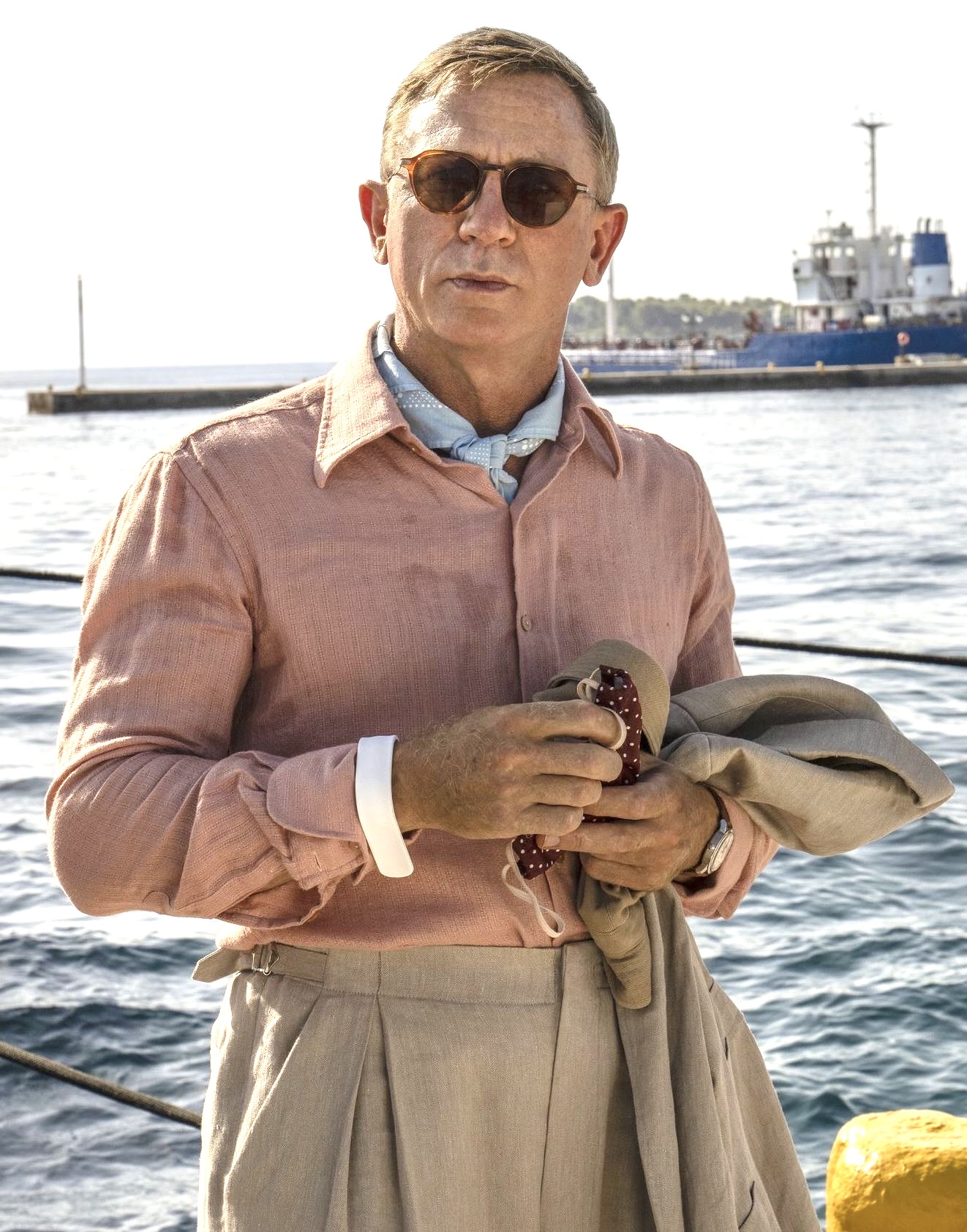
Once again, this is very stylish, bright and kinetic. We’re offered a selection of – mostly repellent – characters who feel more like caricatures than real people. We learn more about ‘the world’s greatest detective’, Benoit Blanc (Daniel Craig), who apparently is fond of sitting in his bath whilst wearing a fez (as you do) and who appears to share his home with a very famous housemate. It all begins with a bunch of seemingly unconnected individuals receiving invitations to an exclusive party on billionaire Miles Bron (Edward Norton)’s private Greek island.

The invites come in the form of elaborate puzzle boxes, which must be deciphered. Soon enough, Blanc is standing on the dockside with the other guests, who include hapless socialite Birdie Jay (Kate Hudson), muscle bound YouTuber, Duke Cody (Dave Bautista) and Bron’s former business partner, Andi Brand (Janelle Monáe). It soon becomes clear that Blanc hasn’t actually been invited to this bash, so his presence is only the first in a whole series of mysteries to be solved.The action is set in 2020, so hats off to Johnson for actually referencing the COVID pandemic, with the characters wearing masks and being all awkward about hugging and shaking hands, something that’s barely ever been referenced in the cinema so far.

Once on the island and inside Bron’s super luxurious home – the centrepiece of which resembles a huge er… glass onion – the host announces that they will all be playing an elaborate murder mystery game. At some point in the evening, he will be ‘killed’ and the guests will have to work out whodunnit…

So far, so Agatha Christie, but it should be said that nothing here goes according to anybody’s plan and, while I feel the early stretches of Glass Onion take some sticking with, once we’ve reached the midpoint, a huge revelation in the form of a series of flashbacks makes everything much more interesting. From here, the proceedings become ever more unhinged, ever more labyrinthine, as Johnson throws aside the conventions of the genre and begins to have fun with proceedings. It’s here too that his central tenet becomes clear. We’re continually reminded that nothing is hidden, nothing is opaque and that the answers to every puzzle are right there in front of us.

It’s clever but, once again, there’s a sense of distance. Because I don’t believe in any of these people, the result is like watching an expert game of chess, with the director manipulating the action like a grandmaster. I’m watching with a sense of detachment rather than being swept up in the proceedings.

Ultimately Glass Onion is an interesting exercise in legerdemain, and Netflix will doubtless do well with it. It will be interesting to see where the series of films goes from here but, for me at least, this feels like a step in the right direction.

4 stars

Philip Caveney

Motherless Brooklyn

13/12/19

Motherless Brooklyn, based on the novel by Jonathan Letham, has clearly been a labour of love for actor, Edward Norton. He’s been trying to put a movie version together for something like fifteen years now and, finally, here’s the result. As well as starring as lead character Lionel Essrog, Norton has gone ‘the full Orson Welles,’ serving as screenwriter, executive producer and director. He’s transposed the novel’s setting from the 1990s to the 1950s, an astute move, as the look and feel of the film is most definitely noir. Dick Pope’s bleak cinematography evokes memories of some of the great movies in this genre, particularly Chinatown.

Lionel is working for a small-time detective agency in New York. When we join the action, he and Gilbert (Ethan Supplee) are watching out for their boss, Frank Minna (Bruce Willis), who has an important meeting with some powerful people and has asked his employees to covertly back him up. 

The meeting goes spectacularly wrong and Frank winds up with a bullet in his gut. As a result, Lionel finds himself following up on Frank’s recent cases, one of which has him following Laura (Gugu Mbatha-Raw), an activist and daughter of a local jazz club owner. Lionel is able to call on some pretty special skills, as he has an uncanny ability to recall everything that’s ever been said to him. He also has a tendency to blurt out seemingly unconnected utterances at random moments – it’s probably Tourette’s syndrome but, this being the 1950s, his condition doesn’t yet appear to have a name.

As Lionel digs deeper into the case, he comes up against ruthless property developer, Moses Randolph (Alec Baldwin) and also Randolph’s mysterious, down-at-heel critic, Paul (Willem Dafoe). But what do these two men have to do with Laura? And will the unravelling of the case prove dangerous for both her and Lionel?

Motherless Brooklyn is a curiously old-fashioned concoction, one that takes its own sweet time to roll out its labyrinthine story, but Norton, in what is only his second attempt at directing a movie (his first was Keeping the Faith in 2000) has done a pretty good job of pulling the various narrative strands into a satisfying whole. His performance is pitch perfect and he’s helped by a stellar supporting cast. Baldwin is particularly good as the decidedly Trumpian Randolph, a dead-eyed, frost-hearted megalomaniac with no scruples whatsoever, while Mbatha-Raw dazzles like an orchid in the drab heart of 50s America. I like the way Lionel’s disability is handled (it feels very convincing, just a part of who he is, ordinary to those who know him) and I also enjoy the film’s refusal to tie its storylines up with easy resolutions. Finally, it’s worth mentioning that the jazz score, a style of music that usually repels me, works brilliantly here, as does a haunting piece by Radiohead’s Thom Yorke.

This won’t be for everyone, but those with an enduring love of film noir will find plenty here to savour – and Norton deserves much credit for his tenacity in seeing this slow-gestating project through to the end.

4.2 stars

Philip Caveney


Isle of Dogs

25/03/18

The arrival of a new Wes Anderson movie is generally a cause for excitement and Isle of Dogs has the added frisson of seeing him return to work with the London-based 3 Mills animation team, whom he employed to such great effect on Fantastic Mr Fox. It must be said, however, that this is an altogether more ambitious project than his previous stop-motion foray.

The story is set twenty years into the future in the fictional Japanese city of Megasaki. After a recent dog-flu epidemic, Mayor Kobayashi (Komichi Nomura) orders all the city’s dogs to be rounded up and exiled to an offshore island, essentially a rat-infested repository for much of Japan’s unwanted garbage.

On the island, a group of dogs are struggling for survival, led by Chief (Bryan Cranston), a battle-scarred stray who sees himself very much as the alpha male of the pack. His followers  are voiced by a whole menagerie of A-List talent (Bill Murray, Edward Norton, Jeff Goldblum, to name but three). The sudden arrival of Kobayashi’s twelve year old ward, Atari (Koyu Rankin), changes everything. Atari is in search of his beloved lost pet, Spot, who the mayor has insisted must follow the example of all the other four-legged offenders and be sent into quarantine off-shore. This sets Chief and his pack off on a quest to help Atari by locating the missing canine and, of course, they uncover some startling truths in the process. Meanwhile, a pro-dog student group led by the intrepid Tracy (Greta Gerwig) are leading an insurrection against Kobayashi, who, it seems, has not been as honest as he might have been…

Some critics of the film have accused it of cultural appropriation, but I can’t help hoping they are barking up the wrong tree. The love and respect for Japan and its traditions are evident in just about every frame of this delightful movie, from the Taisho drumming sequences to the visual references to veteran directors, Akira Kurosawa and Hayao Mizazaki. What’s more, the animation is so detailed and so brilliantly realised, it’s hard to suppress my gasps of admiration as the story scampers along at high speed from revelation to revelation. All the usual Anderson qualities are in evidence – witty one-liners, a steadfast refusal to get too sentimental about the characters and a delicious vein of dark humour that ties the whole package neatly together.

On the same day we viewed this, The Cameo Cinema hosted a dog-friendly screening, but, as we chose to attend the humans-only show, I cannot really comment on how it went down with its four-legged viewers.

But in my humble opinion, at least, this film is a howling success.

4.4 stars

Philip Caveney

Birdman

MV5BODAzNDMxMzAxOV5BMl5BanBnXkFtZTgwMDMxMjA4MjE@._V1_SX214_AL_

1/1/15

The first film of the New Year turns out to be this quirky and offbeat offering from Alejandro Gonzalez Inaritu, a riveting slice of cinema that’s actually all about live theatre and the essential differences between the two media. It’s heartening to see a packed screening on opening night for what is essentially a highly experimental work, one that has as many questions as it does answers and one moreover that is cleverly edited to look like one continuous tracking shot.

Riggan Thomson (Michael Keaton) is undergoing a long dark night of the soul. Formally the star of a series of successful superhero movies, he is attempting to rejuvenate his career by appearing on Broadway in an adaptation of a Raymond Carver short story which he has written himself. When his lead actor is injured the night before the first performance, he manages to acquire the services of Mike Shiner (Ed Norton) a conceited method actor who is as destructive as he is accomplished. Meanwhile Riggan juggles the affections of his daughter cum personal assistant, Sam (Emma Stone), his lover Laura (Andrea Riseborough) his lead actress Lesley (Naomi Watts) and his manager, Jake (an unusually retrained Zach Galifiniakis.) But the spectre of his previous screen persona still haunts him and he is having terrible trouble differentiating between what is real and what is imaginary…

The film is never less than captivating and from time to time takes off on inspired flights of fantasy that dazzle the eye and stir the imagination. Keaton is a revelation in the lead role, giving the audience insights into the mind of a man who is constantly on the edge of insanity (his previous incarnation as Tim Burton’s Batman gives the story added poignancy) and the script comes laced with a vein of dark humour that never shrinks from savaging the very industry that has nurtured it. If the other films of 2015 are in this league it’s going to be a fine year indeed.

4.8 stars

Philip Caveney