
08/11/24
Bedlam Theatre, Edinburgh
New York playwright Tony Kushner’s 1991 “fantasia on national themes” is notoriously complex, but we’ve come to expect EUTC to tackle ambitious projects head-on, so we’re not surprised to learn that they’ve chosen this seminal play for their latest production. We’re excited to see what Gen Z will bring to this play about their Gen X predecessors, as they struggle to deal with a deadly epidemic, populist prejudice and rampant capitalism. Plus ça change, plus c’est la même chose… I’m guessing they can relate.
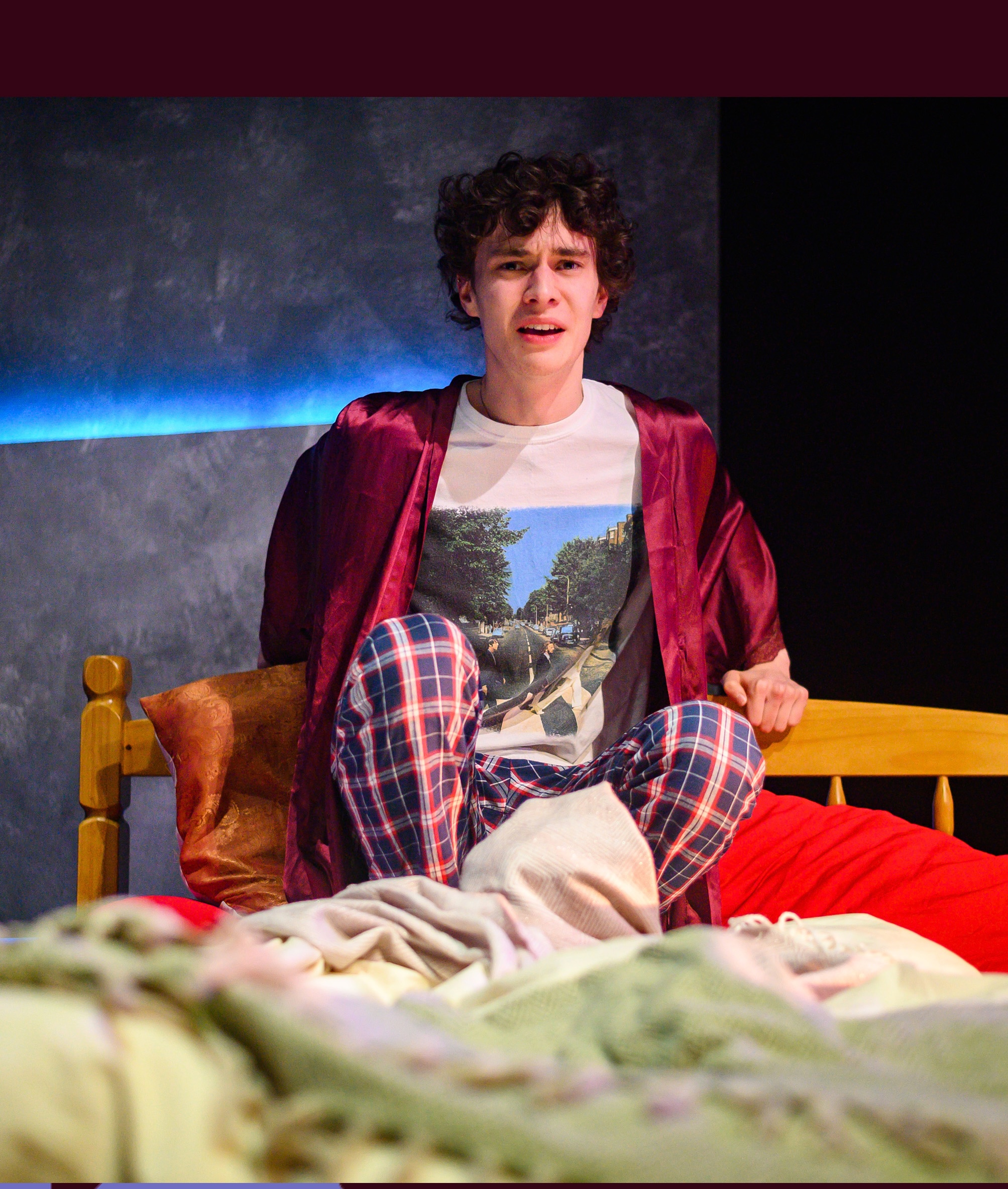
El Mair plays Prior Walter, a young man with a recent AIDS diagnosis and a distraught boyfriend. Louis (Leo Odgers) doesn’t want to deal with the realities of illness: the puke, the shit, the spectre of death. Prior is devastated by Louis’s abandonment, and retreats ever further into a fantasy world, ably assisted by the cocktail of drugs he has to take to manage his condition.
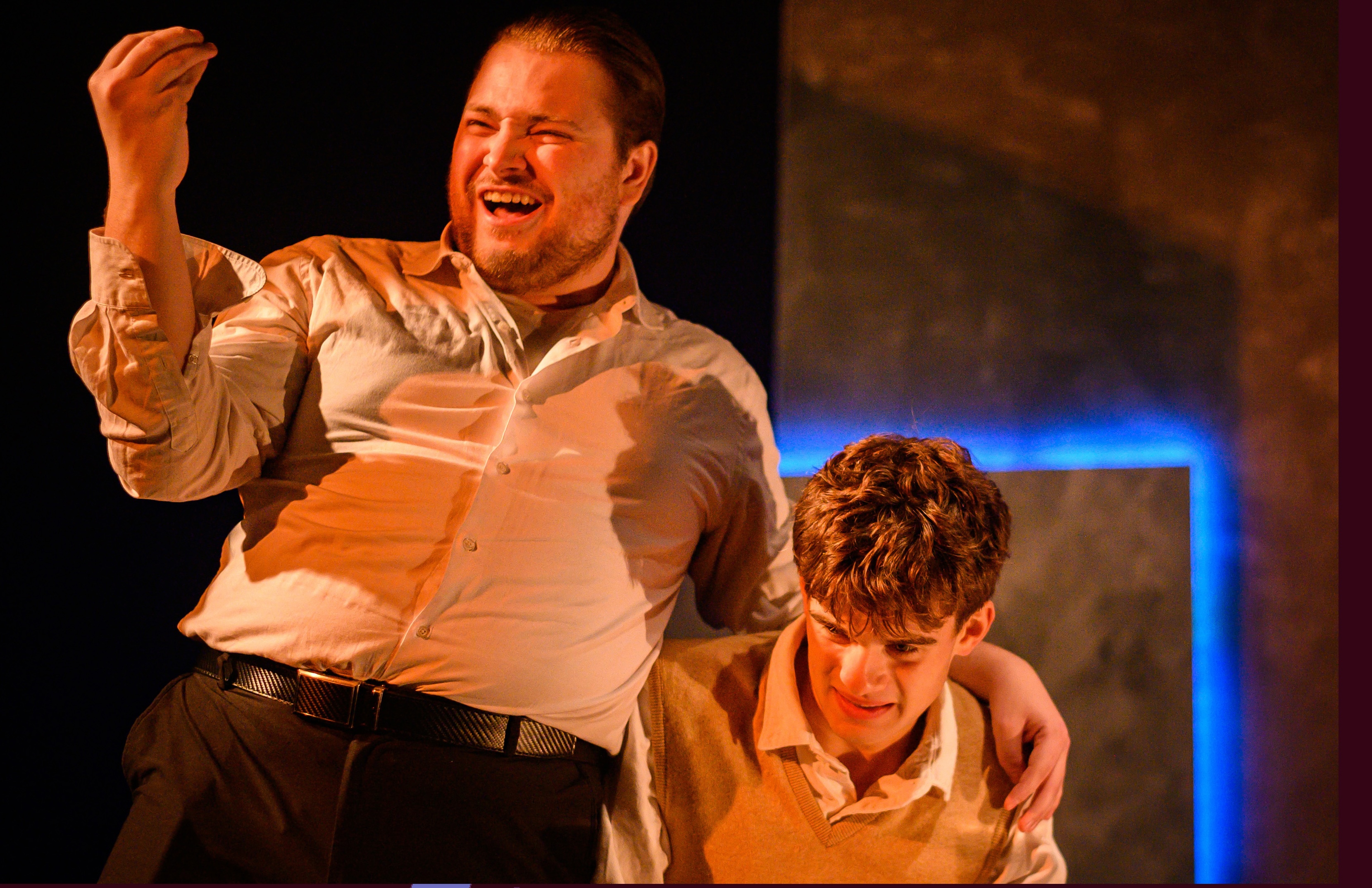
Meanwhile, Louis’s colleague, Joe (Will Grice), is facing demons of his own: his Mormon faith doesn’t allow him to acknowledge his homosexuality and remaining in the closet is killing him. But when he tries to come out to his mother, Hannah (Ava Vaccari, who excels throughout this production in a number of roles), she refuses to listen. “This conversation didn’t happen.” Of course, the secret also has a devastating impact on his wife, Harper (Natalia Campbell), who is addicted to Valium and, like Prior, plagued by visions.
As if Joe weren’t already dealing with enough pressure, his mentor, sleazy lawyer Roy Cohn (Hunter King) – the only real-life character in this fictional world – is determined to put Joe’s shiny good-boy persona to use, finding him a job in Washington DC, close to the seat of power. (“I make presidents,” he says, King’s already chilling performance heightened by the wider context, the combination of Trump’s re-election and Abi Abbasi’s recent film, The Apprentice, which details Cohn’s influence on the young Donald.)
Directed by Meri Suonenlahti and Andrew More, Angels in America is a triumph. The student cast are more than up to it, imbuing their characters with heart as well as humour; there’s some real intelligence at play here. The naturalistic performance style works well, emphasising the strangeness of the more fantastical sequences, such as Harper and Prior’s dream meeting. Campbell and Mair, both talented actors, are especially compelling in this scene, their fragility writ large as they stare at each other ‘through a glass darkly’. Louis Handley’s set design mirrors these contrasts, the prosaic heaviness of the bed and desk and sofa juxtaposed by dreamily-lit pastel backdrops, which move on casters between each scene, so that the landscape subtly shifts and dips, illuminating the characters’ growing disorientation. Full use is made of the theatre’s history as a former chapel too, the huge blacked-out window above the stage lit to suggest the angels’ presence.
It’s astounding what EUTC manage to achieve with their limited budget: the final scene in particular is a coup de théâtre (I won’t say any more; I won’t spoil the surprise). Suffice to say, it’s worth bundling up in your winter woollies and heading to Bedlam to catch this one. Three and a half hours fly by like the eponymous angel. I only wish they were doing Part Two: Perestroika as well.
4.8 stars
Susan Singfield


 Bouquets & Brickbats