
Dylan Read

Treasure Island

29/11/24

Lyceum Theatre, Edinburgh

A satisfying Christmas show can be a decidedly tricky thing to pull off. If Robert Louis Stevenson’s Treasure Island initially seems an unlikely vehicle for such a venture, my qualms are short-lived. Duncan McLean’s sprightly adaptation of the classic tale is perfectly pitched for family entertainment. It sticks surprisingly close to the original plot, but throws in enough delightful twists to make me forget that I’ve heard this story so many times before.

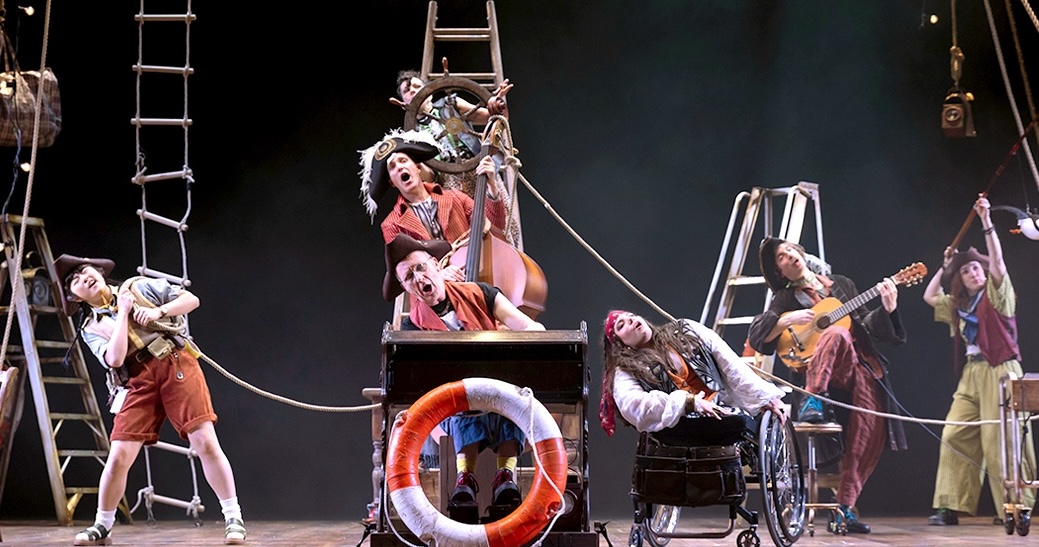
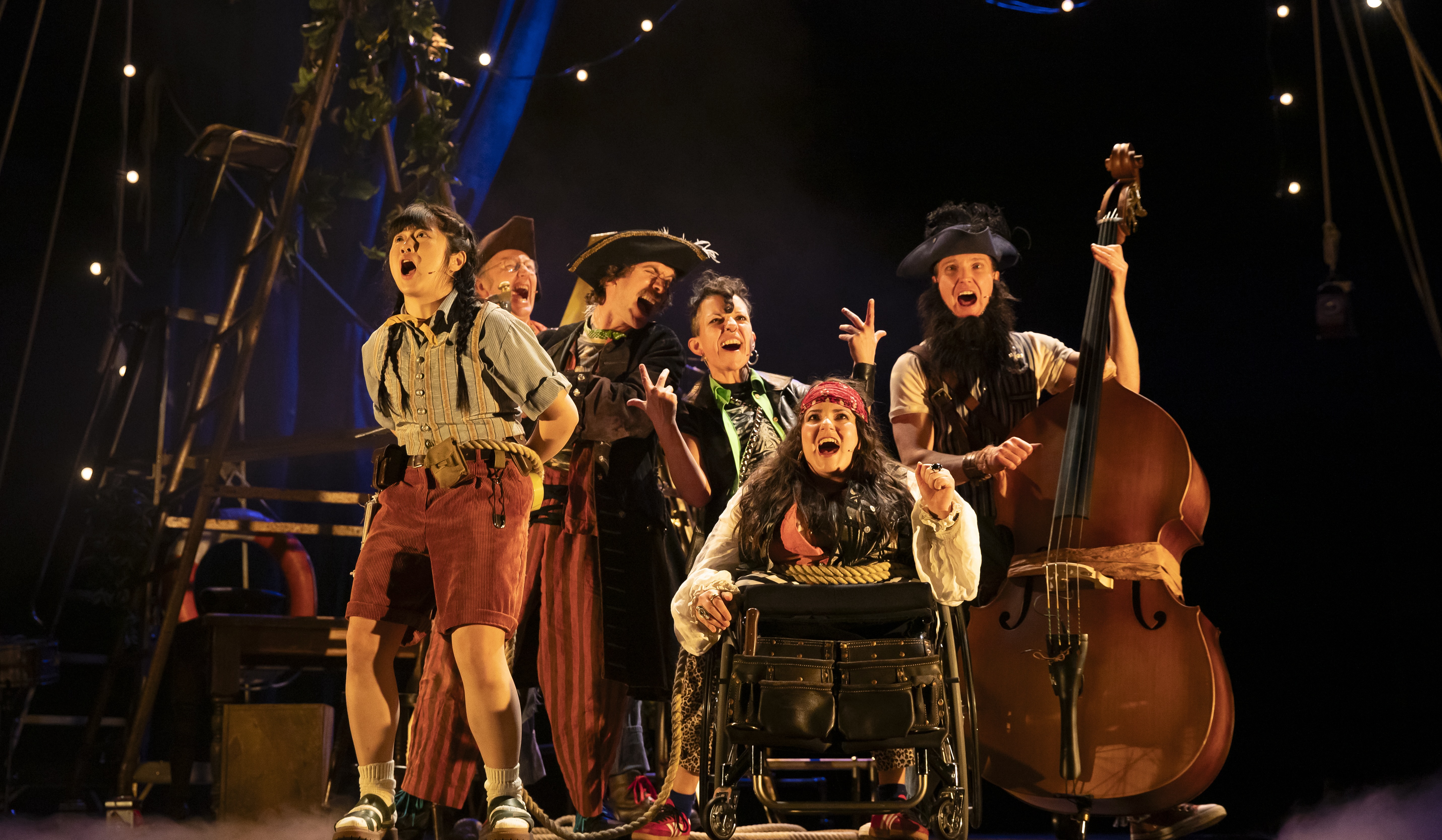
The tale begins in the Admiral Benbow Home for Reformed Pirates. It’s coming on Christmas and young Jim Hawkins (Jade Chan) is attempting to keep the unruly residents (a pack of former cut-throats) suitably entertained with a story. But it turns out that ex-buccaneers take a dim view of books about macrame and bird-spotting, so Jim reluctantly offers to recount the events that brought them all together in the first place. It helps that the pirates have plenty of talents they can bring to bear in the telling, not least the fact that they can all sing, dance and bash out tunes on a variety of musical instruments.

The story begins in time-honoured fashion with the arrival of Billy Bones (Itxaxo Moreno) at the Admiral Benbow and, of course, the delivery of the dreaded Black Spot – and it isn’t long before Jim has possession of the fabled treasure map. He enlists the help of The Laird of Leith (a delightfully silly performance by TJ Holmes), who owns a ship called The Hispaniola. The Laird engages the services of a pie-maker called Lean Jean Silver (Amy Conachan), who has a pet puffin (expertly operated by Dylan Read). But Lean Jean may not be as benign as she appears…

The main changes to the story are geographical. McLean is based in the Orkney Islands so, in this version of the story, the Hispaniola heads North, towards colder waters. Alex Berry’s effective set design manages to somehow encapsulate the look and feel of an old sailing ship using not much more than ropes, rigging and strategically-placed stepladders, while everyday objects are pressed into service to become boats and aquatic creatures. Director Wils Wilson expertly deploys the small cast, sending them racing and capering over every inch of the Lyceum’s spacious stage, assisted by piratical-looking stage hands. At times, it feels like there’s a much bigger crew at work.

There are sword fights and chases, thrills and spills aplenty, and Tim Dalling (who also plays an engaging Ben Gunn) has written a selection of charming songs to accompany the action, ranging from plaintive ballads to raunchy rock-and-roll.

If only he had a singalong Christmas ditty up his sleeve, something to send every audience homewards singing the chorus. Oh wait, it turns out he has.

Treasure Island is a must-see for the festive season – you’ll laugh, you’ll tremble, you’ll tap your feet to the jaunty jigs and reels – and even the youngest members of the family will find themselves riveted. So step right this way, ye scurvy dogs – and have a merry puffin Christmas!

4.6 stars

Philip Caveney

Cockpit

10/10/17

Lyceum Theatre, Edinburgh

If you want to see the Lyceum in a completely different light, then now is the time to do so, as the whole place has been transformed for a timely production of Bridget Boland’s Cockpit, a challenging political piece set in the aftermath of World War Two.

It’s hard to make truly immersive theatre in a Victorian proscenium arch, but the design here is radical. There is raked seating on the stage, facing the auditorium, making the performance space effectively traverse. There are suitcases spilling their guts onto random seats; ladders leading up to (and down from) the boxes; the gantry is exposed. Even the trap-room is utilised. And yet, despite being rendered almost unrecognisable, the theatre building is also given a central role in this production, which is – cleverly – site-specific. For we are all (actors and audience) cast as displaced people (DPs), released from prisons and concentration camps across Germany but not yet able to celebrate our liberation. Instead we are cooped up in a provincial German theatre, which has been requisitioned by the British Army to serve as a holding pen before we are repatriated.

There’s a strong reminder here of the complexity of war: the common enemy may have been defeated but there are other grievances just as entrenched, which may never be resolved. This exploration of European history and relations seems especially prescient, as – outside the theatre – we try to navigate the choppy waters of Brexit. Divisions within our own country are deep and rancorous; our relationships with others have yet to be determined. Cockpit feels as though it could have been written last week, although in fact it was penned in 1948. These are interesting times in which to consider the notions of idealism versus pragmatism, hope versus despair.

Cockpit  is a witty, clever play. Forcing people of different nationalities and political persuasions to co-exist in a confined space allows the arguments put forward to appear spontaneous and natural, while the plot device of a suspected plague outbreak ensures we also see the characters’ common humanity, as they put aside their differences to focus on survival. The enormity of the task faced by Captain Ridley (Peter Hannah) is made very clear. A workable exit strategy seems nigh on impossible, as tensions rise between the various factions, and no one is prepared to compromise.

There is comedy here too: Dylan Read (who also plays French farmer Duval) excels as Bauer, the uptight stage manager, who prizes saving his beloved building above all else. His pomposity is funny: he fusses over petty details, takes great delight in providing props, bristles at the suggestion he might be ‘front of house.’ Through him, Boland also explores the redemptive power of theatre, a thread which culminates in an awe-inspiring performance from La Traviata by singer Sandra Kassman. Bauer might seem ridiculous, but preserving art and culture is important, we are shown.

Director Wils Wilson has served up a fascinating piece of theatre, which, if not exactly enjoyable, is nevertheless arresting and thought-provoking. It’s provocative and demanding; it’s not an easy piece to watch. But it’s certainly worth the effort, and will have you thinking long after the curtain falls.

4.5 stars

Susan Singfield