21/06/23
Festival Theatre, Edinburgh
The tragic story of The Titanic has exerted a powerful hold on the public imagination ever since its doomed maiden voyage in 1912. It seems horribly ironic that, as we take our seats in The Festival Theatre, the vessel (or at least an ill-fated attempt to visit what remains of it) is once again dominating the news channels. Still, whatever you think about the subject, this stately musical by Maury Weston and Peter Stone offers an assured account of the events that led to one of the biggest disasters in maritime history.
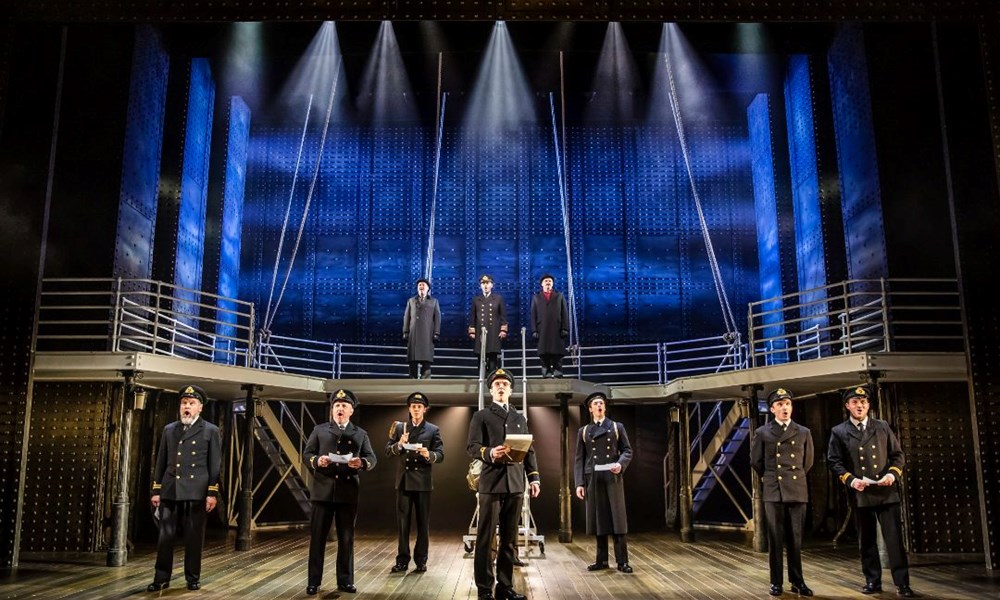
In the first half, we’re introduced to the players as the ship prepares for departure. There’s Captain Edward Smith (Graham Bickley), looking forward to what he believes (rightly as it turns out) will be his final voyage. There’s the ship’s designer, Thomas Andrews (Ian McClarnon), proud of his own ingenuity and convinced that the ship he has built is ‘unsinkable.’ And there’s J. Bruce Ismay (Martin Allanson), the managing director of the White Star Line, presented here as the villain of the piece, a man whose rampant hubris is held largely responsible for the disaster. The truth is rather more complicated than that, but every story needs a villain, I suppose.
Around this triumvirate flock the passengers: the privileged toffs in first class, the hopeful emigrants looking forward to a brand new start in second, and the poor and the dispossessed down in third. There’s also the many members of staff who wait on more than two thousand passengers. The twenty-five members of the cast certainly have their work cut out to represent so many doomed travellers and, it has to be said, with umpteen speedy costume changes, they do a pretty good job of it.
Yeston’s sombre score avoids the cheesy power ballads so often associated with this kind of production, opting instead for a kind of operetta approach. In the jollier moments (and yes, there are a few in the first half), there’s even a hint of Gilbert and Sullivan in the delivery, as members of the cast waltz merrily across the deck.
But of course, the second half can’t be anything but mournful as the ship, having kept its rendezvous with that iceberg, begins (spoiler alert!) to sink beneath the waves.
It’s here, to be honest, that the production struggles to recreate the ensuing chaos. David Woodhead’s set design is impressive but stolid, and I find myself longing for some state-of-the-art special effects to contribute more Sturm und Drang to the closing moments. What’s more, it’s impossible to be surprised when the story I’m watching is so ingrained into my memory that I find myself picking up on its occasional deviations from the truth.
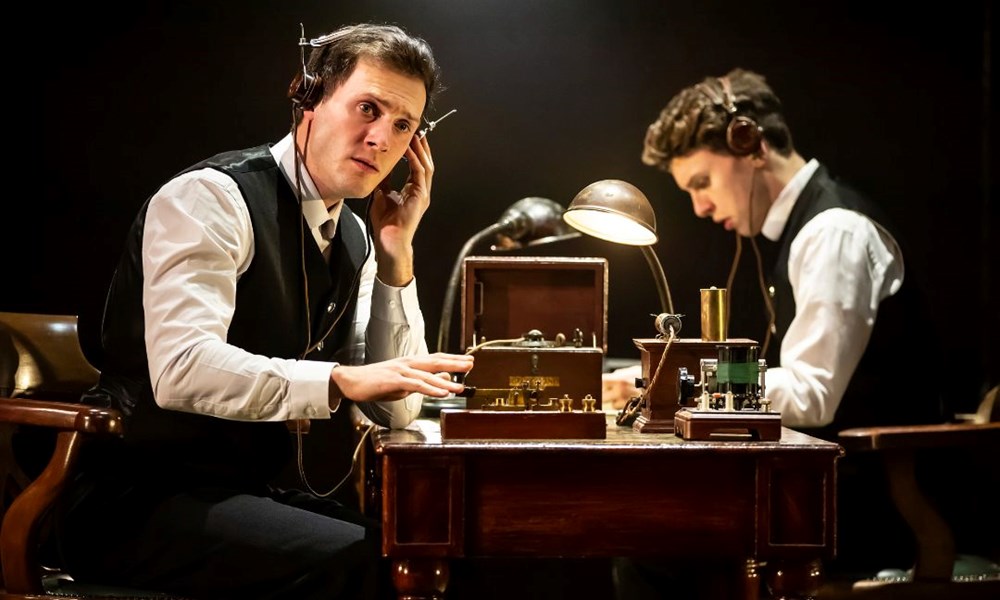
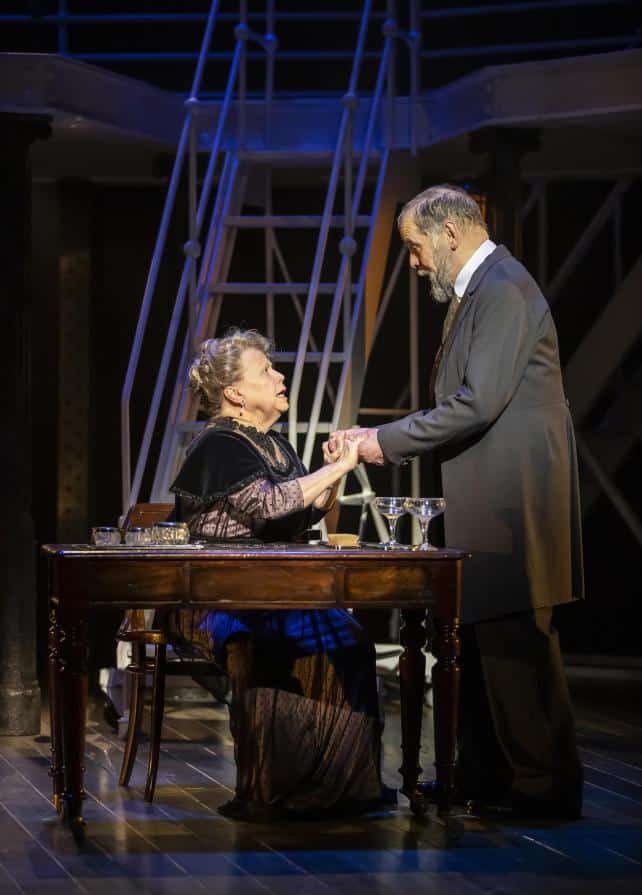
Still, there are some strong moments here. I particularly enjoy the duet between Frederick Barrett (Adam Filipe), sending a marriage proposal to his sweetheart back in England, and Harold Bride (Alistair Hill), the Marconi radio operator who enables him to do so. And anybody who can keep a dry eye through the final duet of elderly couple, Isador Straus (David Delve) and his wife, Ida (Valda Aviks), as they decide to face their fate together, is certainly made of sterner stuff than me.
The production closes with a tribute to the 1,500 people who lost their lives on that fateful night – and, after the enthusiastic applause has died away, Bickley steps forward to deliver the cast’s heartfelt hope that the passengers aboard the missing Titan submersible might be found safe and well.
That of course – like the Titanic itself – will soon become a matter of historical record.
4 stars
Philip Caveney


 Bouquets & Brickbats