David Lean

Dune: Part Two

03/03/24

Cineworld, Edinburgh

It only needs a glance around the IMAX auditorium at Edinburgh’s Cineworld on this Sunday afternoon to confirm that Denis Villeneuve’s big gamble has paid off. There’s barely an empty seat in the building. 

Dune: Part One came along at a propitious time. It was October 2021 and we were barely out of lockdown, sitting uncertainly in our seats, wearing paper masks and slapping gel on our hands at five-minute intervals. What we needed now was something epic to take our minds off the pandemic and we certainly got that – but what we were also handed was an unfinished story and a three-year wait for its conclusion. 

Would it be worth it?

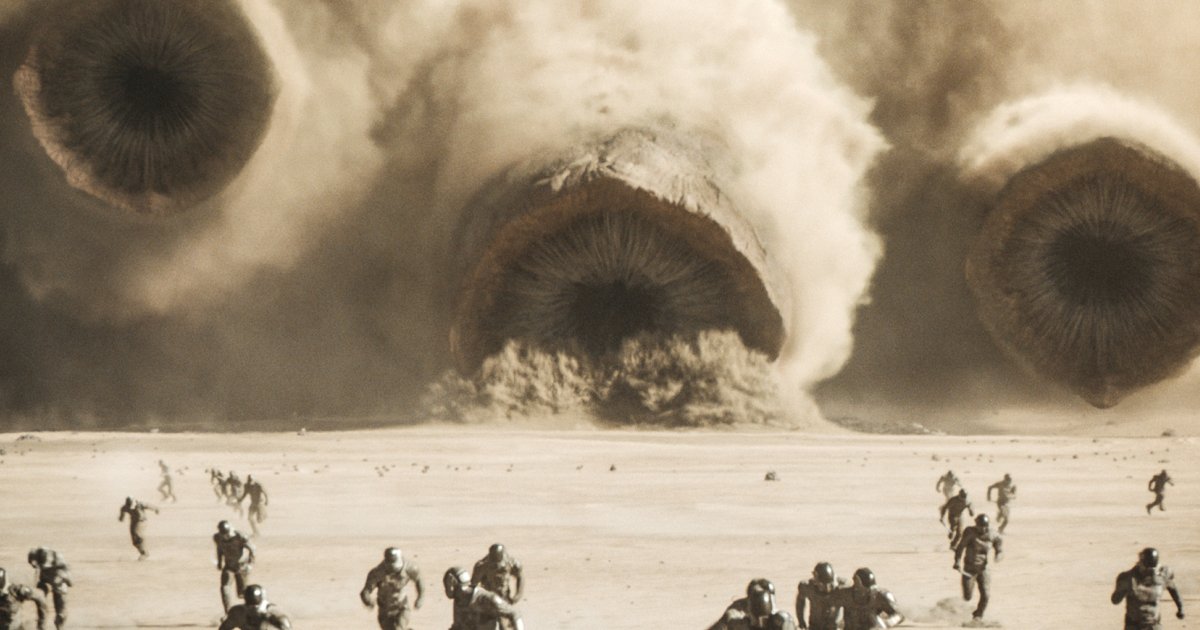
The answer to that is a resounding yes! If the first film occasionally felt a little too languid for comfort, Part Two ramps the action up to eleven, and Villeneuve has the good sense to keep everything rattling along at full speed ahead. The result is a film that, despite  a running time of just under three hours, never feels overlong. 

And in this case the word ‘epic’ barely does the material justice: this is an immense, eye-popping spectacle, an insanely inspired slice of cinematic world-building that at times leaves me almost breathless at what I’m witnessing up on the giant screen. This, my friends, is why they invented IMAX. If you haven’t seen Part One since its release (or at all for that matter), I’d advise you to catch up with it via streaming before sitting down to the second installment. I did and it helps no end to reacquaint myself with the characters.

We pick up exactly where we left off. Paul Atreides (Timothée Chalamet) and his mother, Jessica (Rebecca Ferguson), have survived the murder of most of their family and have sought refuge with the Fremen people in the remotest part of the desert planet, Arrakis. Paul has finally met his (quite literal) dream girl, Chani (Zendaya), and, under the protection of Stilgar (Javier Bardem), he’s learning the ways of the Fremen. 

At the same time, he’s all too aware that some of the more devout members of the tribe are giving him meaningful looks and referring back to an ancient prophecy that a messiah will one day arrive and lead the Fremen to triumph over their oppressors.

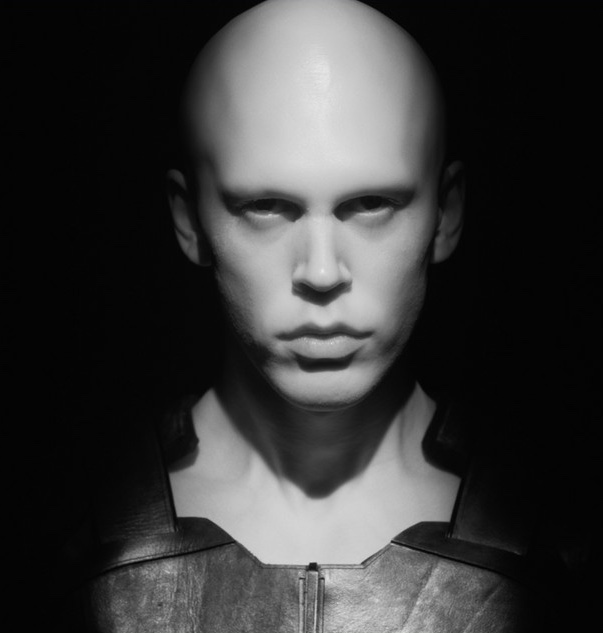
Could this be a potential way for Paul to take revenge for the killing of his father by the evil Baron Harkonen (Stellan Skarsgard), who is still skulking in a bathtub doing unspeakably horrible things to everyone who comes near him? And if you think he’s bad, wait till you meet his nephew, the psychopathic Feyd-Rautha (Austin ‘Elvis’ Butler), who redefines the word ‘villain’ in one of the most remarkable screen transformations ever.

Villeneuve has excelled himself here and Dune: Part Two is an extraordinary achievement, one that cements his reputation as one of the great visionaries of the cinema, up there with the likes of David Lean and Stanley Kubrick. His interpretation of Frank Herbert’s source novel spins allegories about the links between religion and drugs, the evils of colonialism, the ruthlessness of royalty, the inevitability of war between the poor and the privileged. That’s all there lurking behind the dazzling action set pieces and massive explosions.

My only niggle (as with the first film) is that the 12A rating sometimes works against the film, when all that violent mayhem must remain essentially bloodless in order to tick the boxes – but it’s not a big enough quibble to dampen my enthusiasm for this giant-sized helping of space fantasy, that quite frankly makes the Star Wars franchise look positively amateurish by comparison. 

And if the story’s conclusion doesn’t feel quite as er… conclusive as I might have expected, the possibility of Dune Messiah looming on a distant horizon may account for it. A trilogy, perhaps? 

Well, it would be rude not to, right?

5 stars

Philip Caveney

Brief Encounter

30/12/23

Royal Exchange Theatre, Manchester

It’s my birthday (hurrah!) and I’m in Manchester, visiting my daughter and her husband, which is already a massive improvement on last year. (In 2022, Susan and I found ourselves stranded in Carlisle for two nights when flooding interrupted our train journey back to Edinburgh. Deep joy.) As an added bonus, we’re also visiting the Royal Exchange Theatre, always a favourite venue when we actually lived in this neck of the woods. 

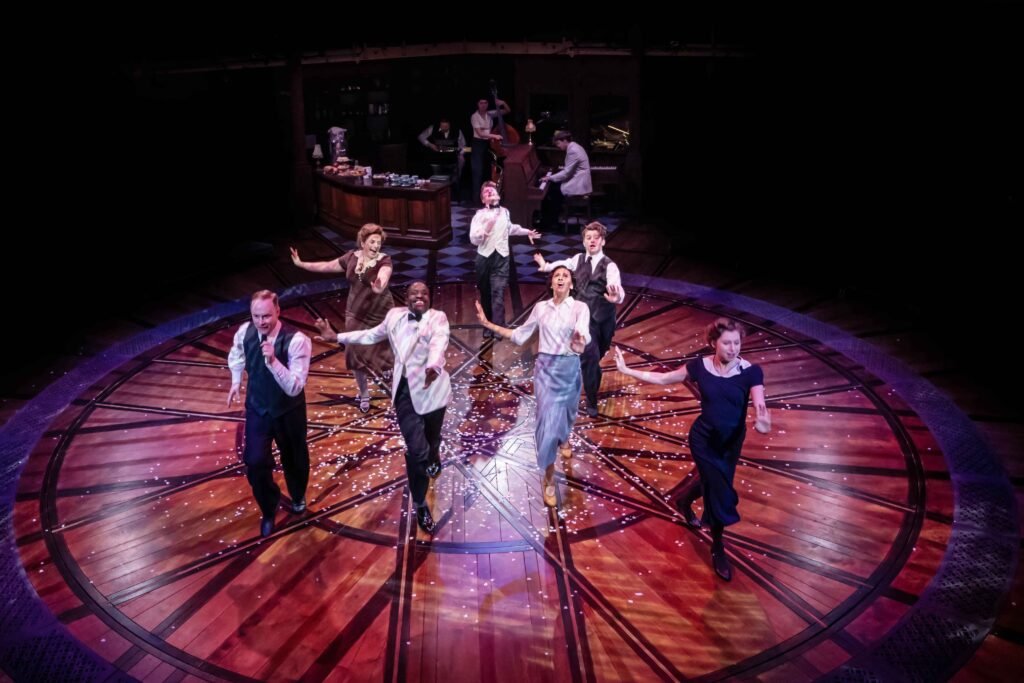
Tonight, we’re seeing Emma Rice’s adaptation of Noël Coward’s Brief Encounter, perhaps most fondly remembered for David Lean’s iconic 1945 film adaptation. But of course, it began life as a theatre production in a collection of works entitled Tonight at 8.30. Rice has had the brilliant idea of incorporating some of Coward’s songs into the narrative, making it not exactly a musical so much as a play with music cleverly incorporated into the narrative, with four musicians onstage throughout. This is an ambitious move and much more interesting than a straight recreation of its much-adored progenitor.

The plot is so familiar I won’t spend too much time recounting it. Laura (Hannah Azuonye) is awaiting her train at Milford Junction when she gets a bit of grit in her eye. GP Alec (Baker Mukasa), who happens to be having a cup of tea in the café when she stumbles in, comes to her assistance. From this inconsequential incident a friendship develops, which becomes increasingly problematic as the twosome keep bumping into each other. All too soon, they realise they are falling in love. 

But both of them are happily married and are tortured by the thought of deceiving their respective partners. So what should they do for the best?

Anyone familiar with Lean’s film will be aware that Rice sticks fairly close to that script (something that we confirm by rewatching it on the long journey home the following day), but she does some astute restructuring. Some of the film’s minor characters are given more developed roles here: the relationship between railwayman Albert (Richard Graves) and cafe manager Myrtle (Christina Modestou, most recently seen by B & B at the Edinburgh Fringe in the wonderful Grand Old Opera House Hotel) is more prominent and there’s also a developing romance between café worker Beryl (Ida Regan) and porter Stanley (Georgia Frost). The contrast between the polite conversations of the middle-class protagonists and the earthy, working-class station employees is effectively captured.

At key moments, the actors slip effortlessly into one of the ‘The Master’s’ torch songs, giving the proceedings a louche, cabaret feel, and there’s a brilliantly-choreographed routine where the whole cast move around the Exchange’s circular stage to a series of different musical pieces, culminating in a frenzied jitterbug. The performances are all exemplary, but I particularly enjoy Modestou’s soulful rendition of No Good at Love and Regan’s plaintive interpretation of Mad About the Boy

There’s also a delightful coup de théâtre involving the big station clock that hangs over the proceedings, while hats should also be lifted to the versatile Matthew Allen, who handles a whole string of smaller roles, singing, tap dancing and, at one point even playing the flipping saxophone! 

Sarah Frankcom directs with considerable skill – I fondly recall seeing her delightful production of Blithe Spirit in this very theatre, way back in 2009 – and, all in all, this is a delightful and occasionally surprising production that celebrates the spirit of its illustrious predecessor.

4.2 stars

Philip Caveney

Doctor Zhivago

MV5BMTkzMDk3MDA2Nl5BMl5BanBnXkFtZTgwODUxMDkxMTE@._V1_SX214_AL_Unknown

02/12/15

It’s hard for me to accept but it’s been fifty years since I saw this film. It was in 1965 in a Chinese cinema in Singapore, where the idea of a snowbound landscape seemed an impossible fantasy. I remember, as a boy, being absolutely blown away by the experience. It was one of the first ‘serious’ films I’d ever watched, though I also seem to remember that many of the critics of the time were rather unkind to David Lean’s interpretation of Boris Pasternak’s best-selling novel, accusing it of being a ‘chocolate box’ movie.

So it’s great to be able to reassess it on the big screen and to realise that whole sections of the film have remained with me, imprinted indelibly on my unconscious mind; and to confirm that this really is an ‘old school’ epic of admirable power and grandeur. I didn’t know it then, of course, but Lean had one heck of a struggle to realise his vision. Unable to film in Russia, he had to make do with locations in Madrid, (in summer) his actors sweating under layers of fur. Other shots were secured in Finland, Canada and Portugal. A cavalry charge across a frozen lake was recreated by placing a cast iron sheet across a dry Spanish river bed and sprinkling it with plaster dust.  Not that any of that is evident. You’ll rarely see a more convincing evocation of winter landscapes.

Dr Zhivago is essentially a poignant love story, set against the turbulent events of a changing Russia. It begins with Yevgraf (Alec Guinness) a policeman in the ‘new’ Soviet Union, trying to find the lost daughter of his half brother, celebrated poet, Yuri Zhivago and his lover, Lara. Could it be ‘The Girl’ (Rita Tushingham)? From there, the story cuts back to Yuri’s tragic childhood and then moves on to the tumultuous events of the First World War and the Russian Revolution, where the lives of both Yuri and Lara are forever linked and transformed by the horrors of war.

It’s totally engaging, even at a bum-numbing 193 minutes. (Those with weak bladders will be glad to hear that the film still features its original fifteen minute intermission). In the title role, Omar Sharif, fresh off Lawrence of Arabia, provides a remarkable calm at the centre of the cinematic storm, while as Lara, Julie Christie has never been more radiant. Add a stellar selection of supporting actors – Alec Guinness, Rod Steiger, Tom Courtenay, Ralph Richardson, and you have a powerful film that dazzles as much today as it did in the decade in which it was released.

But it’s the magnificent set pieces that really linger in the memory: a savage cavalry attack on a protest march, with Zhivago’s tortured expression conveying the true horror of the situation unfolding in front of him; a packed railway station, where Zhivago and his family fight to board a train to the Urals; and a remote country house transformed into a gleaming ice palace by the extremes of the Russian winter. What’s even more remarkable is that this was all achieved without the benefits of CGI and other contemporary special effects – Doctor Zhivago is a tribute to all the technicians, set builders and costume designers who toiled to make David Lean’s remarkable vision a reality. Fifty years on, it still stands as a beacon of extraordinary creativity and a tribute to a man’s uncanny ability to film epic stories.

Chocolate box? Well, if that’s the case, tuck in. This is a delicious confection, as tasty now as it ever was.

5 stars

Philip Caveney