
02/03/26
The Cameo, Edinburgh
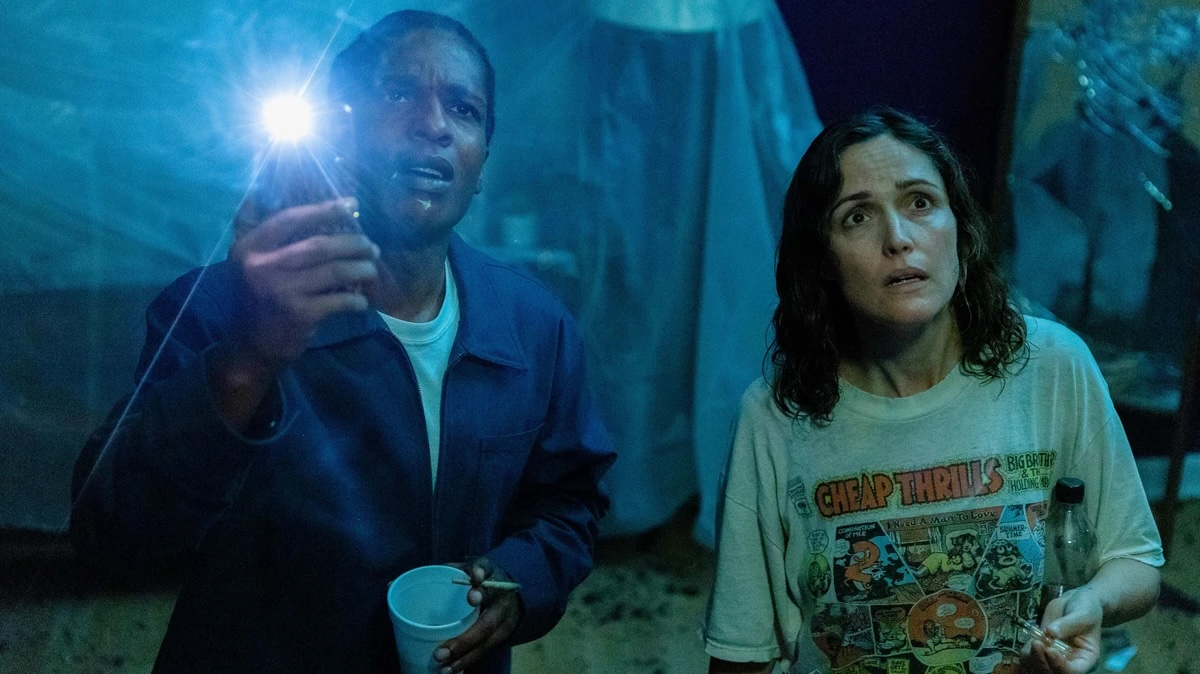
Her child is sick and Linda (Rose Byrne) can’t cope. Caring for her daughter (Delaney Quinn) is a full-time job – and she has an actual full-time job as well. Throw in an absent husband (Christian Slater), a judgemental doctor (writer/director Mary Bronstein) and a gaping hole in her bedroom ceiling, and it’s no surprise that Linda is tired, snappy and a little too reliant on wine and weed.
The child has an unspecified eating disorder and has been fitted with a feeding tube. (In an audacious directorial decision we never get a proper look at the girl, but it really works – this isn’t her story.) Linda’s paediatrician insists that she should attend parents’ meetings, where a group of mothers (no fathers in sight) are exhorted not to blame themselves for their children’s conditions. With no sense of irony, Dr Spring follows the meeting by telling Linda that her child is “failing,” that Linda doesn’t have the right attitude and, essentially, it’ll be her fault if the treatment doesn’t work.
Meanwhile, Linda’s husband, Charles, can’t help because he’s working away, but that doesn’t stop him from phoning to hector her. She should make the most of staying in a hotel, he says, implying it’s a holiday, but why hasn’t she chased up the contractor who’s supposed to be fixing the apartment? Why isn’t the child gaining weight? Why has Linda left the child alone to go shopping? Why hasn’t Linda answered his texts? Why, Linda? Why?
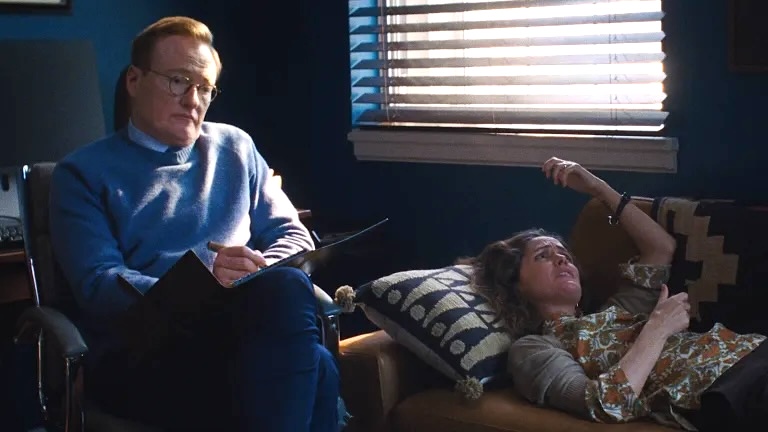
Her therapist (Conan O’Brien) isn’t much use either. Linda’s a therapist too, with an office down the hall from his, and his impassive responses rile her. She knows the tricks of the trade and is frustrated that he won’t transgress, won’t relieve her of responsibility by simply telling her what to do. When one of Linda’s own patients, a young mother with post-partum depression (Danielle MacDonald), abandons her baby in Linda’s office, it’s the final straw. Linda has reached her limit.
Almost a companion piece to Lynne Ramsey’s Die My Love, Bronstein’s movie is a searing indictment of a system that sets mothers up to fail, that overloads them with responsibility but provides no safety nets. Byrne’s portrayal of Linda’s mental decline is devastating: she loses all confidence in every area of her life, no longer capable of functioning as mother, therapist, wife or friend. Even her putative relationship with her hotel neighbour, James (A$AP Rocky), proves shallow and unreliable, prompting her to turn even further in on herself. The world is hostile and everyone is an enemy. In the end, there’s only one way out…
Linda’s disintegration is magnified by cinematographer Christopher Messina’s use of light: the gold flashes that dance in her periphery; the dreamscapes that veer between illusion and reality. The hole in the ceiling looms ever larger over Linda’s head, a great big gaping metaphor for a woman on the edge.
Byrne’s towering, nuanced performance makes her a worthy Oscar contender (although I’m still backing Jessie Buckley for the win). Meanwhile, this intense, emotional movie certainly seals Bronstein’s reputation as one to watch.
4.4 stars
Susan Singfield


 Bouquets & Brickbats