Danielle Deadwyler

Carry-On

16/12/25

Netflix

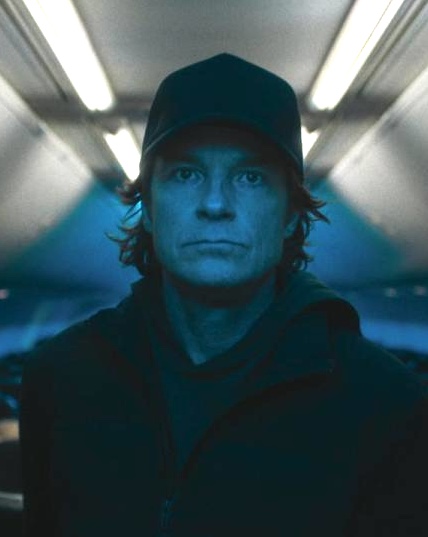
Apart from that unfortunate title – which inevitably calls to mind a series of vintage comedies starring the likes of Sid James and Hattie Jacques – Carry-On is a tense, propulsive thriller, anchored by a dramatically beefed-up Taron Egerton. It’s directed by Jaume Collet-Serra, the man who put Liam Neeson on the train journey to hell in The Commuter.

This is a Christmas movie in the same way that Die Hard is a Christmas movie. That is to say, the action of the film takes place on Christmas Eve and there are some strategically-placed seasonal songs. But it must also be mentioned that, in this story of an evil man trying to explode a case containing Novichok on a packed holiday airplane, love and peace are in decidedly short supply. Which is not to say this isn’t great fun. I personally had a ball with it, but I appreciate it won’t be to everyone’s taste.

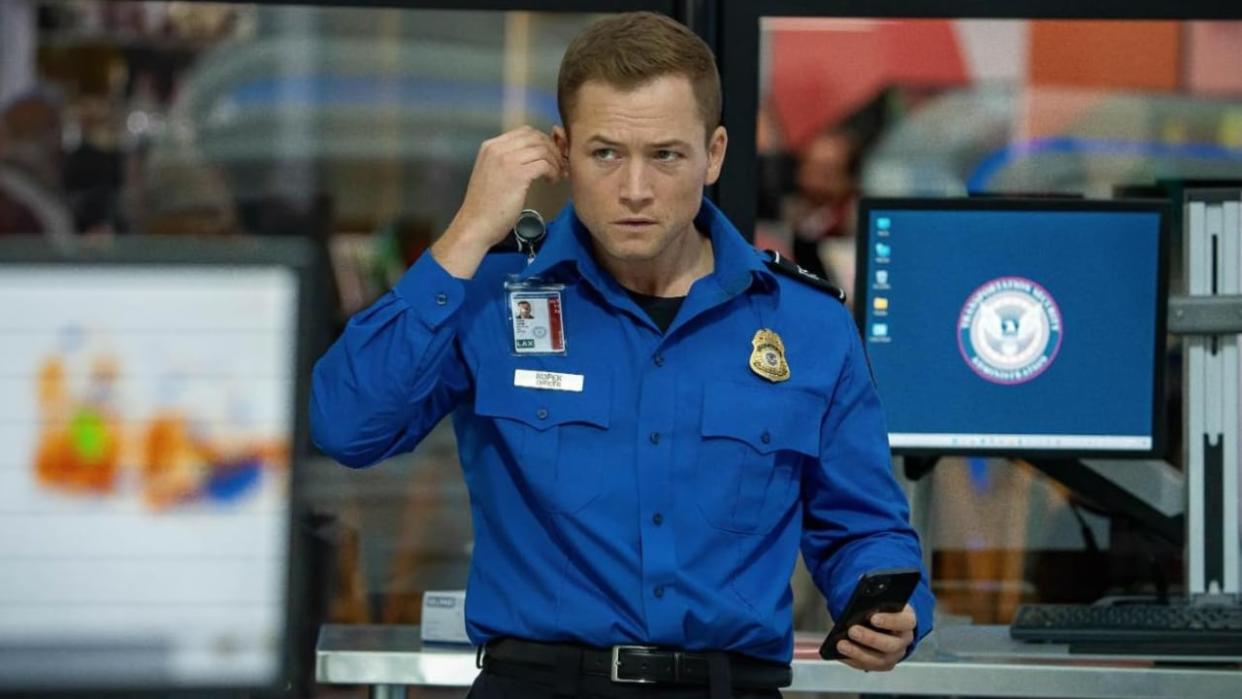
Ethan Kopek (Egerton) works at LAX Airport in security. He and his partner, Nora (Sofia Carson), are soon to have an addition to their family, so Ethan understandably has promotion on his mind. To this end, he manages to persuade his boss, Phil Sarkowski (Dean Norris), to let him take a post in the baggage-scanning lane, which carries extra responsibility. Which is an understatement, because Ethan has unwittingly upset the meticulously-laid plans of ‘The Traveller’ (Jason Bateman). He has planned to get the aforementioned Novichok aboard a New York-bound flight and explode it, killing the two hundred and fifty passengers aboard. His excuse for doing so? Somebody is paying an awful lot of money for his services. (The Traveller appears to regard his fellow human beings as disposable items.)

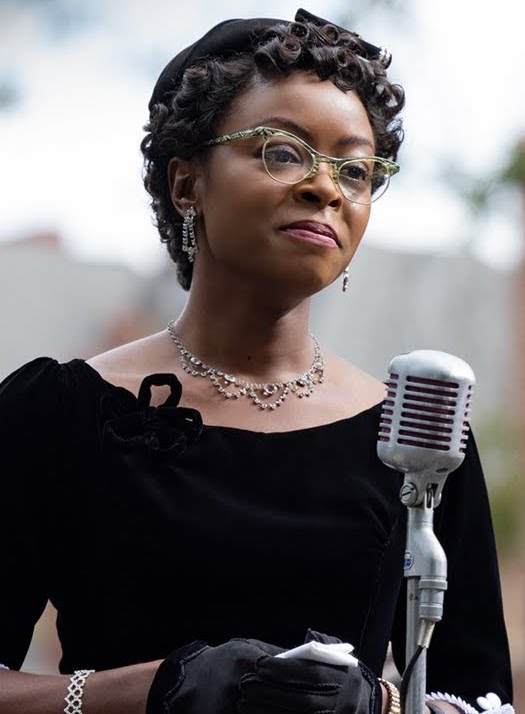
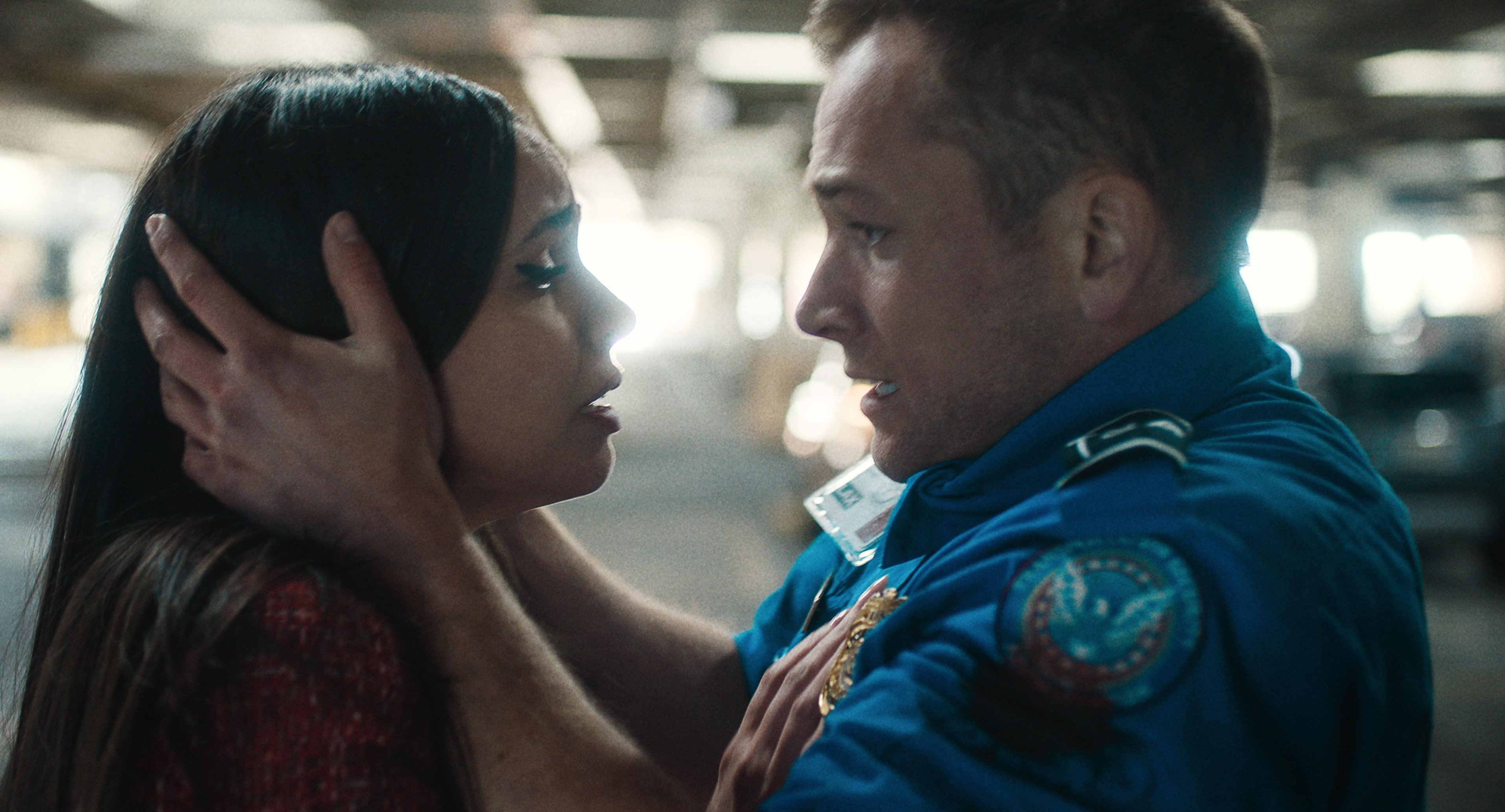
Ethan soon has a stranger’s voice in his ear, instructing him to allow the lethal suitcase onto the plane or risk having Nora murdered. The Traveller’s equally loathsome partner, The Watcher (Theo Rossi), has his eye on her and a sniper rifle loaded and ready to go. Meanwhile, elsewhere, plucky cop Elena Cole (Danielle Deadwyler) has picked up the faintest trace of a clue at the scene of a recent murder and begins to think that something dodgy might be about to go down.

But it’s Christmas Eve and nobody wants to listen…

What ensues is Ethan desperately trying to outmanoeuvre the two villains by any means at his disposal, without incurring his partner’s death (so no pressure there). Elena gradually works out the clues that bring her closer and closer to the airport. But time is ticking steadily away. Is it already too late to stop this frightful incident from occurring?

Collet-Serra and writer T.J. Fixman provide a tale that has more twists than a python on itching powder and the many Christmas references are almost mockingly thrown at the viewer as the story unfolds. (A particular highpoint for me is a no-holds-barred punch up in a speeding automobile as Wham’s Last Christmas pumps out of the car stereo.) Buckle-up for a wild ride!

If some of the elements are a little too familiar – Ethan desperately trying to defuse a bomb as the timer counts steadily down to zero – the presentation always feels fresh enough to make you forgive these occasional transgressions. Is it believable? Well, no, not really, but that’s hardly the object of the exercise. I do like the fact that Fixman has the good sense not to push my credulity too far. People get shot/stabbed/poisoned here and they don’t keep reviving and coming back for more. Which makes for a welcome change.

Meanwhile, Egerton, who has never really convinced in his previous attempts to fill an action-hero role, is utterly convincing in Carry-On and, since this is a Netflix original, it’s there to watch whenever you’re ready to hit the start button.

Those who favour a heart-warming seasonal tale might prefer to wait for Wallace and Gromit.

4.2 stars

Philip Caveney
I Saw the TV Glow

31/07/24

Cameo Cinema, Edinburgh

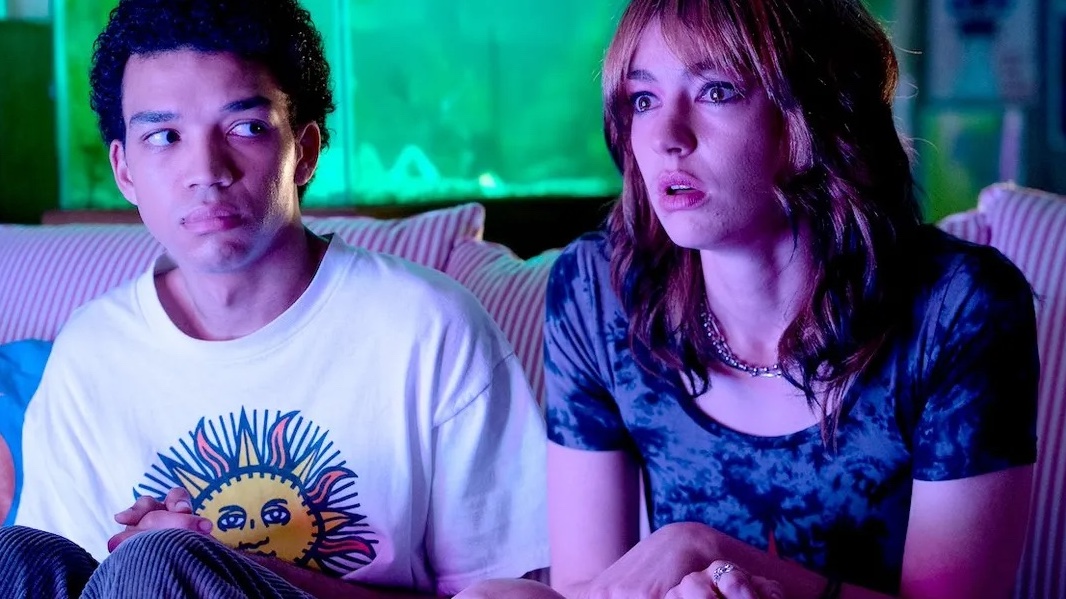
I Saw the TV Glow, written and directed by Jane Schoenbrun, is a intriguing independent film. It begins in the late 1990s and shares some DNA, I think, with Longlegs, in that it has a powerful sense of disquiet running through its very core, an overpowering sensation that there’s something horribly wrong here, though it’s hard to pinpoint exactly what it is.

Owen (played in the opening sequences by Ian Foreman) is a repressed seventh-grader, living with his mother, Brenda (Danielle Deadwyler), and his strict, overbearing father, Frank (Fred Durst). Owen has been intrigued by trailers he’s seen for a new television show called The Pink Opaque, but it starts at 10.30pm, which is way past his bedtime. At a school event, he bumps into Maddy (Brigette Lundy-Paine) who is reading a book about the show and is clearly obsessed with it. She invites him to stay overnight at her place so he can actually watch an episode and he eagerly grasps the opportunity, telling his parents that he’s having a sleepover with a schoolfriend. The episode he watches blows Owen’s mind and he’s an instant convert to its powers.

The action cuts to two years later. Owen (now played by Justice Smith) still can’t stay up to watch that show. His mother has died from cancer and his uncommunicative father spends his hours alone in his room, watching his own favourite TV programmes. Maddy starts to videotape episodes of The Pink Opaque and leaves them for Owen to pick up, so he can watch them in secret. And then, some years later, the show is cancelled after its fifth season – and Maddy disappears. Owen doesn’t see her again for a decade…

I Saw the TV Glow is a great big metaphor wrapped up in spooky bright pink trappings. It’s clear from the word go that Owen is unsure about who he is. There’s no romance between the two leads: Maddy makes a point of telling him, at their first meeting, that she is ‘into girls’ – though there’s little evidence to suggest she’s into anything aside from that TV series. Owen takes a dead-end job working in the local cinema, but the whole time he’s thinking about The Pink Opaque, about its cast of characters, who seem to know exactly where they belong in the world. After Maddy’s departure he is adrift: alone, forsaken, barely able to function in a world where he feels buried alive.

This film is all about the power of the images we hook into at an early age: the resonance they have in shaping our lives; the overpowering desires we have to be a part of them. Schoenbrun is trans and there are obvious parallels here with her lived experience, but anyone who has been infatuated with something in their youth – or felt like a a misfit – will be able to identify with the undercurrents that bubble away beneath the film’s dark, brooding surfaces. The occasional excerpts we are offered from The Pink Opaque are bizarre, dreamlike sequences, that put me in mind of early David Lynch.

As the years pass, Owen drifts – apparently, he acquires a family of his own, but we’re only told about them, we never see any of his home life. He is still essentially alone and when, years after its demise, he is finally able to stream The Pink Opaque on demand, he is bewildered by what he sees.

This is a compelling, brooding film, that will stay with you long after its heartbreaking conclusion – and Schoenbrun is surely a director to watch.

4.6 stars

Philip Caveney

Till

07/01/23

Cineworld, Edinburgh

The story of Emmett Till and his mother, Maimie Till-Mobley, is a real-life tragedy that echoes down the years, a case that was only fully resolved in 2022 – even though the initial events unfolded more than sixty years ago.

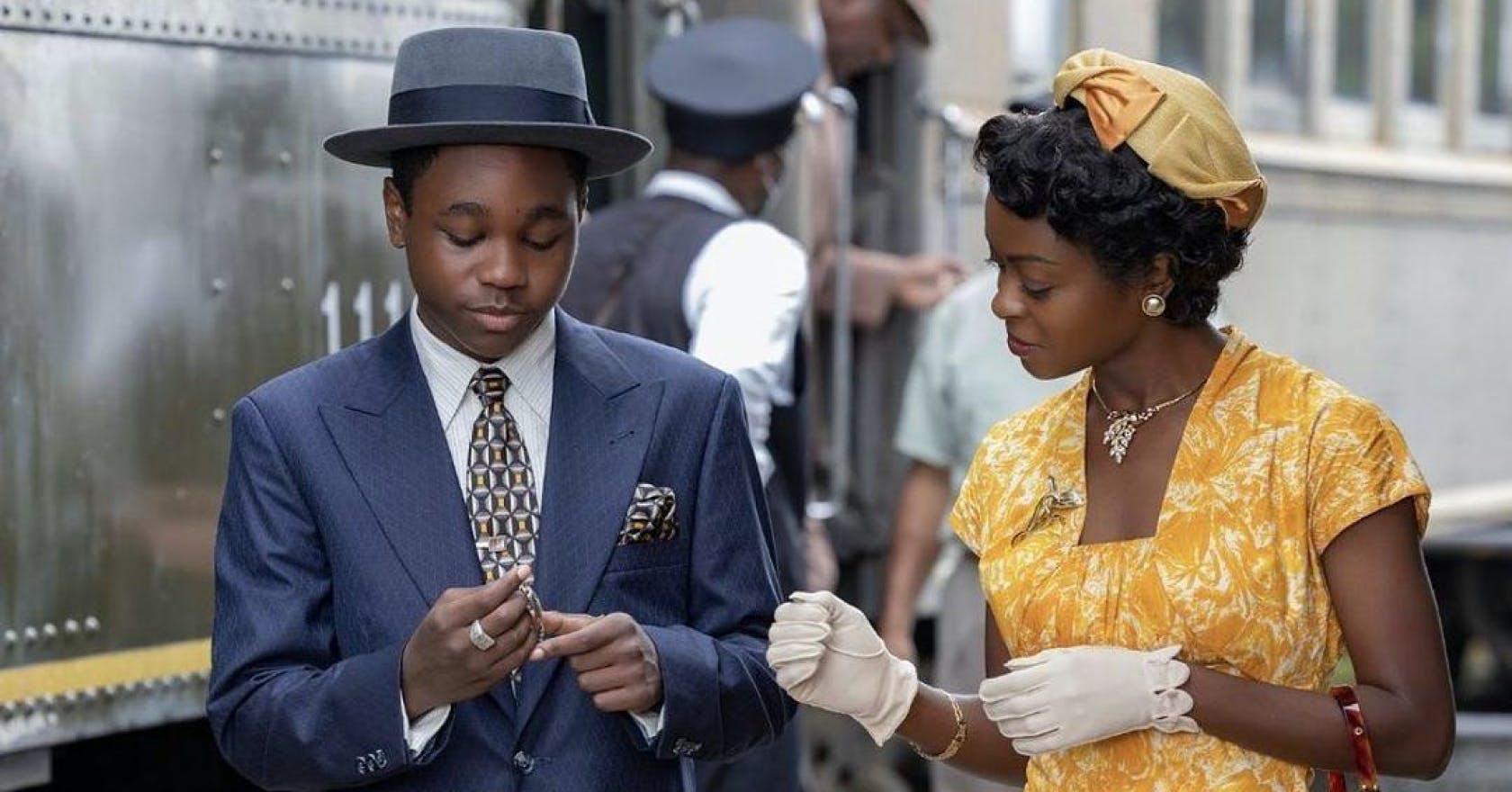
It’s August 1955, and Mamie (Danielle Deadwyler) lives and works in Chicago. Her husband died during World War 2, but she has found herself a decent job (the only Black woman in her office) and is well able to give her live-wire fourteen year old son, Emmett (Jalyn Hall), a comfortable life. Mamie is understandably worried when Emmett announces his wish to go and visit his cousins and work with them on a cotton plantation in Mississippi for the summer. She knows that it will be a stark cultural change from the relatively enlightened city in which the boy has grown up – and she knows too that he’s always ready to lark around and crack jokes. Mamie’s mother, Alma (Whoopi Goldberg), advises her to warn her son to keep his head down. “If he does that, he’ll be fine,” she says. “He’ll be back in no time.” So Mamie reluctantly agrees to the visit.

But her worst fears are soon shockingly realised. In Mississippi, Emmett visits a convenience store and makes friendly overtures to Carolyn Bryant (Haley Bennett), the white woman behind the counter. The next time Mamie sees her son is at the railway station in Chicago, where she views his brutalised, barely recognisable body in a wooden box. He’s been beaten, shot and lynched.

Chinonye Chuku’s film is fuelled by righteous anger, the knowledge that such brutality can – and still does – exist in one of the world’s more powerful countries. There are plenty of other characters in the story, all faithfully rendered, but it is Deadwyler’s extraordinarily powerful performance that gives it wings. Little wonder she’s considered a front-runner for the next Oscars.

If I’m honest, the screenplay (by Chuku, Michael Reilly and Keith Beauchamp) has a tendency to occasionally drift into too much exposition, and the slowly unfolding process of the trial can sometimes seem ponderous. But that’s a minor niggle. I’d be lying if I didn’t admit to viewing much of this through a fuzzy veil of helpless tears.

The most shocking details of all are reserved for the end credits, one of which actually makes me gasp in disbelief.

If you’re looking for a cheery outing to the movies, Till really isn’t the film for you, but it’s an important piece of relatively recent history and a fitting tribute to the memory of both Emmett Till and his incredibly brave and resourceful mother. My advice? Steel yourselves and take a long, hard look.

4 stars

Philip Caveney