

01/02/24
Cineworld, Edinburgh
Not so much an adaptation of Alice Walker’s 1982 novel (or Steven Spielberg’s 1985 film, for that matter), this ambitious production is based on the Broadway musical which first got to strut its stuff in the early 2000s and has gone through several iterations since. Inevitably, much of the novel’s more hard-hitting elements have been sanded and burnished for consumption by a mass audience.
Directed by Blitz Bazawule, with music composed by Kris Bowers, the result is a film that occasionally bursts into exuberant, joyful life but just as often feels bowdlerised as it struggles to make a song and dance about incidents that don’t quite fit the medium.
We first meet Celie (Phylicia Pearl Mpasi) when she’s a teenager, pregnant with her second child – by her father, Alfonso (Deon Cole). Mpasi brilliantly portrays Celie’s loneliness and distress, especially when, as he did with the previous baby, Alfonso takes the infant away from Celie without any explanation. Shortly thereafter, he offers her up as a bride to the heinous ‘Mister’ (Colman Domingo), a musician of sorts who has several motherless kids to care for in his ramshackle home down by the swamp. He needs somebody to get the place in shape and, if Celie is slow in following his orders, he’s all too ready to let his fists do the talking. Colman too, is utterly convincing as a man who’s never had his authority challenged by anyone.
Celie sets to work, determined to look after her new ‘family’ but when her beloved sister, Nettie (Halle Bailey), turns up saying that Alfonso has been making moves on her, Celie begs Mister to allow Nettie to move in with them. He agrees and inevitably, it isn’t long before he attempts to sexually assault her. When she dares to hit back, he throws her out of the house telling her never to return – and Celie has nobody to fight her corner.
The years move inexorably on – a scene where Celie views the changing seasons through the windows of the house as she ages is brilliantly handled. Celie (now played by Fantasia Barrino) has become inured to her own suffering, but redemption arrives in the form of vivacious blues singer, Shug Avery (Taraji B Henson), the woman who Mister reveres above all others and whom he’ll go to any lengths to please. When Celie and Shug form an unlikely alliance, it’s clear that change is in the air…
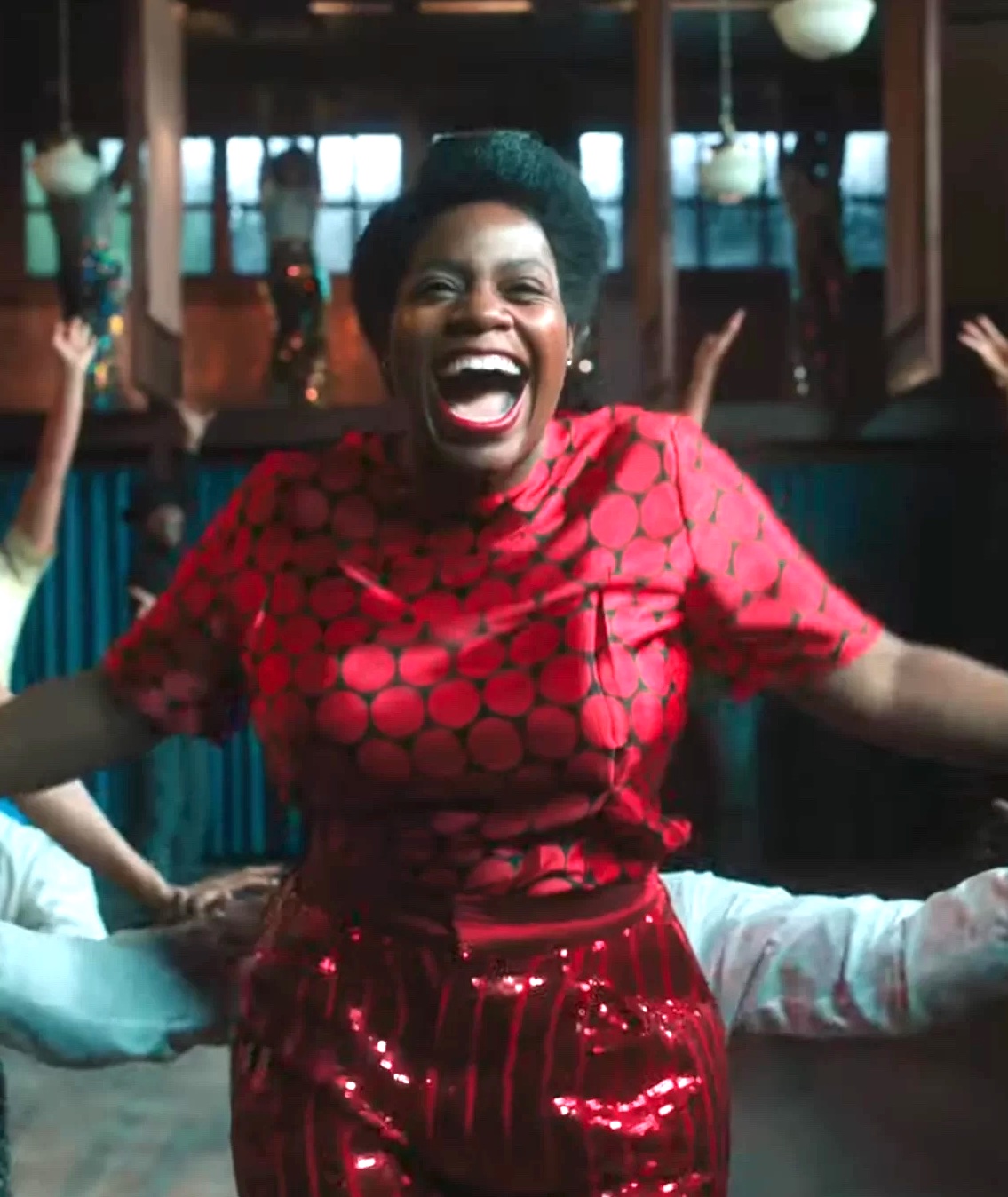
To give The Color Purple its due, Bazawule brings a whole host of invention to the difficult task of directing this piece, constantly exploring different approaches to a complex project. Cinematographer Dan Lautsen makes everything look luminous and remarkable and I particularly love a fantasy sequence set on a huge gramophone turntable. For me, the film is at its most successful during the big, ensemble pieces with scores of dancers whirling and leaping to vibrant, blues-inflected songs. I should also mention Danielle Brooks’ remarkable performance as Sophia, a powerful and assertive woman, eventually brought to heel by the injustice of the age. Brooks brings genuine verve to her portrayal and the scenes where she languishes in a prison cell provide the film’s most heartbreaking moments.
The relationship between Celie and Shug has been not so much downplayed as eradicated. In the book, it’s explicitly sexual; here it amounts to a quick snog in the cinema and a few meaningful looks, which I think speaks volumes about what makes contemporary American audiences uncomfortable. Why the subject of rape is deemed acceptable for depiction but a concensual lesbian relationship isn’t remains something of a head scrambler. Go figure.
The story’s conclusion, where everybody gathers to let bygones be bygones, feels every bit as unlikely as it did in the original story and, if I’m honest, it’s in this sequence where it all gets a little too schmaltzy for my liking.
So, once again, here is another of those curate’s egg productions (a phrase I use far too often). It’s good in parts (sometimes very good) but elsewhere, I find the ingredients a little too bland for my taste.
3.6 stars
Philip Caveney


 Bouquets & Brickbats