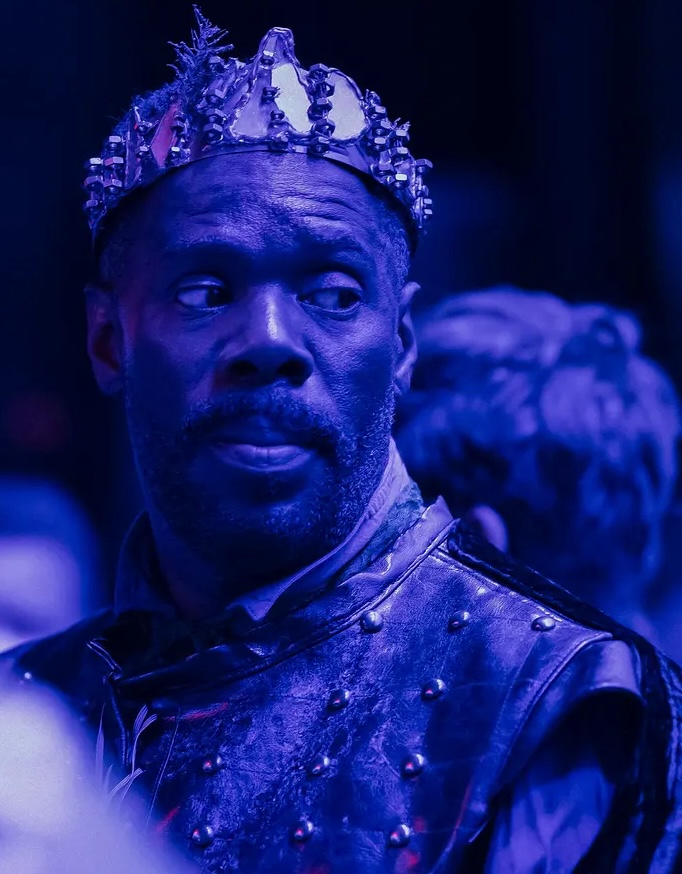
Colman Domingo

Sing Sing

31/08/24

The Cameo, Edinburgh

It’s National Cinema Day and picture houses across the country are offering tickets for a mere £4. The Cameo is packed to the rafters. Does this mean that cinemas could sell out regularly if they lowered their prices, or is the mass turnout down to the sense of a special occasion?

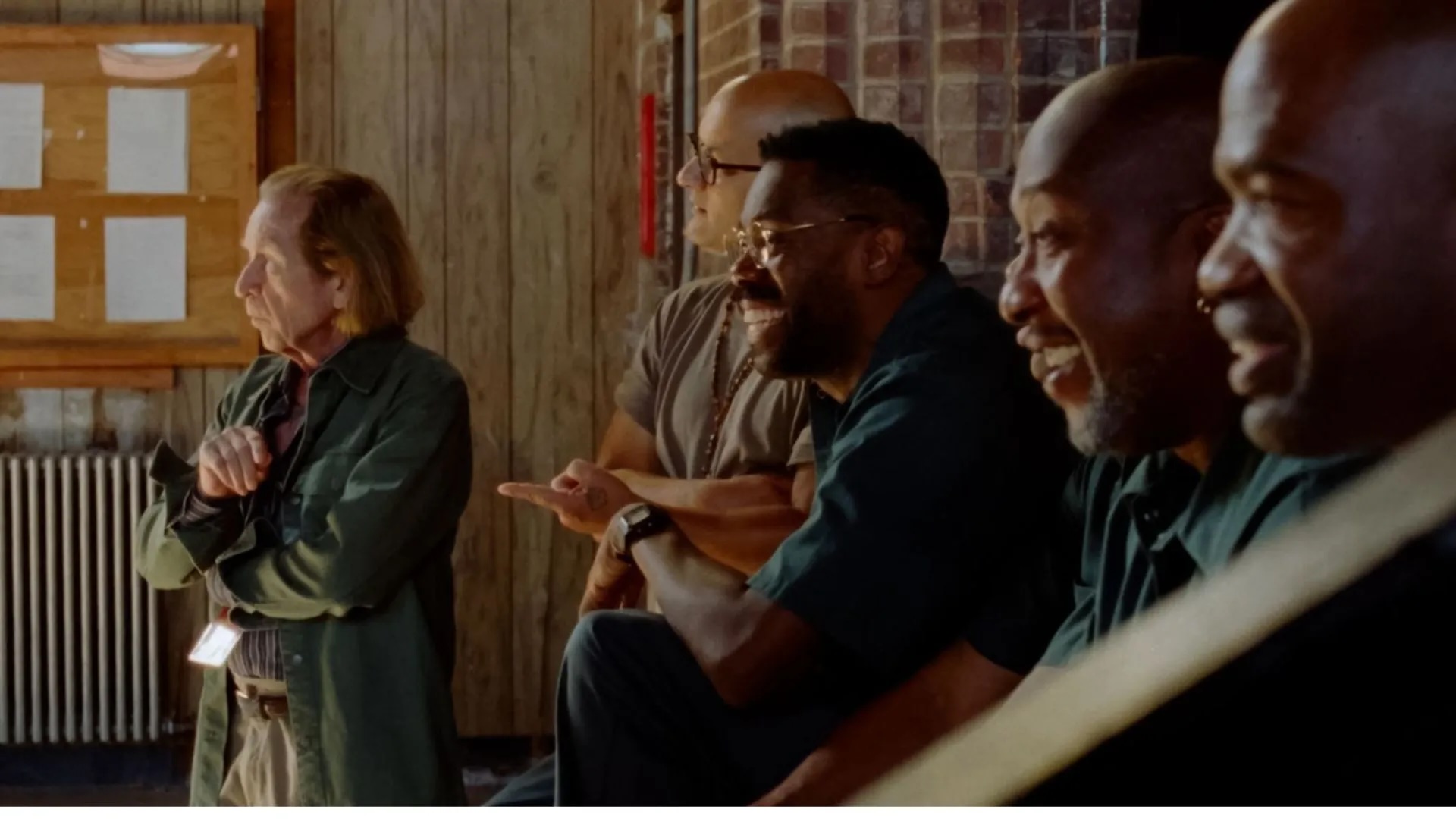
The programming is important too, of course. Sing Sing deserves to draw the crowds, even at full price. It’s a weighty, life-affirming piece of work, humanising the inmates of the titular maximum security prison. It’s also a timely reminder of why the arts are so important.

Based on John H. Richardson’s book, The Sing Sing Follies, Greg Kwedar’s movie is all about the RTA programme (Rehabilitation Through the Arts), which provides customised curricula of theatre, dance, music, etc. in prisons across the USA. Each jail has its own steering committee of prisoners, and external facilitators to help them explore their ideas. The benefits to both inmates and wider society are clear: by offering troubled people hope, allowing them the chance to explore their feelings and develop skills, to improve their self-esteem, the severity of infractions within prisons is reduced – and so is recidivism. The urge to punish, to make correctional facilities as unpleasant as possible, is perhaps understandable but it’s self-defeating. If we want a better world for everyone, we have to accept the evidence and give incarcerated people as many opportunities as possible to improve their circumstances.

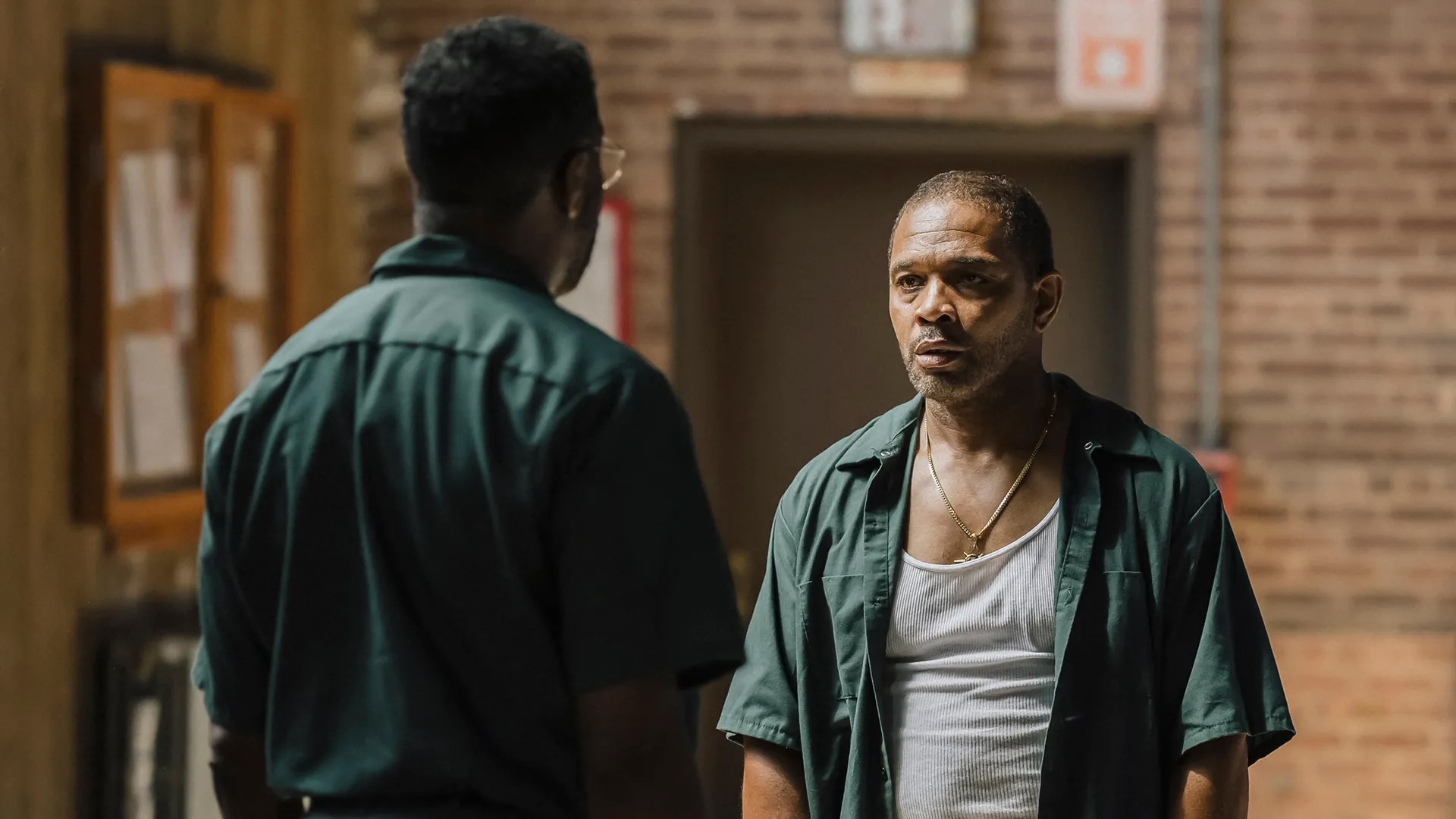
Colman Domingo makes a thoughtful, impressive John “Divine G” Whitfield, a central member of Sing Sing’s RTA group. Divine G – who has a cameo appearance – writes plays as well as performing in them, and also works tirelessly to support other inmates with their appeals. Apart from Paul Raci as volunteer drama leader Brent Buell, the rest of the cast comprises ex-prisoners playing themselves. Co-lead Clarence “Divine Eye” Maclin is especially affecting: his transformative journey from bullish gang member to esteemed performer might be predictable but it’s absolutely compelling.

We shouldn’t need reminding that theatre matters: we’ve known it forever. Thomas Keneally’s The Playmaker and Timberlake Wertenbaker’s Our Country’s Good both immortalise the real-life production of The Recruiting Officer performed by convicts deported to Australia in 1789. Margaret Atwood’s fictional account, Hag-Seed, doesn’t just illuminate The Tempest for a contemporary audience, it also advocates for arts in jail. Bertolt Brecht’s Lehrstücke (1920s and 30s) were created precisely to focus on the process of creating drama and the impact it has on actors. Here, in Clint Bentley’s gentle, often funny screenplay, we see again exactly how life-changing theatre can be.

Kwedar wisely steers clear of the violence we are accustomed to in prison movies: the menace is there, but it’s in the wings. Instead, we get to see the men at their best, when they’re engaged in something they really care about. As Sean “Dino” Johnson points out, “We get to be human in this room.”

And human they are. As a teacher of creative drama (albeit with children, not criminals), I’m not at all fazed by Buell’s bonkers-sounding playscript, Breakin’ the Mummy’s Code, which incorporates everyone’s ideas, including time travel, Freddy Krueger, ancient Egypt and, um, a couple of Hamlet’s soliloquies. That sounds just fine to me! It’s heart-warming to see how much it matters to the men, how seriously they take the acting exercises and the director’s notes, how much fun they have when they’re finally on stage.

Sing Sing is an important film, but it’s a highly entertaining one too. Beautifully crafted, with cinematography by Pat Scola, you’re guaranteed to leave the cinema with a smile on your face and a sense of hope for the future.

4.7 stars

Susan Singfield

The Color Purple

01/02/24

Cineworld, Edinburgh

Not so much an adaptation of Alice Walker’s 1982 novel (or Steven Spielberg’s 1985 film, for that matter), this ambitious production is based on the Broadway musical which first got to strut its stuff in the early 2000s and has gone through several iterations since. Inevitably, much of the novel’s more hard-hitting elements have been sanded and burnished for consumption by a mass audience.

Directed by Blitz Bazawule, with music composed by Kris Bowers, the result is a film that occasionally bursts into exuberant, joyful life but just as often feels bowdlerised as it struggles to make a song and dance about incidents that don’t quite fit the medium.

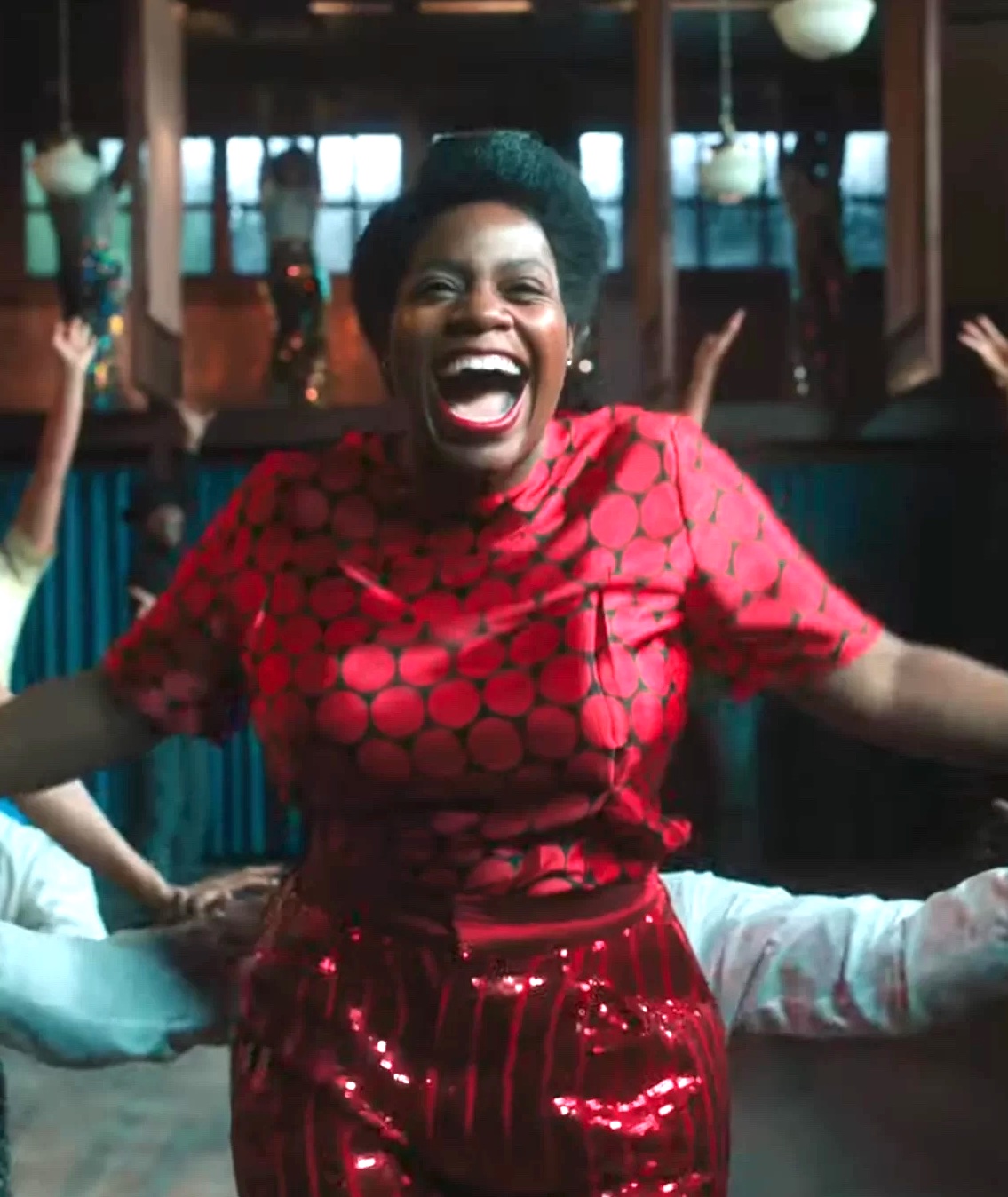
We first meet Celie (Phylicia Pearl Mpasi) when she’s a teenager, pregnant with her second child – by her father, Alfonso (Deon Cole). Mpasi brilliantly portrays Celie’s loneliness and distress, especially when, as he did with the previous baby, Alfonso takes the infant away from Celie without any explanation. Shortly thereafter, he offers her up as a bride to the heinous ‘Mister’ (Colman Domingo), a musician of sorts who has several motherless kids to care for in his ramshackle home down by the swamp. He needs somebody to get the place in shape and, if Celie is slow in following his orders, he’s all too ready to let his fists do the talking. Colman too, is utterly convincing as a man who’s never had his authority challenged by anyone.

Celie sets to work, determined to look after her new ‘family’ but when her beloved sister, Nettie (Halle Bailey), turns up saying that Alfonso has been making moves on her, Celie begs Mister to allow Nettie to move in with them. He agrees and inevitably, it isn’t long before he attempts to sexually assault her. When she dares to hit back, he throws her out of the house telling her never to return – and Celie has nobody to fight her corner.

The years move inexorably on – a scene where Celie views the changing seasons through the windows of the house as she ages is brilliantly handled. Celie (now played by Fantasia Barrino) has become inured to her own suffering, but redemption arrives in the form of vivacious blues singer, Shug Avery (Taraji B Henson), the woman who Mister reveres above all others and whom he’ll go to any lengths to please. When Celie and Shug form an unlikely alliance, it’s clear that change is in the air…

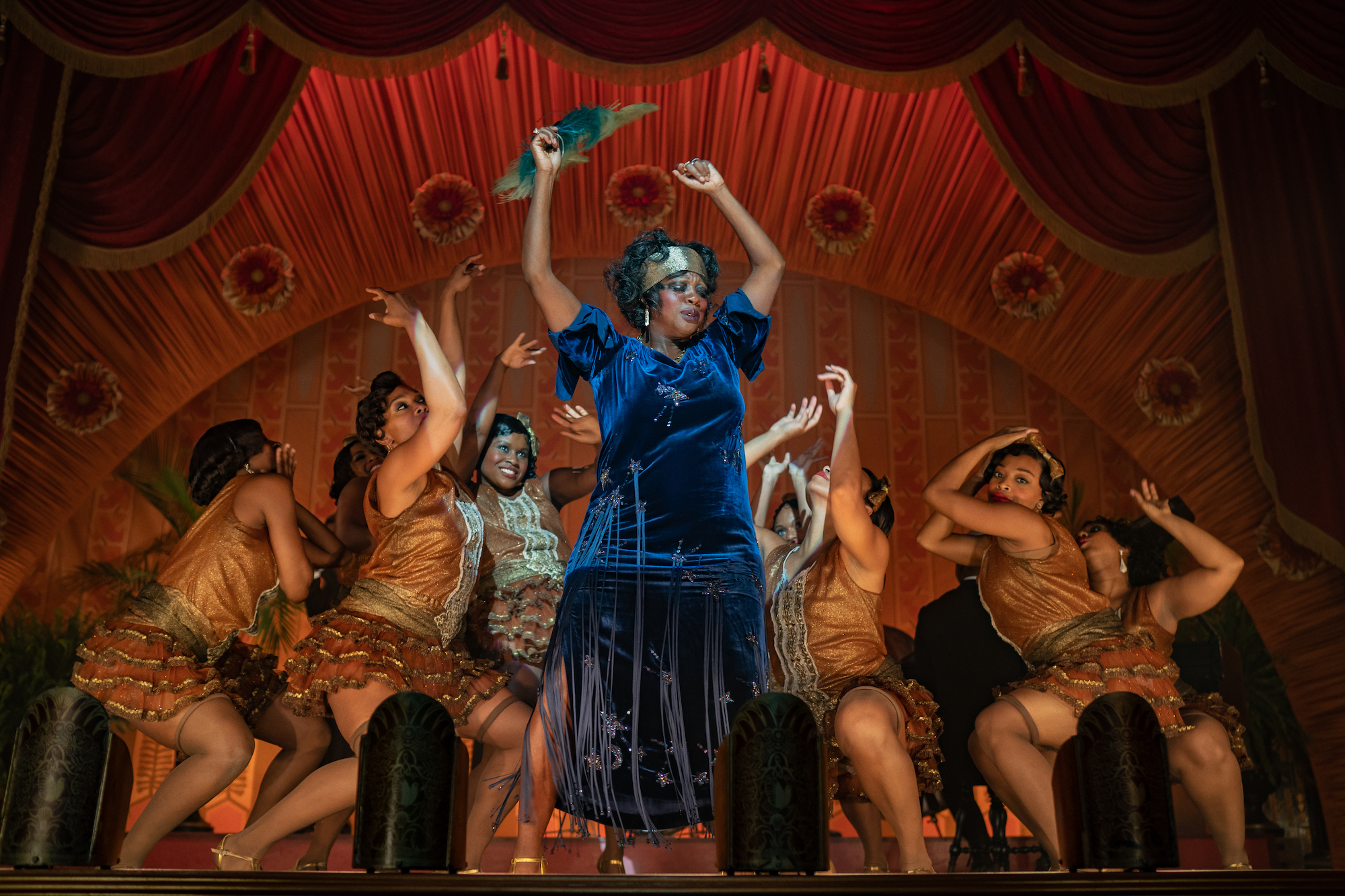
To give The Color Purple its due, Bazawule brings a whole host of invention to the difficult task of directing this piece, constantly exploring different approaches to a complex project. Cinematographer Dan Lautsen makes everything look luminous and remarkable and I particularly love a fantasy sequence set on a huge gramophone turntable. For me, the film is at its most successful during the big, ensemble pieces with scores of dancers whirling and leaping to vibrant, blues-inflected songs. I should also mention Danielle Brooks’ remarkable performance as Sophia, a powerful and assertive woman, eventually brought to heel by the injustice of the age. Brooks brings genuine verve to her portrayal and the scenes where she languishes in a prison cell provide the film’s most heartbreaking moments.

The relationship between Celie and Shug has been not so much downplayed as eradicated. In the book, it’s explicitly sexual; here it amounts to a quick snog in the cinema and a few meaningful looks, which I think speaks volumes about what makes contemporary American audiences uncomfortable. Why the subject of rape is deemed acceptable for depiction but a concensual lesbian relationship isn’t remains something of a head scrambler. Go figure.

The story’s conclusion, where everybody gathers to let bygones be bygones, feels every bit as unlikely as it did in the original story and, if I’m honest, it’s in this sequence where it all gets a little too schmaltzy for my liking. 

So, once again, here is another of those curate’s egg productions (a phrase I use far too often). It’s good in parts (sometimes very good) but elsewhere, I find the ingredients a little too bland for my taste.

3.6 stars

Philip Caveney

Candyman

05/09/21

Cineworld

Horror remakes can be decidedly tricky customers. Like those endless Halloween sequels, for instance, they can turn out to be pale retreads of a brilliant original. I have good memories of Bernard Rose’s 1992 Candyman, which was so much more than just another creepy slasher movie. That said, I’m also uncomfortably aware it had its own slew of inferior sequels, so I’m not exactly filled with anticipation at the prospect of Candyman 2021. But, with Jordan Peele attached as producer, I’m hopeful that this new offering from director Nia DaCosta might have something different to offer.

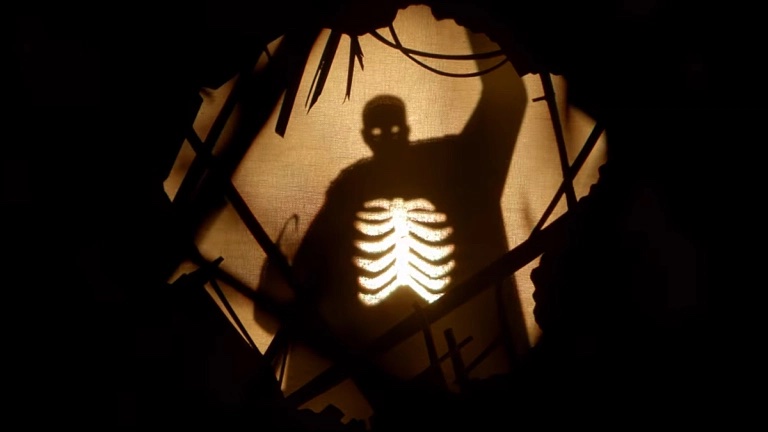
It’s clear from the get-go that this is intended to be more than just a straightforward reboot. For one thing, the opening credits (even the Universal logo) are reversed left to right, as though reflected in a mirror – a delightful reference to the film’s central premise – and then the startlingly stylistic cinematography takes a grip on my senses, aided and abetted by delightful shadow-puppet sequences, depicting the history of the film’s infamous urban legend. There’s also a powerful ‘black lives matter’ subtext running through this version. Some critics have derided it, claiming that it is hammered home a little too forcefully, but I disagree. The message is an important one and it’s clearly stated. It adds to, rather than reduces, the power of the story. And that has to be a good thing, right?

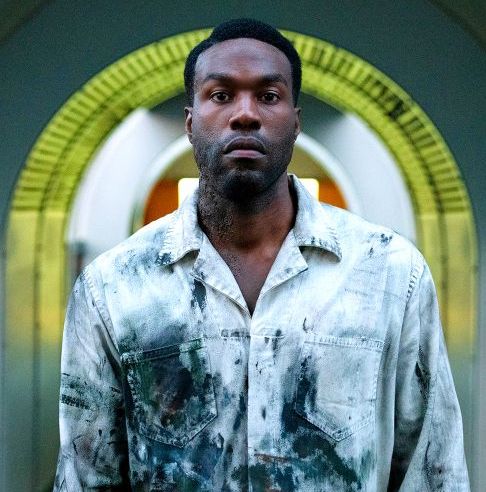
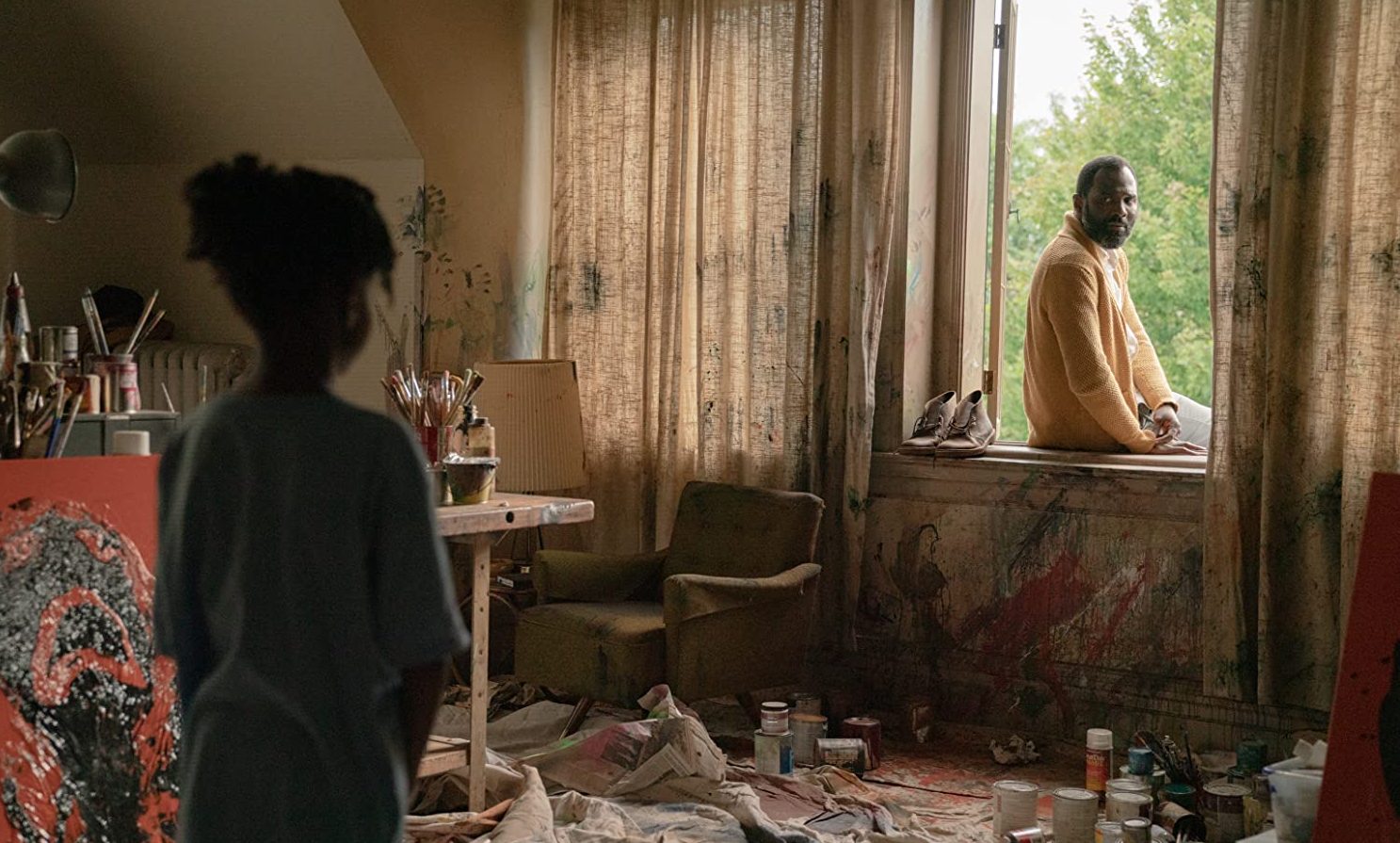
Twenty-seven years after the events of the first film, visual artist Anthony McCoy (Yahya Abdul-Mateen II) is living in a swish high-rise apartment in the area of Chicago that borders the old Cabrini Green housing project where the original Candyman strutted his grisly stuff. This part of the city has been gentrified over the years and now, Anthony and his art-dealer partner, Brianna (Teyonah Parris), spend their time sipping expensive wine and attending flashy art exhibitions. But Anthony has lost his painting mojo. It’s been some time since he came up with anything new.

When Brianna’s younger brother, Troy (Nathan Stewart-Jarrett), tells him about an old urban legend, Anthony is interested enough to wander into Cabrini Green with a camera, looking for inspiration. It’s there that he meets William Burke (Colman Domingo), who tells him more about the story of the Candyman. And it’s there too that Anthony is stung by a bee and begins to experience some startling reactions to the venom…

Cinematographer John Guleserian creates a world where everything seems inverted. The sinister glass towers of Anthony’s home are depicted upside down as though plunging into sinister depths, rather than reaching for the sky. Much of the ensuing action is glimpsed via reflections in mirrored surfaces – and one sequence where an art critic is murdered in her high rise apartment, filmed in a distanced silent long shot actually makes me gasp. I have been made to feel like a helpless observer. The film doesn’t shy away from its slasher roots either. There are some genuinely wince-inducing murders and a couple of instances of extreme body horror that almost have me looking away from the screen. But the violence, though savage, never feels salacious – and DaCosta has the canny knack of knowing exactly when to cut away from the action.

Ultimately, this feels like a palpable win, a film that treats the original with reverence but also manages to develop the story in coherent and inventive ways. The stylish art direction adds a dazzling sheen to the whole enterprise. There’s also a wonderful joke in here that provides, once and for all, the definitive answer to an age old question: ‘Why do people in horror movies go wandering down staircases into dark and gloomy cellars?’ I won’t reveal what happens but, in the midst of all the dread, it actually makes me laugh out loud.

There will always be reboots of popular horror movies and many of them won’t be worth the price of admission. But this one, I feel, is a cut above.

4.6 stars

Philip Caveney

Ma Rainey’s Black Bottom

20/12/20

Netflix

The chances are you’ve never heard of Ma Rainey before: I know I hadn’t.

A quick glance at Wikipedia confirms that she was one of the earliest African-American blues singers, an entrepreneur who started her career on the Southern Vaudeville circuit in the early nineteen hundreds and who, through the twenties, became known as ‘Mother of the Blues.’ As the decade rolled on, she made a series of recordings, which introduced Blues music to a new – predominantly white – market.

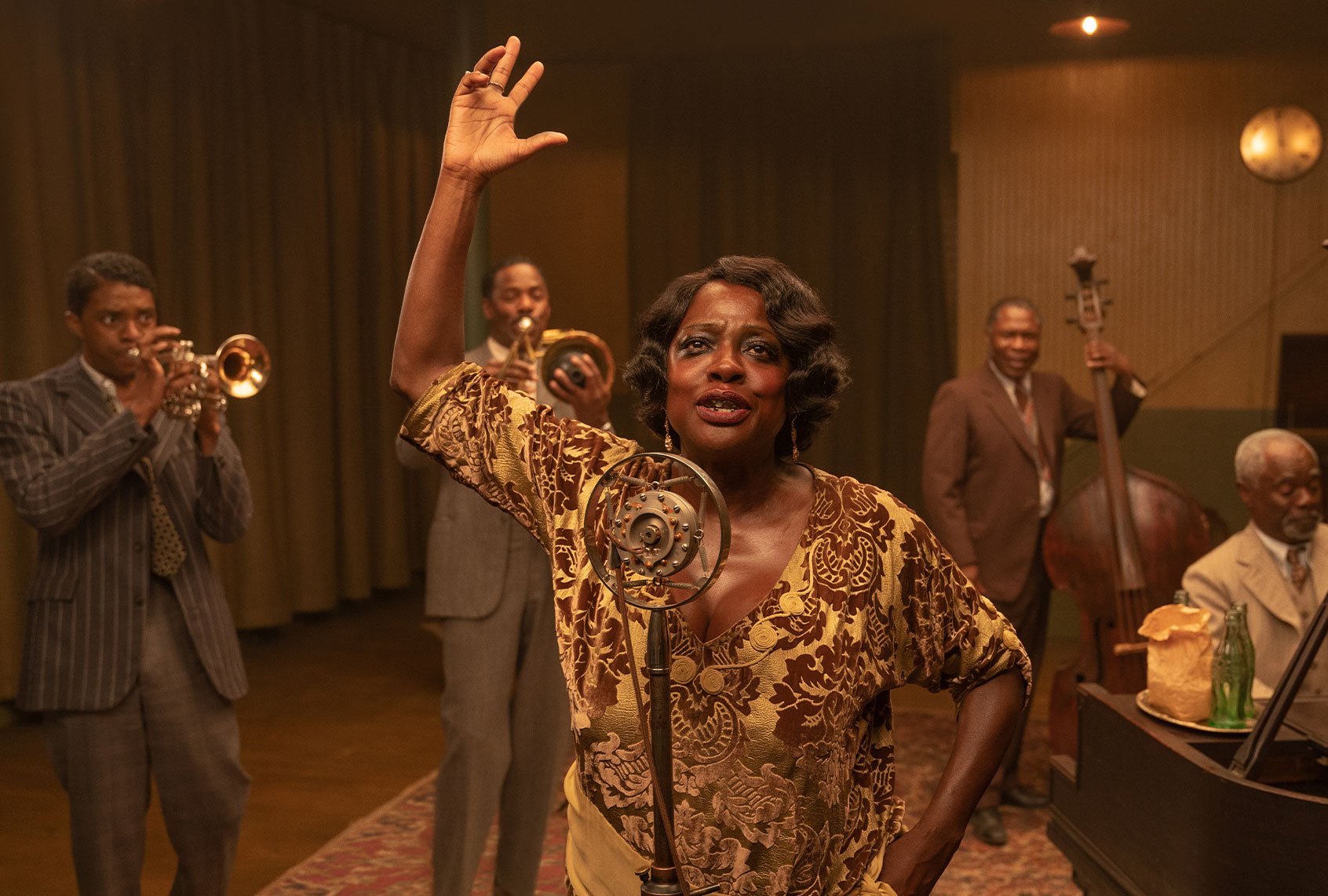
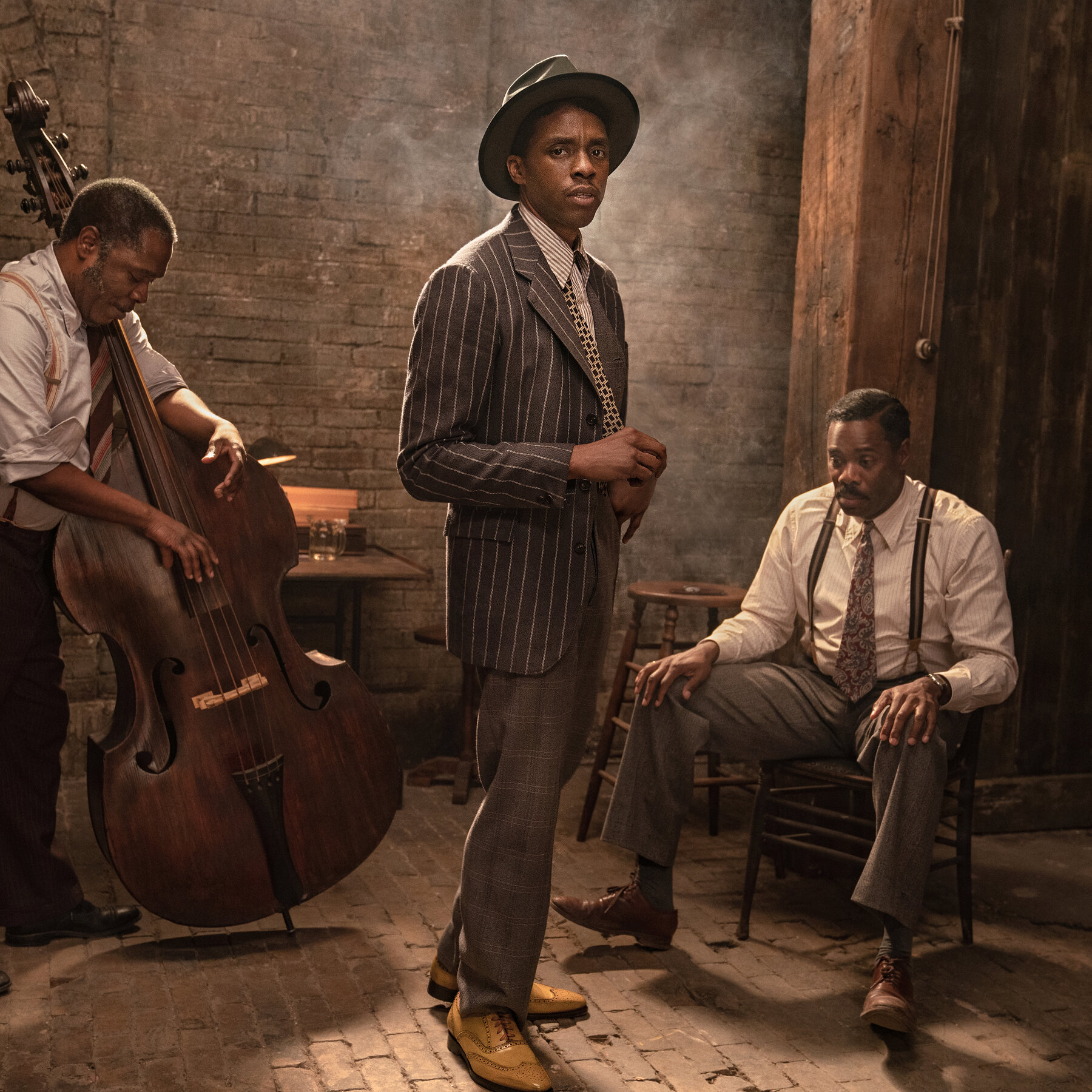
It’s summer 1927 and Ma (Viola Davis) has ventured North to Chicago to lay down some tracks for the Paramount record label at the urging of her white manager, Irving (Jeremy Shamos). Her musicians duly arrive to back her up, among them a young and ambitious horn player, Levee (Chadwick Boseman). Unlike the other members of the band, he senses that the wind of change is in the air and that America is developing a new taste for jazz stylings. He’s eager to be a part of it. His fellow musicians, Toledo (Glynn Turman), Cutler (Colman Domingo) and Slow Drag (Michael Potts), urge him to toe the line. Ma is a tough cookie and he’d do well to do as she tells him, but he’s got his own reasons for wanting to spread his wings…

Director George C. Wolfe offers a lean, powerful adaptation of August Wilson’s original play, which is essentially a lament for the way in which prosperous white record producers continually took vibrant black music and bent it to their own whims, earning vast sums of money into the bargain – little of which went to the original artistes. In the titular role, Davis offers a brooding, snarling study of a embittered woman who knows only to well how her music is being stolen from her and who steadfastly refuses to lick the boots of the men who are taking it – even haranguing them when they neglect to offer her chilled Coca Cola in the sweltering confines of the studio.

But of course, Ma Rainey’s Black Bottom also turns out to be Chadwick Boseman’s final performance and, at times, he comes close to stealing the show. It’s hard to believe that this passionate and talented young actor has already been taken from us. His performance here makes for a memorable farewell but it’s tragic to consider what else he might have achieved had he been given the chance. Levee is a compelling character, the product of horrifying events in his childhood, which have only served to fuel his overpowering desire to make good as a musician – but it is an ambition that will, ultimately, consume and destroy him.

There are some splendid musical interludes, but not so many that they overpower the drama – and, as the temperature rises and tempers begin to fray, there’s plenty of that to relish. The final musical sequence brilliantly pins down the kind of cultural appropriation that forms the central tenet of this film. Netflix has been raising its game in recent months and this is another success for them.

Watch it, and not just to say goodbye to Mr Boseman.

4.2 stars

Philip Caveney

Assassination Nation

24/11/18

Salem. Teenage girls. Mass hysteria. And death. Assassination Nation‘s parallels with the witch trials are not subtle. But they are bold and audacious, timely and provocative. This is a fascinating film.

It’s not a retelling of The Crucible, but it riffs on the themes: a society bound by rules so strict that no one really follows them; the chaos that’s unleashed when the underbelly is exposed. And the teenage girls, easy scapegoats for the mob. Why look for someone else to blame when there are sassy, sexy young women strutting about the town, showing off their nubile bodies and their high intellects?

Lily (Odessa Young) is our heroine: an eighteen-year-old with attitude. Her parents are Mr and Mrs Uptight, squarer than a box, but Lily has opinions of her own. She’s smart: when the school principal (Colman Domingo) takes her to task for submitting pornographic drawings for an art assignment, she argues eloquently; these are not mindless ‘shock-the-system’ images, but a considered response to the world she knows. Taken aback, the principal acknowledges she’s right, but asks her to concede: ‘This is high school; it’s not appropriate here.’

And that’s kind of the point of the whole film: that we all collude in pretending reality is something else. We wear our masks and present public selves that are very different from our private selves, and (some of us) outwardly condemn others who are seen to do the very things that we do too. Writer-director Sam Levinson clearly has something to say about this, and he’s not shy about saying it. The utter absurdity of modern American life is mercilessly exposed.

Things begin to fall apart in Salem when an anonymous hacker starts uploading everybody’s secrets: texts and emails, photographic caches, google searches, everything. It’s no longer possible to maintain the illusion that everyone follows the creeds laid out for them, and the fallout is huge. At first it doesn’t seem to matter too much: the mayor is rightly exposed as a hypocrite, standing on a ‘family values’ platform, denying LGBT+ rights, while secretly cross-dressing. But we soon learn that he’s a victim too, that no one can flourish in a world that condemns individuals when they reveal the truth about themselves.

And then, as more people have their private lives revealed, we discover that the mob is hungry for blood. Even the most innocuous photographs are seen as proof of corruption; we’re back in Crucible territory now: if you’re accused, you’re guilty; there’s really no way out. Eventually, inevitably, Lily’s own phone is hacked. She’s been sexting with a married neighbour, so the townsfolk have a lot to say. The baying crowd turns on her and her friends: they are literally out to kill.

This is a vibrant, pulsating movie, that screams its message loudly and proudly – and largely successfully. Oddly, I detest the first fifteen minutes or so, and am actually contemplating walking out of the cinema (something I haven’t done since Heat) but I’m glad I sit it out, because – once that frantic, in-yer-face, split-screen throbbing is over – it all starts to fall into place, and the opening makes sense in context too.

It’s a film for our times, that’s for sure. There are tongue-in-cheek trigger warnings that seem at first to be poking fun at ‘snowflakes’ but turn out to foreshadow scenes that show how relevant these issues really are. There’s a chilling moment where a mob is chanting, ‘Lock him up!’ about an innocent man: no prizes for making the connection here. I said it’s not subtle. But why should it be? Sometimes the most affecting art is created using broad strokes.

I don’t think it’s a spoiler to say the girls become avengers – it’s clear from the posters, after all, but I have some qualms about the way in which weapons are used in this final third. It’s all a bit glamorous, a bit ‘good-guy-with-a-gun’ for my liking. But then, I suppose, the truth is this: in a society as rigid and divided as modern America, the suits who make the rules really had better look out. Because the guns are out there. And those they seek to victimise know how to use them too.

4.3 stars

Susan Singfield