Christopher Abbott

Bring Them Down

09/02/25

The Cameo, Edinburgh

In the Wild West, as we all know, men are men and they have vengeance in their hearts. And naturally they always take the law into their own hands. In the case of Christopher Andrews’ directorial debut, Bring Them Down, we’re talking about the West of Ireland, somewhere near Athenry, judging by what’s printed on the side of a van. The story is set in the present day but you’d be forgiven for thinking that it’s some time in the 1950s.

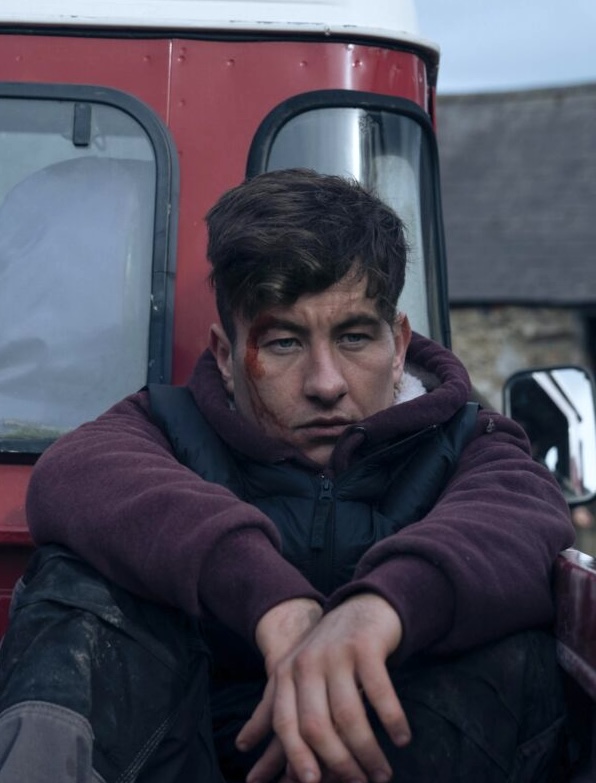
Michael O’Shea (Christopher Abbott) is a sheep farmer, stranded out in the middle of picturesque nowhere with his disabled father, Ray (Colm Meany), grumbling and snarking in the background. The two of them are constantly in dispute with their neighbour, Gary (Paul Ready), who is building holiday homes on adjoining land and seems to be spoiling for a fight. It doesn’t help that Gary is married to Caroline (Nora-Jane Noone), with whom Michael shares a troubled history (as we’ve seen in the film’s opening flashback). Gary and Caroline have a son, Jack (Barry Keoghan), who is tormented by the fact that his parents are in financial straits and appear to be on the verge of splitting up. He’s desperately on the lookout for ways to earn some extra money.

When somebody steals a couple of the O’Shea’s rams, Michael discovers them in Gary’s herd. He is at first reluctant to challenge his neighbours but, spurred on by his father’s angry tirades, Michael soon succumbs and sets off on a bloody quest for vengeance…

A more reductive view of the Irish would be hard to imagine. Every male character we meet seems intent on hurting, taunting or maiming those who get in their way and these people are seemingly unaware that the Garda even exist. Somewhere around the halfway point, Andrews’ script does a backward loop and offers a fresh perspective on what we’ve seen up to now, to indicate that things are not entirely as they seem, but it hardly helps matters, and I simply cannot credit one scene where Jack and his pal Lee (Aaron Hefferman) embark on an escapade so heinous it beggars belief.

There are other problems here. Keoghan is supposedly a teenager (Jack certainly acts like one) but unfortunately looks every day of his actual thirty-two years; and, while Abbott (an American actor, last seen undergoing supernatural changes in Wolf Man) makes a halfway decent stab at an Irish brogue and even delivers lines in Gaelige, this is thick-eared stuff that appears to offer an unpleasant subtext, suggesting that women shouldn’t be allowed to leave their men, as it messes them up.

Bring Them Down at least does what it says on the can. I leave the cinema wishing I’d skipped this film and looked elsewhere for a afternoon’s entertainment.

2.6 stars

Philip Caveney

Wolf Man

18/01/25

Cineworld, Edinburgh

Director Leigh Whannell last plundered the vaults of Universal Studios with his reboot of The Invisible Man (2020), where he managed to completely reimagine the 1933 source film (starring Claude Rains) as a twisty-turny nail-biter with Elisabeth Moss. The Wolf Man, a 1941 fright flick for Lon Chaney, has had plenty of remakes over the years, but few of them have ever managed to unleash the story’s full potential. While Whannell makes a spirited attempt here, framing this as an allegory about a man trying to escape from the toxic influences of his late father, the telling is poorly-paced and runs out of steam long before it ends.

It begins with an effective flashback. A young boy called Blake (Zac Chandler) heads out on a hunting expedition into the forests of Oregon with his authoritarian father, Grady (Sam Jaeger). The two of them live alone in a remote cabin (in the woods, naturally) and Blake has overheard Grady talking on the CB radio, making ominous remarks about something ‘dangerous’ that lurks in the forest, so the kid is understandably pretty nervous. Sure enough, in a thoroughly gripping sequence, the two hunters find themselves becoming potential prey as they are pursued by an unseen creature…

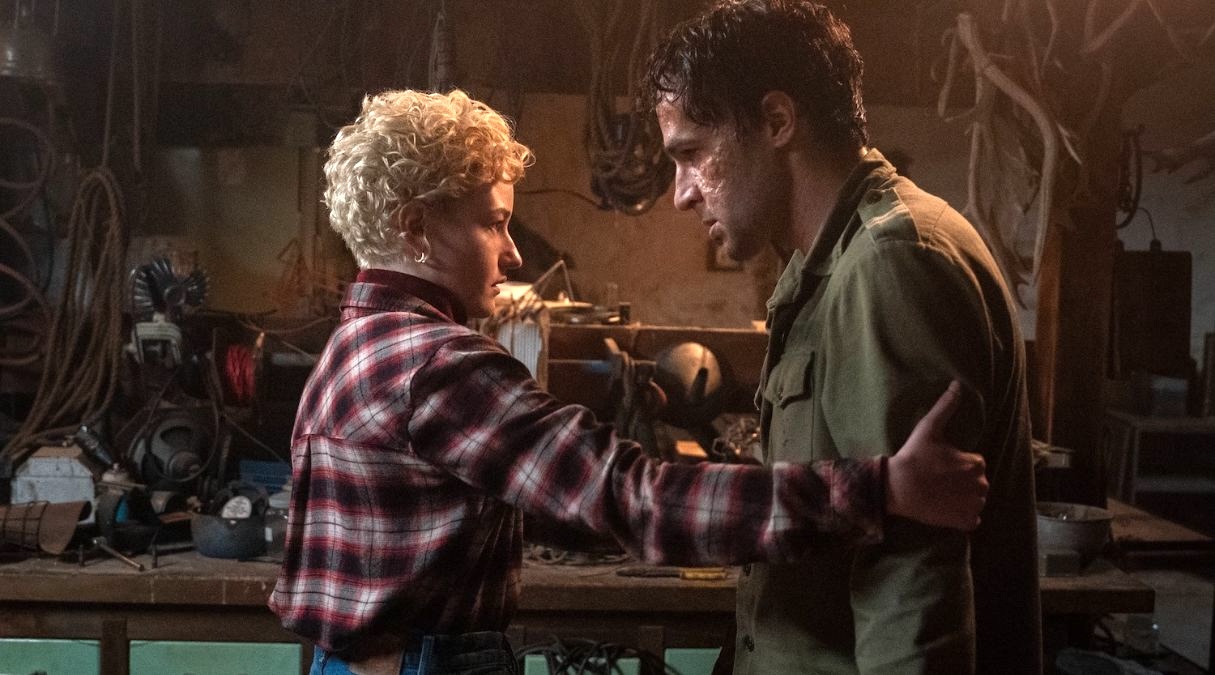
40 years later, Blake (now played by Christopher Abbott) is living in San Francisco. He’s a would-be writer who has lost his mojo and is playing the role of house-husband while his journalist wife, Charlotte (Julia Garner), puts food on the table. Blake is constantly worried about their young daughter, Ginger (Matilda Firth), and sees his sole reason for existence as a mission to protect her from harm.

Grady, meanwhile, has been missing presumed dead for a very long time. When news comes through that the authorities have officially pronounced him ‘deceased,’ Blake comes up with an idea. Why don’t the three of them hire a van, drive out to Oregon and clear out his father’s cabin, whilst having a relaxing holiday in the process? At this stage, I’m not sure which is most unlikely – Blake’s suggestion or his wife and daughter’s decision to say ‘Hey, why not?’

But it happens anyway and, in what feels like a rather rushed narrative, the three of them drive to Oregon and find themselves menaced by a mysterious upright beast even before they properly arrive at their destination…

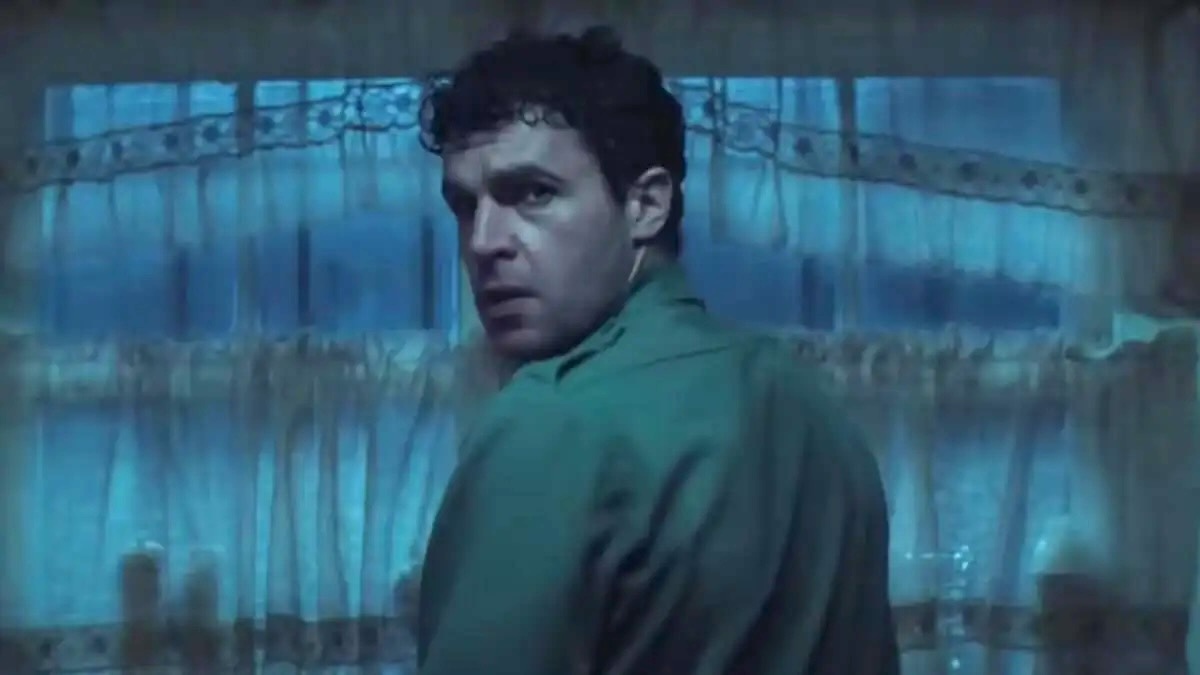
To give the film its due, Whannell manages to cook up impressive levels of suspense for the film’s first hour. Stefan Duscio’s murky cinematography and Benjamin Walfisch’s eerie music add to the steadily mounting sense of dread. When Blake suffers an injury and begins to transform into – well, take a wild guess – his situation seems to mirror a whole series of possible references from drug addiction to generic inheritance. But just as I’m thinking that this is going to be a triumph, there’s a major development (I’m confident you’ll spot it when it arrives) where the story reaches its logical conclusion, and where it really ought to end.

Except that there’s still another half hour to fill – and so the action continues, squandering most of the Brownie points earned so far, in what feels like a series of completely superfluous extra scenes. As is so often the case, the more we see of the titular creature, the less menacing it becomes. A last, thought-provoking scene arrives a little too late to undo the damage.

A shame, because that first hour definitely takes the viewer to some very uncomfortable places – and it’s hard not to conclude that, if it had only taken the family a little longer to get to the cabin, this could have been a much more satisfying experience.

3.4 stars

Philip Caveney

Black Bear

30/04/21

Curzon Home Cinema

Of course, my primary purpose here is to review Black Bear. But, before I do, let’s take a little look at Curzon Home Cinema. Why, I’d like to know, are there still no subtitles available for English language films on this platform? I try my best, where possible, to support indie endeavours over the major franchises, but this lack of accessibility is becoming something of a deal breaker. I can watch a film without subtitles; I just prefer not to. There are many, many people who simply can’t. Come on, Curzon. This needs to be resolved.

And so to Black Bear, sadly one of the most disappointing films I’ve seen in a while. It’s not half as clever as it keeps telling us it is; even the fabulous Aubrey Plaza can’t save this one for me.

Be warned: there are spoilers ahead.

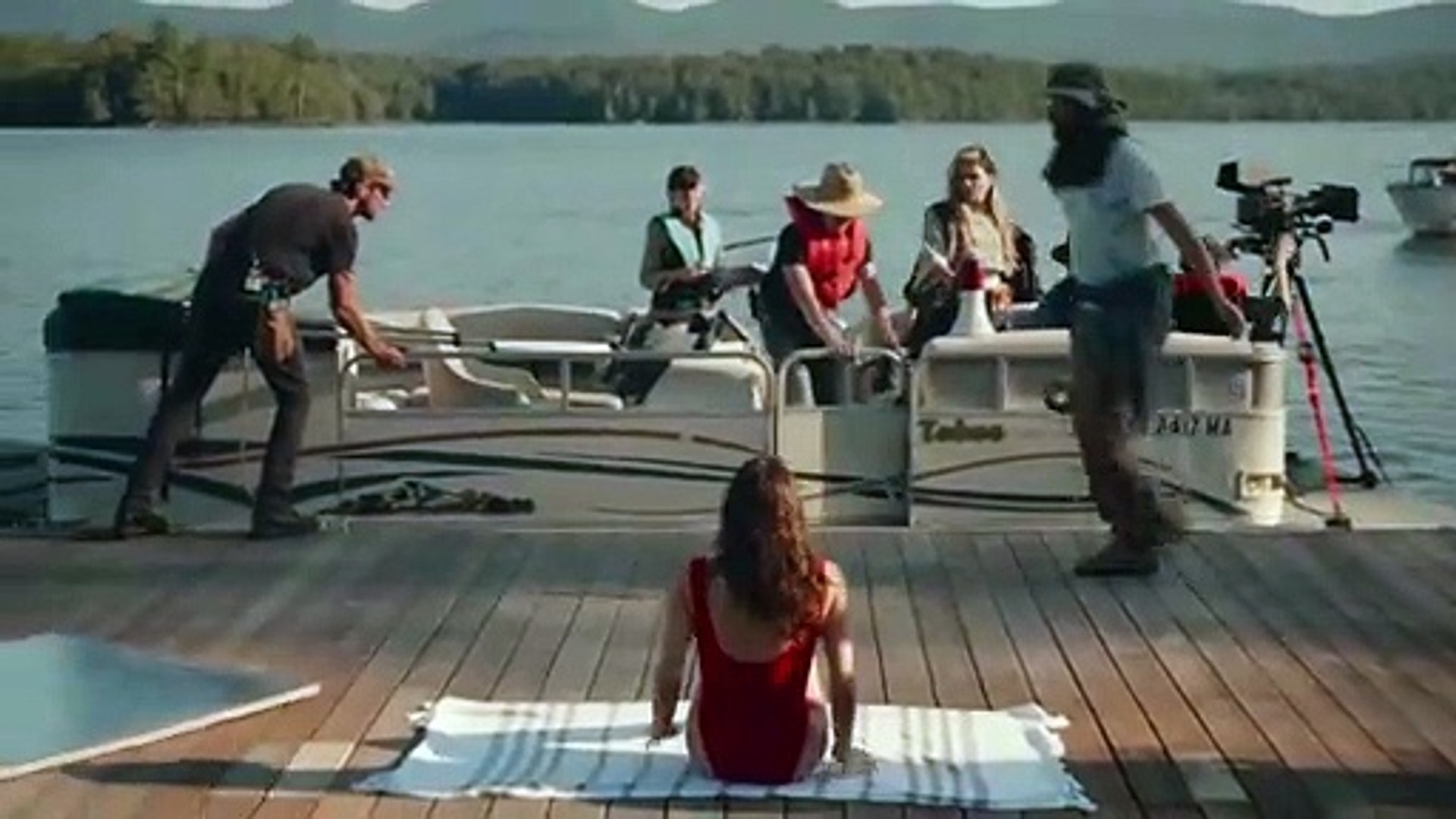
There’s a remote house by a lake. It’s owned by a couple, Gabe (Christopher Abbott) and Blair (Sarah Gadon), who market it as a retreat for creative people. Blair is pregnant. Gabe is a failed musician. Along comes Allison (Plaza), a film-maker. She’s here to write, but spends most of her time sitting staring at the lake dressed in a red swimming costume. They’re all horrible. Blair and Allison become jealous rivals on sight. Gabe is a Lawrence Fox type, who thinks he’s being edgy by saying that feminism is the cause of society’s collapse. Blair says she’s a feminist, shrieks for a while and then cries. Allison sits dead-eyed, agrees with Gabe, then says she’s only joking. And fucks him.

I don’t know what writer/director Lawrence Michael Levine is trying to say here. It’s very muddled. Of course, characters don’t speak their author’s thoughts, but Gabe is given a suspiciously long time to expound his anti-feminist views in excruciating detail.

And then we have a switcheroo, sort of, except nothing really changes. Now we see that they are all making a film: Gabe is the director, Allison and Blair are actors. But instead of Blair and Gabe being a pair, it’s Allison and Gabe. But Allison and Blair are still jealous of each other, because… why? Because of Gabe? Because they’re two women in the same house and that’s just what happens? It’s a curiously old-fashioned view of female relationships.

The bear rustles in the undergrowth, a big unsubtle metaphor. When we see him, just twice, he looks passive, almost cuddly.

There are moments here that glimmer with promise. The deliciously uncomfortable conversation in the first act, where Gabe and Blair undermine everything each other says. The frantic chaos of the film set: the prompt (Jennifer Kim) who can’t find her page; the runner (Paola Làzaro) who’s got the runs.

But there’s a cruelty at the heart of this story that just doesn’t sit well, a mean-spiritedness that seems to pervade everything. The performances are flawless. But the story is a mixed-up mess.

2.5 stars

Susan Singfield

It Comes at Night

11/07/17

What is the disease that’s afflicting America? In Trey Edward Schults’ stylish dystopian fear-flick, it appears to be an airborne virus that’s decimating the population, and isolating survivors. Joel Edgerton stars as Paul, an ex-history teacher holed up in his family home with his wife, Sarah (Carmen Ejogo) and their teenage son, Travis (Kelvin Harrison Jr.). They’re paranoid and distrustful, trapped in their sealed sanctuary, donning gas masks and carrying guns whenever they’re compelled to venture into the outside world.

Staggering into this powder-keg of neuroses is Will (Christopher Abbott), desperately seeking shelter for his young family. He, his wife, Kim (Riley Keough), and their infant son, Andrew (Griffin Robert Faulkner), are reluctantly invited to move in, albeit with very strict parameters. But things are bound to go wrong.’Trust no-one,’ Paul tells Travis. ‘You can’t trust anyone except your family.’ Suspicion and wariness pervade every interaction: it’s a recipe for disaster.

The film is fiercely intense. Okay, so the allegory isn’t particularly subtle: the fear and ‘othering’ of outsiders is, in fact, the disease – and it’s the same one that’s afflicting the real America today. Scare-mongering about refugees, seeking to impose travel-bans: these isolationist behaviours do not auger well. Without trust and cohesion, society can’t work.

It’s a tightly crafted film, with a real sense of claustrophobia throughout. Kelvin Harrison Jr. is particularly mesmerising as the teenage boy, struggling to mature in a disintegrating world with no peers with whom to compare experiences.  And I like that there are no ‘baddies’ here, just individuals seeking to protect themselves and their families, unwittingly destroying all that they hold dear. As their circle shrinks ever smaller, there is less and less to hold on to, and the ending (which I won’t spoil here) is beautifully bleak.

This is a sly, thought-provoking little film, with plenty to ponder and discuss after the credits roll.

4.2 stars

Susan Singfield