09/05/24
Cineworld, Edinburgh
When author Pierre Boulle published his science fiction novel La Planéte des Singes in 1963, he could have had no idea of the protracted cinematic legacy that awaited it. In 1968, Planet of the Apes starring Charlton Heston was a massive hit and had one of the most iconic final scenes in history. It spawned four (admittedly patchy) sequels and, in the 1970s, became a long-running television series, of which I still have fond memories.
In 2001, Tim Burton attempted a big-screen reboot, but only his staunchest fans would claim that it was in any way a success.
So when, ten years later, director Rupert Wyatt made another attempt to apply the old defibrillators, I had low expectations (which, in retrospect, may have helped). Rise of the Planet of the Apes was a cracking film which centred on a remarkable mo-cap performance by Andy Serkis as Caesar. Two more films (both directed by Matt Reeves) continued in the same vein, rounding off with War for the Planet of the Apes in 2017. Surely there was nothing more to be said on the talking simian subject?
Ahem.
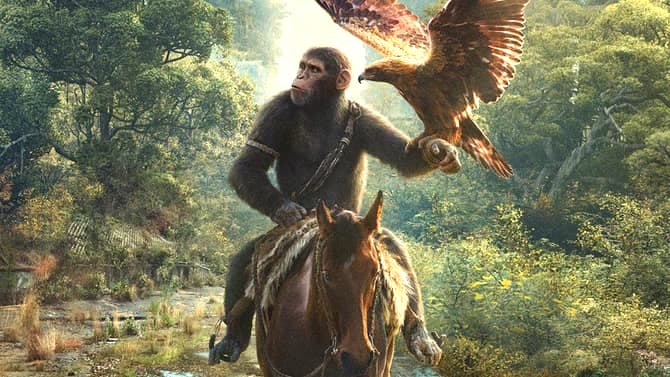
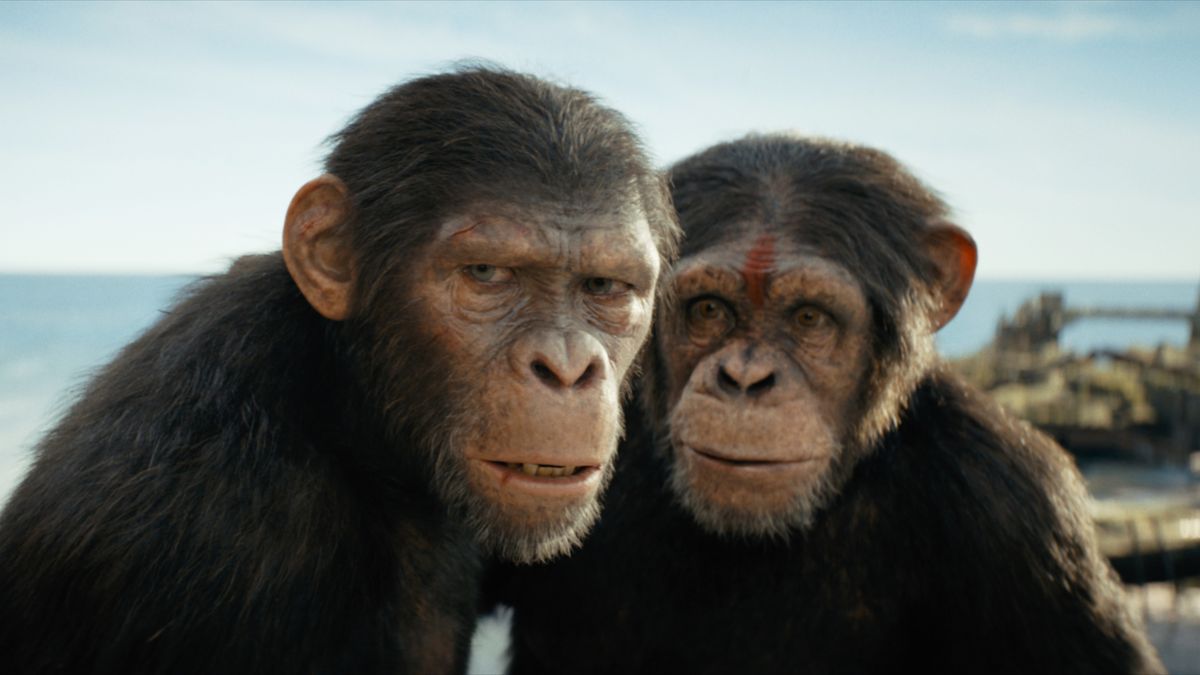
Wes Ball’s Kingdom of the Planet of the Apes begins with a glimpse of Caesar on his funeral pyre and then scampers nimbly onwards for many years, introducing us to a new hero, Noa (Owen Teague). Noa is one of a tribe of chimpanzee hunter-gatherers, who specialise in training eagles, which they send out to catch fish for them. The apes are now the dominant species on the planet and the few humans that Noa encounters are savages who, thanks to a mysterious virus, have lost their ability to speak.
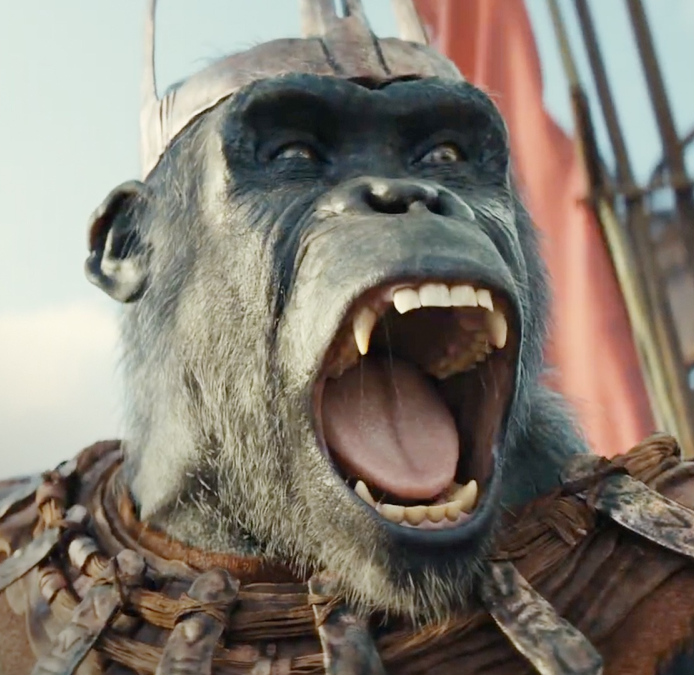
Noa is approaching a coming-of-age ceremony for which he needs a freshly-laid eagle’s egg but, when the one he’s been carrying around with him gets scrambled, he’s obliged to ride out in search of a replacement. He comes up against a gang of aggressive bonobos, under the despotic leadership of Proximus ‘Caesar ‘(Kevin Durand), who has realised that – much like the Romans before him – he can make the name a hereditary title and subvert everything that his illustrious progenitor ever believed in. Noa also meets a wise old orangutan called Raka (Peter Macon) and a human called Mae (Freya Allan), who, unlike most of her species, can speak eloquently. She has a secret mission to carry out in the ruins of the nearby city where Proximus reigns, so Noa and Mae travel there together. They are captured and made to swear allegiance to Proximus. Another captive human, Trevathan (William H. Macy), tells Noa that Proximus is spending much of his time trying to gain entry to a massive underground vault which may just contain a ‘book’ which could restore the power of speech to humanity….
If this is beginning to sound complicated, let me assure you that on the screen it’s even more so – and this gives the story a muddled quality, particularly in the saggy middle section of its lengthy running time. Don’t get me wrong, the film has many qualities to commend it. Like its three predecessors, the world-building here is brilliantly done and the exotic (Australian) locations are awe-inspiring to say the very least. Also, the mo-cap characters are depicted with astonishing nuance and it’s to the film’s credit that, despite a massive cast of simians, I am never confused as to who is who.
As the film thunders into its final stretches there’s a major revelation – and I remind myself that Wes Ball has made no secret of the fact that he sees KOTPOTA as the opening salvo in a trilogy. But looking around the scant audience for this afternoon’s performance, I can’t help wondering if there’s any appetite for it. Maybe this lucrative franchise is finally approaching its extinction. If that’s the case, it’s had a pretty impressive run – and, even if this instalment feels like something of a step down, it’s nonetheless a fantastic visual achievement.
Those with a taste for mo-cap marvels should swing down to their nearest multiplex, choose the biggest screen available and… go ape.
3.3 stars
Philip Caveney


 Bouquets & Brickbats