Cathy Tyson

Hoard

19/05/24

Cineworld, Edinburgh

It’s London, some time in the 1980s. Cynthia (Hayley Squires) and her daughter Maria (Lily Beau Leach) are very close, with a whole host of funny rituals and secret games. They watch movies, threading popcorn on string; they dance until they fall over laughing; they go out at night, scavenging from bins.

The house is full to bursting. When she comes home from school, Maria has to climb over the detritus blocking the front door. Her pet ferret, Pearl, goes missing for days. She can’t find her PE kit. In trouble – again – for ‘forgetting’ it, she snaps at her mum. “I hate us. I’ve been to other people’s houses. They’re not like this.”

When the teetering mounds of junk literally crush Cynthia, Maria is taken into care.

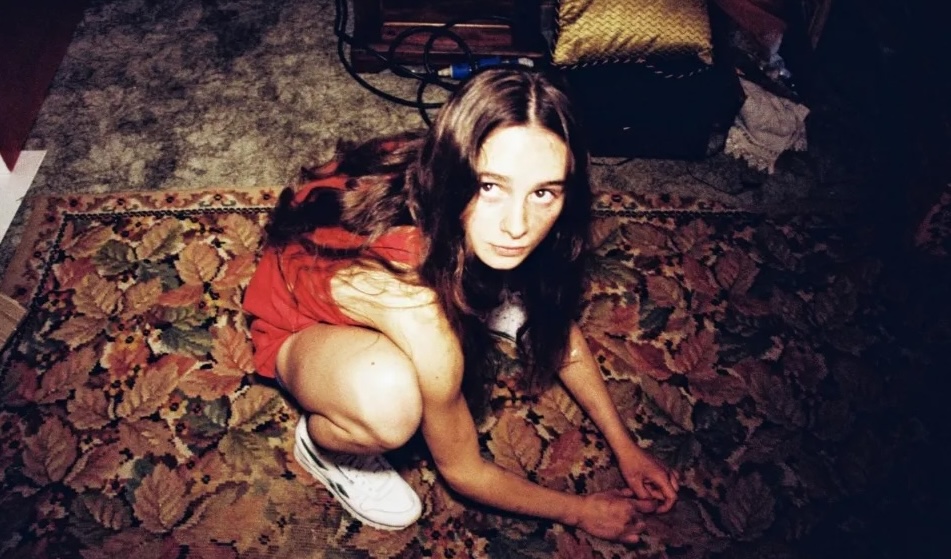
Fast forward to 1994. Maria (Saura Lightfoot Leon) is sixteen now. ‘Mum’ is Michelle (Samantha Spiro), who’s been fostering her for years. Despite still being something of an outsider, Maria has been functioning quite well. But there’s a perfect storm brewing: she’s left school but doesn’t have a job; her only friend, Laraib (Deba Hekmat), is moving away; and news comes in of Cynthia’s death. Enter thirty-year-old Michael (Joseph Quinn), an ex-foster kid of Michelle’s who needs a place to stay for a few weeks. He’s a refuse collector, and Maria finds herself drawn to him, his smell kindling childhood memories. And then she begins to emulate her mother’s hoarding ways…

There’s a lot to admire about Hoard. It’s an ambitious piece, and debut writer-director Luna Carmoon depicts Maria’s fracturing mental health with an unflinching eye, managing to convey both her inner turmoil and how she appears to those outside. The thread of images – fireworks, sherbert, tin drums, irons – is boldly interwoven; and the metaphor-made-literal bullfight scene is particularly memorable. Both Leach and Leon evoke empathy for Maria, convincingly portraying her complex character. Squires is wonderful as Cynthia too, her brittle joie de vivre always just about to crack.

The first act is brilliant, but the early stretches of the second are less compelling: I find it hard to believe in Maria’s relationship with Laraib and in her interactions with the people at the pub. I don’t understand why the lovely Michelle would keep inviting her friend, Sam (Cathy Tyson), to bring her daughters over to visit, when she knows that they bully Maria.

Things pick up again as Michael and Maria fuel each other’s neuroses, spinning further and further out of control. It’s a tough watch – even stomach-churning – but that’s okay; it should be. The resolution, when it comes, is perhaps a little pat, but it’s a relief nonetheless. A short coda provides a clue as to where the story comes from, apparently inspired by events from Carmoon’s own life.

If the ambition sometimes exceeds the execution, Hoard is never less than interesting, and Saura Lightfoot Leon is certainly one to watch.

3.2 stars

Susan Singfield

Rebus: Long Shadows

09/10/18

King’s Theatre, Edinburgh

Edinburgh’s most famous detective is making his theatrical debut, and I’m really looking forward to seeing how the iconic character fares in his home town. But we spend all day unsure if the play is going ahead after lead actor Charles Lawson was taken ill on-stage last night – the sort of dramatic twist nobody wants to experience. We wish him a speedy recovery. In the meantime, we’re relieved to hear that understudy Neil McKinven has stepped into the role, and that the show will go on.

Long Shadows is a new, original Rebus story, co-written specifically as a piece of theatre by Ian Rankin and Rona Munro. It’s a sensible decision: instead of shoe-horning a complex novel into a two-hour slot, this tale is suited to its form, and pared down, free of the literary clutter that scuppers so many adaptations. It fits into the novels’ time line though: this is retired Rebus, unable to let the job go, still haunted by the ghosts of all the crimes he didn’t solve.

In this incarnation, though, the ghosts are made flesh, with murdered teenagers Maggie (Eleanor House) and Angela (Dani Heron) given a formidably physical presence, a sort of chorus of the dead. I like this device: it gives the girls a voice, makes them real characters instead of mere victims, showing us their combined strength instead of focusing on their frailty. There’s also wit in using these ghosts as stage hands, making the scene transitions seamless, and emphasising the idea that the girls help shape the narrative.

We’re in cold case territory. DI Siobhan Clarke (Cathy Tyson), Rebus’s longterm sidekick, finally has the chance to see known killer, Mordaunt (played tonight by Andy Paterson), pay for his crimes. Technology has improved, and there’s DNA evidence tying him to Angela’s murder, twenty-five years ago. He’s got away with it so far, and Siobhan is determined not to let any loose ends threaten this opportunity to take him off the streets. She visits Rebus to see what he remembers, to see if he has any idea what the defence might have hidden up its sleeve.

Inevitably, all roads lead to Cafferty, Rebus’s Moriarty, played here with great aplomb by John Stahl. He’s exactly as I imagine him from the books, all machismo and panache, charm and thuggery. And Maggie’s death, seventeen years ago, is woven expertly into the mix, brought to mind by the arrival on Rebus’s stair of her teenage daughter, Heather. It’s a clever plot, with twists and turns that keep me guessing. I can’t deny it’s all quite expositional, a lot of telling-not-showing of the past; we’re watching people sit and talk about events rather than seeing them unfold before our eyes. But it’s enlivened by the presence of those ghosts, the gobby teenagers who won’t be shut up, and by strong performances all round.

McKinven does a sterling job. In the first act, he’s faultless: the role belongs to him. He does have a script in the second act, but he doesn’t refer to it often. It makes sense: the first act is much more of an ensemble piece, and McKinven, in his usual multiple roles, clearly knows this section well. But the latter half is essentially a three-hander between Rebus, Cafferty and Clarke; presumably McKinven has habitually spent this time in his dressing room, relaxing, before appearing briefly in the concluding scene. No matter, the script stuffed into his pocket doesn’t look out of place – Rebus is always carrying case files around. And he only seems to need it to place what’s coming next: he’s acting the dialogue, not reading it. And maybe, by tomorrow, he won’t need it at all. Either Lawson will be back, or McKinven will have learned the lines.

The set, designed by Ti Green, is perhaps my favourite thing about this whole production. I love the simplicity of it, the economy. There are no unnecessary props or pieces of scenery; it’s as uncluttered as the script. But it’s wonderfully evocative: Edinburgh’s tall grey walls and winding paths, tunnels and closes, stairs and bridges, all there at once, their purpose and atmosphere changing with the light. It’s almost breathtaking when the streets of the Old Town are turned instantaneously into a glass penthouse on the Quartermile by the stupidly simple method of lighting the side panels from behind. It’s a revelation as remarkable as those related to the crime.

So, a welcome addition to the Rebus pantheon, and certainly a must-see for fans of the irascible ex-detective.

4 stars

Susan Singfield