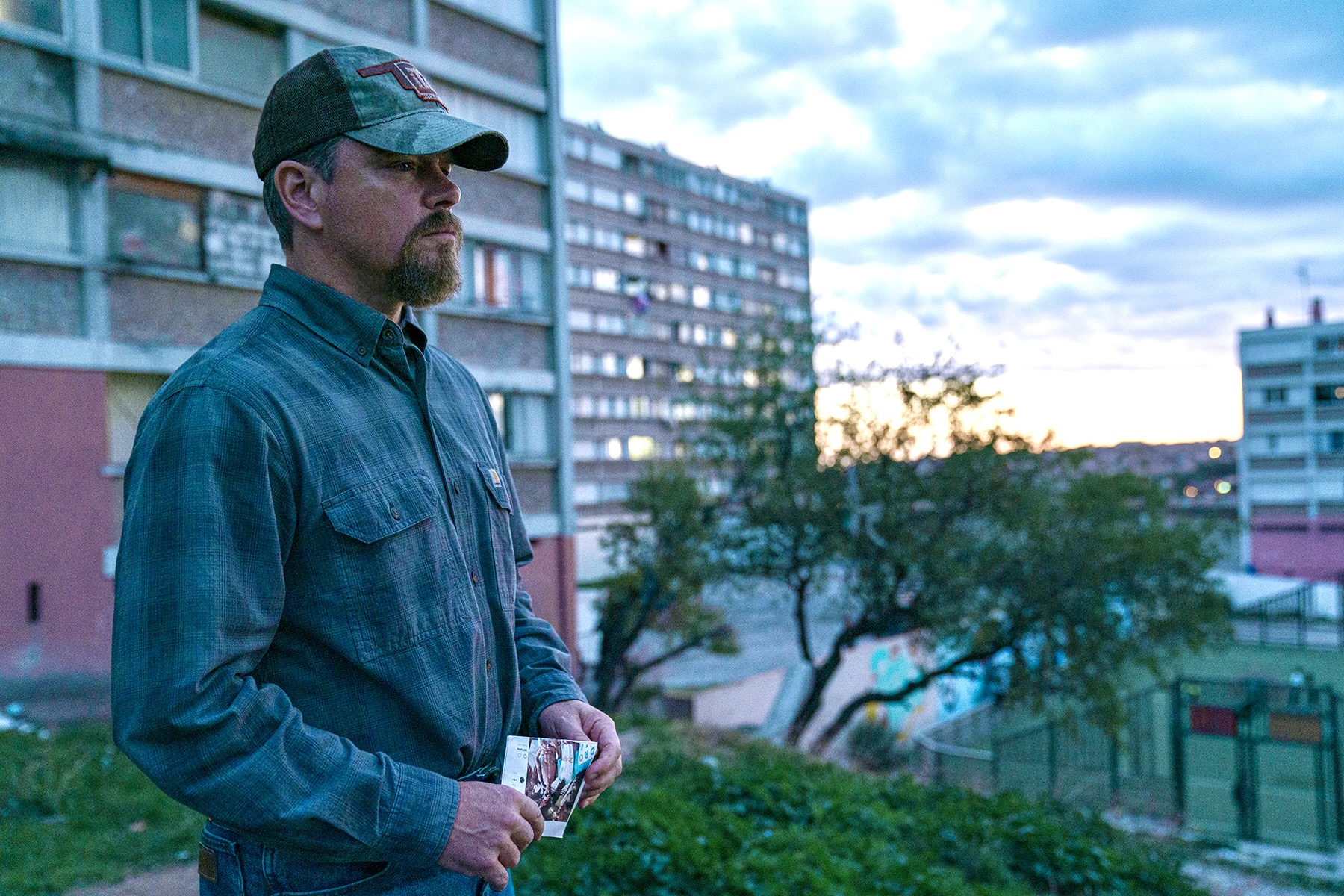
Camille Cottin

House of Gucci

02/12/21

Cineworld, Edinburgh

A talented young man is motivated by his manipulative wife to take hold of the power that lies within easy reach. He just needs to be ruthless in order to obtain it. Despite his qualms, he follows her advice and is led onwards to his own destruction.

This is, of course, the plot of Macbeth, but it’s also one that fits House of Gucci like a perfectly designed leather glove. Ridley Scott’s film, based on the book by Sara Gay Forden, relates the true life events that led up to the assassination, in 1995, of Maurizio Gucci, the major shareholder in one of the world’s most successful fashion brands. If proof were ever needed that real life can be weirder than fiction, then here it is, writ large.

When we first meet Maurizio (Adam Driver) it’s the 1970s and, though he’s well aware that he’s the potential heir to the Gucci fortune, he’s already decided he wants none of it and is training to be a lawyer. Then, at a party, he meets Patrizia Reggiani (Lady Gaga), who – having recognised the possibilities that Maurizo’s surname offers – has soon romanced him to the point where he wants to marry her.

Maurizio’s sickly father, Rodolfo (Jeremy Irons), decides she’s a ‘gold-digger’ and advises his son to steer clear, but Maurizio is smitten enough to renounce the family fortunes in order to be with her. It isn’t long before Maurizio and Patrizia are married and a baby daughter is on the way. Meanwhile, she keeps reminding Maurizio that he needs to step up to the plate and take control of his inheritance…

After the assured (but sadly unsuccessful) The Last Duel, this film feels like another Ridley Scott body- swerve. He’s always been a director that refuses to be pigeon-holed and this really couldn’t be more different from its predecessor, but where TLD felt perfectly judged, HOG is just flabby and unfocused, a parade of caricatures cavorting in a series of fancy locations. It rarely feels like these people are real and have actual lives.

While Lady Gaga certainly puts in a game performance as the success-obsessed Patrizia, even Al Pacino as Maurizo’s Uncle Aldo struggles to rise above the clunky dialogue he’s been given.

And then there’s the enigma of Jared Leto as Aldo’s deluded son, Paolo, who fancies himself as a fashion designer but has no evident talent to back him up. It’s panto season, so perhaps that explains why Leto feels the need to deliver his lines in a kind of high pitched sing-song fashion, but it just seems… really odd. What’s more, with a two-hour-thirty-eight minute running time, there’s a lot here that should have been cut back. The film doesn’t really find its mojo until the final third, but by then it feels like a case of too little, too late. There’s a welcome appearance by Call My Agent‘s Camille Cottin as the new woman in Maurizio’s life, but she’s not given enough to do.

It certainly doesn’t help that most of the people involved are venal, unscrupulous capitalists and it speaks volumes when Pacino’s Aldo – an unapologetic tax dodger – emerges as the film’s most sympathetic character.

In the end, this is something of a disappointment.

3 stars

Philip Caveney
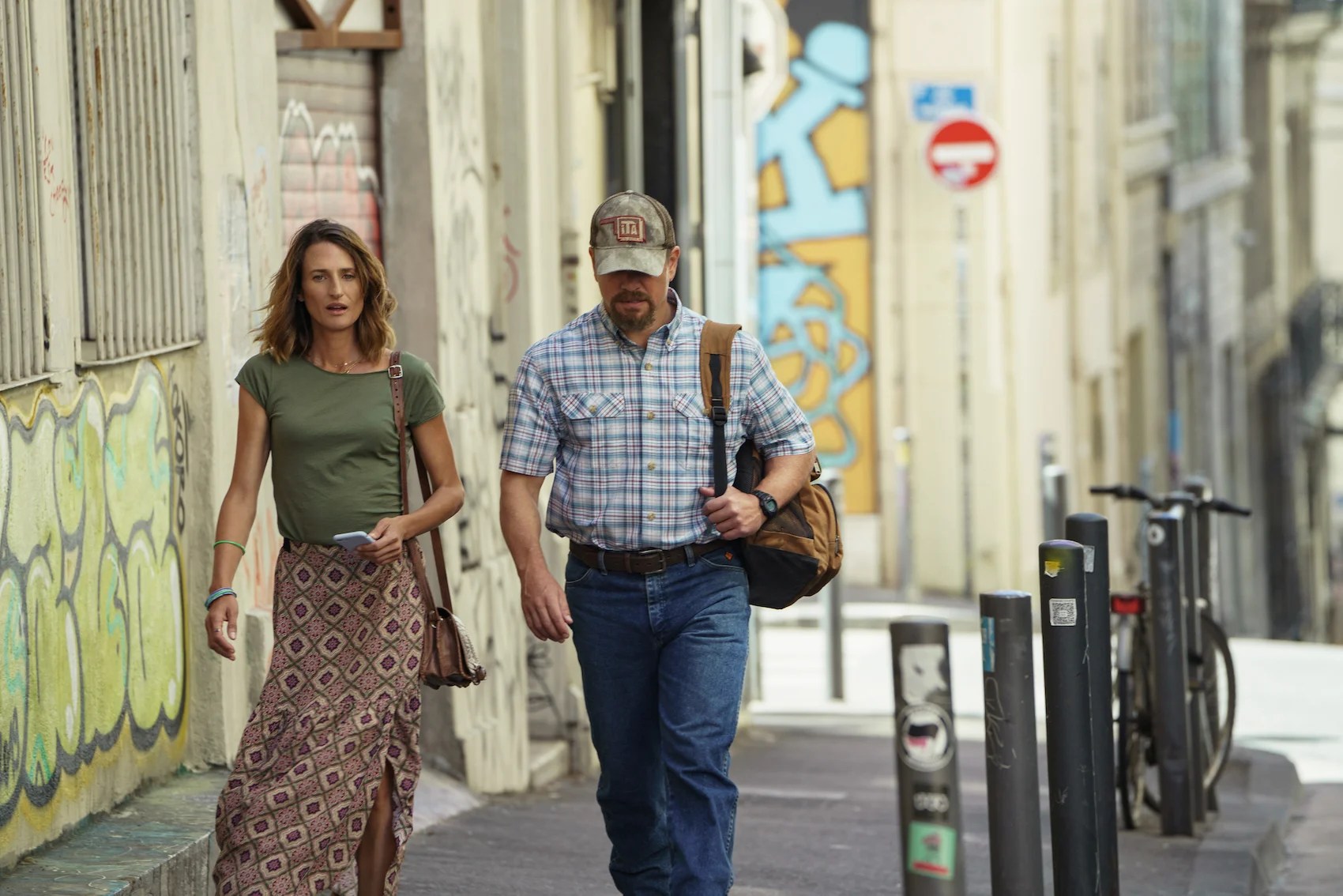
Stillwater

12/08/21

Cineworld, Edinburgh

Director Tom McCarthy’s film is a slower, subtler version of the “vigilante-let-down-by-the-system-so-has-to-go-it-alone” genre, and it’s this considered approach that makes the piece both watchable and heartbreaking. Bill Baker (Matt Damon) is a flawed hero, with neither super-strength nor driving passion to propel him forwards. He’s just a guy in a difficult situation, trying his best to put things right. And, a lot of the time, failing.

Bill’s daughter, Allison (Abigail Breslin) is in prison in Marseilles. She’s been found guilty of murdering her girlfriend, fellow uni-student Lina, and has already been incarcerated for five years. Back in Oklahoma, Bill takes on all the casual labouring work he can find, and spends the proceeds making regular visits to France. He hasn’t always been the best dad – he has a history of drug and alcohol abuse – but he’s determined to be there for Alli now.

When the film opens, this is already routine. Bill’s prison visiting card is half-full of stamps; the staff at his hotel in Marseilles know him. This is just the way things are. But then Alli gives him a letter for her lawyer: a key witness, missing from her trial, has been heard bragging about getting away with murder, and Alli wants him found. But the lawyer sorrowfully dismisses her claim: it’s hearsay; it’s too late. So Bill is left with little choice but to investigate alone…

Well, not quite alone. He doesn’t speak French, so he needs an interpreter. He only has a few acquaintances in France, but Virginie (Camille Cottin), an erstwhile fellow hotel guest, seems friendly, and she owes him a favour for looking after her daughter, Maya (Lilou Siauvaud). The trouble is, she was only at the hotel for a couple of nights, while repairs were being done on her apartment, so first he has to track her down… Luckily for Bill, the hotel staff aren’t exactly big on protecting their guests’ privacy, and anyway, Virginie doesn’t mind. She collects causes and campaigns, and she’s only too pleased to help. In fact, she offers him a room. He babysits and, well, fixes things (taps, toilets, sockets), because that’s what he does, while she reads everything she can and talks to potential witnesses.

If this all sounds familiar, don’t be fooled: McCarthy shies away from the tried-and-tested path. Bill and Virginie face real obstacles, and there isn’t always a way around them. Dogged determination doesn’t always win the day, and anyway, the last thing Alli wants is for Bill to get involved…

It’s great to see Cottin in a big-screen role. Obviously, she has an illustrious career behind her, but we’ve only recently become aware of her, via the rather marvellous TV series, Call My Agent (Netflix). She has a real presence here, inhabiting her character completely, and oozing charisma. But she’s not the only one: Siauvaud is a delight, and, of course, Breslin and Damon both have real acting chops too. Damon’s depiction of the monosyllabic, fish-out-of-water American is wonderfully understated: he’s inarticulate, humble, quietly resolved – a million miles away from the brash confidence of a typical ‘hero.’

This is a very realistic film, and cinematographer Masanobu Takayanagi shows us a realistic vision of Marseilles too. We see the gorgeous white cliffs and blue waters of the Mediterranean; the romantic rooftop view from Virginie’s apartment; the glorious tumble of shuttered Provençal streets. But we also see the seamier districts – the seedy bars and no-go areas – and they’re properly integrated: we are shown the whole city, in all its vibrant contradictions.

There are echoes here of Amanda Knox’s story, but only echoes. Stillwater draws on that narrative, but it’s very much its own tale – of love and redemption and imperfect endings.

4.1 stars

Susan Singfield