Cameo Cinema

The End

30/03/25

The Cameo, Edinburgh

Joshua Oppenheimer might not be the most prolific of directors, but he’s certainly one of the most original. The documentary-maker’s first foray into fiction is a case in point: who else would offer us an unsettling post-apocalyptic… musical?

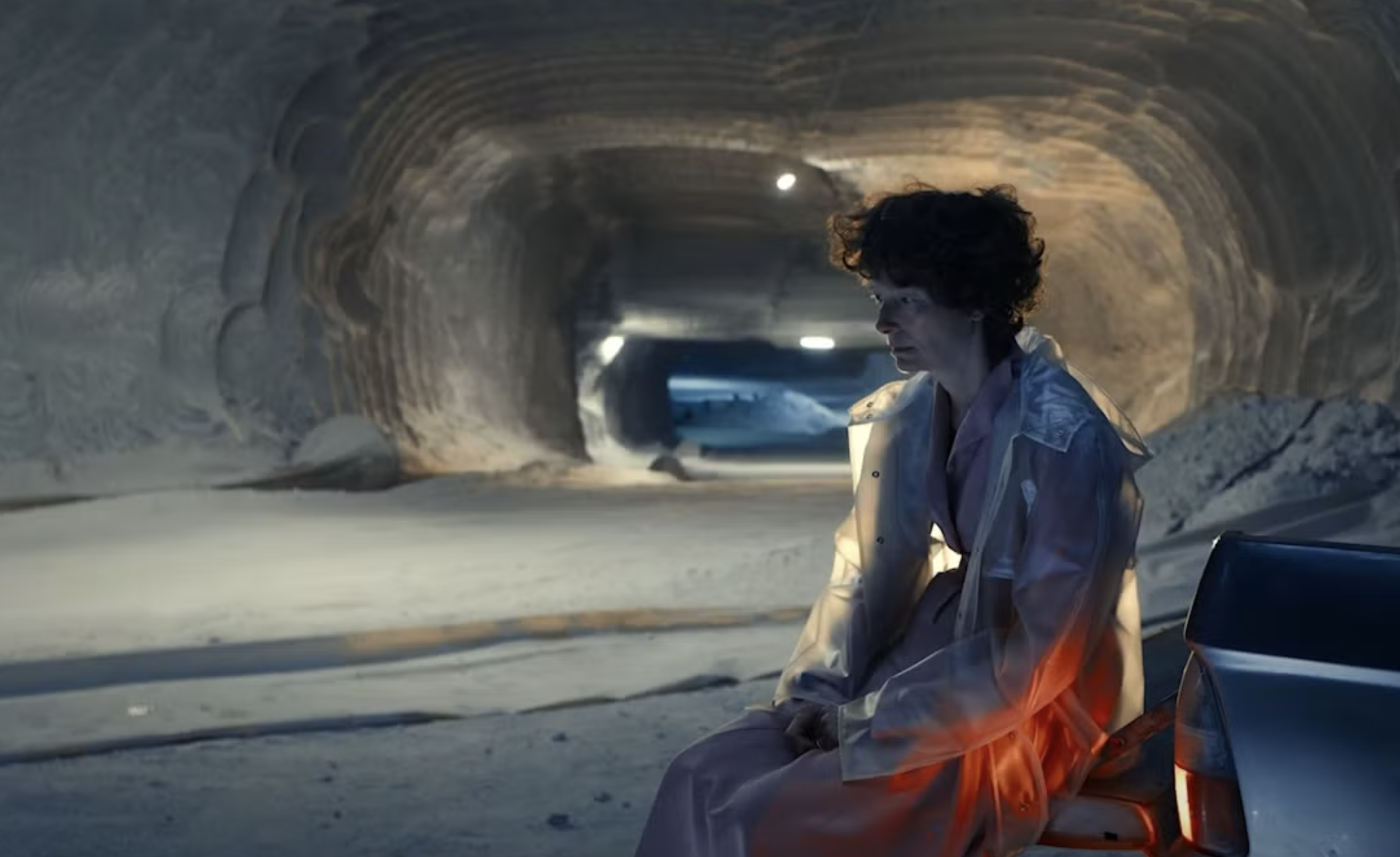
The setting is an oligarch’s nuclear bunker. There’s been some kind of climate disaster, precipitated by the billionaire’s fossil fuel company. Most of humanity is dead, but – decades after the fallout, far below the earth – a chosen few still live in luxury, albeit in the confines of some eerie salt mines.

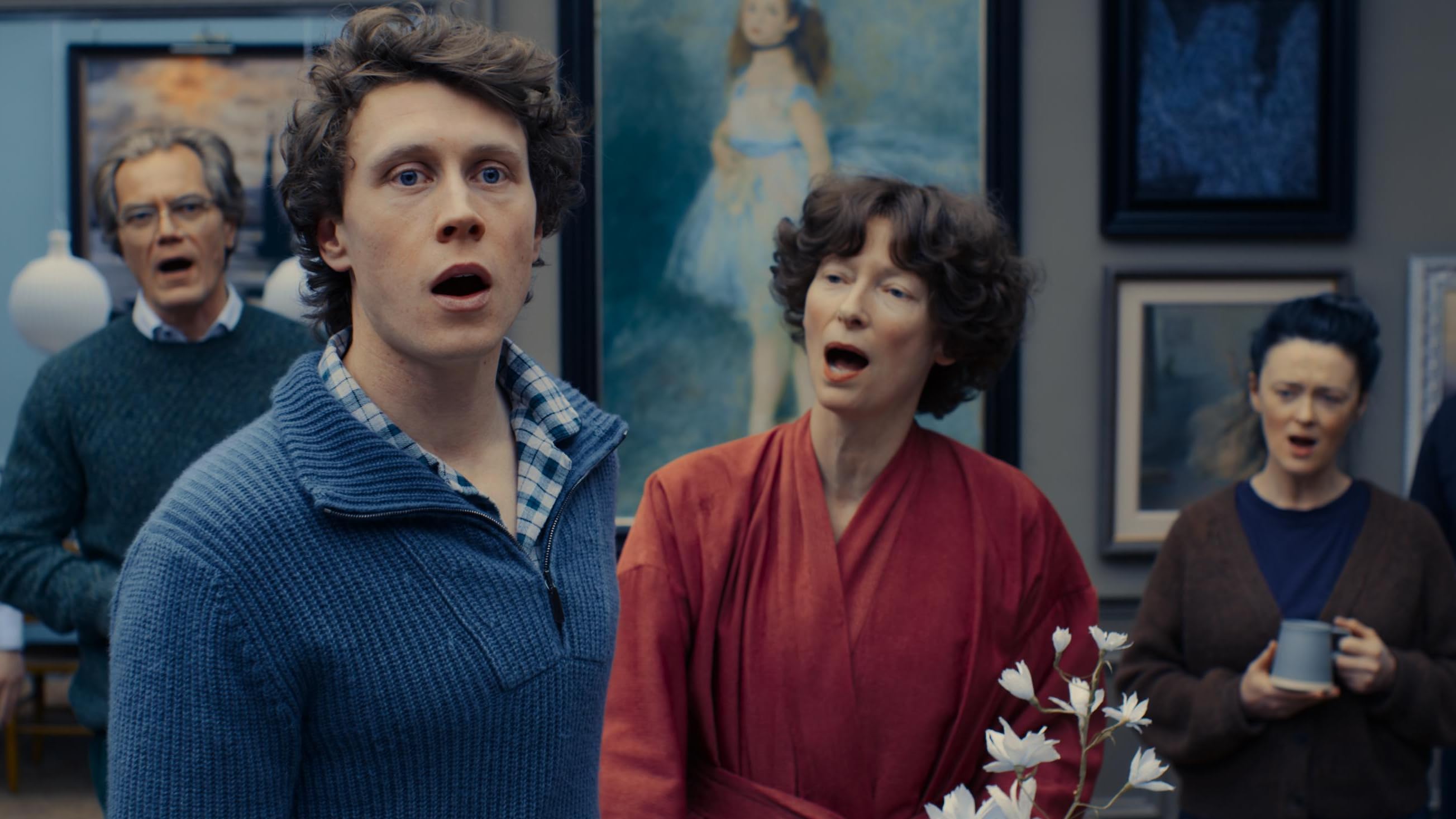
Father (Michael Shannon) is the oligarch, Mother (Tilda Swinton) his wife and Son (George McKay) their twenty-year-old child, born underground. He has never seen the sky, never met anyone outwith their small circle – and never questioned his parents’ tales about their former lives. Instead, he immerses himself in building an intricate model of all the outside places he’s only ever heard about.

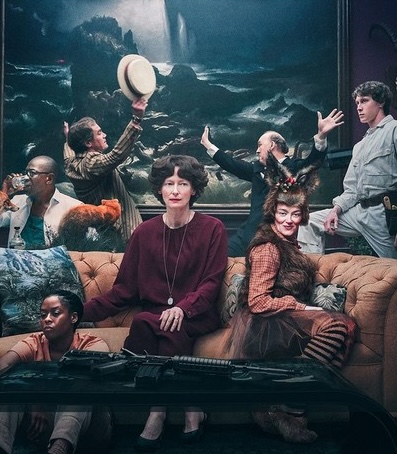
The bunker has three more occupants: Friend (Bronagh Gallagher), Butler (Tim McInnerny) and Doctor (Lennie James). The trio are touted as “part of the family” but it’s pretty clear they’re here to serve, to take care of the cooking, the cleaning and the rich people’s health. Father spends his time working on a self-aggrandising autobiography, resisting Son’s attempts to offer editorial advice, while Mother fusses endlessly over the exact positioning of the priceless artworks on the walls. Life ticks by, one day much like another, an opulence-clad monotony that fulfils none of them.

And then Girl (Moses Ingram) turns up. She’s the first outsider Son has ever met, and he’s smitten. But she’s had to leave her family behind, and her survivor’s guilt opens up new avenues of thought for Son. Why has his family been chosen, out of everyone, to inhabit this haven? And why, when the place is vast, are there so few of them? Once he starts to ask questions, everything changes…

Mikhail Krichman’s cinematography is sumptuous: the scenes in the salt mines are particularly beautiful, but every shot is a work of art, as meticulously framed as the Renoirs and Monets decorating the bunker.

The film is billed as a musical but, despite the lengthy spoken sections, it feels more like an opera, with its formality of tone and portentousness. The music by Marius De Vries and Josh Schmidt amplifies the heightened emotions, but the vocal parts are sensibly kept simple, which suits the non-singers in the cast (such as Swinton). Ingram, Gallagher and McKay are more accomplished, and they are given the most to do.

Despite its bloated running time, The End is a thought-provoking and startlingly unconventional movie, quite unlike anything else on the big screen. It’s not one you’ll find at a multiplex, but it’s definitely worth the price of a ticket at your local indie (or Picturehouse) cinema.

4.3 stars

Susan Singfield
Robot Dreams

09/04/24

Cameo Cinema, Edinburgh

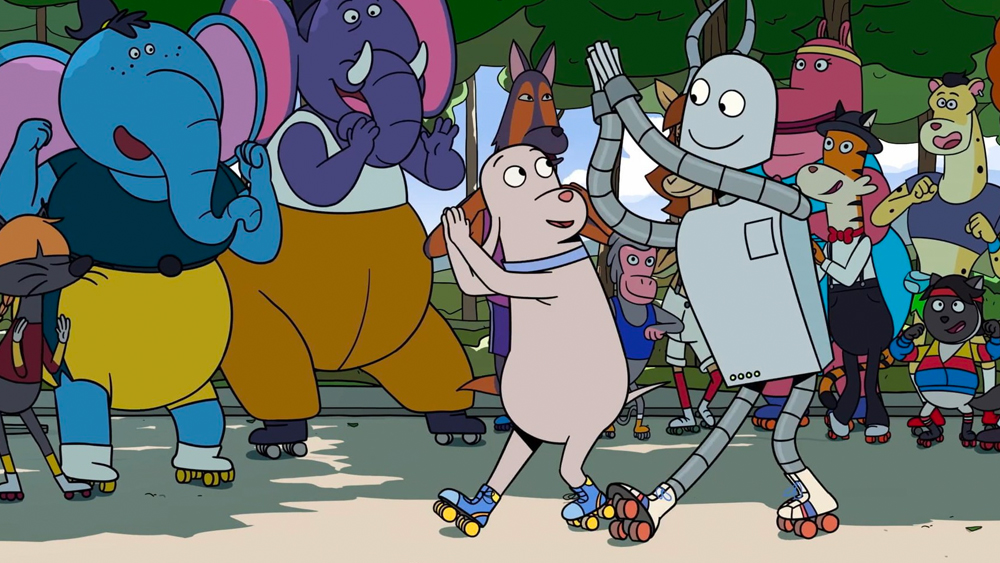
After the blistering onslaught of Monkey Man, I find myself hankering after something a little more sedate and I’ve heard promising things about Robot Dreams, even if cinematic showings are proving elusive. So I’m delighted to discover that there’s an afternoon screening at The Cameo at a time when I’m available to see it. Written and directed by Pablo Berger, based on the graphic novel by Sara Varon, this wordless animation, set in New York some time in the 1980s, is the very epitome of charm – yet its deceptively simple premise also manages to make room for some perceptive observations about the nature of relationships.

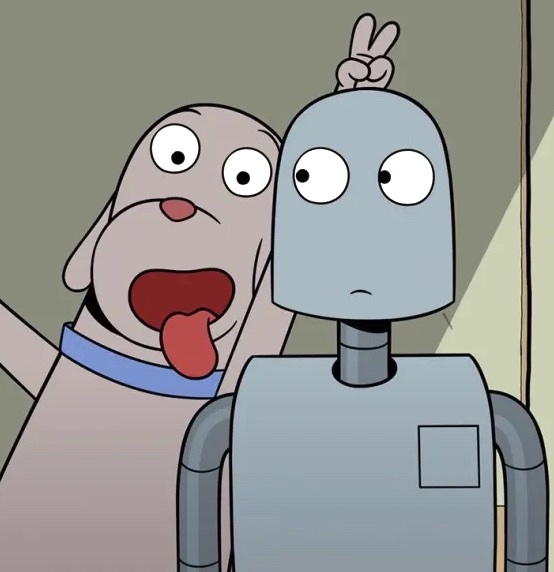
Dog lives in an apartment in the heart of the city and tries to keep himself occupied by playing the latest video game – Pong – and cooking up nightly feasts of microwave meals for one. But he is increasingly aware that he has nobody to share his life with. When he sees a TV advert for a robot companion, he eagerly sends off for one and it arrives as a flatpack all ready to be assembled. Dog is quite handy with a tool kit and soon puts Robot together. It isn’t long before the two of them are out on the town, visiting a series of beautifully-rendered locations and learning how to function as a duo.

It all goes swimmingly until, ironically, they visit the beach together and Robot learns to his cost that a metal body and sea water do not make a winning team. Rusted into immobility, he’s unable to do anything to help himself and Dog doesn’t have the strength to move him from his place on the sand, so he heads off to look for help. But it’s the last day of the season and, when he returns, the beach is all locked up and off limits until June…

It’s hard to convey how utterly charming this film is and how its various twists and turns have the power to exert a grip on my emotions. As I watch, I find myself thinking back to situations in my own past, times when things have moved beyond my control. I love its inventiveness: the constant attention to detail; the fact that pretty much every frame holds a tiny item that references something else. The dreams of the title refer to a series of visions that Robot has while he lies in the sand waiting for rescue, but Dog has them too – and unlike most animated movies, Robot Dreams has the courage to resist offering us the usual glib resolution.

The rumours are correct: this is a delightful cinematic experience which absolutely deserves its recent Oscar nomination for Best Animated Feature. And you’ll believe that dogs and robots can roller skate to the music of Earth, Wind and Fire.

4.8 stars

Philip Caveney

The Trouble with Jessica

06/04/24

Cameo Cinema, Edinburgh

The Trouble With Jessica is at the Cameo tonight, and so are director Matt Winn and lead actor Shirley Henderson, here for a Q&A. The place is bustling. Indeed, the only seats we can find are in the very front row, but that’s okay. We settle down in the comfy velvet chairs and stretch our legs out, making the most of the space.

TTWJ is essentially a comedy of manners, drawing on elements of farce. It goes to some dark places – including suicide, depression and rape – but always (trust me) with humour, eliciting belly laughs from tonight’s audience. Winn treads that precarious line well.

Sarah (Henderson) and Tom (Alan Tudyk) have invited their best friends over for what Sarah dramatically announces will be the last dinner party they’ll host in this house. Tom’s latest architectural project has flopped, and they need to sell their beloved home to save themselves from going under. But Beth (Olivia Williams) and Richard (Rufus Sewell) have brought along an extra guest, a mutual ‘friend’ called Jessica (Indira Varma), whose recent memoir has become a bestseller. Sarah is not pleased. She’s no fan of Jessica’s and, as soon as the titular character begins to speak, it’s easy to see why. She’s awful.

And then she kills herself in Sarah and Tom’s garden.

Sarah is furious. The house sale might be jeopardised! Her kids might have to go to state schools! They might have to live in a rubbish part of London! There’s nothing for it. They’ll have to move the body, pretend the suicide occurred elsewhere…

Through all the deliciously heightened nonsense that follows, the only thing I find hard to believe is that Sarah and Beth would keep up their friendship with Jessica. She doesn’t seem to have any redeeming features. She’s slept with two of Beth’s boyfriends and flirts incessantly with Tom. She’s rude and demanding and I don’t know anyone who’d put up with her.

That aside, I enjoy this film.

There is a charming cameo from Anne Reid as a nosey neighbour, and a wonderfully sinister series of scenes with Sylvester Groth as the potential house buyer. Jonathan Livingstone and David Schaal are very funny as PCs Terry and Paul, working-class foils to all the hoity-toity hogwash (although PC Paul recognises a decent clafoutis when he sees one).

It’s a stylish movie. The camera often lingers on the loveliness of the house, like an estate agent’s puff piece, reminding us of what’s at stake. Yes, Sarah and Tom are very privileged and it’s easy to mock their first world problems – but no one wants to lose what they have accrued; no one wants to fail, to have to step backwards. Of course they’d probably be fine if it all went tits up – but it’s no surprise they don’t want to put that theory to the test. It’s more relatable than its milieu might make it sound.

I like the title cards that act as introductions to the various ‘chapters’, each beginning The Trouble With… Tension mounts as the quartet struggle to come to terms with what they’re doing, as well as to manage the practicalities. Henderson in particular is riveting, her brittle capriciousness a delight to watch.

The Q&A is interesting too; it’s good to find out a little more about the process – especially Winn’s composition of the score – and it’s always a thrill to be in the same room as the people you’ve just been watching on the screen.

Once home, I find myself googling clafoutis recipes. Guess what we’re having for pudding tonight?

4 stars

Susan Singfield

Perfect Days

25/02/24

Cameo Cinema, Edinburgh

‘It’s about this guy who cleans toilets for a living.’

Yes, I know. On paper, Perfect Days doesn’t sound like the most promising scenario I’ve ever heard but, in the hands of veteran director, Wim Wenders, it’s so much more than I might have expected. Wenders is somebody who I used to love back in the day. Paris Texas (1984), is the movie I remember him best for, but, since Wings of Desire in 1987, I have lost track of his output. This latest offering is a charming, affectionate study of a man’s everyday working life and the various people he encounters along the way. 

Perfect Days picked up a couple of prestigious prizes at Cannes in 2023 and more recently was nominated for Best International Feature Film at the 96th Academy Awards. It’s easy to see the qualities that enchanted the judges.

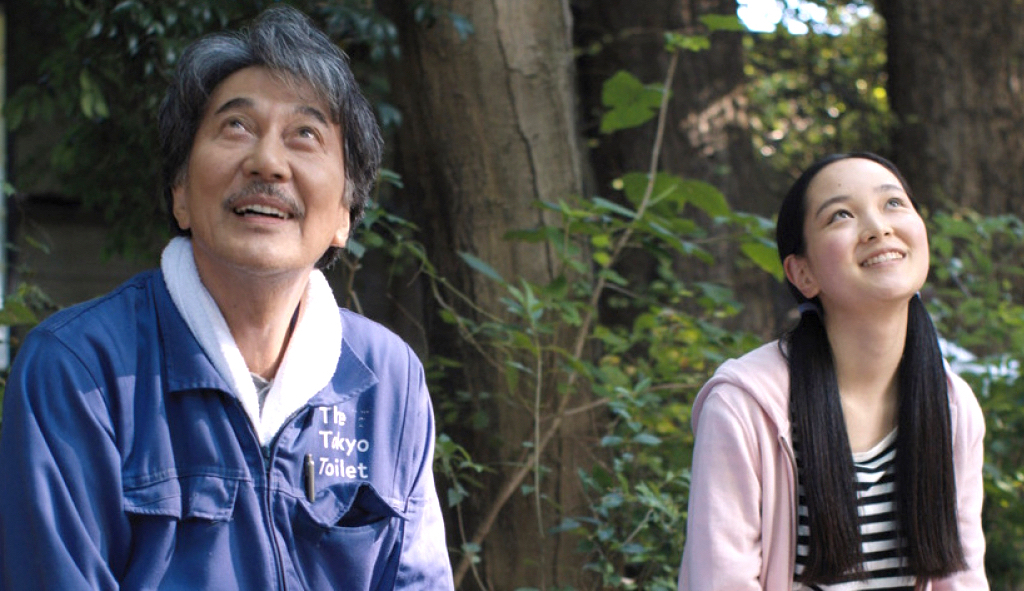
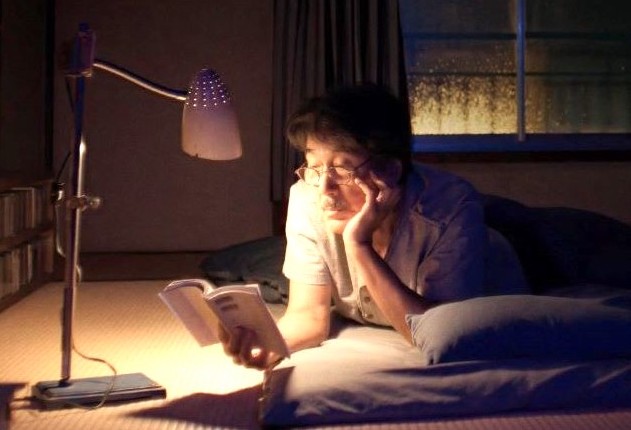
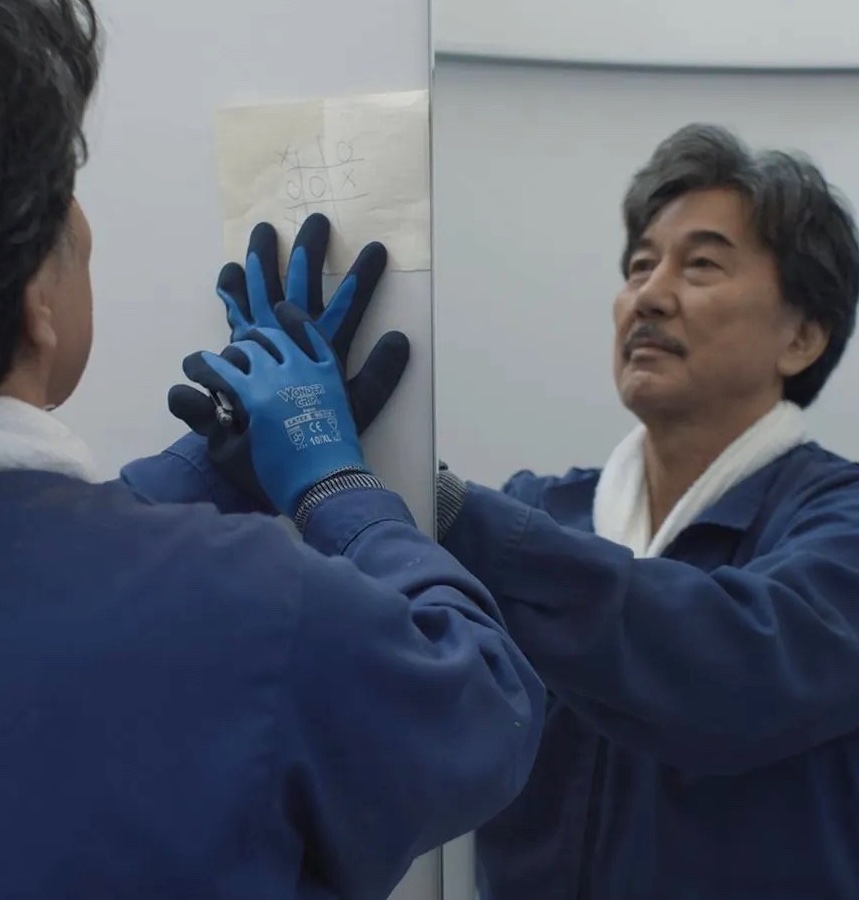
The aforementioned toilet cleaner is Hirayama (Koji Yakusho), a quiet and reserved character who has very little to say for himself but who appears to have an almost zen-like appreciation of the world about him. He’s a man who is absolutely committed to his routine and, from the opening scene onward, we share it with him. He wakes in the early hours of the morning in his small but immaculately neat apartment and we travel with him in his van as he listens to a series of vintage songs on his cassette player – The Animals, Van Morrison and (perhaps not surprisingly given the title of the film) Lou Reed.

We work alongside him as he journeys from public toilet to public toilet, ranging from simple-but-functional cubicles to state-of-the-art superloos, sharing his brief interactions with the people he encounters along the way. Not all of them are strangers to him. There’s his feckless young colleague Takashi (Tokio Emoto), endlessly chasing after a woman called Aya (Aoi Yamada) and trying to find ways to earn enough money to go out with her. There’s Hirayama’s teenage niece, Niko (Arisa Nakano), who turns up unannounced at his door one evening after running away from home. And there’s Hirayama’s estranged sister, Keiko (Yumi Aso), who comes to collect her daughter and who cannot understand why her brother is ‘wasting his life’ in such a thankless occupation.

But as the story progresses, we begin to understand that Hirayama isn’t wasting his life. Far from it, he is carrying out important work to the best of his ability, with quiet dignity and determination. Of course, a life so based on routine only needs the slightest glitch to throw everything into turmoil, which happens when Takashi fails to show up one day, leaving Hirayama to do the work of two people…

As Perfect Days unfolds in its calm, understated way, it exerts an increasingly powerful grip on the viewer, gradually revealing more about its central character but always leaving us wanting to know a little more. It’s also true to say that the city of Tokyo is one of the most important characters in the film. Wenders unveils its various charms in so many different lights, from dawn to dusk, from sundown to sunrise. Franz Lustig’s cinematography depicts its back alleys and sidestreets, stares up at its neon lit skylines in a sort of swooning wonder. 

Yakusho’s performance is also a delight, his character saying little but revealing every emotion through his range of expressions, dour and perplexed one moment, on the verge of helpless laughter the next. It all culminates in an extended shot of him driving his van home as Nina Simone’s Feeling Good blasts from the tape deck, Hirayama’s face registering the sheer unadulterated joy of every line.

Some will claim that there’s not enough content here to sustain a two-hour running time, but I would respectfully disagree. This is a little gem of a film and a reminder if ever it were needed that, at the age of 78, Wenders is still a creative force to be reckoned with.

4.4 stars

Philip Caveney

Vanya: National Theatre Live

23/02/24

Cameo Cinema, Edinburgh

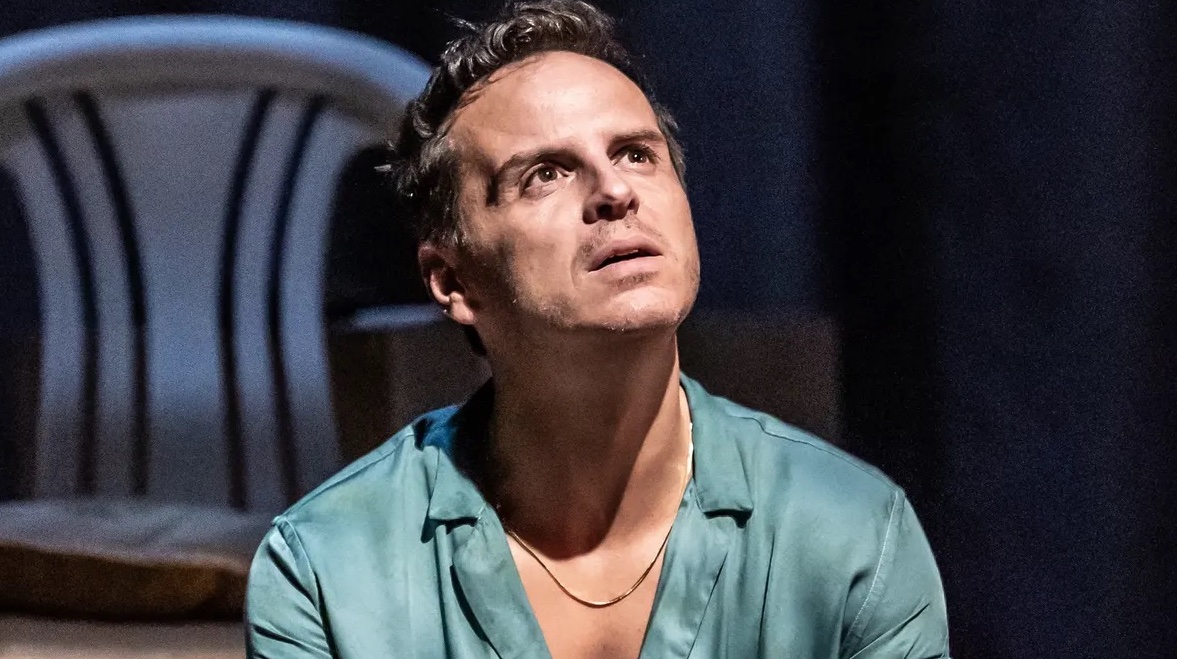
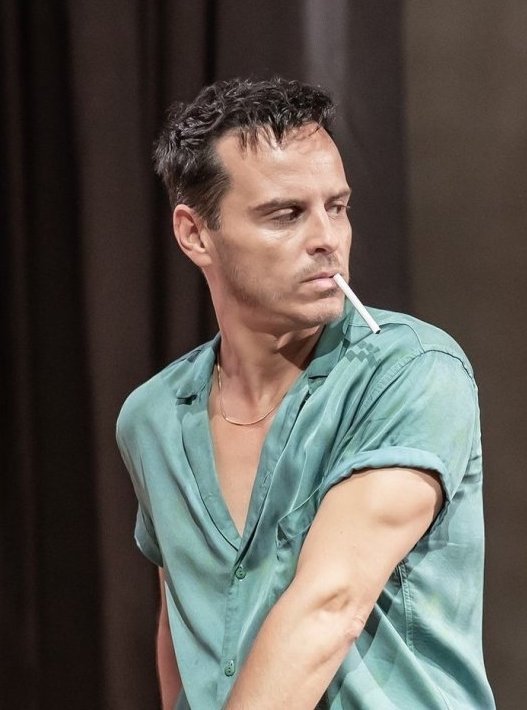
I have previously been somewhat baffled by the general adulation heaped upon Andrew Scott. Don’t get me wrong, I’ve always thought him a perfectly decent actor, but have somehow failed to appreciate the full depths of his talent.

Until now.

Simon Stephens’ brilliant adaptation of Anton Chekov’s Uncle Vanya features seven characters in a complex tale of a family’s interactions on a remote country estate. All of them are played – perhaps inhabited would be a more accurate word – by Scott. There’s no recourse to any costume changes and the set design amounts to little more than a series of chairs, a piano and a doorway. Scott slips effortlessly from one character to the next, using only slight modulations of voice and tiny mannerisms to tell me instantly who he is at any given moment. The effect is uncanny. The term tour de force is often used but I’ve rarely seen it so consummately earned.

Credit should also go to Stephens, whose script strips the story back to its basics (and slightly updates it) so that all the characters’ motivations are clear from the outset – and to director Sam Yates who keeps the whole enterprise beautifully understated, so that it flows from scene to scene like honey in a heatwave. But the lion’s share of the accolades must go to Scott, who is mesmerising in every role: pompous and self-aggrandising at Aleksandr Sebryakov, the retired professor still obsessed with working on his latest project; smooth and sensual as Aleksandr’s young wife Helena; and painfully self-conscious as his daughter Sofia, who has always been told that she’s ‘plain’.

He’s delightfully gossipy as Maria – the mother of the titular Ivan (Vanya), a hard working man who has selflessly devoted himself to supporting Aleksandr, whom he has idolised since childhood – and wonderfully tragic as Mikhail, the middle-aged country doctor who is desperately in love with Helena.

And finally, he is comically ingratiating as Ilya, an impoverished landowner, now dependent on the goodwill of the Sebryakov family. A delightful running joke has us (and the rest of the cast) forgetting that he’s there, observing everything that happens.

If this sounds hopelessly complicated on paper, fear not. The wonder of this National Theatre Live production is the way in which it glides like gossamer through the cuts and thrusts of a family drama, where even a scene where Scott is obliged to make love to himself unfolds like a dream. Throw in a rendition of Jacques Brel’s heartbreaking ballad If You Go Away and I’m completely sold, a convert to Scott’s evident talent.

Vanya – and Scott – are both extraordinary. If you get the opportunity to see this, I urge you to take it.

5 stars

Philip Caveney

The Night of the 12th (La Nuit du 12)

02/04/23

Cameo Cinema, Edinburgh

Written by Gilles Marchand and directed by Dominik Moll, The Night of the 12th features few of the traditional tropes we might expect to find in a crime procedural. It’s based around an (unsolved) real-life murder and, though it occasionally gives the impression that there may be a satisfying solution waiting for us at the film’s conclusion, it steadfastly refuses to supply one. Here is a story that is far more interested in the effects that a crime has on those assigned to investigate it than in the crime itself. It’s a brave decision on the part of the filmmakers but one that – for me at least – feels suspiciously like a game-changer.

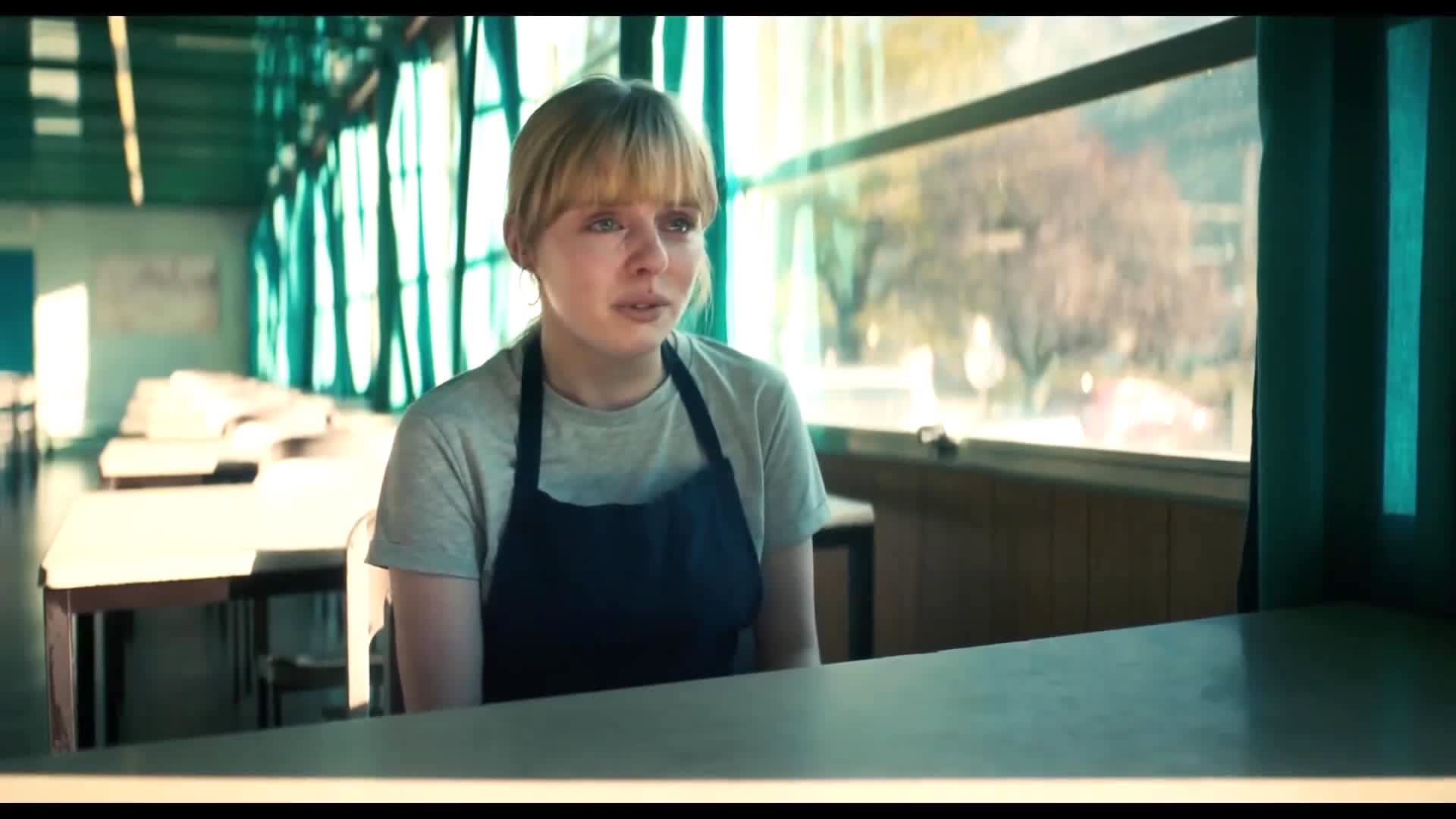
It’s the night of October 12th 2016 and Clara (Lula Cotton-Frapier) leaves the house of her friend, Stéphanie (Pauline Serieys), in the picturesque mountain village of Grenoble, to walk the short distance home. But on her way back, she’s approached by a masked stranger, who flings petrol into her face and sets her ablaze. Her body is discovered the following morning, burned almost beyond recognition.

Newly appointed police chief Yohan Vivès (Bastien Boullion) is assigned to head up the resulting murder investigation, assisted by his close friend, irascible older cop, Marceau (Bouli Lanners). Marceau is currently having serious marital issues, which make him even more unpredictable than usual and Yohan spends much of his time reigning in Marceau’s excesses. Yohan also makes a mess of breaking the news of the murder to Clara’s mother.

The team of investigators soon uncover a whole parade of suspicious males, many of whom have, at some point, enjoyed a sexual relationship with Clara. They range from a toxic bully, who has been previously arrested for beating up a girlfriend; a local weirdo living in a squat close to the murder scene; and a rapper, who has openly threatened to ‘burn’ Clara in the lyrics of one of his recorded songs, available to view on YouTube. But what initially promises to be an open and shut case keeps leading the team of investigators along a series of dead ends and, as the days, months and years slip inexorably by, Yohan is increasingly affected by his total inability to make any headway with the case…

The Night of the 12th exerts a powerful grip and its overarching theme appears to be a meditation on the nature of evil. It also explores an awful truth: that it is generally men who commit such terrible crimes against women, and it’s also mostly men who are tasked with solving them. When a new female judge (Anouk Grinberg) takes over, Yohan finds himself reinvigorated by her presence and ready to give the case one last push. But is it a change that’s come too late to be of any help?

Dark, brooding and mysterious, The Night of the 12th will surely infuriate those who prefer their mysteries to have a definitive answer, but it manages to keep me hooked right up to the final frame and, for me, that’s enough to recommend it as one to watch. I’ll be the first to acknowledge, however, that the film won’t be for everyone. Watch this for the journey rather than for the final destination.

4.2 stars

Philip Caveney

My Neighbor Totoro

11/03/18

After the harrowing Grave of the Fireflies, the next film in the Cameo Cinema’s Studio Ghibli season comes as a slice of light relief. My Neighbor Totoro is the enchanting story of two intrepid young girls from the city, Satsuki (voiced by Noriko Hadaka) and her little sister, Mei (Chika Sakamoto). In the opening scenes, we watch as the girls move with their father to a dilapidated house in the Japanese countryside in order to be closer to their mother, who is ill in hospital (with what, exactly, we are never told).

The old house harbours some fascinating secrets, including the little creatures called ‘Soot Spreaders’, who haunt the dark corners of each room and scatter away whenever humans approach; but Satsuki and Mei seem to greet such visitors with interest and delight, rather than dread. If there’s a central message here it seems to be ‘embrace the inexplicable’ and that’s exactly what the girls do, encouraged by the enthusiasm and positivity of their father. They soon make friends with Granny (Tania Kitabayashi), an old lady who lives nearby and even with Kanta (Toshiyuki Amagasa), a teenage boy who initially appears to be unfriendly but who proves to be a friend when push comes to shove. The girls also discover that the nearby forest is home to a collection of mystical creatures, not least the strange shambling clawed beast known as Totoro, who, unlike most monsters, turns out to friendly and helpful.

As in ‘Fireflies,’ this story perfectly captures the essence of a moody but resourceful  little girl (Mei) and her interplay with Totoro provides much of the humour here. Their antics are often laugh-out-loud funny. The storyline has strong echoes of Alice In Wonderland, particularly in Mei’s pursuit of a rabbit-like creature down an underground opening and in the form of a Cheshire Cat-headed magical ‘coach’, summoned by Totoro to take the girls off on fantastic adventures. Written and directed by Hayao Miyazaki, this is a delightful film that has genuine appeal for all ages. It’s also quite beautiful to look at – some of the gorgeous woodland vistas captured here would not look out of place on the walls of an art gallery.

Utterly beguiling. The Cameo’s season continues on Sunday 18th of March with Kiki’s Delivery Service. Get those tickets booked now!!

4.2 stars

Philip Caveney

Train to Busan

31/10/16

Zombie movies are a bit like buses: you wait for what seems like ages for a decent one and then two crackers come along at pretty much the same time. No sooner are we over extolling the genre-busting virtues of The Girl With All The Gifts, than Train to Busan comes thundering down the track. We’ve all heard of Snakes on a Plane, but Zombies on a train? One look at the trailer was enough to convince us that this should be our Halloween movie of choice.

South Korean writer/director Sang-ho Yeon is in the driver’s seat of this adrenalin-fuelled delight, which eschews the slow-witted lumbering zombies of George Romero and substitutes them for some hot-footed, rabid berserkers that would leave the crowd from 28 Days Later standing on the platform. They are everywhere in this film – tumbling through glass doors, raining down out of the sky and, at one point, forming an inhuman chain clinging tenaciously onto the back of a locomotive. It’s fast, it’s frantic and, above all, it’s fun to watch.

Our hero is Seok Woo (Yoo Gong) a wealthy fund manager who, from the very outset, presents as a man who looks after his own best interests. When he is obliged to (very reluctantly) escort his young daughter, Soo-an (the adorable Soo-an Kim) to Busan to rendezvous with her mother – from whom Seok Woo is separated – he expects nothing more than an uneventful journey. But there’s a barely glimpsed ‘incident’ at the station where the train starts from and an injured woman stumbles aboard and locks herself in the toilet. When she emerges, she is one of the undead and she quickly sets about biting everyone she encounters. This is a disease that travels like wildfire and, within minutes, the train is full of unwelcome travellers.  Seok Woo and a band of fellow passengers will have to use every trick they can think of if they hope to survive to the end of the line…

Like most zombie movies, this is more than it might at first appear. The train is a great big metaphor for humanity and it quickly becomes apparent that the most dastardly travellers on board are the ones who care only about themselves. Chief among them is Yong-Suk (Eui-sung Kim) a man who thinks nothing of flinging a helpless teenage girl to the ravening hordes in order to cause a diversion to escape their clutches. Time and again, the nice people (the socialists) are seen sacrificing themselves in order to help others. The question is, which side will Seok Woo end up on?

Don’t worry – this doesn’t feel anything like a lecture. While you could argue that Train to Busan isn’t particularly scary, it makes up for that shortfall by ramping events up to almost unbearable levels of suspense, utilising some incredible set pieces along the way. This is quite simply a cinematic thrill ride, one that grips like a vice all the way to its (heartbreaking) conclusion.

Don’t miss out. Book your ticket to ride before this one pulls out of the platform and disappears over the horizon.

4.8 stars

Philip Caveney


Love & Friendship

images

29/05/16

Cameo, Edinburgh

Love & Friendship is an amalgamation of two early novellas (Lady Susan and Love and Freindship [sic]), penned by the esteemed Jane Austen when she was still in her teens. It’s a witty, acerbic tale, and seems true to the spirit of this oft-misunderstood writer in a way that many screen adaptations of her work do not. Romance, here, is never really the point; we don’t really care who marries whom. Instead, this is a satire: a deliciously wry examination of how people manipulate social mores.

Kate Beckinsale, as Lady Susan, is superbly cast. She is undoubtedly a venal fiend, and yet we root for her because… well, why not? She’s attractively rebellious and unrepentant in her selfishness, and – if some men are idiotic enough to fall for her games – then really, more fool them.

Most engagingly foolish of all is Tom Bennett’s James Martin, an affable buffoon, whose lack of intelligence is more than compensated by the size of his estate. Bennett milks his role’s comic potential, clearly relishing the chance to ask, in all seriousness, which of the twelve commandments he is allowed to break.

Oh, it’s a slight film all right, like Austen’s books,”a little bit (two inches wide) of ivory” – but it’s crammed full with such verve and vivacity that it’s hard to think of a more engaging way to spend an afternoon. Especially when we’re in the delightful environs of Edinburgh’s oldest and most loved cinema, the superb Cameo, where we’ve recently become members.

4.1 stars

Susan Singfield