
16/08/23
C Venues Aurora (Main House), Lauriston Street, Edinburgh
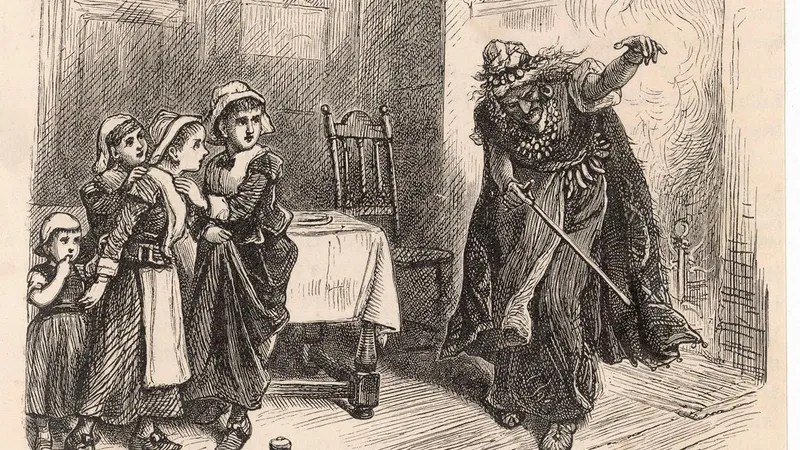
Written as a correction to Arthur Miller’s The Crucible, which relegates Tituba to the sidelines, Winsome Pinnock’s 2016 monologue reinstates her as a central figure, a key player in the Salem Witch Trials. Whereas Miller shows her practising witchcraft with the town’s white children, encouraging them to dance naked and sacrifice chickens, and then ignores her, Pinnock returns to the transcripts of the court cases, where Tituba was the first to confess, the first to name others and thus take her revenge on those who had enslaved her. Of course The Crucible is a wonderful play, but it’s a shame Miller silences Tituba as he does, because her story is really interesting, as well as important.
In this lyrical monologue, Pinnock explores Tituba’s backstory, as well as her motivation for denouncing the townspeople in Salem. I learn for the first time that she’s Caribbean, not African, and see how she has more reason than anyone else in the play to grasp this opportunity to seize power. Almost everyone in Salem is oppressed to some extent: the church exerts a strong grip, demanding adherence to its punitive codes. But there’s a clear hierarchy within this: first the white men, then the white women and then the white children. At the bottom of the pile are the Black women and children, the latter sold and sent away, the former worked to the bone and whipped on a whim. No wonder Tituba speaks out.
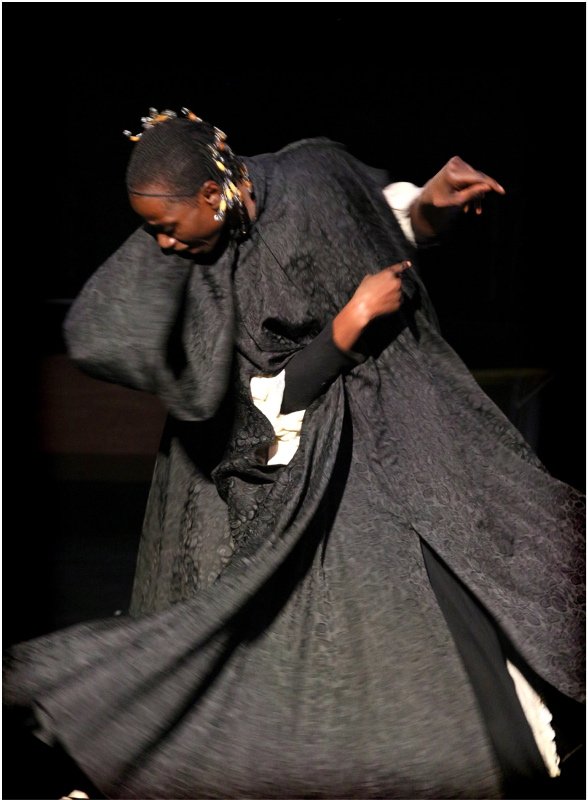
In this Africanus World production for C Venues, Faith Martin Abongo delivers an intense, compelling performance, accentuating the poetic rhythm of Pinnock’s words. This Tituba is riveting, illuminating; I learn a lot about her world. The section where she is beaten is hard to watch – as it should be – and it’s to Abongo’s credit that I can almost feel Samuel Parris’s cruel presence.
If there’s a criticism here, it’s to do with the staging. This is an intimate play, but the Main Hall is vast and cavernous and some of the words are hard to hear. I think the piece would work better if it were brought forward, closer to the audience, and if – instead of exiting between each scene, only to return moments later having made a simple costume change – Abongo were to remain onstage throughout.
All in all, this is a beautifully-crafted piece of writing, and Abongo does it justice.
3 stars
Susan Singfield


 Bouquets & Brickbats