

31/07/24
Cameo Cinema, Edinburgh
I Saw the TV Glow, written and directed by Jane Schoenbrun, is a intriguing independent film. It begins in the late 1990s and shares some DNA, I think, with Longlegs, in that it has a powerful sense of disquiet running through its very core, an overpowering sensation that there’s something horribly wrong here, though it’s hard to pinpoint exactly what it is.
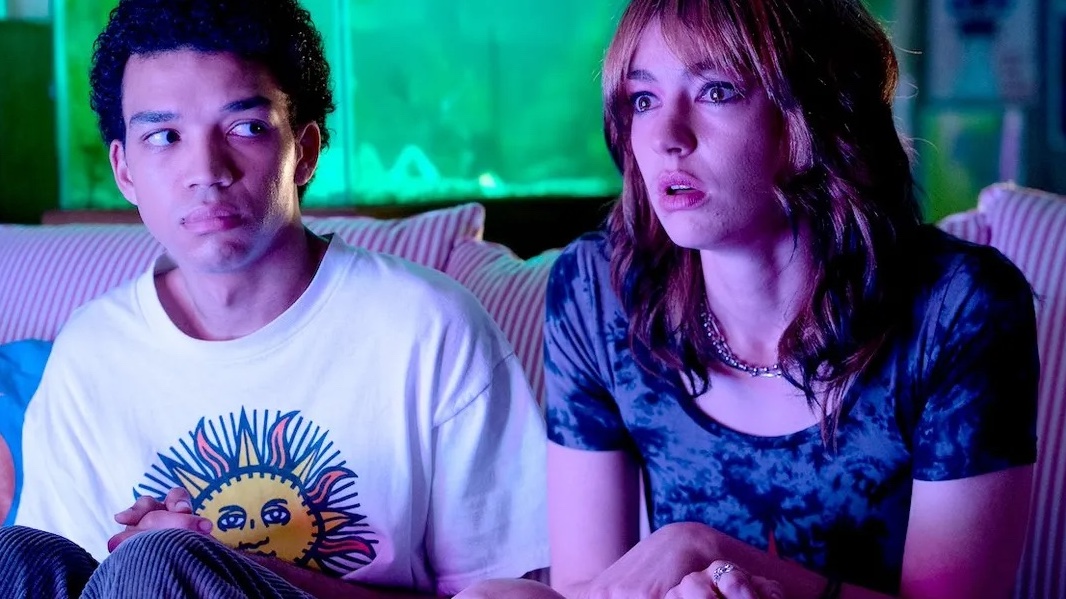
Owen (played in the opening sequences by Ian Foreman) is a repressed seventh-grader, living with his mother, Brenda (Danielle Deadwyler), and his strict, overbearing father, Frank (Fred Durst). Owen has been intrigued by trailers he’s seen for a new television show called The Pink Opaque, but it starts at 10.30pm, which is way past his bedtime. At a school event, he bumps into Maddy (Brigette Lundy-Paine) who is reading a book about the show and is clearly obsessed with it. She invites him to stay overnight at her place so he can actually watch an episode and he eagerly grasps the opportunity, telling his parents that he’s having a sleepover with a schoolfriend. The episode he watches blows Owen’s mind and he’s an instant convert to its powers.
The action cuts to two years later. Owen (now played by Justice Smith) still can’t stay up to watch that show. His mother has died from cancer and his uncommunicative father spends his hours alone in his room, watching his own favourite TV programmes. Maddy starts to videotape episodes of The Pink Opaque and leaves them for Owen to pick up, so he can watch them in secret. And then, some years later, the show is cancelled after its fifth season – and Maddy disappears. Owen doesn’t see her again for a decade…
I Saw the TV Glow is a great big metaphor wrapped up in spooky bright pink trappings. It’s clear from the word go that Owen is unsure about who he is. There’s no romance between the two leads: Maddy makes a point of telling him, at their first meeting, that she is ‘into girls’ – though there’s little evidence to suggest she’s into anything aside from that TV series. Owen takes a dead-end job working in the local cinema, but the whole time he’s thinking about The Pink Opaque, about its cast of characters, who seem to know exactly where they belong in the world. After Maddy’s departure he is adrift: alone, forsaken, barely able to function in a world where he feels buried alive.
This film is all about the power of the images we hook into at an early age: the resonance they have in shaping our lives; the overpowering desires we have to be a part of them. Schoenbrun is trans and there are obvious parallels here with her lived experience, but anyone who has been infatuated with something in their youth – or felt like a a misfit – will be able to identify with the undercurrents that bubble away beneath the film’s dark, brooding surfaces. The occasional excerpts we are offered from The Pink Opaque are bizarre, dreamlike sequences, that put me in mind of early David Lynch.
As the years pass, Owen drifts – apparently, he acquires a family of his own, but we’re only told about them, we never see any of his home life. He is still essentially alone and when, years after its demise, he is finally able to stream The Pink Opaque on demand, he is bewildered by what he sees.
This is a compelling, brooding film, that will stay with you long after its heartbreaking conclusion – and Schoenbrun is surely a director to watch.
4.6 stars
Philip Caveney
 Bouquets & Brickbats