Brian James O’Sullivan

Maybe Tomorrow

14/10/25

Traverse Theatre, Edinburgh

Glamour and strife! Bigger than life!”

Siân Silver (Liz Ewing)’s showbiz career is careering towards the end of Sunthorpe-on-Sea’s dilapidated pier, where the seventy-five-year-old singer is gamely touting her outmoded razzle-dazzle to ever-smaller audiences for a measly £250 a week. It’s a long way from the stardom she dreamed of, but at least she’s still on stage, performing – until the theatre manager tells her she’s no longer required. Siân doesn’t know who she is if she’s not sparkling in the spotlight. What’s left when even the dregs she’s settled for are so cruelly stripped away?

Forced to confront her failure, Siân is visited by the ghost of Siânny past (Julia Murray). Young Siânny is brimming with hope and vitality, urging her future self to embody the spirit of her long-time heroine, Little Orphan Annie. Instead of bemoaning her hard-knock life, Siânny thinks Siân should focus on making the most of the years she has left. “Maybe now it’s time…”

At first, Siân’s having none of it but she soon realises she has nothing to lose. Why not step into the plucky red-head’s ankle socks and Mary Janes? After all, why should little girls have all the fun? The role of Annie is wasted on a ten-year-old! If she has to bow out, then she’ll do it on her own terms…

Written by Hannah Jarrett-Scott with music and lyrics by Brian James O’Sullivan, Maybe Tomorrow is a decidedly quirky piece of musical theatre, rife with heart and humour. The songs work well, paying homage to Charles Strouse’s original score without allowing it to overwhelm this play. Under Lesley Hart’s direction, Ewing shines as the protagonist (and not just because of her sequinned costumes), imbuing the fading performer with pathos. Siân is talented but unappreciated: of course she’s resentful; of course she’s angry at her producer-ex, who promised her centre-stage but left her in the wings. Murray provides excellent support, not only as the vivacious Siânny, but also as a series of minor male characters, with an impressive range of hats, accents and, um, farts.

An ageing Annie-fan myself, I enjoy this show immensely. It’s undeniably absurd, but somehow rather beautiful. It feels like the start of something that could easily evolve into a full-length musical production, where both themes and characters would have more space to breathe. Why not pop along to the Traverse this week and see for yourself? “You’re gonna have a swell time.”

4 stars

Susan Singfield
FEIS

23/09/25

Traverse Theatre, Edinburgh

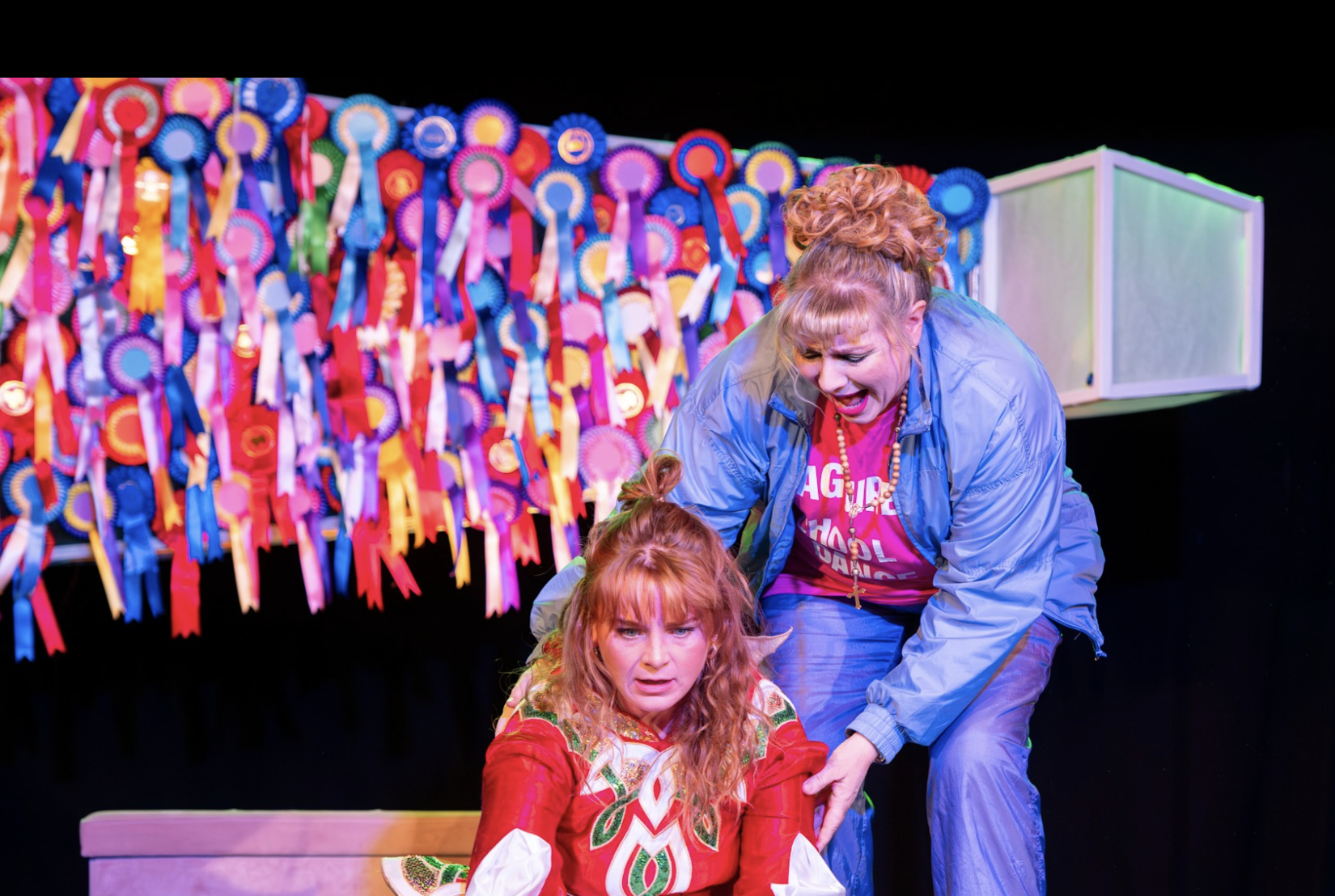
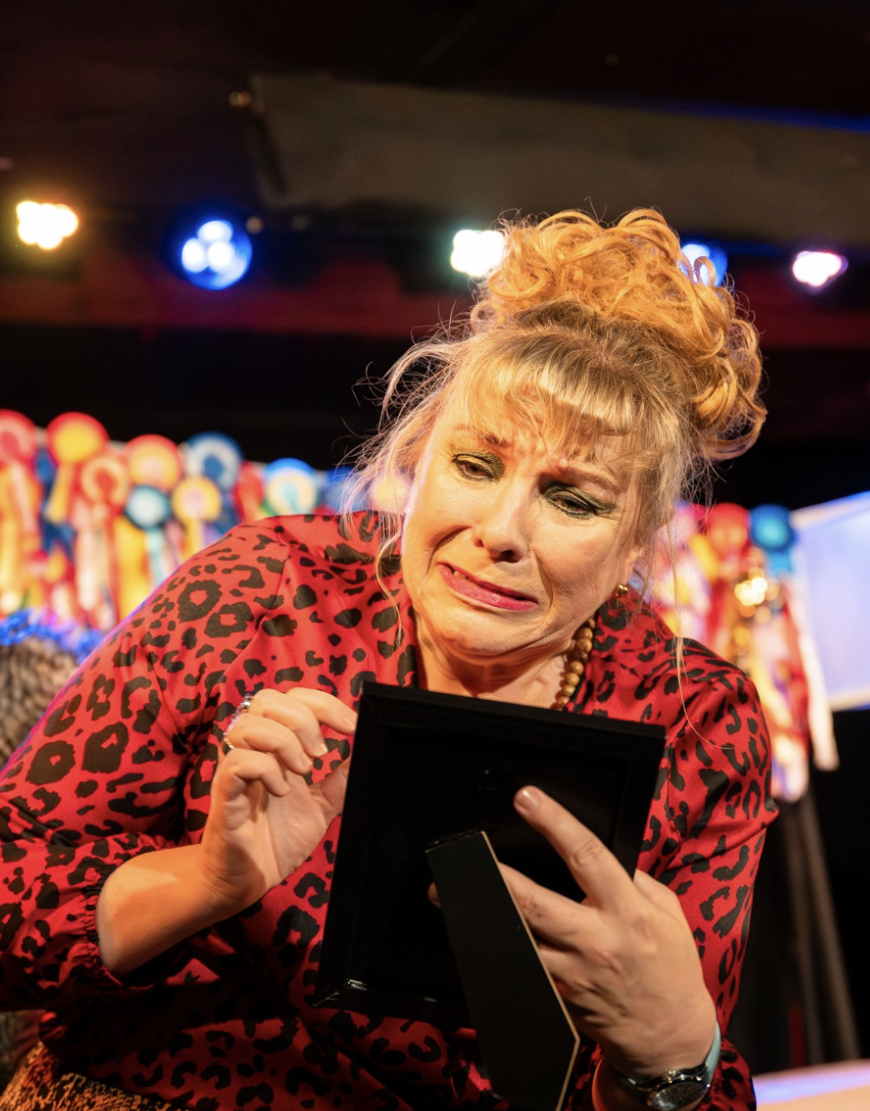
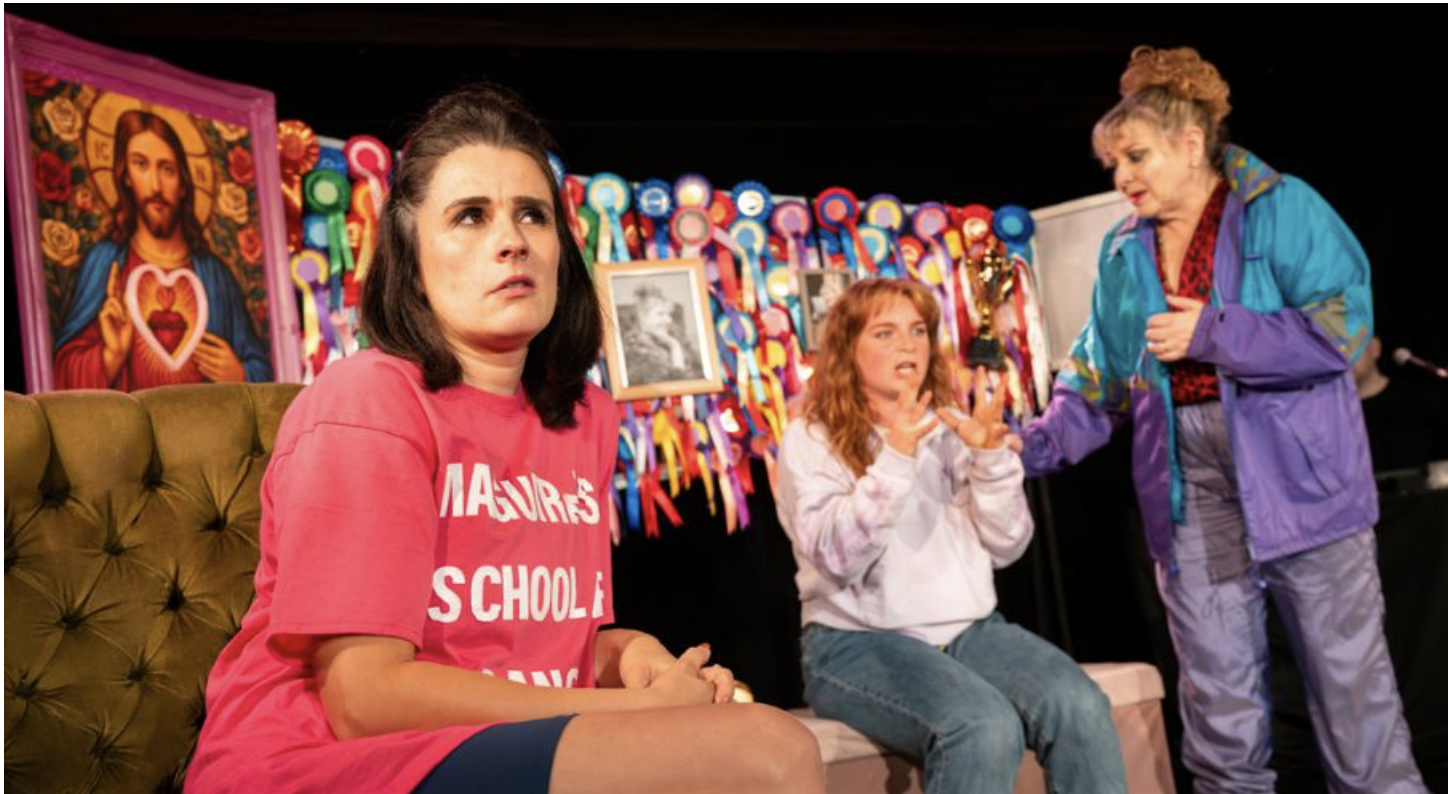
All is not well at Maguire’s School of Irish Dance. Back in the day, this Glasgow-based outfit was seen as a leader in its ghillie-footed field, when Deirdre (Louise Haggerty) won enough rosettes to paper the walls of her teenage bedroom. Decades later, the school’s fortunes are flagging disastrously and she’s been reduced to offering a ‘VIP’ service, performing online for an exclusively male clientele, who are not above offering extra money for her used socks.

Deidre’s mother, Maura (Julie Coombe), is blissfully unaware of these new measures but, when her teenage granddaughter, Aoife (Leah Balmforth), falls flat on her face at the 2023 Irish World Championships, things look pretty grim. Then Maura manages to scare off the school’s only other decent dancer and it’s clear that something has to give…

Billed as a dark comedy – though perhaps the term ‘farce’ might be more appropriate – FEIS (pronounced fesh) is a cautionary tale about ambition and the lengths to which some people are prepared to go to in oder to secure a win.

Writer Anna McGrath pursues the laughs with a vengeance, though it has to be said that the various twists and turns of the story often defy credibility and, in one particular instance, a real-life star of the Irish dance world has a pretty heinous accusation levelled against him.

Haggerty gives the lead role her all, even throwing in what looks to this novice like an impressive bit of Irish-dancing, but I remain unconvinced that anybody would go to the lengths Deidre does in order to attain her objective. Balmforth feels severely underused throughout, while Coombe’s is obliged to deliver a series of fat-shaming comments at an unseen dancer that feel somewhat at odds with contemporary thinking. (This may be the point but it feels ill-judged to me.)

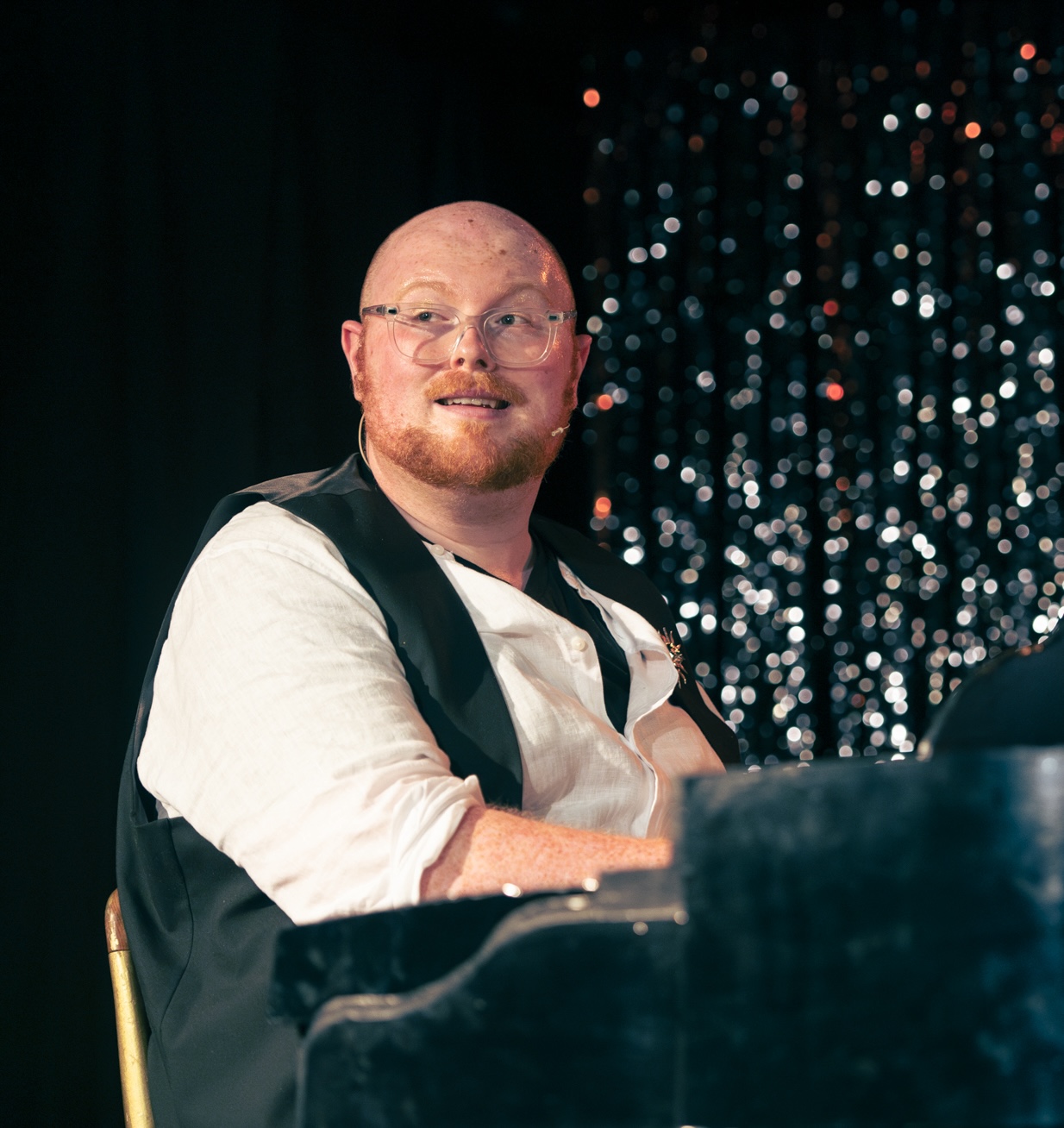
Musician Brian James O’ Sullivan adds some spirited jigs and reels to the proceedings. Michael Flatley, meanwhile, was unavailable for comment.

3 stars

Philip Caveney

The Last Cabaret on Earth

17/09/24

Traverse Theatre, Edinburgh

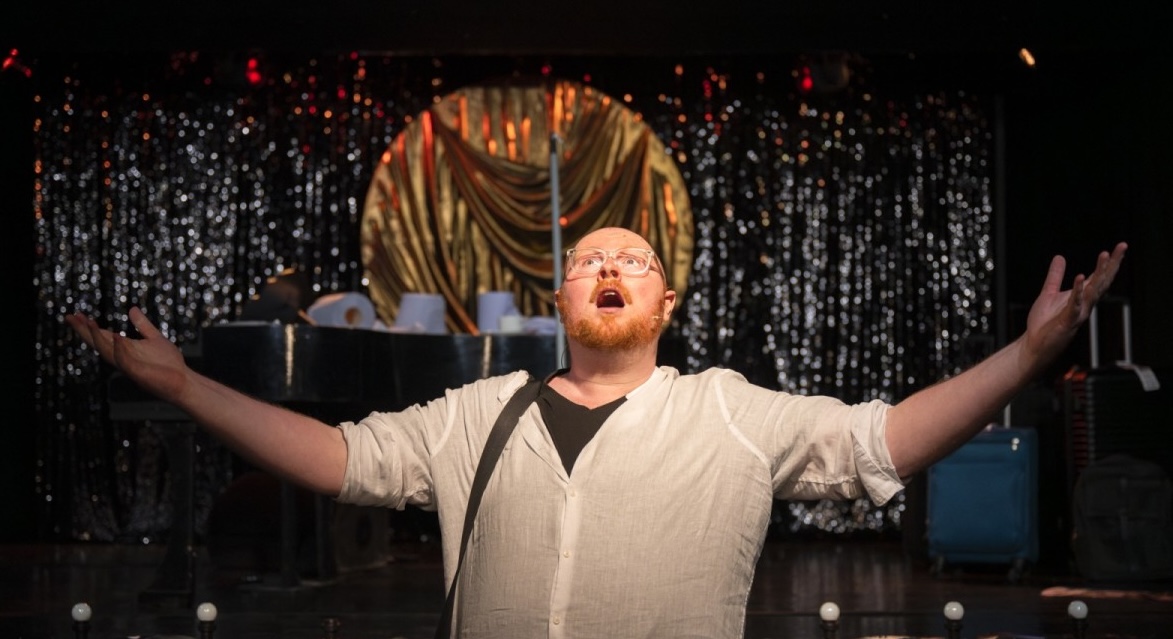
Almost before we know it, a new season of A Play, A Pie and A Pint is upon us for its – gasp! – 20th Anniversary run. This opening piece is part-play, part-cabaret and the title is not – as you might suppose – metaphorical, but quite literal. Due to a catastrophic solar event, the world is due to end in one hour (don’t panic!) and Sam (Marc Mackinnon) is stuck in a locked-down airport hotel, delivering his final show to a captive audience. That’s us, in case you were wondering.

He’s stranded hundreds of miles away from his longtime partner and co-creator, Mel, who can only contribute to the performance via a series of jumbled text messages. As the final hour ticks relentlessly away, Sam offers us some insight into his tortuous path into show-biz: the people who helped him on his way, the others who stood in his path.

One thing’s for sure: when the end finally comes, he’ll greet it with a song and a smile…

Mackinnon is an engaging actor and he delivers Brian James O’Sullivan’s script with considerable skill, performing a series of classic songs in a wonderfully distinctive style. Under Joe Douglas’s direction, Mackinnon lures the audience into his prematurely fading orbit. A sequence utilising an old glitter-ball and the torch from a mobile phone is particularly affecting.

I do have one reservation. Although the songs – ranging from Judy Garland to James Taylor – are beautifully sung and Mackinnon has a strong, plaintive voice, there isn’t much original material here. There is a charming little ditty about a man who lives in a house made of pasta (!) but I would like to hear more new compositions.

However, this apocalypse is weirdly captivating and a strangely delightful way to spend your last hour – even if the tragic conclusion seems horribly prophetic.

3.8 stars

Philip Caveney

Meetings with the Monk

17/010/23

Traverse Theatre, Edinburgh

Meetings With the Monk, this week’s offering from A Play, A Pie and A Pint, is a gentle affair, a study in both mental health and the limitations of live drama. Deceptively simple in tone, it explores these two issues in some depth – although the meta-theatricality arguably hogs the show.

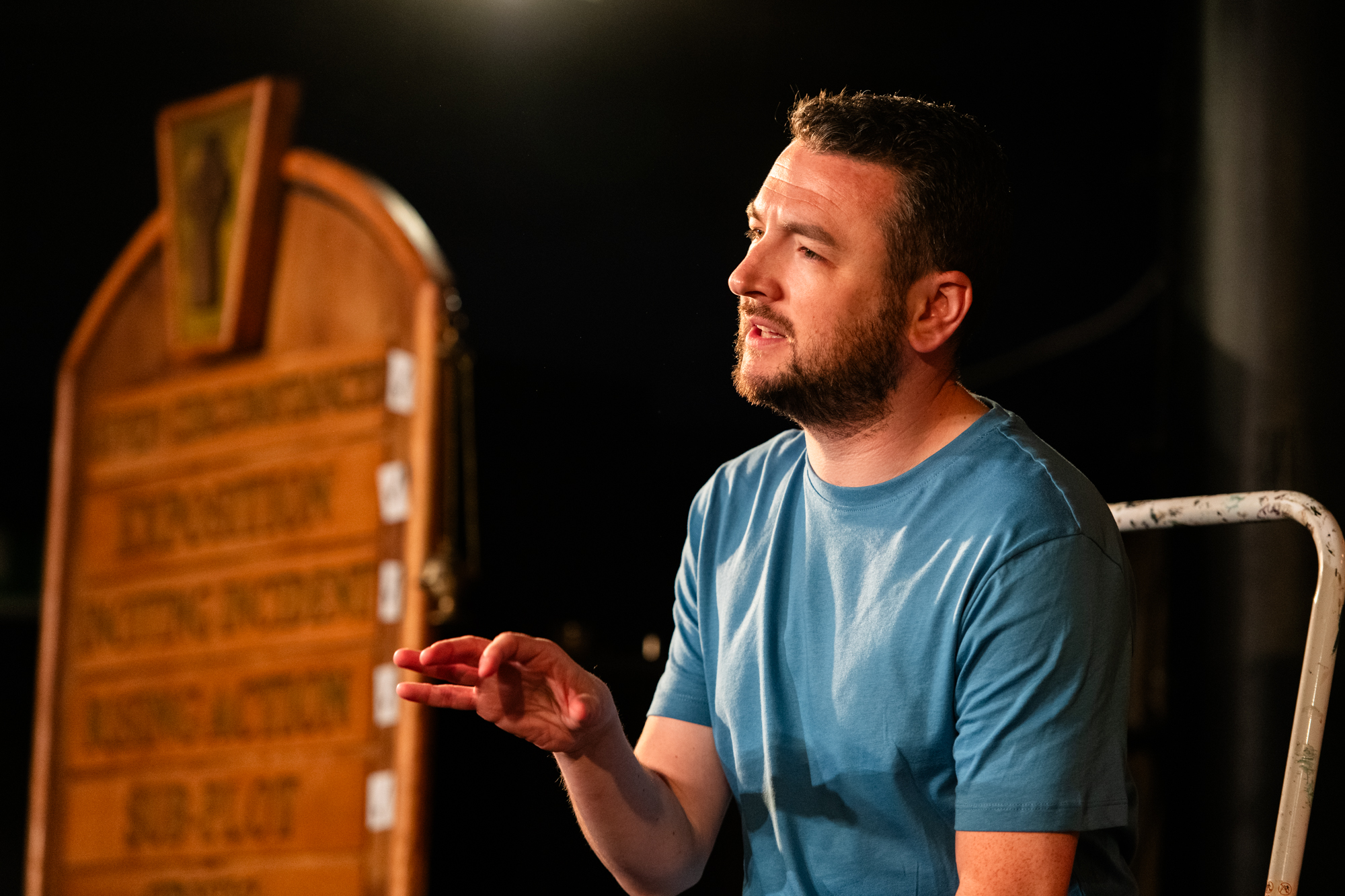
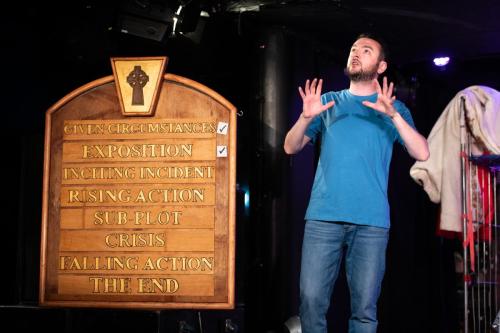
Brian James O’Sullivan is our guide, the elision between writer, actor and character established right from the off, as he assumes the role of the front of house staff, pointing out the emergency exits and informing us about next week’s play. He’s chatty and friendly, explaining what’s going to happen, breaking down the performance into its component parts, ticking them off on a list as they occur. Introduction? Check. Exposition? Check. Rising action? Bring it on.

The story is almost incidental. The title sounds enticing (what do monks talk about?) but, actually, the meetings with the brothers are the least interesting things about this piece. It turns out that people who live cloistered lives don’t have all that much to say. Still, their soothing words have a profound effect on ‘Brian’, who’s struggling with depression, and thinks that taking a leaf out of his Granny’s book and going on a retreat might help. The Abbey is very different from his home in Glasgow and, in this quiet place, he finds the space to clear his head. 

O’Sullivan is a stand-up comedian and he uses that skill to his advantage. Although this piece isn’t a comedy by any means, his easy interaction with the audience means that we’re immediately on his side, and he knows just when to undercut a difficult topic with humour, so that it never feels too much, even when he’s talking about suicide. 

The set (by Gemma Patchett and Johnny Scott) is monkishly austere, while Ross Nurney’s lighting – appropriately – lightens the mood, a simple coloured spot indicating an abbey or the goodness that shines from Brother Felix.

Nimbly directed by Laila Noble, this is an enjoyable and thought-provoking play, although I do find myself wishing for a little more substance. I really enjoy the exploration of theatrical storytelling, but I’d also like a bit more plot or at least a bigger climax. Father Felix, who appears as a recorded voice – apparently, there are several different recordings, and O’Sullivan doesn’t know which will be played on the day – feels like a wasted opportunity. I keep waiting for him to say something memorable. 

Nonetheless, I applaud the experimental nature of Meetings With the Monk. It’s a quirky, original piece of writing, and one that invites much discussion afterwards..

3.6 stars

Susan Singfield