Brady Corbet

The Testament of Ann Lee

03/03/26

Filmhouse, Edinburgh

Watching The Testament of Ann Lee I find myself, once again, in the uncanny valley of the true story that seems so mind-bogglingly unlikely, I start to ask myself if the ‘facts’ might have been tampered with for entertainment value. But no, it only takes a swift Google after the viewing to establish that Ann Lee really did do all the things that are depicted here. She was the founder of The Shakers – and, if your knowledge of this mysterious religion extends only to the rather fancy furnishings they left in their wake, join the club.

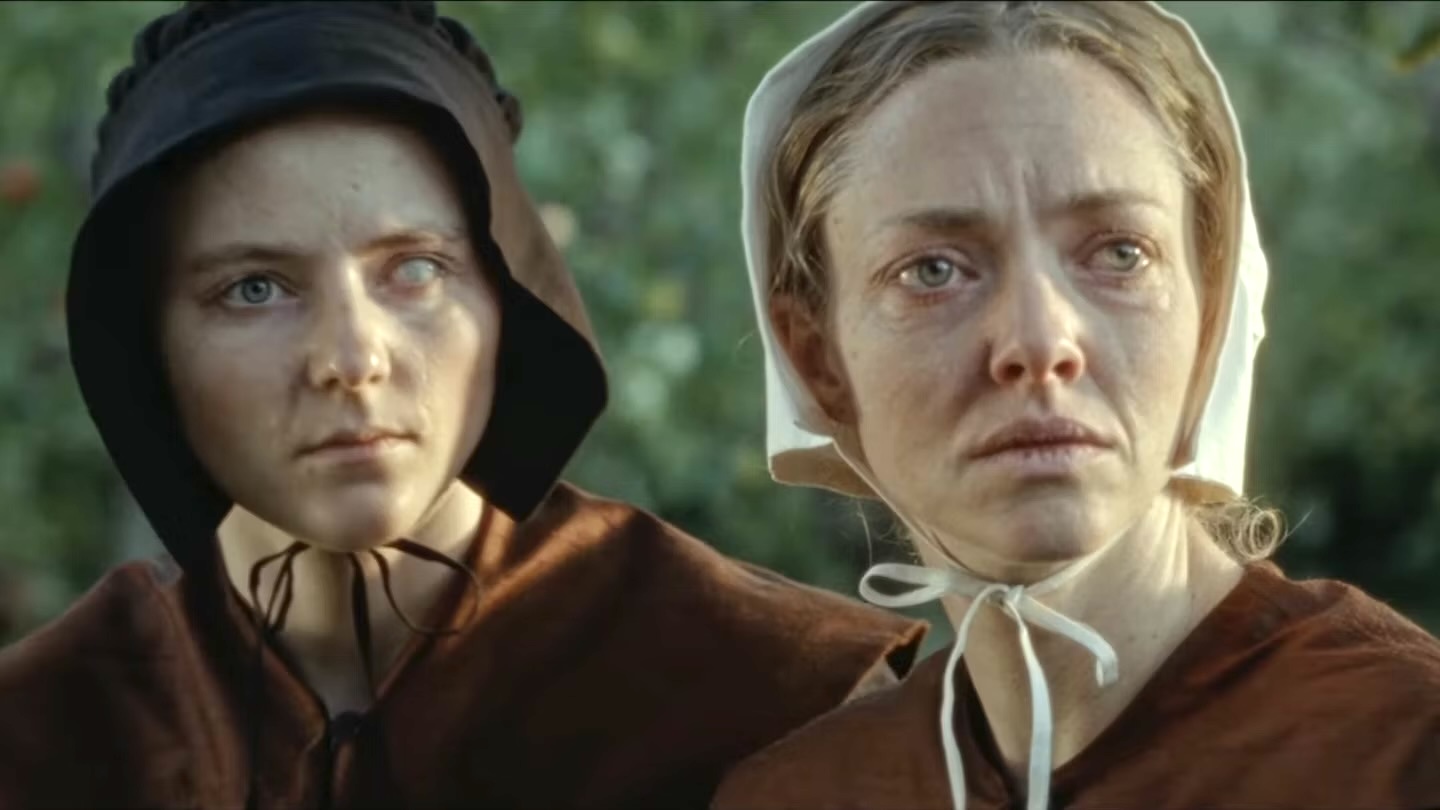
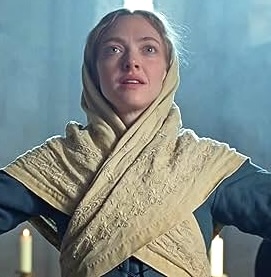
Directed by Mona Fastvold and co-written with Brady Corbet (director of The Brutalist), TTOAL is a great big sprawling narrative about the titular Ann (Amanda Seyfried), narrated by her sister, Mary (Thomasin McKenzie). It follows Ann from her humble childhood in Manchester, through her ill-fated marriage to Abraham (Christopher Abbott), and on to her ambitious pilgrimage to America where, accompanied by her tireless brother, William (Lewis Pullman), she establishes a religion on the premise that she is the reincarnation of God in female form. As you do.

It’s clear, when viewed through a modern lens, that Ann’s beliefs are founded upon a mixture of depression after losing four children in their infancy and her subsequent conviction that sex is inherently evil, something only to be indulged in with the express aim of creating babies. Blaming herself for their premature deaths, she stopped eating and subsequently suffered from visions and began exhibiting the strange, twitchy movements that ultimately gave her religion its name. (For a while there it was going to be the Shaker-Quakers, but they settled for something snappier.)

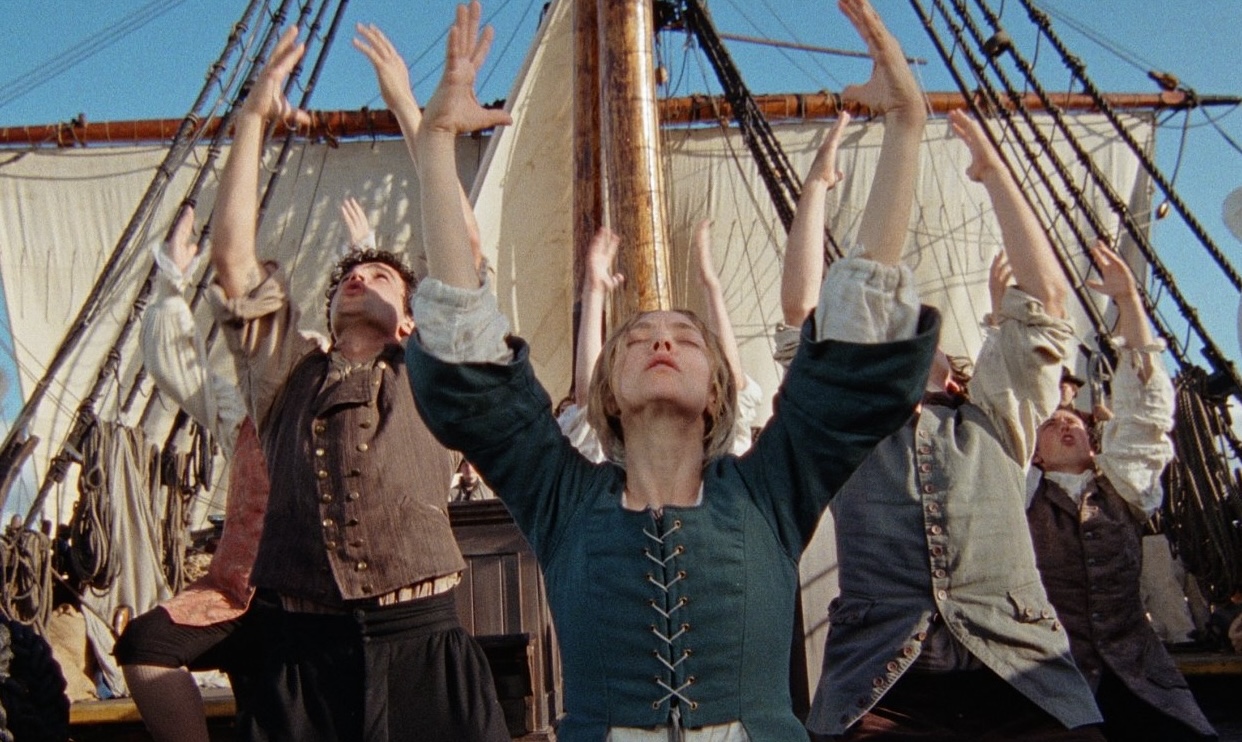
Oh, and did I mention that this is also a musical? Composer Daniel Blumberg has created a whole series of songs based around original Shaker hymns, to which Seyfried and the rest of the cast dance and leap like demented trancers at an all-night rave. It shouldn’t work and yet it does, big time. TTOAL is an ambitious and exhilarating epic that provides the ever-watchable Seyfried with what just might be the role of her career. She even manages a pretty convincing Mancunian accent, though she does very occasionally lapse into Liverpudlian. It’s important to add that this is not just a star vehicle for Seyfried, but the very embodiment of an ensemble piece, with every member of the cast working hard to make this incredible story credible.

There’s no denying this is the kind of film that’s destined to divide audiences (aside from anything else, I suspect the many song and dance numbers will alienate a lot of people) but, to my mind it’s an ambitious enterprise that achieves all its goals. Brought in on the same kind of ‘modest’ budget that gave us The Brutalist, this screening in 70mm employs old-fashioned matte painting techniques to achieve its stunning vistas and it looks absolutely ravishing. However manic it gets, it manages to keep me hooked throughout its two hours and seventeen minutes run time.

Do I come to understand the rabid sensibilities that fuelled the Shaker movement?

Not for a moment, but I have a wild ride trying to get to grips with it.

4.6 stars

Philip Caveney
The Brutalist

25/01/25

Cineworld, Edinburgh

It’s evident from the very beginning of The Brutalist that director Brady Corbet is determined to establish his own rules. Instead of rolling vertically, like every other credit sequence you’ve seen, the words slide horizontally across the screen and resemble the work of a groundbreaking graphic designer. Using VistaVision – a screen format popularised in the 1950s – the film has its own distinctive look. It has a prodigious running time of over three-and-a-half hours, but, much like the old epics of David Lean, viewers are afforded a fifteen-minute interval, so we can avail ourselves of a toilet break.

It’s a wonder then that The Brutalist is so utterly compelling that I barely even notice its length. This is monumental in every sense of the word and perhaps the biggest wonder of all is that it’s been created on a budget of less than ten million dollars – a fraction of most films conceived on this scale.

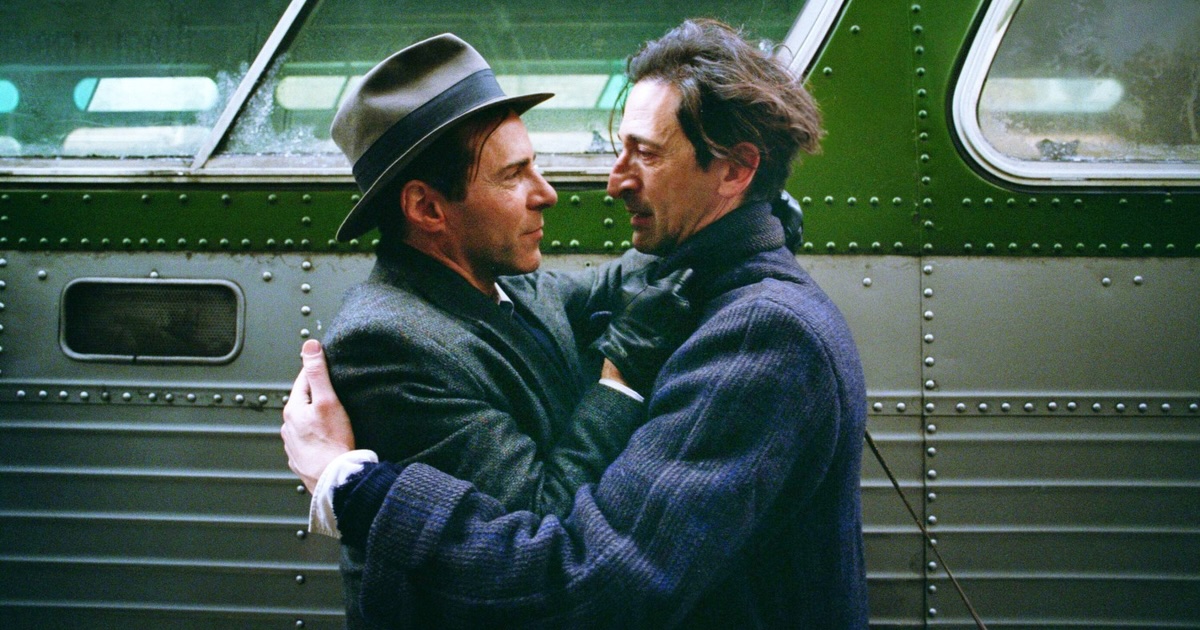
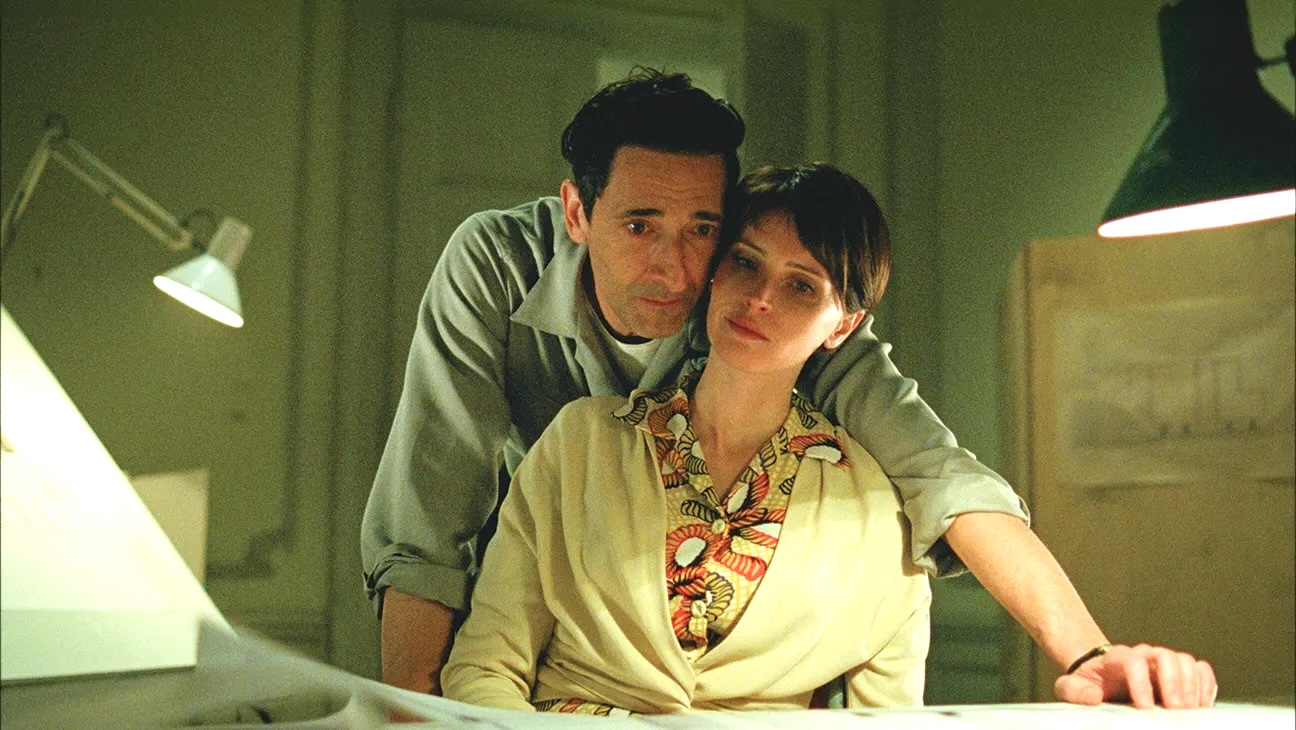
The story begins in 1947 with a series of fragmentary glimpses of Jewish refugee, László Tóth (Adrien Brody) travelling by ship from his native Hungary to begin a new life in America. He has been forcibly separated from his wife, Erzsébet (Felicity Jones), and his orphaned niece, Zsófia (Raffey Cassiday), and imprisoned in Dachau concentration camp for most of the war, but has now been offered sanctuary in Pennsylvania by his cousin, Attila (Alessandro Nivola), and his Catholic wife, Audrey (Emma Laird). The couple run a small furniture store and Attila is well aware that, before the war, László worked as an architect of the Bauhaus School. His design skills, Attila thinks, will come in useful.

Attila is approached by Harry Lee Van Buren (Joe Alwyn), who wants to commission László to redesign his father Harrison’s private library as a birthday surprise. Rather than do a straightforward upgrade, László transforms the room into a stunning work of art. When Harrison (Guy Pearce) arrives home earlier than expected, he clearly doesn’t approve of what’s been done in his absence and flies into a rage, ordering László and Attila to leave. Harry subsequently refuses to pay for the work and, as a consequence, László finds himself thrown out of his cousin’s place, with no better prospect than labouring to earn his daily bread. With his friend, Gordon (Isaac de Bankholé), he sinks into heroin addiction.

But when the redesigned library appears in the pages of an influential style magazine, Harrison undergoes a dramatic change of heart. Suddenly, he wants to be László’s patron, to converse with him, to fully understand his working methods. What’s more, he has influential Jewish friends who will be able to help him to bring Erzsébet and Zsófia over from Hungary to be with him. And then Harrison starts talking about a new commission: a massive civic centre dedicated to his late wife, a place where the local community can meet and enrich their lives.

But in the fullness of time, László will discover that such indulgences come at a price that will utterly compromise his artistic freedom – and will impinge upon his life in ways he could never have anticipated…

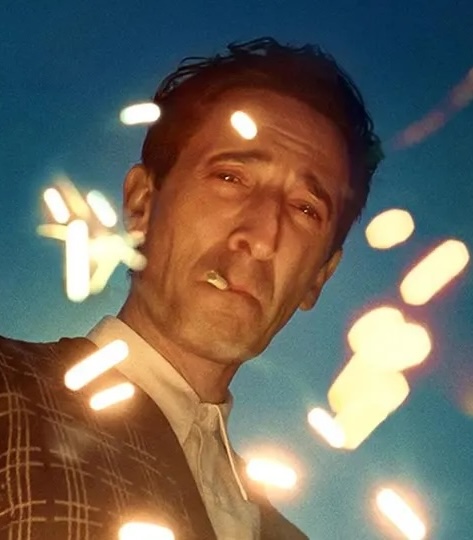
The Brutalist is a remarkable film in so many ways, not least because of Brody’s powerful performance in the lead role, a tortured artist, forced to compromise his talent at every turn. Pearce is also terrific as the self-aggrandising Harrison and Alwyn excels as his sneering, deeply unpleasant son, a man used to getting his own way in everything he approaches. Jones doesn’t enter the story until the film’s second half but submits a beautifully nuanced performance as Erzsébet, a woman still physically tortured by the aftermath of the starvation she suffered during the war. I should also mention Daniel Blumberg’s wonderful score, which provides the perfect accompaniment to Lol Crowley’s eye-popping cinematography.

The film has plenty to say about the creative process and it nails perfectly the powerful seduction that success offers to any artist – the fateful allure of patronage and its unpalatable compromises. Brady’s screenplay, co-written with Mona Fastvold, is wise enough to hint at unspeakable things rather than spelling them out – and it keeps me hooked until the final frame.

Will Brody lift the ‘best actor’ gong at this year’s Oscars? It’s a strong possibility in a year that features a whole bunch of commendable performances. Meanwhile, go and see The Brutalist and marvel at its epic qualities – and, if possible, watch it on an IMAX screen to best appreciate the wonders of VistaVision.

5 stars

Philip Caveney