books

FEIS

23/09/25

Traverse Theatre, Edinburgh

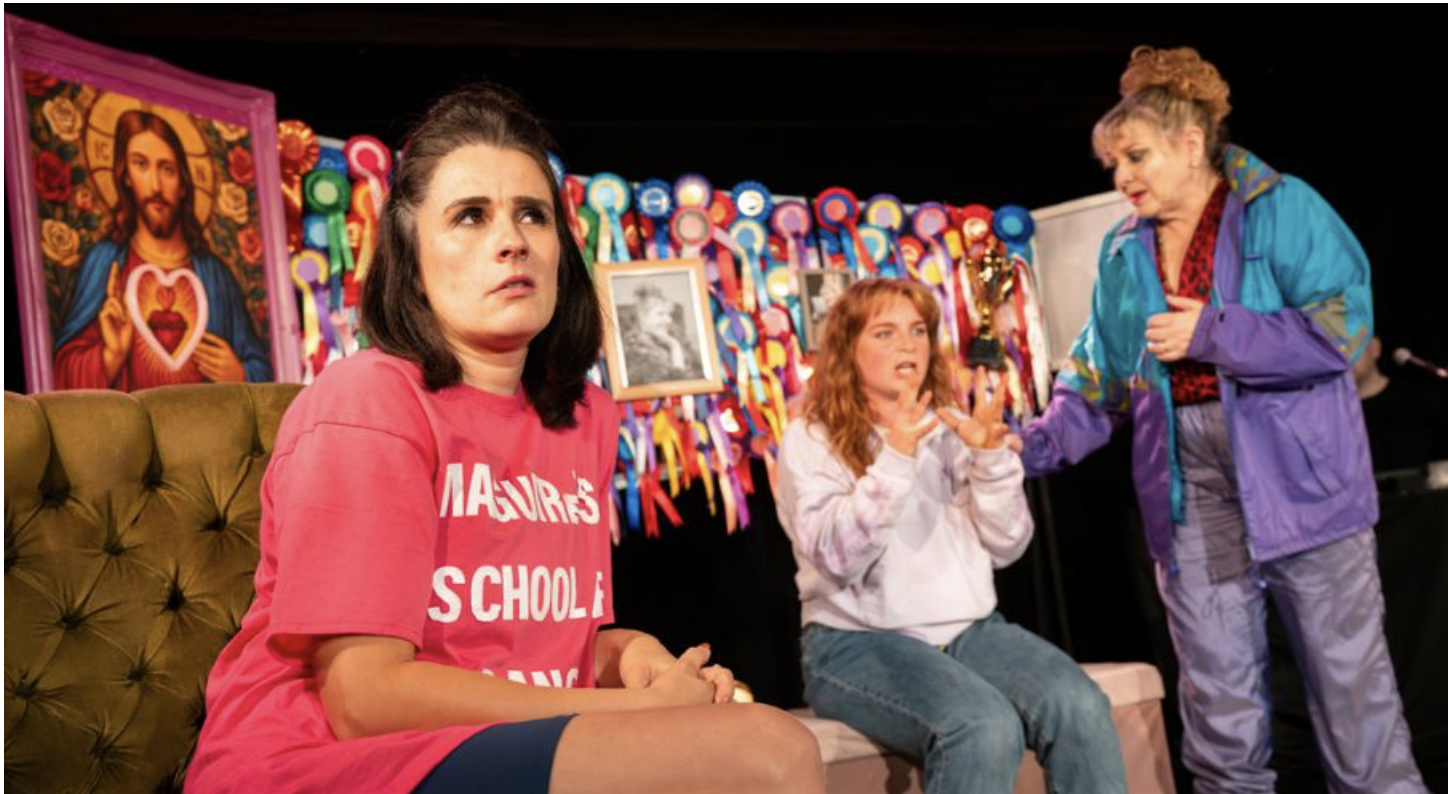
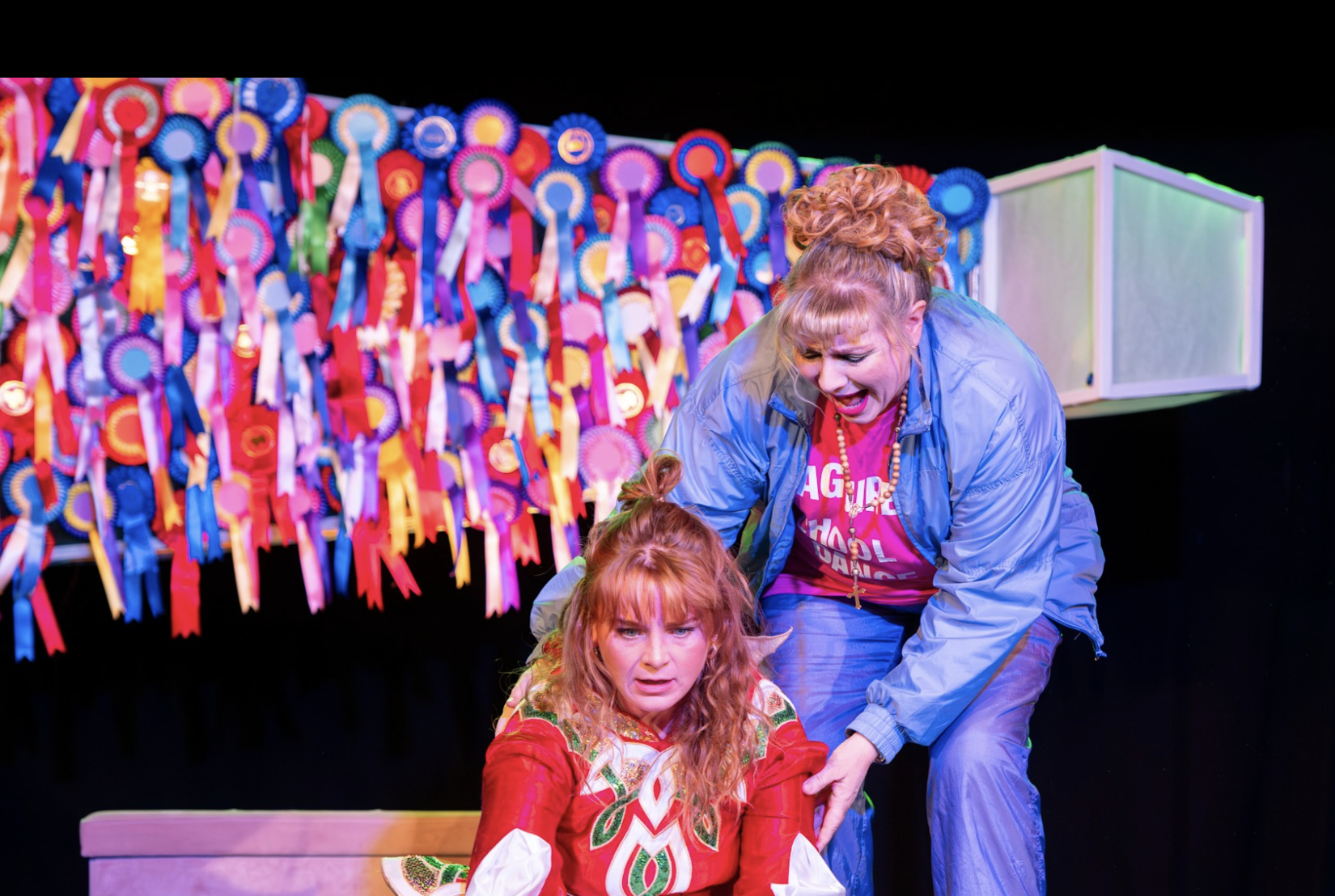
All is not well at Maguire’s School of Irish Dance. Back in the day, this Glasgow-based outfit was seen as a leader in its ghillie-footed field, when Deirdre (Louise Haggerty) won enough rosettes to paper the walls of her teenage bedroom. Decades later, the school’s fortunes are flagging disastrously and she’s been reduced to offering a ‘VIP’ service, performing online for an exclusively male clientele, who are not above offering extra money for her used socks.

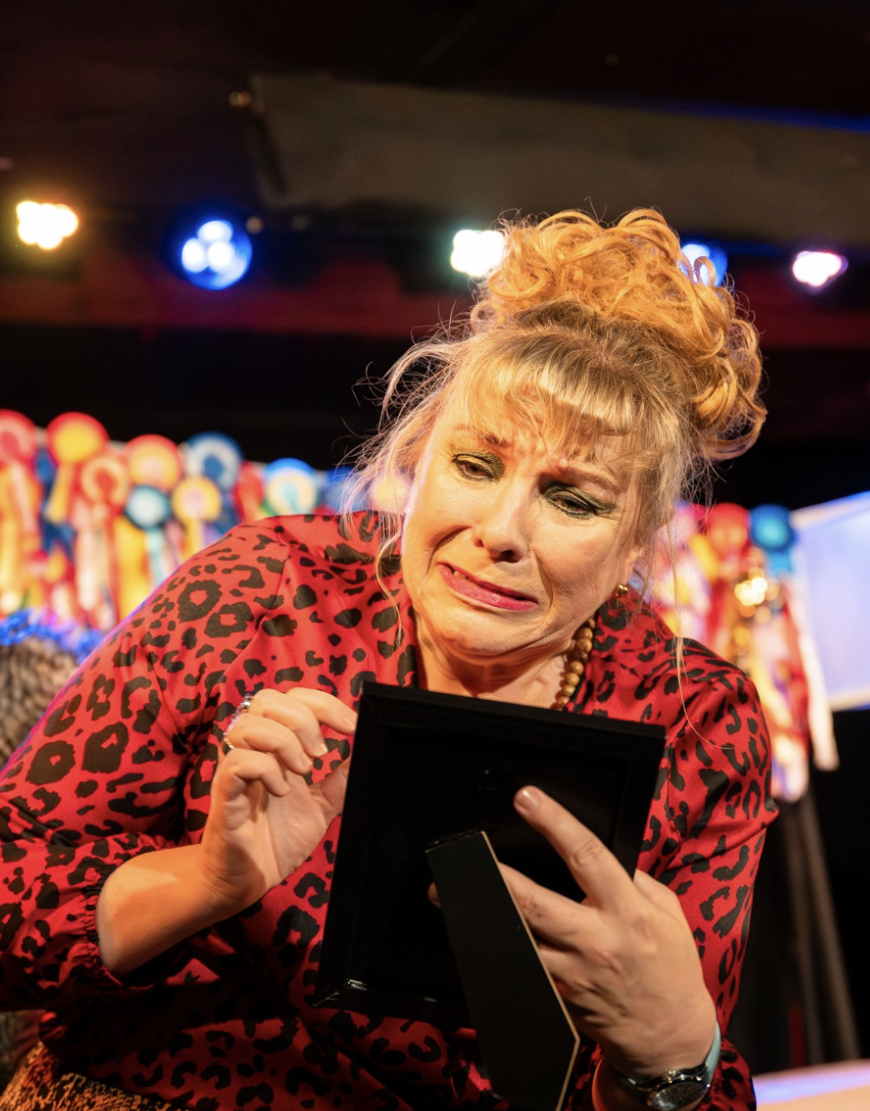
Deidre’s mother, Maura (Julie Coombe), is blissfully unaware of these new measures but, when her teenage granddaughter, Aoife (Leah Balmforth), falls flat on her face at the 2023 Irish World Championships, things look pretty grim. Then Maura manages to scare off the school’s only other decent dancer and it’s clear that something has to give…

Billed as a dark comedy – though perhaps the term ‘farce’ might be more appropriate – FEIS (pronounced fesh) is a cautionary tale about ambition and the lengths to which some people are prepared to go to in oder to secure a win.

Writer Anna McGrath pursues the laughs with a vengeance, though it has to be said that the various twists and turns of the story often defy credibility and, in one particular instance, a real-life star of the Irish dance world has a pretty heinous accusation levelled against him.

Haggerty gives the lead role her all, even throwing in what looks to this novice like an impressive bit of Irish-dancing, but I remain unconvinced that anybody would go to the lengths Deidre does in order to attain her objective. Balmforth feels severely underused throughout, while Coombe’s is obliged to deliver a series of fat-shaming comments at an unseen dancer that feel somewhat at odds with contemporary thinking. (This may be the point but it feels ill-judged to me.)

Musician Brian James O’ Sullivan adds some spirited jigs and reels to the proceedings. Michael Flatley, meanwhile, was unavailable for comment.

3 stars

Philip Caveney
Chef

14/03/25

Traverse Theatre, Edinburgh

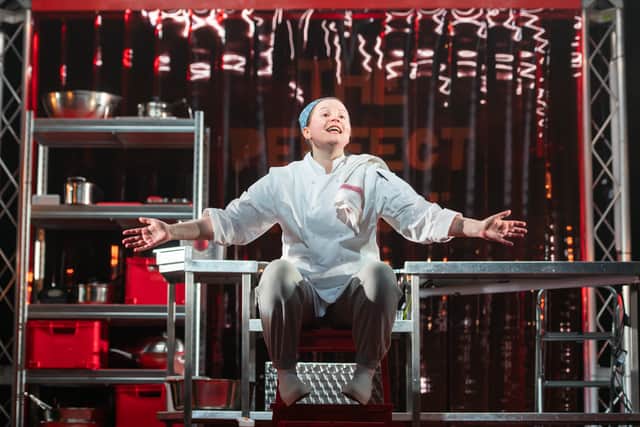
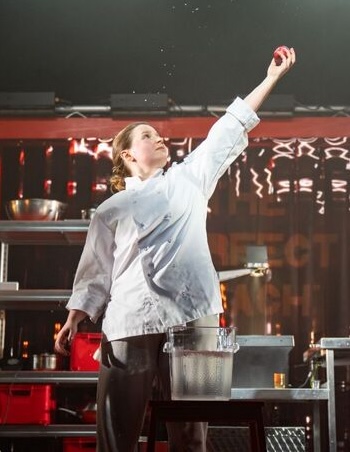
We are in a working kitchen and Chef (Rebecca Benson) is commenting on the purity of a peach, how so many cooks see it as their duty to corrupt and mask its natural flavour in their constant mission to seek out exotic new recipes. Here is somebody who has an almost religious fervour about food: its presentation, its flavours, the impact it can have on our lives. As she warms to her theme, we learn that the preparation of food has been both her salvation and her downfall. Alongside her, a silent kitchen porter – and BSL interpreter (Yvonne Strain) – helps her out whenever she needs to illustrate a point.

Sabrina Mahfouz’s Chef is an extraordinary play, a monologue delivered in a lyrical, almost poetic flow of startling imagery, the various sections of the narrator’s life introduced around specific recipes, each one important to her development. We learn about her hardscrabble youth, her uncaring father, her fierce determination to one day have a Michelin star displayed above the entrance to her own premises. And we gradually learn about what brought her to this particular kitchen today.

The tone at first is light, stuffed with delicious descriptions that flow from Benson’s tongue like manna – but, as the play stretches into its second half, other darker flavours begin to creep in: the shocking tang of corruption, a hint of something rotten at the heart of this tale of vaulting ambition.

And I love the fact that the story ends with a note of duality, the possibility that all might not be as straightforward as it initially appears…

Anchored by a powerhouse performance by Benson that ranges from uplifting fervour to unfettered rage, the piece is skilfully directed by André Agius, with Peter Small’s lighting design switching us effortlessly from place to place in the narrator’s cluttered headspace – and I’ve never seen a BSL interpreter so seamlessly incorporated into a performance, with Strain making an important contribution to the production that goes beyond the practical purposes she’s been put there for.

This is a riveting slice of theatre, brilliantly performed and expertly presented.

5 stars

Philip Caveney

Much Ado About Nothing

06/02/25

Pleasance Theatre, Edinburgh

Let’s face it, judged by plot alone, Much Ado About Nothing is a bit, well… silly. Like most of Shakespeare’s comedies, the humour relies on disguise, misunderstandings and a fickle approach to romance. As an audience, we really have to suspend our disbelief. Would sworn enemies such as Benedick and Beatrice (Benedict Harrison and Verity Mann) really have an immediate change of heart thanks to some very unsubtly orchestrated eavesdropping? Both of them? It seems unlikely. Would a respected celebrant (Dylan Kaeuper) really suggest that a jilted bride should fake her death, or her father embrace the idea – agreeing that “death is the fairest cover for her shame”? Hmm. And would the groom – a mere twenty-four hours later – agree to marry his dead fiancé’s looky-likey cousin without ever setting eyes on her? I mean, that’s a no, right? Meanwhile, we’re also supposed to accept that no one in Leonato (Faolán Ingram)’s household suspects the decidedly dodgy – almost moustache-twirling – Don John (Cameron Broadly) of being a villain, despite the many outward clues. But still. It is what it is, and there’s a lot of fun to be had along the way.

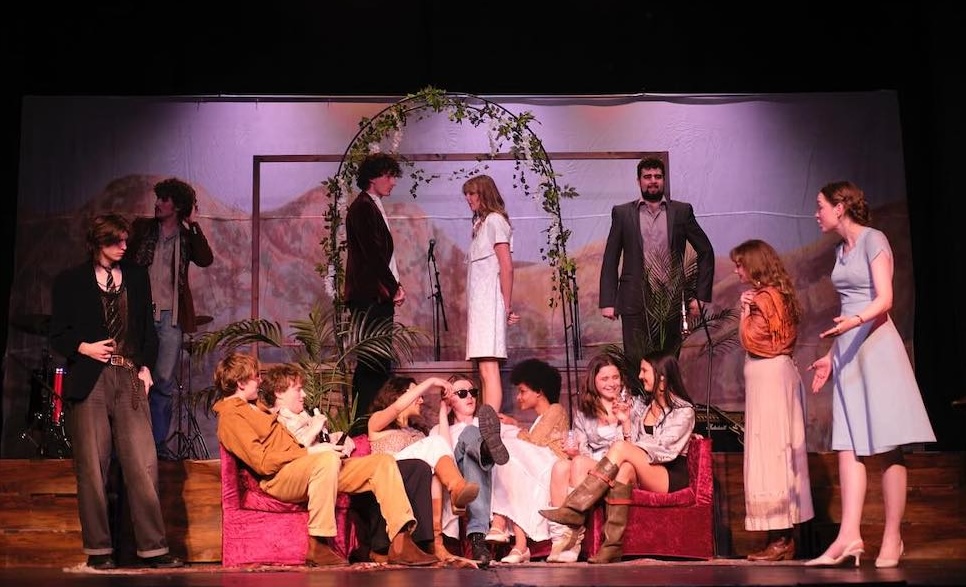
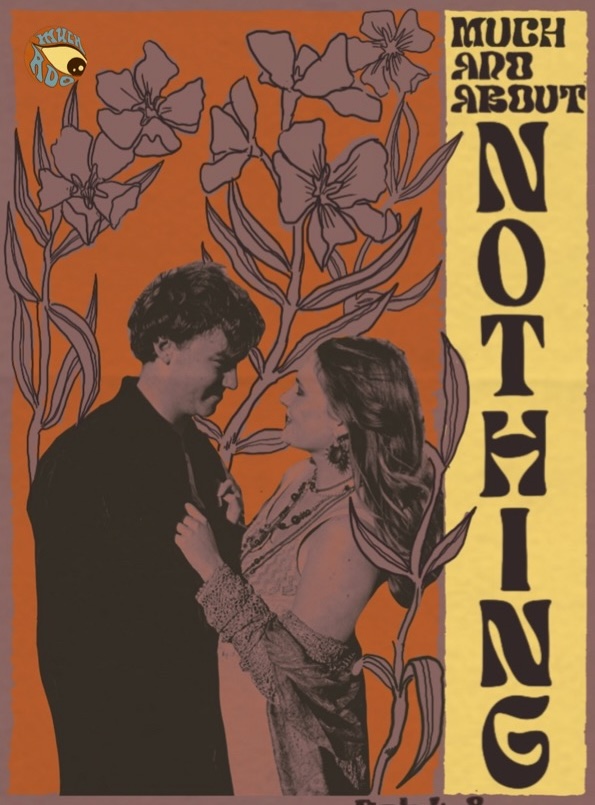
EUSC’s production of this sprawling play is sprightly and engaging. The directors (Madeleine Brown, Marina Funcasta and Anna Simurda) have chosen to emphasise the humour, eliciting larger-than-life performances from their actors rather than aiming for anything subtle – and I think this is a wise move. The action has been moved from Italy to California, from the 16th century to the 1970s but, while the period is clearly-evoked, I’m less certain about the place. There’s certainly a laid-back Summer of Love vibe, but most of the music is British (Bowie, Bolan, The Sweet, The Police) and the majority of characters speak with English accents, so it all feels a bit more Camden Town than Haight-Ashbury.

Leonato’s estate is Party Central as he and his wife, Antonia (Maria Wollgast), play host to the local socialites. What better way to make a match for their beloved daughter, Hero (Francesca Carter)? The dope is plentiful, the drinks are flowing – and love is in the air. Claudio (Rider Hartley) fancies his chances with Hero, and she’s rather keen on him as well. But “the course of true love never did run smooth” (yes, I know – wrong play), and what could go wrong with Don Pedro (Eric Parker)’s complicated plan to woo the girl on his friend’s behalf? Throw in some meddling servants, a fabulously drunken henchman (Fraser Murray), a local constable (Robbie Morris) and a veritable army of liggers – and the scene is set for some merry mayhem.

It’s a great idea to have a live band on stage, although I can’t help feeling they’re under-utilised. Still, the young cast are clearly having a ball, dressed up to the nines in flares and sequins (floppy hats off to costume designers Paloma Leigh-Stevenson, Alex Dunlop and Bea Fitz), their delivery as bold and brash as the script demands. Not everyone has a lot to do, but they all make the most of what there is, and there are some lovely moments of background detail, such as Margaret (Mia Dé)’s horrified realisation that her tryst with Borachio is being used to frame Hero. Harrison (Benedick) and Carter (Hero) are the standouts for me, but all of the actors and musicians perform with gusto, and I am thoroughly entertained.

There are just two more chances to catch this groovy rendition of Much Ado, so why not head on down to the Pleasance and hang loose with the hippies? Be sure to wear some flowers in your hair…

3.4 stars

Susan Singfield