
14/08/23
Assembly George Square (The Box), Edinburgh
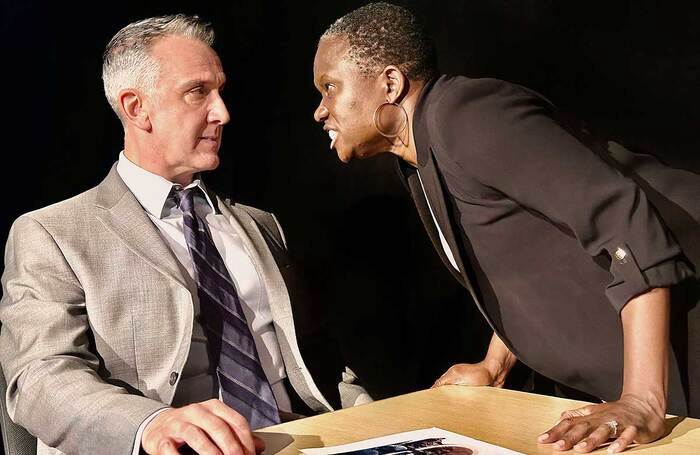
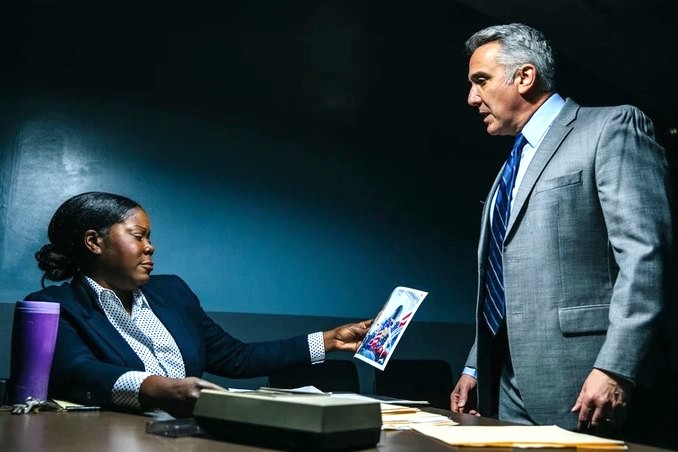
Blue by June Carryl is an intense two-hander, focusing on the aftermath of a police shooting.
Sully Boyd (John Colella), sorry, Sergeant Sully Boyd, as he is quick to remind us, is used to the Police Department’s internal discipline procedure. He’s had complaints levied against him before. Being interviewed by a fellow officer is just a formality, isn’t it? And anyway, this time the investigator is Rhonda Parker (Carryl), an old family friend. Sully’s known Rhonda since she was a kid; he was pals with her dad; heck, her husband used to be his partner, before he quit the force.
But something is different. For starters, this ‘mistake’ is much, much worse than the others. He’s shot and killed a Black motorist, and there’s no evidence that the guy did anything wrong. There is evidence, however, of Sully’s mounting racism, his conviction that something is being stolen from him, from all white men. As the aphorism goes, “When you’re accustomed to privilege, equality feels like oppression.”
Sully can reminisce about the good old days as much as he likes, but his true feelings have been brutally exposed, and another Black man has paid the price. African-American Rhonda isn’t about to let him off the hook…
Post-George Floyd, there has been a sea-change: first the groundswell of the Black Lives Matter movement and then pushback from those who think that, if Black lives matter, it means that white lives don’t. Blue is a blistering illustration of what this looks like in practice, of how a police force that is supposed to serve and protect us all equally is incapable of doing so, because its vision of ‘us’ is rooted in white supremacy.
It is to both Colella’s credit as an actor and Carryl’s as a writer that Sully does not come across as a two-dimensional baddy. He clearly sees himself as a decent guy, someone who’s put in his time serving his country, and just doesn’t understand why things have to change. He likes his position of privilege, even if he won’t acknowledge it.
However, it’s Carryl’s emotive performance that brings this important two-hander to its powerful and devastating conclusion.
4.6 stars
Susan SIngfield


 Bouquets & Brickbats