Billy Wilder

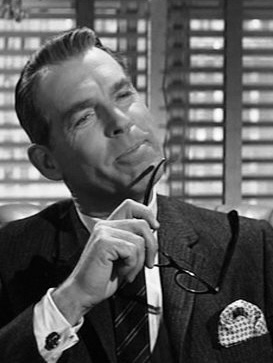
Sunset Boulevard

21/12/25

Filmhouse, Edinburgh

Hard on the heels of seeing one Billy Wilder masterpiece, The Apartment, comes an opportunity to see another, his 1950 film, Sunset Boulevard. I’m eager to watch it, as I haven’t seen it since I viewed it on TV in my youth. Whereas The Apartment looks forward to the new permissive era of the 1960s, this one takes its inspiration from the movies of the silent years, and the vast sea-changes that came in 1927, when Al Jolson became the first actor to talk onscreen in The Jazz Singer.

While the silent era has been revisited in a more lighthearted manner in movies like Singin’ in the Rain, Wilder casts a more meditative light on the previously-bankable stars suddenly left stranded by arrival of the talkies.

The movie is narrated by Joe Gillis (William Holden), a once promising young screenwriter, now struggling to make his way in the highly-competitive world of 50s Hollywood and quickly running out of options. Trying to evade some guys who are attempting to repossess his car, he pulls into the garage of a crumbling Hollywood mansion, assuming that the place is abandoned. But here he meets up with faded silent-movie megastar, Norma Desmond (Gloria Swanson) and her devoted butler, Max (Erich Von Stroheim). When Norma learns that Joe is a writer, she immediately invites him to stay in the guest room, telling him that she’s working on a screenplay of Salome, which she plans to star in when she makes her “return” (for some reason, she hates the term “comeback”). Joe realises she hasn’t a hope in hell of getting the movie financed, but he needs somewhere to kick his heels, so he reluctantly takes her up on her offer and agrees to help her write the script.

But as the days pass, he becomes her constant companion, and he starts to appreciate the full depths of her obsession – and realises that walking away from this situation isn’t going to be as straightforward as he initially supposed…

Of course, Wilder is writing about the same studio system that he himself progressed through, and his sharp, witty screenplay (co-written with Charles Brackett and DM Marshman Jnr) has about it the utter veracity of lived experience. Swanson had actually been a silent-movie star back in the day and exerts an extraordinary screen presence, portraying her possessive, vulnerable and ultimately-tragic character with consummate skill. Von Stroheim, meanwhile, was himself an influential director of silent films. There are also cameos from other real stars, like Cecil B DeMille and (very briefly) Buster Keaton. Holden, of course, is just embarking on his own long and monumental screen career and he makes the perfect foil, calm and measured despite all the madness that surrounds him.

The film’s final scene is one of the most enduring in movie history, as Norma Desmond takes her final prowl down a staircase for the camera and prepares for her close-up, so caught up in her own fantasy, that all the surrounding cops and news reporters somehow become her acolytes.

Sometimes, you return to a classic film after a long absence and wonder what all the fuss was about. But Sunset Boulevard is still a powerful and bitterly-spiced cinematic confection, as fresh and hard-hitting as it was all those years ago – and I feel privileged to have the opportunity to see it on the big screen.

5 stars

Philip Caveney
The Apartment

19/12/25

Filmhouse, Edinburgh

It’s the last day of term: I’ve taught my final drama class before the holidays, and I’m ready to wind down. Fortuitously, the Filmhouse has chosen this evening for a members’ free screening of one of Philip’s favourite Christmas movies, The Apartment. Although we arrive early, the foyer is already buzzing, people queuing amiably for the complementary mulled wine and mince pies that are being served. It smells delicious but, as we’re both tee-total, I’m gluten-free and Philip would rather starve than eat dried fruit, we don’t bother joining the line. Instead we head on upstairs to secure ourselves some decent seats.

When it comes to iconic festive movies, I’ve got a bad track record. I didn’t see 1992’s A Muppet Christmas Carol until 2019, but that 27-year lull pales into insignificance compared to the 65 years that have lapsed since Billy Wilder directed (and co-wrote) The Apartment. So I’m excited to finally catch up with this film that Philip is so enamoured of – and what a treat to see it on the big screen in an immaculate 4K restoration.

A study in toxic masculinity, where powerful middle-aged men exploit vulnerable young women, and the only way for anyone to get ahead in the workplace is to submit to the demands of their narcissistic bosses, this feels like a very contemporary tale. Indeed, if it weren’t for the monochrome cinematography, the 1960s fashions and the rolodexes on the office workers’ desks, this could easily pass for a #MeToo-inspired drama. Plus ça change, plus c’est la même chose

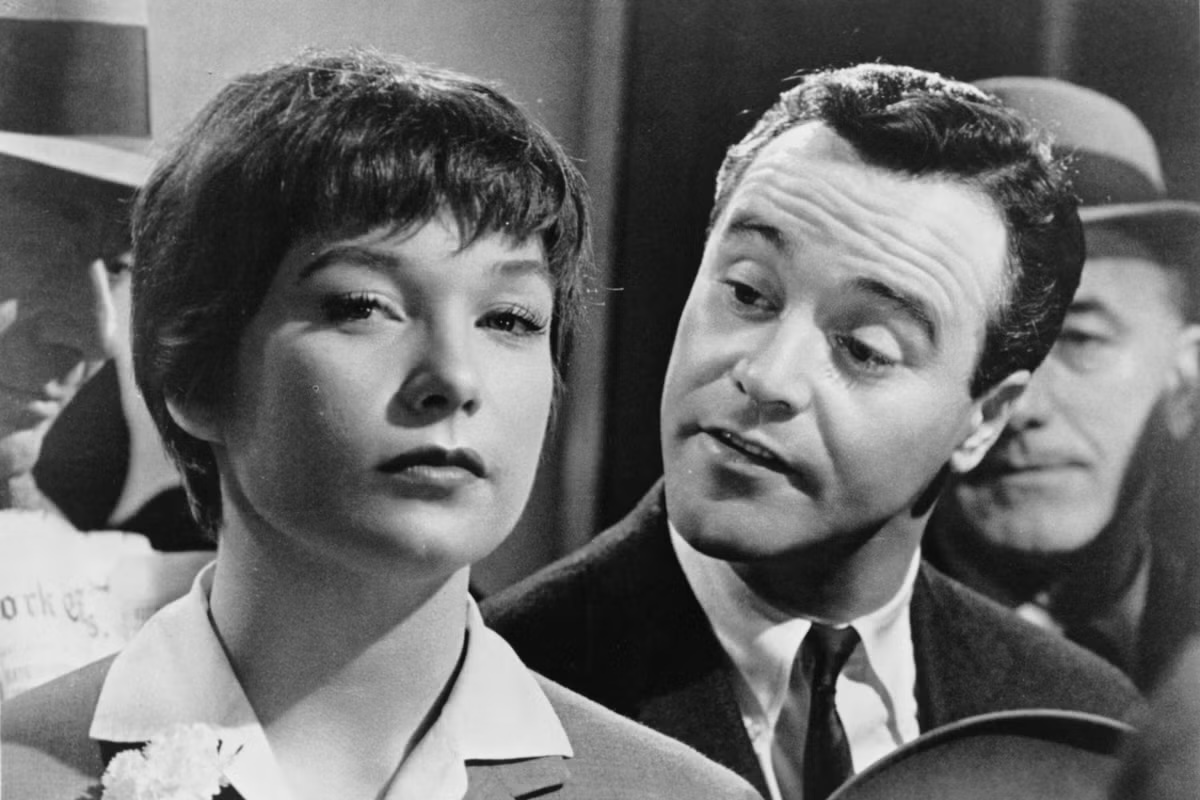
It’s Christmas-time in New York City, and CC Baxter (Jack Lemmon) is a lowly clerk with just one advantage: he has managed to secure a reasonably-priced apartment in a sought-after location near Central Park. When his supervisors learn where he lives, they promise him promotion… so long as he lets them use his conveniently-situated abode to conduct their extra-marital affairs. Cue comedic mayhem as CC struggles to maintain control of an overfull schedule, often forced to kill time lurking outside his own home as he waits for the lovers to leave. As if that weren’t enough, he also has to endure his neighbours’ disapproval: they think he’s some sort of Lothario, entertaining a parade of women. Still, if it means he can get on at work, then it’s worth it, right? And anyway, he doesn’t know how to refuse…

But then CC strikes up a friendship with lift attendant Fran Kubelik (Shirley MacLaine) and his priorities begin to shift. When he learns that she’s having an affair with the odious manager, Mr Sheldrake (Fred MacMurray), he’s devastated, but their warm relationship endures – and, in the end, their mutual affection saves them both.

It’s a beautiful film: at once funny and heartwarming, bleak and hopeful. Wilder and co-writer IAL Diamond’s script is vivacious and witty, and Lemmon and MacLaine are both dazzling in their roles, their naïvety and powerlessness so utterly appealing that I want them to flourish from the moment I see them on screen. Meanwhile, MacMurray makes an excellent villain, all surface charm and barely-concealed self-interest. Convincingly drawn, this is a perfect study of human nature – with an ultimately life-affirming and seasonally-appropriate message.

Merry Christmas! And don’t forget the fruitcake.

5 stars

Susan Singfield

Ace In The Hole

10492500_10204319617449172_5587906620477752250_n

22/08/14

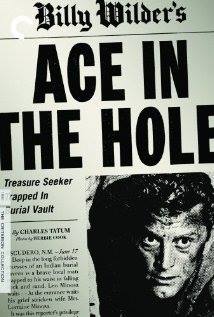
In 1951, writer/director Billy Wilder was riding the crest of the wave he’d generated with Sunset Boulevarde, a critically acclaimed and very successful movie. But his next film, Ace In The Hole, featured a story so vitriolic and poisonous that it almost sank his career forever.

Now rereleased in a spanking new black and white print, it couldn’t be more prescient and thoroughly deserves re-evaluation. Kirk Douglas, at the height of his considerable powers plays Chuck Tatum, a former big shot reporter who finds himself all washed up in Alberqurque and forced to take a post on a local newspaper. He’s constantly on the lookout for the big story that will propel him back to former glories and thinks he’s found it when he chances upon an accident in an old Indian mine where a luckless restaurant owner, Leo Minosa has been trapped by a cave-in. Chuck sets about creating a ‘human interest’ story about the attempt to rescue Leo and proceeds to milk it for all its worth, even taking steps to ensure that the process takes longer than it needs to.

Though nominated for an Oscar, the American public didn’t take kindly to a film that suggested that newspapers sold lies, that the general public would flock like vultures to a catastrophe and that the lure of easy money will always win out over common decency. Tatum is a vile creation, a man who will stop at nothing to further his career and pretty much every other character around him is revealed as a self-serving, gutless wonder, including Leo’s shrewish wife, Lorraine (Jan Sterling). Despite it’s 1950’s setting, this is a film that still resonates today and ranks amongst Wilder’s finest achievements.

5 stars

Philip Caveney