Billy Mack

Keli

15/05/25

Lyceum Theatre, Edinburgh

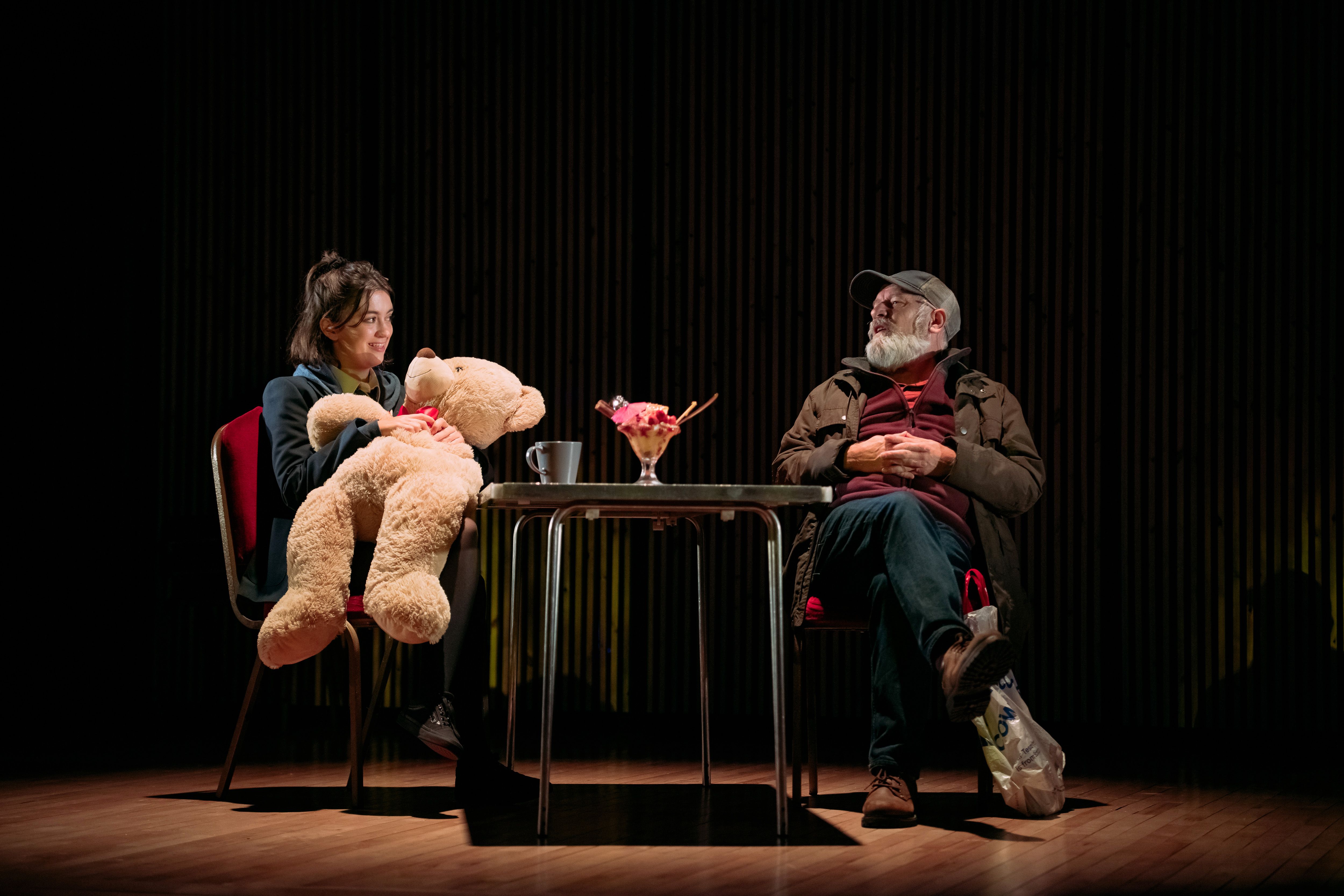
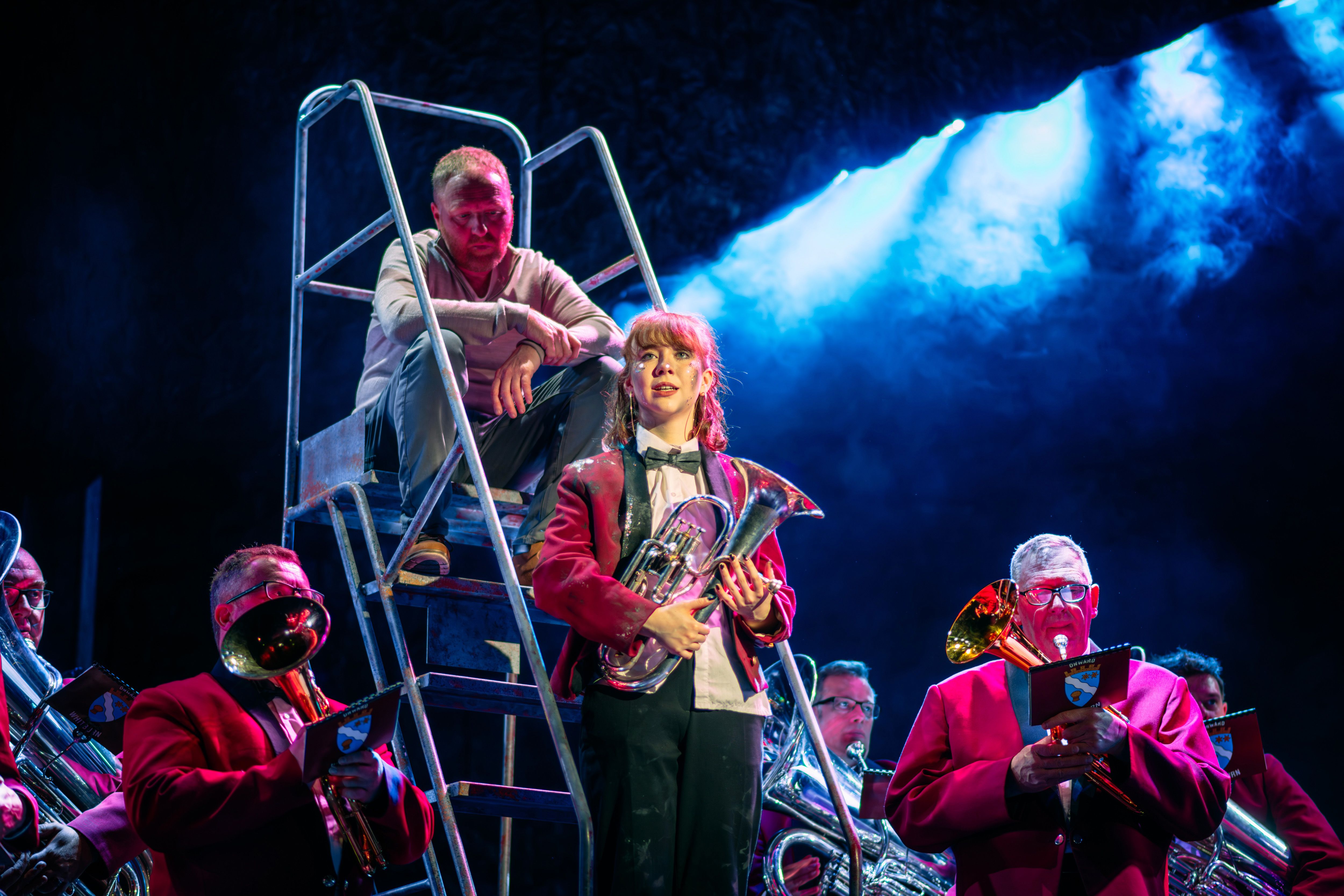
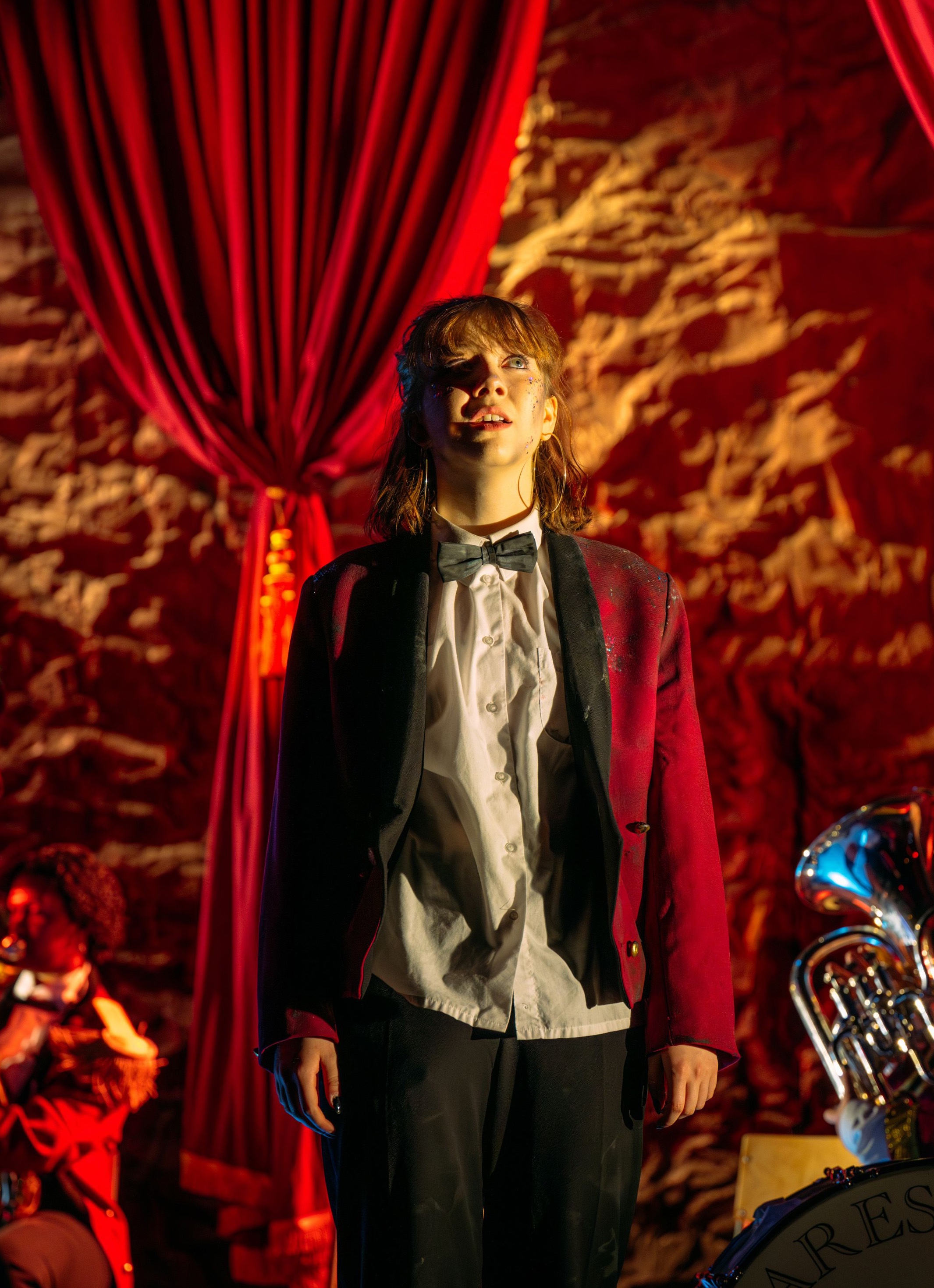
Not so much a musical as a play in which music is an intrinsic part of the production, Keli is set in the fictional Anston (based on the real-life Whitburn), where the titular character – a motor-mouthed seventeen-year-old played by Liberty Black – lives with her agoraphobic mum, Jane (Karen Fishwick). Keli is doing her business HND and works part time at the local Scotmid. She’s also a member of the Anston brass band; indeed she’s their star player, even if she does find it hard to get to rehearsals on time. Bandleader Brian (Phil McKee) needs her there because the band has been chosen to perform in a national competition at the Royal Albert Hall, and he’s depending on Keli to nail a particularly tricky solo.

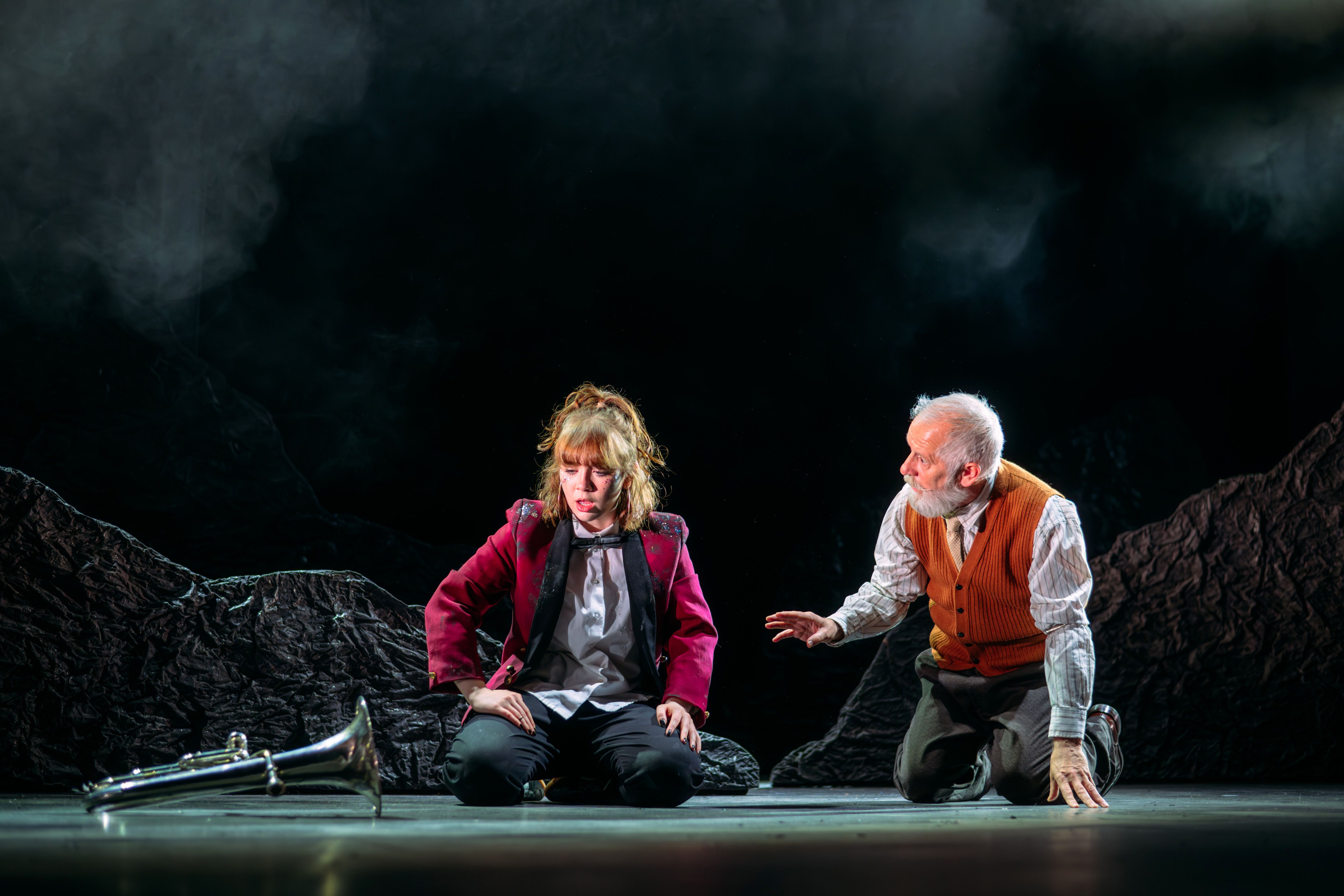
When we first meet her it’s clear that something has gone horribly wrong. She’s in the act of stealing a tenor horn from a glass case in a nearby country home. The last thing she’s expecting is for the ground to give way and send her plunging into the labyrinths of the old coal mine that runs beneath the property – and she certainly doesn’t expect to find an old man lurking down there, waiting to ask her some very perplexing questions…

Keli, written by Martin Green, began life as an audio play. In this theatrical version the music (also composed by Green) still provides a constant counterpoint to the drama. In fact, occasionally the score obscures parts of the dialogue, but that’s probably something that will settle in as the run progresses.

The combination of brass band music and coal mine closures inevitably evokes comparisons with the 1996 film Brassed Off (indeed, it’s even mentioned at one point) but Keli is a different beast entirely, a strange blend of kitchen sink reality and contemporary fantasy. While I’m not sure all the elements work – a lengthy sequence set in a sexy London nightclub feels oddly misplaced – there’s still lots here to enjoy. Black is sassy and vivacious in the title role, while Billy Mack submits a charming performance as the mine’s mysterious inhabitant, William. Olivia Hemmati is terrific in the twin roles of Amy, Keli’s Scotmid supervisor, and Saskia, a free-spirited woman Keli meets in a pub in London, who shows her how to embrace her inner self.

Set designer Alisa Kalyanova and lighting supervisor Hana Allan make the production look sumptuous – the evocations of the coal mine are particularly effective. Director Bryony Shanahan keeps the momentum bubbling as the piece moves effortlessly through a series of different locations.

And there’s no denying that the play’s final scene offers a thrilling crescendo as – on alternating nights – the massed ranks of the Whitburn/ Kingdom brass bands file onto the stage and let rip. Worth catching? You’re darned tooting it is!

3.6 stars

Philip Caveney
Men Don’t Talk

17/11/24

Scottish Storytelling Centre, Edinburgh

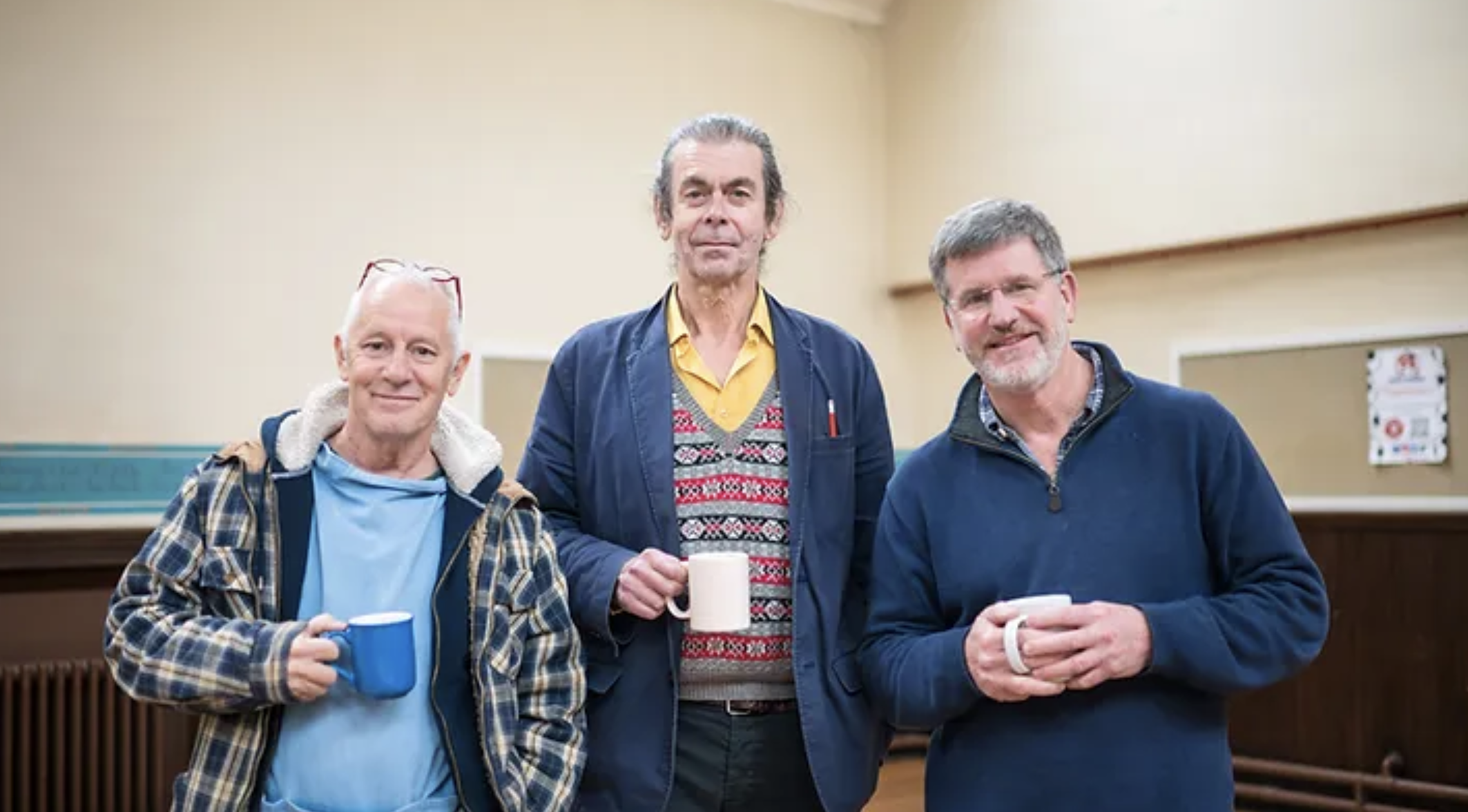
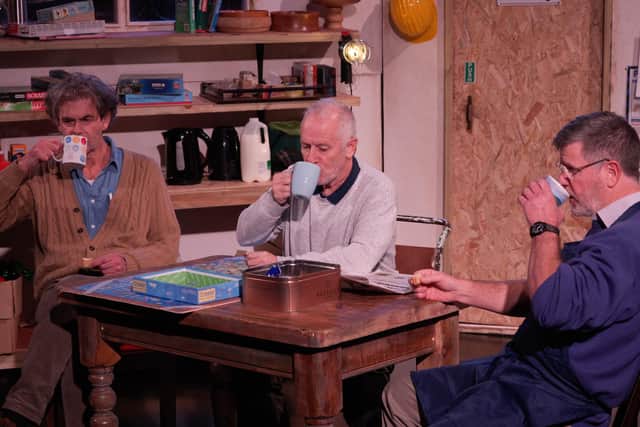
“You’ve not been here before, have you?” asks Ken (Dougal Lee), addressing a member of the audience who has ostensibly turned up at the Men’s Shed for the first time. “How do you take your tea?”

“Er, just milk,” says the man in Row 2.

The shed boasts two kettles, Ken tells us proudly, switching one on and putting tea bags into a couple of mugs. While he waits for the water to boil, he chats amiably about why he’s been coming to the Men’s Shed ever since he retired. He needs a bit of space away from his wife, he says. They’ve never been under each other’s feet before. The shed is a place where he can come to enjoy the company of other men. And build a bat box.

He pours water into the mugs, adds milk, squeezes the tea bags and pops them into a food waste bin. Then he hands the mug over to the man behind me. “There you go.”

Writer-director Clare Prenton’s script has an endearingly gentle tone. The atmosphere in the shed is relaxed and understated; it’s easy to see why it appeals to the men who visit it. Based on extensive interviews with real-life Men’s Shed members, Prenton shines a light on the importance of creating spaces where men can talk.

Because they don’t, apparently. Unless they’re shoulder to shoulder, that is, rather than face to face. Men’s Sheds provide opportunities to learn new skills and there’s no pressure on the members to open up about their feelings. But, working alongside one another, helping out with art or craft or DIY projects, it turns out that men begin to feel comfortable sharing their personal stories. And that they are more than willing to put an arm around a pal’s shoulder and support them if they can.

This matters, because men’s mental health is in crisis. Suicide rates are worryingly high. The good news is that change is happening: we no longer tell our children that boys don’t cry; we don’t encourage repression or a stiff upper lip. And Men’s Sheds can play an pivotal part in this shift, especially for older guys.

As well as Ken, we also meet Jimmy (Billy Mack), an alcoholic who needs somewhere to be that isn’t the pub, and Tom (Greg Powrie), a widower who’s taken up woodwork since his wife’s demise. Through these characters and their meandering conversations – which cover PTSD, grief and custard creams -Prenton presents a convincing case, even when dealing with the controversial issue of whether women should be allowed to join. Ken’s the outlier who says no, while the others – including forty offstage members – have all voted yes. No one agrees with Ken but it’s to Prenton’s credit that his impassioned argument isn’t ridiculed, and he isn’t reduced to a clichéd misogynist for expressing this desire.

Today’s performance is BSL interpreted, and I’m impressed by how well the interpreter is incorporated into the action. He’s a named member of the Men’s Shed, greeted as Greg, drinking tea and eating biscuits with the rest of them, nodding hello and then translating what they say. It’s neatly done.

I also love the fact that the detailed, naturalistic set, designed by Frances Collier, has been built by Peebles & DIstrict Men’s Shed. This adds to the feeling that this is a truly inclusive piece, and that Prenton has treated her subject with the respect and gravitas it deserves. It’s a didactic play, but – although I definitely feel that I have learned something – I never feel lectured. And, if I were a man in need of a chat or a new project or simply somewhere convivial to be, I’d certainly be checking to see if there was a Men’s Shed in my locale.

4 stars

Susan SIngfield

Until It’s Gone

28/02/23

Traverse Theatre, Edinburgh

This sprightly two-hander packs a lot into its fifty-minute running time. Until It’s Gone is the first of 2023’s A Play, a Pie and a Pint offerings, and it’s a corker: Alison Carr’s tight and cleverly-crafted script imagines a future where all of womankind have disappeared, and men are left to make the best of a world without them. In stark contrast to Charlotte Perkins-Gilman’s Herland, where women have created a female Utopia, this male-only Scotland is a dystopian mess, its citizens desperate for the women to return from their unspecified and unexplained exile.

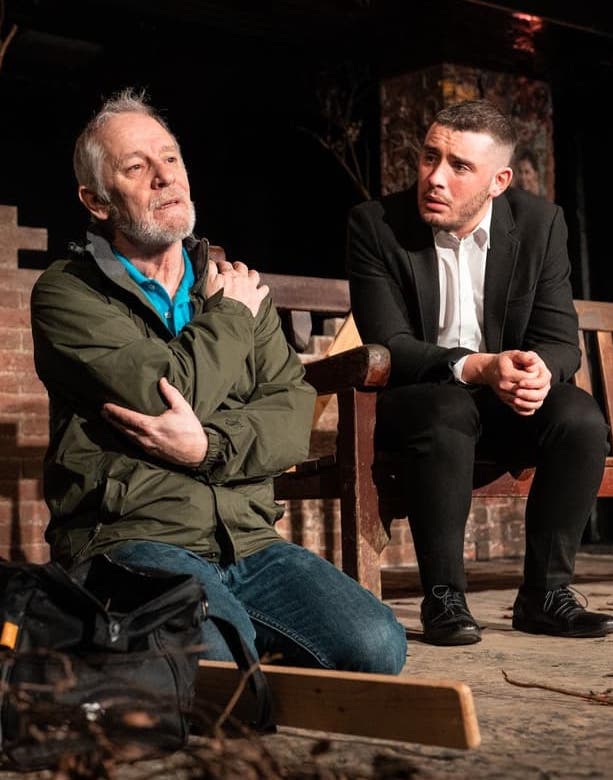
We’re offered a glimpse into this terrifying scenario through a simple park-bench, chalk-and-cheese set-up: a meeting between an eager young man of twenty-five (Sean Connor) and a gruff older one (Billy Mack). They’ve been matched by a supposedly ‘world-beating’ app, but this is not a date – or at least, not a conventional one. They are two avowedly heterosexual, cis-gendered men, following a strict government mandate to ‘connect’ – because things aren’t sustainable as they are. Through this smallest of microcosms, Carr seeds just enough information into the men’s darkly comic dialogue to allow us to envisage the bigger picture, the tortured society in which they live, where schools are closed, most interactions happen online, and everything feels wrong.

The characters are beautifully realised, played with warmth and humour by Connor and Mack, even as they expose the men’s real pain. The generational divide is deftly managed, the initial chasm between them narrowing as they talk and share confidences, slowly realising that they’re more alike than not, that their shared fate should bind them rather than pull them apart.

Under Caitlin Skinner’s assured direction, the play’s political points are clearly made without ever feeling intrusive. I like the cheeky use of tableaux and blackouts to mark the passage of time at the beginning, and the set – by Gemma Patchett and Jonny Scott – is modest but strikingly effective. I’m especially drawn to the myriad images of women adorning the tumbledown walls, and find myself wondering if they are ‘missing’ posters or simply photos, there to remind the men of what they’ve lost. 

Because, of course, you never know until it’s gone…

4.4 stars

Susan Singfield

The Enemy

20/10/21

King’s Theatre, Edinburgh

Ooh. I’m VERY excited about this one. I’m an avid admirer of Ibsen – what self-respecting theatre-lover isn’t? I’m in awe of the way he combines theatrical innovation and political conviction with accessible story-telling. I’m also a fan of Kieran Hurley’s work (Chalk Farm, Mouthpiece and Beats are all excellent), so I’m fascinated to see what he and director Finn den Hertog do with the Norwegian’s masterpiece, An Enemy of the People.

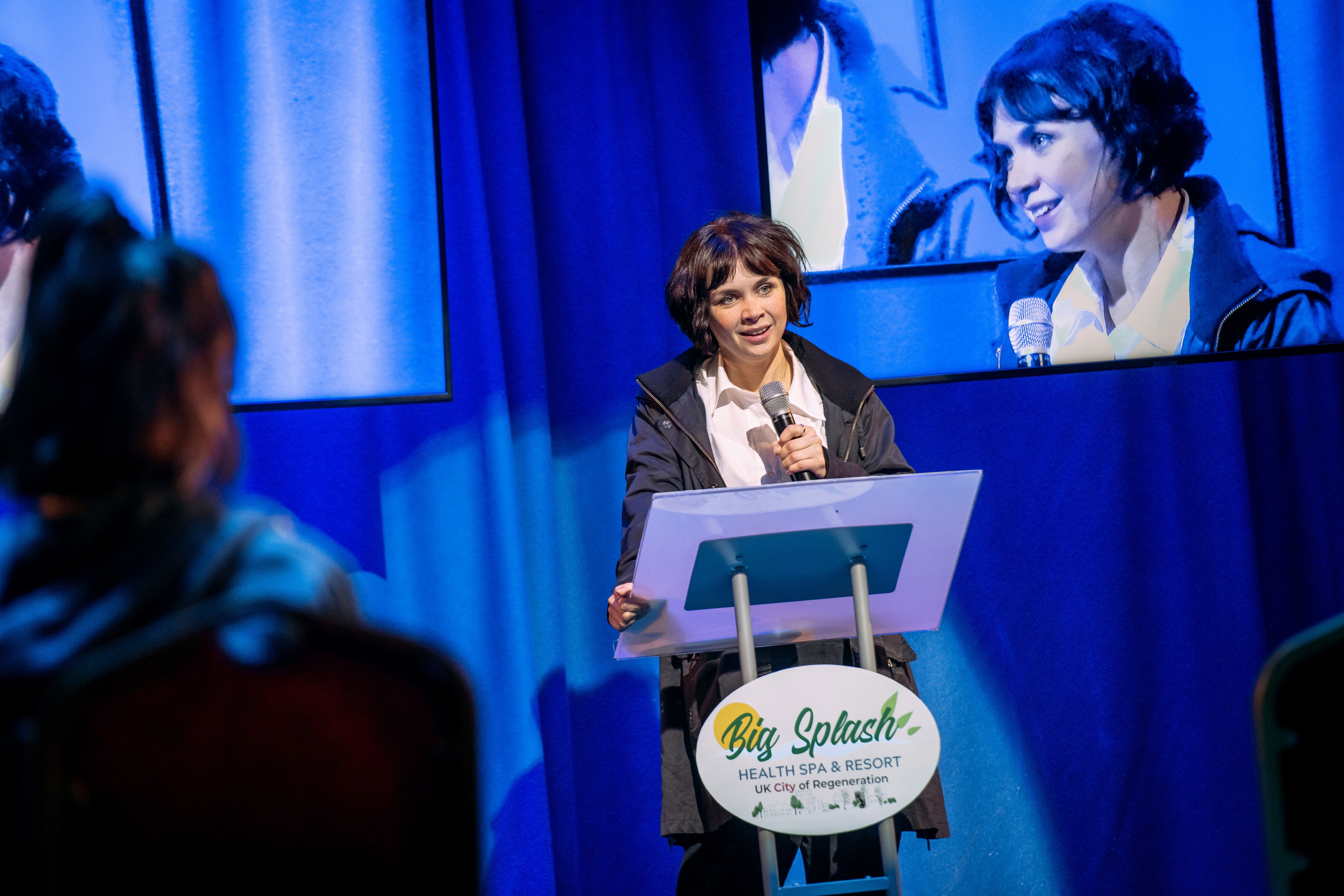
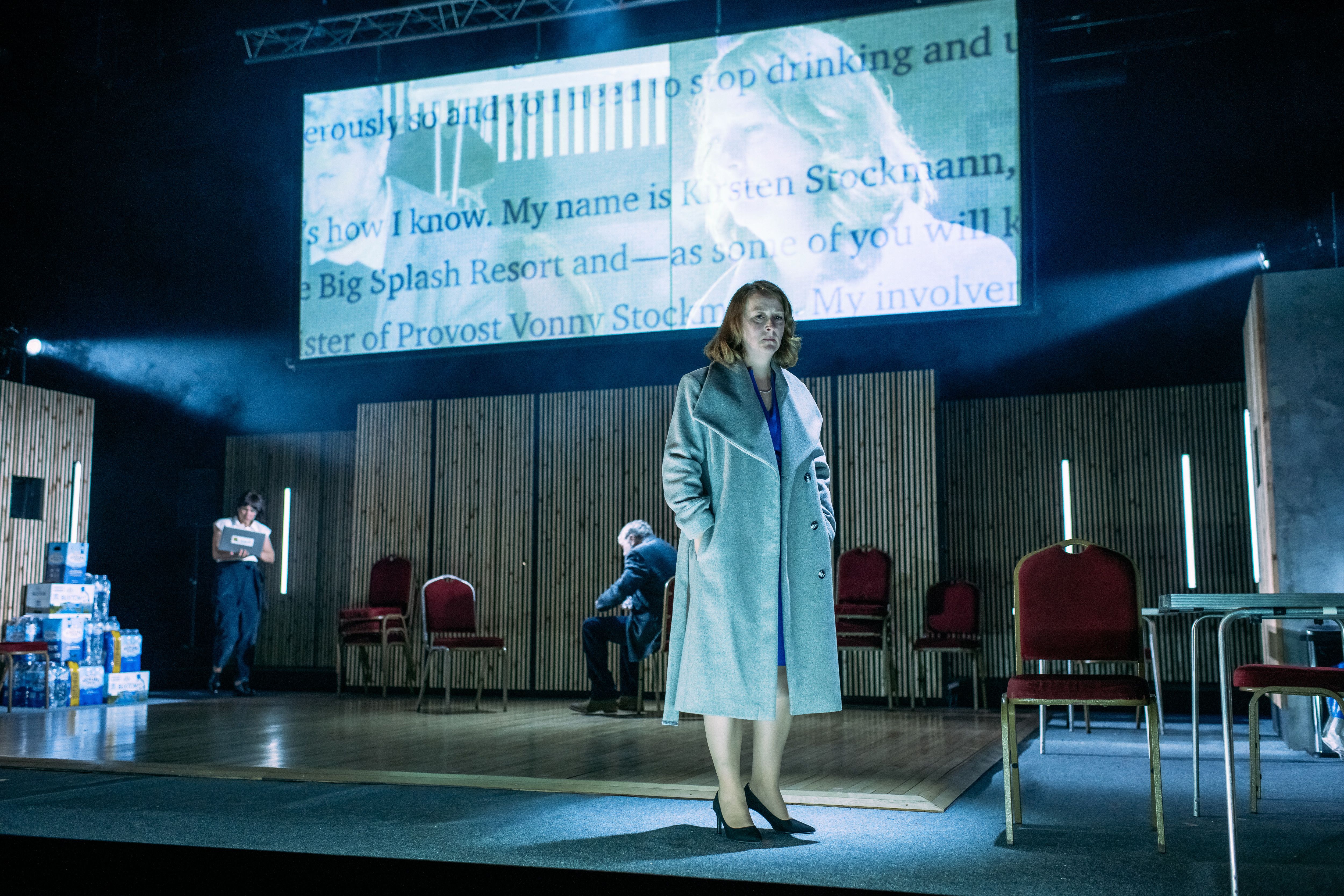
In fact, Hurley doesn’t change much at all, plot-wise. This 140-year-old play is uncannily prescient. The difference is all on the surface: in the modes of communication, and the cadence of the dialogue – and it’s beautifully done. The story shifts easily to a contemporary “once-great Scottish town,” where a new spa resort promises regeneration, and offers hope to the poor and dispossessed who live there. But Dr Kirsten Stockmann (Hannah Donaldson) is concerned: a sickness bug is spreading, and she’s almost certain the town’s water supply has been contaminated. But how? Could blame lie with council-approved shortcuts, aimed at bringing forward the resort’s opening? Maybe. If so, it’s more than a little awkward, because the provost is Kirsten’s sister, Vonny (Gabriel Quigley). Still, surely she will be grateful for the heads up, pleased to be able to avert a public health disaster, no matter what the cost? But no. Vonny has no qualms: without the resort, the people have nothing. They’re not sick because of poison, she tells her sister; they’re sick because they’re poor. She has a point.

Although the story remains unchanged, the staging is bang up-to-date: video designer Lewis den Hertog has created a multi-media piece à la Katie Mitchell, with ‘live cinema’ (where the onstage action is filmed and projected simultaneously onto a large screen) a key feature. There are pre-filmed sequences too, such as a jarringly upbeat advert for the new resort, and a series of enthusiastic vox pops on the local news. And there are text messages, and YouTube videos, and Skype and BTL comments a-plenty. It’s Ibsen with all the socials. It works. There’s a dizzying sense of things spiralling out of control, with Kirsten in the middle, alone, holding on to the damning test result – a dreadful talisman.

But Kirsten isn’t quite alone. She might have broken ties with her sister; her friend, Benny (Neil McKinven), and local celeb, Aly (Taqi Nazeer), might have sidled away – but her teenage daughter, Petra (Eléna Redmond) is firmly on her side. And so, perhaps, is Derek Kilmartin (Billy Mack), who has a proposal for Kirsten to consider…

It’s wonderful to see creative theatre projects taking shape again (I’ve nothing against old favourites, and it’s clear to see why theatres are being cautious post-pandemic, but it’s definitely time for something new). This particular project seems like a canny move, combining Ibsen’s timeless appeal with something bold and fresh. It’s almost guaranteed to get bums on seats, while simultaneously allowing playmakers the chance to experiment. Good call!

For the most part, it pays off. I have a little trouble hearing some of the dialogue, especially in the first act. I’m sitting quite far back in the stalls, which might have something to do with it, but I wonder if it’s more about the actors delivering their lines to cameras rather than to the auditorium. But this is my only gripe. The performances are natural and convincing, the relationships well-defined.

The message is clear: the truth matters, however unpalatable. It’s a timely homily. We need to heed the experts. The only problem is, we all think we’re Kirsten Stockmann.

4.3 stars

Susan Singfield