

31/05/23
Festival Theatre, Edinburgh
I was a big fan of Deborah Moggach’s books back in the 80s and 90s. You Must Be Sisters, in particular, made an indelible impression. Although I didn’t read These Foolish Things, when it hit the silver screen in 2011 as The Best Exotic Marigold Hotel, I was primed to enjoy it – and I kind of did. Under John Madden’s direction and with a stellar cast, it struck me as a good-natured, feel-good slice of cinema.
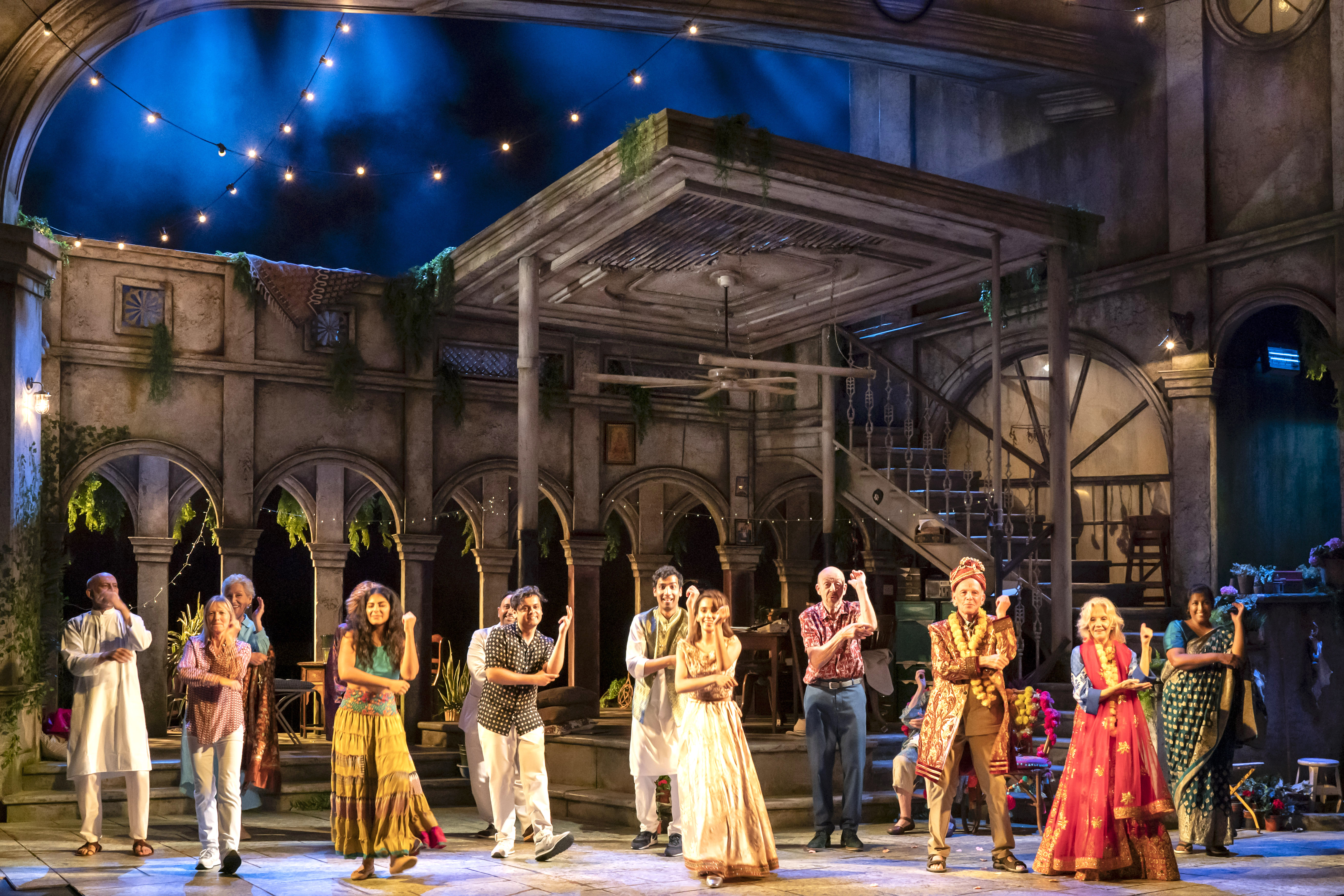
It seems to be a truth universally acknowledged that a successful, ‘uplifting’ film should be adapted into a touring play, so it’s no surprise to find TBEMH added to the roll call. This gentle comedy tells the tale of the widowed Mrs Kapoor (Rekha John-Cheryan) and her hapless son, Sonny (Nishad More), owners of the dilapidated titular hotel. His mother wants to sell the failing business, but Sonny has another idea. He’s been reading about the way old people are treated in the UK: abandoned by their families; ripped off by care homes. Why not repurpose their building as a residential hotel, where elderly white English people can see out their days?
Enter a rag-tag of pensioners: mousy Evelyn (Tessa Peake-Jones), recently widowed and terribly timid; smug married “been-there-done-that” know-it-alls Jean (Eileen Battye) and Douglas (Paul Nicholas); mysterious ex-broadcaster Dorothy (Paola Dionisotti); would-be comedian Norman (Graham Seed); sexy Madge (Belinda Lang), on the hunt for a fourth husband; and Muriel (Marlene Sidaway), ex-cleaner and current bigot. Of course, they’re all on journeys of self-discovery, and India provides the perfect exotic backdrop…
The jokes land well with tonight’s audience and there is much laughter in the auditorium but, in all honesty, it’s an uncomfortable watch. It’s 2023, and we’re all more aware than we were back in 2011. Now, the white saviour narrative feels dated and horribly self-aggrandising. I wince as Muriel points out the inequity of the caste system, thus enlightening Mrs Kapoor and convincing her to promote the ‘Untouchable’ sweeper (Anant Varman). I cringe as the old white women solve Sonny’s relationship problems by telling him to marry for love and reject the idea of an arranged marriage. I squirm as Evelyn educates the lively call-centre workers (Shila Iqbal and Kerena Jagpal), smashing their sales targets with a bit of good English common sense. There is the occasional attempt to temper this (“It was the young people’s idea”), etc., but – basically – it’s the Indians’ role to inspire the Brits by smiling through adversity, and it’s the Brits’ role to show the Indians how to get things done. Sigh.
I’ll file this one under ‘A’ for ‘Awkward’.
2.5 stars
Susan Singfield


 Bouquets & Brickbats