
Australia

The Surfer

18/05/25

Cineworld, Edinburgh

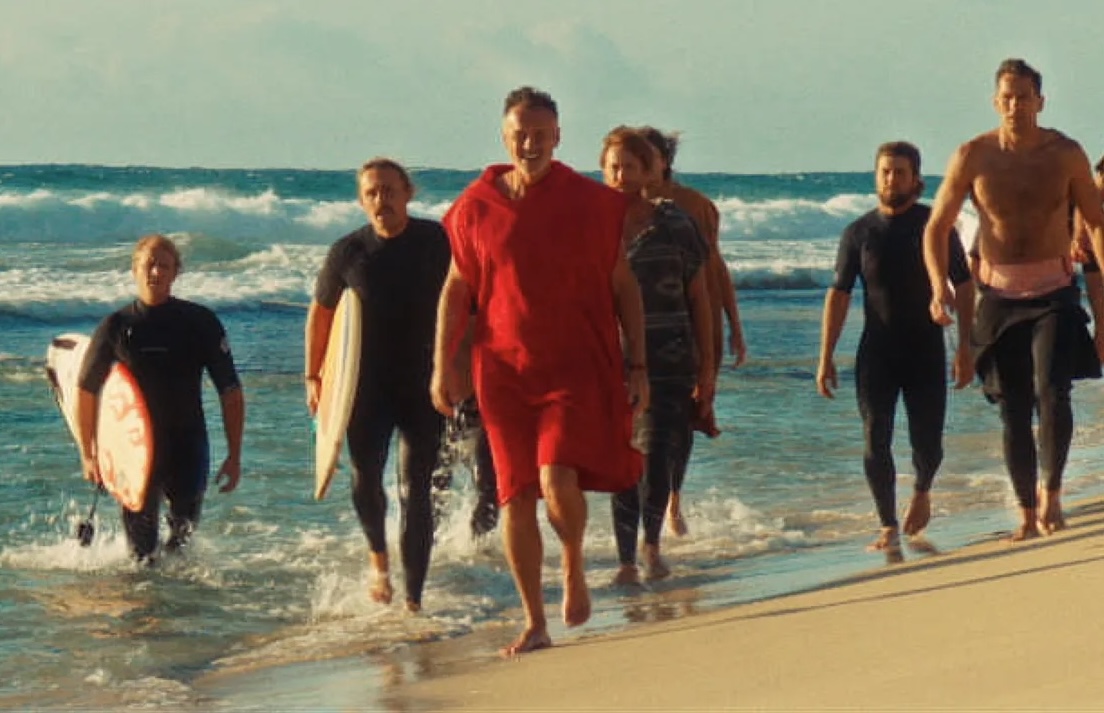
The Surfer, written by Thomas Martin and directed by Lorcan Finnegan, is an Irish-Australian collaboration, filmed on location in beautiful Yallingup. Cinematographer Radek Ladczuk perfectly captures the town’s glorious coastline, all bright blue waves and golden sands shimmering in a sultry heat. However, despite initial appearances, this isn’t a story destined to gladden the hearts of the tourist board Down Under. Instead, it falls firmly into that sub-genre of ‘Unsettling Aussie Small Town’ films – helmed by Wake in Fright and encompassing everything from Picnic at Hanging Rock to The Royal Hotel – and acts as a warning to stay away.

Indeed, the warning here is explicit. As The Surfer (Nicolas Cage) strides confidently towards the water with his son (Finn Little), keen to share his childhood experiences of this particular beach, he is told in no uncertain terms that they’re not welcome: “Don’t live here, don’t surf here.” The Surfer’s protestations that he grew up in the town are met with indifference. “Don’t live here, don’t surf here,” the hostile gang of men repeat. And, in case he’s not quite got the message, “Fuck off.”

But The Surfer has no intention of fucking off. He might have messed up his marriage, his relationship with his son might be rocky, but he’s been successful in his career and he’s here to buy back his grandfather’s old house and start to put things right. The problem is, the locals are a close-knit, powerful bunch, and they’re determined to make him leave…

If this all sounds pretty straightforward, don’t be fooled. The Surfer is a head-scramble of a film: as twisty and impenetrable as an overgrown maze; a hallucinatory experience where nothing is as it seems. Is The Bum (Nicholas Cassim) real? Is he The Surfer? Is he both – a literal and metaphorical double, like Bertha Rochester or Frankenstein’s monster? There are also some gruesome, gnarly moments, and viewers with an aversion to rats should be prepared to look away.

As The Surfer becomes increasingly untethered, spiralling into an chimerical world of sleep deprivation, dehydration and sun exposure, his point of view becomes ever less reliable, and we’re as lost as he is, unsure what’s true and what is not. But in amongst the madness, he clings to one thing: securing the deal on the house. If he can just get through to his broker, everything will be okay…

Under Finnegan’s direction, The Surfer is a taut, disturbing psychological horror, the tension never letting up. Scally(Julian McMahon) makes a compelling villain, his Andrew-Tate-ish brand of toxic masculinity both revolting and convincingly irresistible, and I’m on the edge of my seat throughout, hoping for his comeuppance. But this is Cage’s film and he really owns it, dragging us with him into The Surfer’s personal hell.

In short, The Surfer is an excellent film. Just not a great advert for Oz.

4.1 stars

Susan Singfield

The Umbilical Brothers: The Distraction

15/08/23

Assembly Roxy, Edinburgh

Although this is (almost) our first experience of The Umbilical Brothers, they’ve been around for a long time, successfully plying their madcap blend of mime and soundscapes to appreciative audiences since the mid-90s.

We caught a glimpse of the sort of show they’re best known for at the Assembly Gala Launch, where David Collins performed a series of ever-more complex and surreal actions, accompanied by Shane Dundas’s weird and wonderful sound effects.

The Distraction is something else entirely though, a departure from their established style – although still just as silly and inventive. This show is all about the tech, specifically green screens and multiple cameras, and I’ve never seen anything quite like it.

You can almost hear them saying, “That’d be fun!” and then adding a series of ‘what-ifs’ until a show’s worth of shenanigans has been established.

Even while we’re waiting for the sell-out audience to file in, we get a sense of how cheery it’s going to be, as a series of groan-worthy jokes is displayed on the big screen that dominates the stage. It’s a canny move, setting the tone for the next hour.

There are some tech glitches in the first ten minutes, and it’s hard to tell if they’re real or part of the act. If the former, no matter – the delay is entertaining in itself. If, as I suspect, the latter is true, it’s a neat move, instilling a sense of jeopardy, and reminding the audience to be impressed by how much computer wizardry is being used.

Over the next sixty minutes, the duo mine the possibilities of live green-screen action, taking us from outer space to the depths of the ocean, via TV sports (played with babies – don’t ask), a guest appearance from Steve Jobs and more than one exploding head. There is audience participation – but not as you know it. And there are lots of dolls. If this all sounds like an amorphous mass of nonsense, then that’s exactly what it is – but brilliantly so.

I defy anyone to watch The Distraction without laughing all the way through.

4.5 stars

Susan Singfield

Run Rabbit Run

29/06/23

Netflix

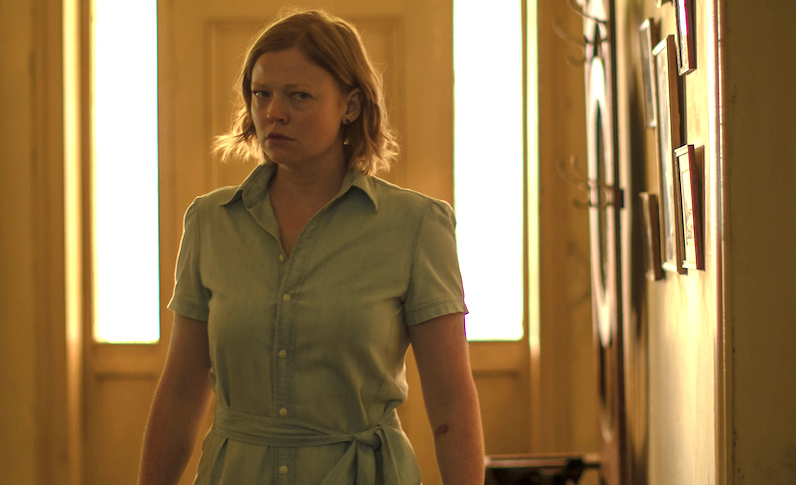
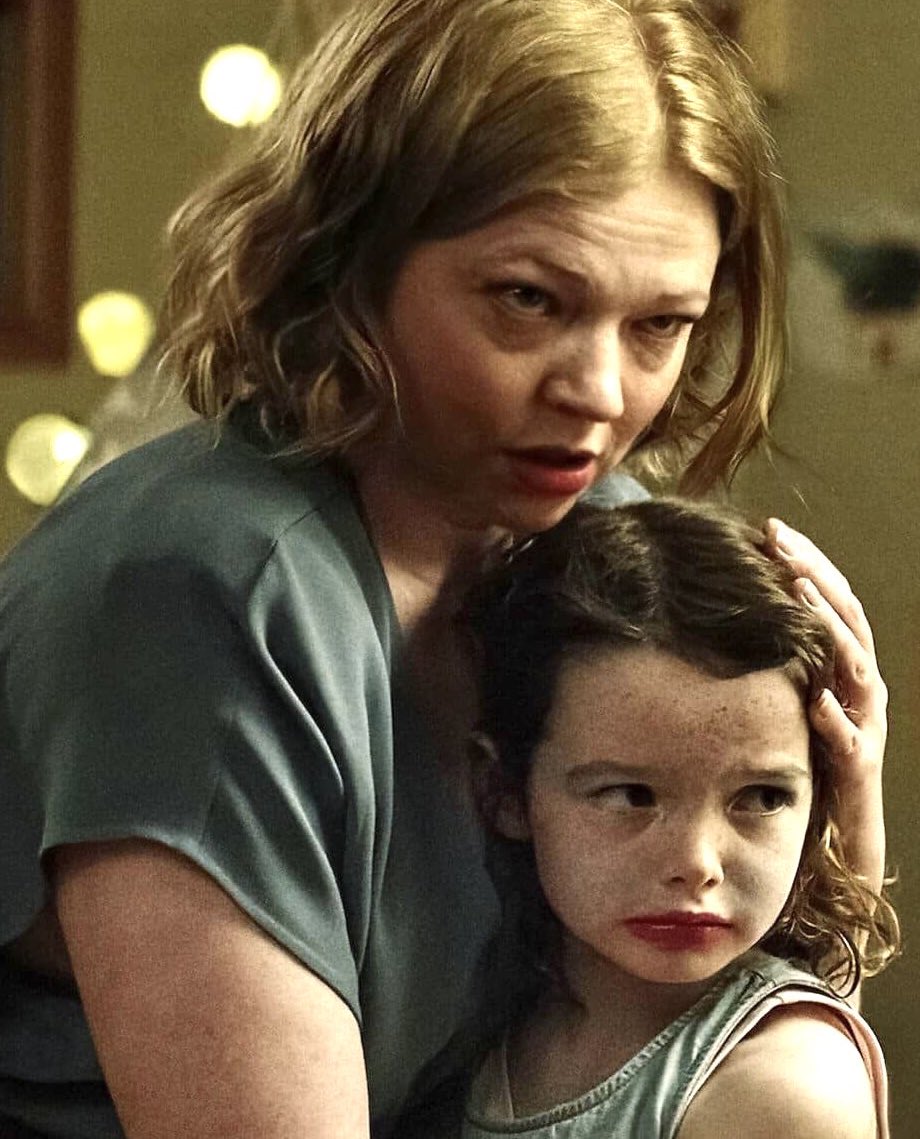
Run Rabbit Run is an unsettling psychodrama, set in an Australia that’s a lot darker and less sun-kissed than we usually see on screen. Woman of the moment, Sarah Snook, stars as single mother Sarah, whose orderly life disintegrates when her young daughter, Mia (Lily LaTorre), begins to exhibit some disturbing behaviours.

On the surface, Sarah seems to have it all: a good job, a nice house, a sweet kid and a civilised relationship with her ex (Damon Herriman). But underneath, she’s struggling. Her dad has just died, and her garage is full of his things, forcing her to confront a childhood trauma she’d rather forget. On Mia’s seventh birthday, a white rabbit appears from nowhere and the little girl adopts him as her pet. And then she starts to talk about things from Sarah’s past, things that she can’t possibly know…

It’s a simple enough story, but director Daina Read manages to generate real tension, despite what is obviously a low-budget, proving that you don’t need expensive gimmicks to make a scary, unnerving film. Sarah’s unravelling is slowly and meticulously examined, so that I’m holding my breath for much of the running time, genuinely fearful, wondering what is going to happen next.

I do suspect that much of the movie is on the cutting room floor. Early press releases (back when Elisabeth Moss was attached, before ‘scheduling conflicts’ meant she had to pull out) make much of the fact that Sarah is a fertility doctor, forced to confront her beliefs about life and death, but there’s not a lot of that in the version before me. True, we see Sarah wearing scrubs, and there’s one scene where she scans a pregnant woman, locating her foetus’s heartbeat, but beyond that and a solitary reference to her as ‘Doctor’, her job isn’t mentioned at all. In fact, when the rabbit bites her, she doesn’t seem to know how to treat the cut, so it’s hard to believe she’s even got a first aid certificate, let alone a medical degree. In addition – and I’m being deliberately vague here so as to avoid a spoiler – there’s quite a big event at the end that isn’t flagged up at all, so that I have to rewind to check if it really happened.

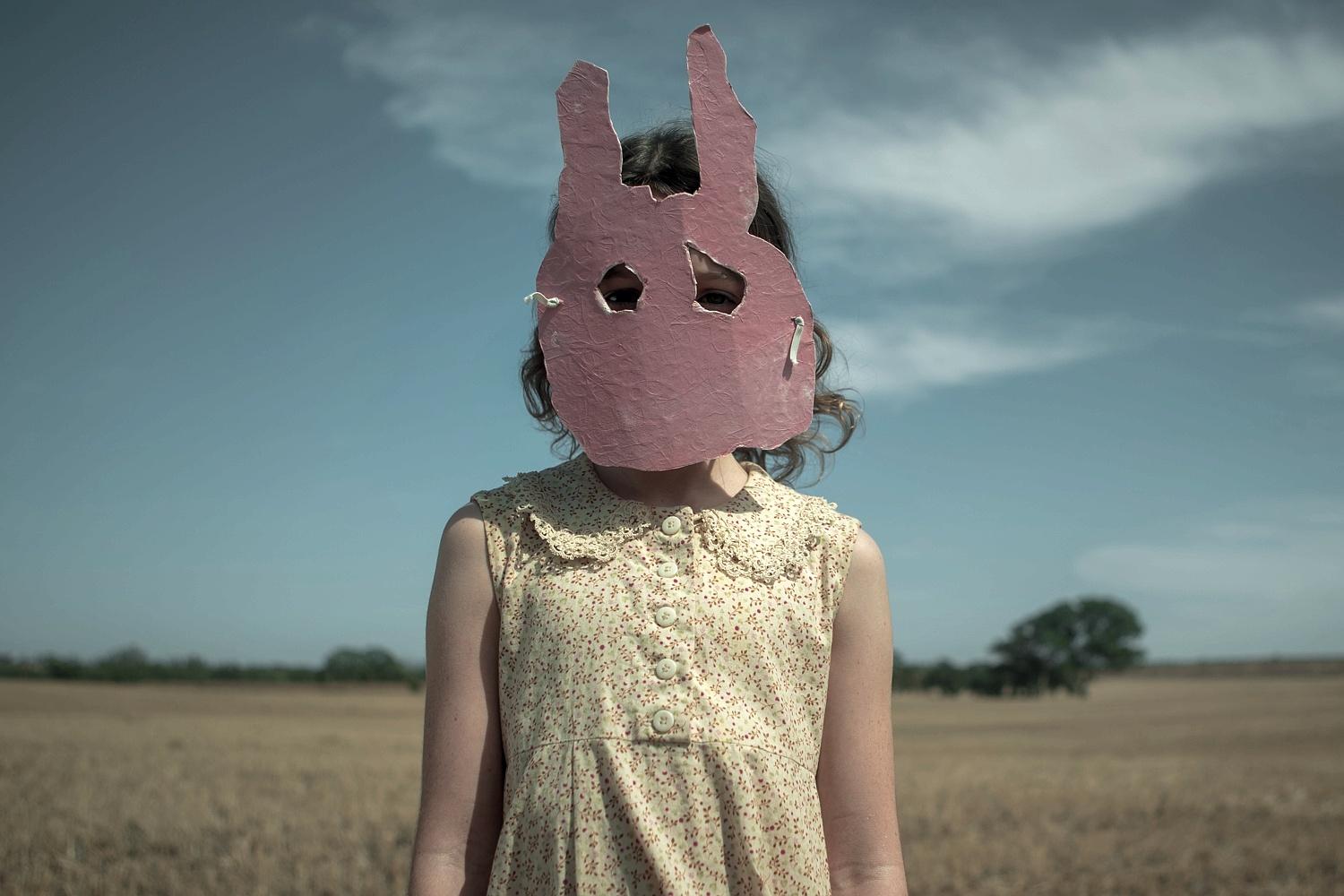
Despite these niggles, Run Rabbit Run is an enjoyably thrilling watch, and Sarah Snook and Lily LaTorre both carry it really well. Mia’s rabbit mask and the oblique Alice in Wonderland imagery are horribly spooky, and I find myself still thinking about this film when I wake up the next day.

3.8 stars

Susan Singfield

The Dressmaker

MV5BNjQ3Nzk0MDM4M15BMl5BanBnXkFtZTgwMzI5ODA3NjE@._V1_SY317_CR0,0,214,317_AL_

21/11/15

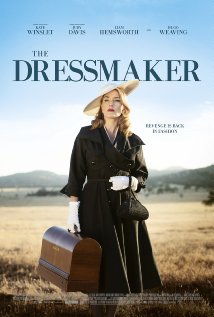
Myrtle ‘Tilly’ Dunnage is back in Dungatar, Australia. It’s a dreary, small-minded nothing of a place,  but there are demons to confront and scores to settle, and Tilly won’t rest until she’s righted those old wrongs. There’s magic (and marijuana) in her fancy-fabric bag, and – armed with her trusty Singer – she stitches up the spiteful mob.

The Dressmaker starts off wonderfully, with languid, hazy landscapes stretching out across the screen. Tilly (the ever-fabulous Kate Winslet), is as incongruous as they come, bringing glamour and a swagger to a tired, washed-out town. It’s a cartoonish, fairy-tale-ish film, with the characters writ large – and, at least to begin with – this is part of its charm. There are echoes of Edward Scissorhands here, both in the storytelling style, and in the bold, broad-strokes design. Tilly ‘rescues’ the town’s women with preposterous costumes; before long, they’re all tiptoeing along the dusty streets in high heels and cocktail frocks, corseted and primped for the daily drudge. They feel sexy and powerful, but they’re just pawns in Tilly’s game; it’s no coincidence that her own wardrobe becomes more muted as she reels them in.

The cinematography is beautiful; the acting sublime (with excellent support from Judy Davis, Kerry Fox and Hugo Weaving, all on finest form). The first two-thirds of this film are a delight. How disappointing then, to find the story arc fatally disrupted, and a final third that feels ridiculous, hysterical and hideously prolonged. There is a clear ending to this tale, and it occurs at about the eighty-minute mark; thereafter it’s an incoherent mess – and it can’t recover from this flaw.

3.5 stars

Susan Singfield