
04/05/25
Dominion Cinema, Edinburgh
Jesse James. Billy the Kid. Butch Cassidy.
America has long had an infatuation with the myth of the outlaw and Bonnie Parker and Clyde Barrow are simply more recent examples of the phenomenon. They carried out their crimes – and met with a deadly reckoning for their transgressions – in the early nineteen-thirties at the height of the Great Depression. The two young criminals were deified in their own lifetimes, largely due to the poems that Bonnie wrote about their exploits and, after their deaths, by several images that were found on a camera that belonged to them. But they had to wait until 1967 to be fully rediscovered, when Arthur Penn’s visceral film about the two criminals brought them back to the attention of young audiences around the world.
Filmed in London’s West End in January 2022 to a sold-out crowd all wearing face masks (a reminder that we had just come through a grim time in our own history), this assured musical offers an intelligent reassessment of Bonnie and Clyde’s familiar story. It begins at the end of their journey with a grim account of the number of bullets that were fired at them in their final moments (130, if you’re interested), before backtracking briefly to their respective childhoods. Young Bonnie (Bea Ward) is already starstruck, singing a song about her favourite movie star, Clara Bow, who she longs to emulate. Young Clyde (Albert Atack) despairs of his family’s hardscrabble existence and is making putative plans for an escape that only a generous infusion of cash can facilitate.
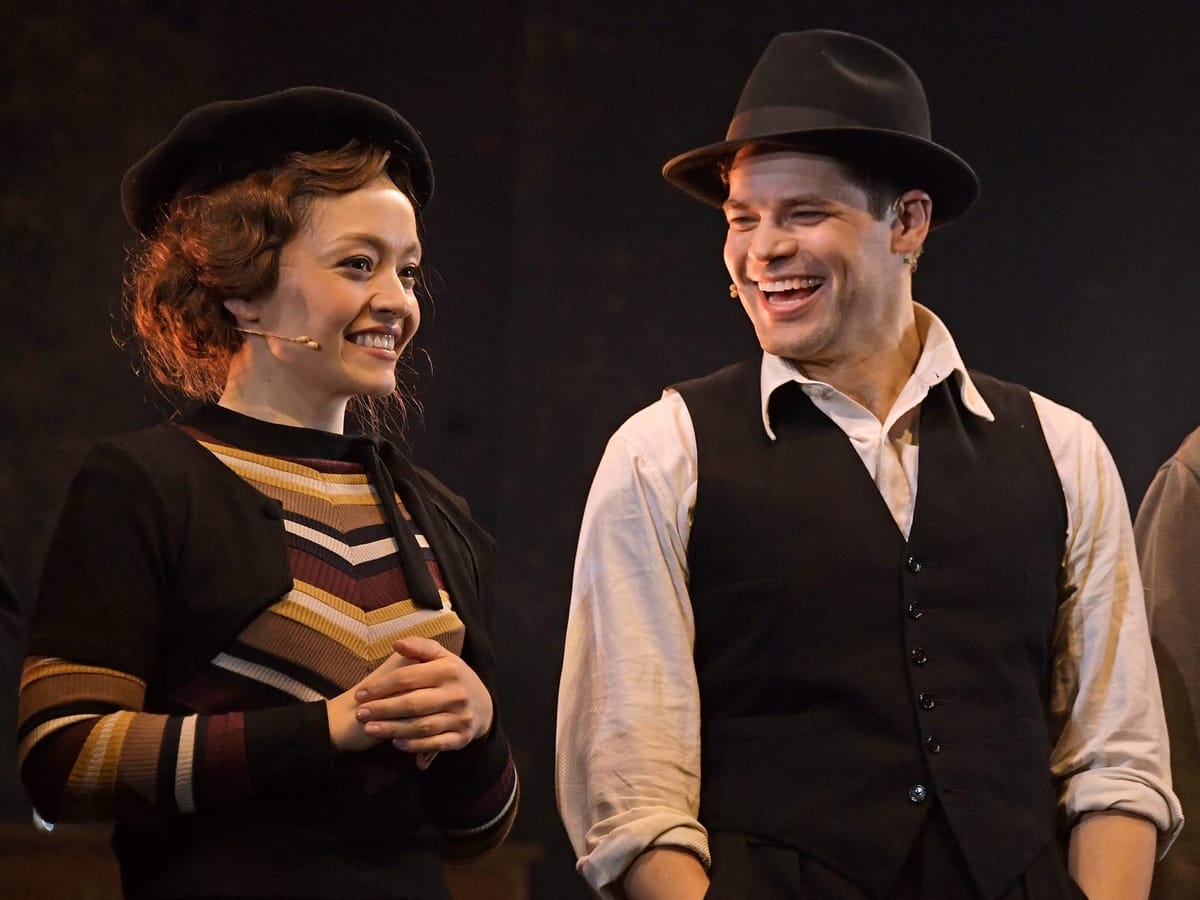
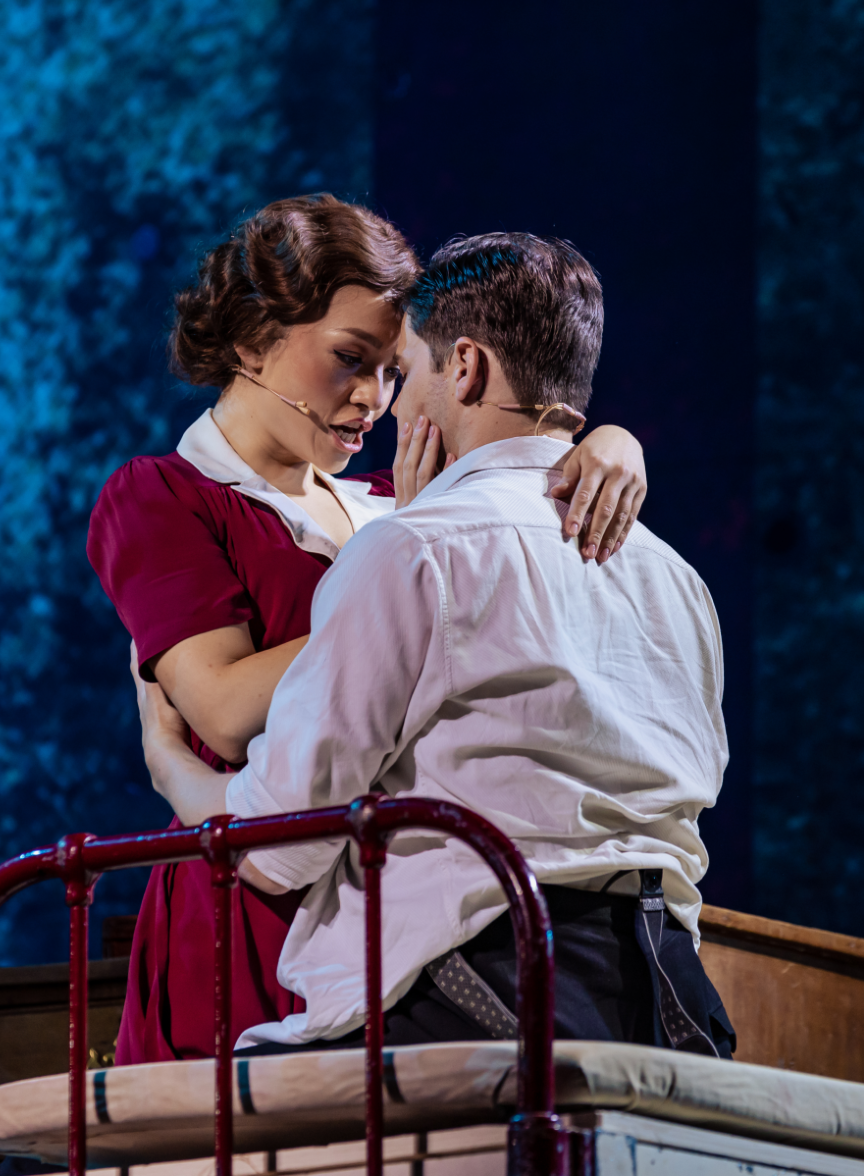
Pretty soon they’ve grown up. Bonnie (Frances Mayli McCann) is working as a waitress when she first encounters the smooth-talking Clyde (Jeremy Jordan). He’s recently absconded from prison but still finds time in his frantic schedule for a little romance. There’s an instant attraction between them, and almost from the word ‘go’, they are inseparable. Clyde’s older brother, Buck (George McGuire), welcomes Clyde’s latest sweetheart, but Buck’s God-fearing wife, Blanche (Natalie McQueen), isn’t quite so entranced by her – and makes her feelings clear.
However, it’s only a matter of time before Buck and Blanche are drawn in to the couple’s irresistible orbit and, as The Barrow Gang graduates from robbing general stores to robbing banks, retribution is patiently biding its time…
Directed by Nick Winston with book by Ivan Menchell and songs by Frank Wildhorn and Don Black, Bonnie and Clyde: The Musical is a powerful retelling of this familiar tale, the songs ranging from blues-infused upbeat thumpers to soulful ballads. From time to time, ‘The Preacher’ (Trevor Dion Nicholas) strides on to deliver some gospel-soaked anthems, clinically parting his congregation from their hard-earned cash in exchange for excerpts from the Bible. The sense of desperation looms large. A scene where the gang stage a bank robbery only to discover that the vaults are completely empty is a particular eye-opener. This is a point in history when people are compelled to take desperate measures.
The performances are uniformly strong. Jordan captures Clyde’s unflagging determination to better himself and his steadily-mounting realisation that he is doomed, while Mayli McCann excels as a woman so under her partner’s spell that she is helpless to resist the inevitable slide towards her own destruction. McQueen offers a deliciously-funny performance as the disapproving Blanche, somehow managing to make every line she utters a searing condemnation.
I find myself wondering how Winston will attempt to recreate the carnage of the duo’s final moments, but happily, he doesn’t even try, preferring to leave them at an intimate moment shortly before they set off on their final journey. And on reflection, that seems the wisest approach.
We all know what happened to Bonnie and Clyde – and the essence of these two legendary figures is not how they died but how they lived.
4.8 stars
Philip Caveney


 Bouquets & Brickbats